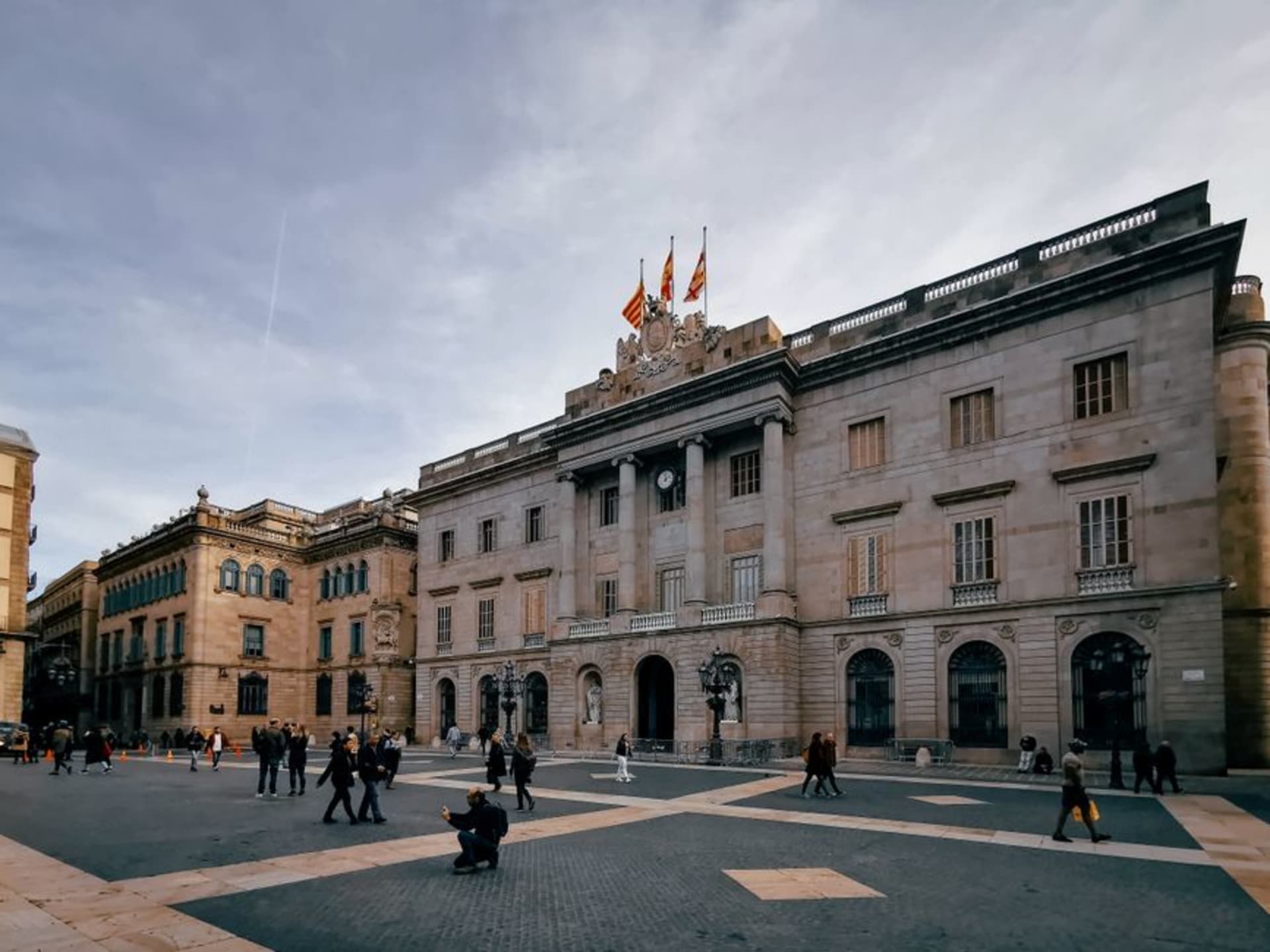
Vic
"I bought a fuet from a man who'd been selling the same sausage recipe his grandfather used, wrapped it in paper, and ate half of it walking back to the car."
An inland Catalan market town where Roman ruins sit behind a bakery and the smell of cured sausage follows you down every street.

We drove up to Vic on a Saturday morning specifically for the market, and I’ll admit I underestimated it. I’d pictured a few stalls of tomatoes and cheap sunglasses. Instead the whole Plaça Major, this huge arcaded square that looks more like a stage set than a town center, was packed wall to wall with vendors — cured meats hanging in rows, wheels of tou dels tillers cheese, old women selling snails by the kilo, a guy with nothing but different grades of olive oil. Vic takes its charcuterie seriously in a way that surprised me even after years in Mexico eating incredible food; the fuet here, that thin dry-cured sausage, is apparently considered close to definitive, and after trying three different vendors’ versions I believe it.
What I didn’t expect was the Roman temple. It’s tucked behind the town hall, half swallowed by a 19th-century mansion that got built right up against it, so you turn a corner past the market stalls and suddenly there’s this 2nd-century structure with six columns just standing there, indifferent to the ham and cheese happening thirty meters away. Lia found it funnier than I did — she kept saying it looked like the temple had wandered into the wrong postcard. There’s something very Catalan about that juxtaposition though, ancient stone next to sausage stalls, nobody making a big fuss about either.

We also climbed the bell tower of the cathedral, which is one of those places where the outside architecture (neoclassical, kind of somber, from a 18th-century rebuild) gives you zero warning for what’s inside. The walls are covered floor to ceiling in dark, almost violent murals by Josep Maria Sert, painted in sepia tones after a fire destroyed his first set during the Civil War. It’s not a pretty church in the postcard sense. It’s heavy and a little unsettling, which honestly stuck with me more than a lot of prettier cathedrals I’ve seen.
Lunch was the real point of the trip, if I’m honest. We found a small place off the square doing botifarra amb mongetes — sausage with white beans, completely unfussy — and split a plate of the local cured meats first because we hadn’t had enough yet. Vic sits up on a plain surrounded by the Collsacabra hills, and there’s a particular dry inland climate here that locals swear is why the curing works so well; whether or not that’s strictly true, I wasn’t going to argue with my mouth full.

By the time we left, mid-afternoon, the market was packing up and the square had gone quiet enough that the temple columns were the only thing still holding your attention. It’s not a place that needs a full day — we did it comfortably from Barcelona and back — but it’s the kind of stop that rewards actually being hungry when you arrive.
When to go: Saturday mornings for the weekly market; the arcaded square is far less atmospheric on a quiet weekday.
Keep exploring
More from Catalonia
 catalonia
Barcelona
A Mediterranean city that somehow figured out how to be both wildly ambitious and casually beautiful at the same time.
Explore catalonia
Besalú
A medieval market town in inland Catalonia so intact and unhurried it makes you wonder what century you drove into.
Explore catalonia
Cadaqués
A whitewashed fishing village at the end of a vertiginous road that Dalí chose and the world has been following him to ever since.
Explore catalonia
Costa Brava
A rugged Mediterranean coastline where pine forests fall straight to turquoise water and the best coves require an effort to reach.
Explore catalonia
Delta de l'Ebre
A flat, wind-scoured river delta of rice paddies and lagoons where flamingos outnumber people and the horizon barely bends.
Explore catalonia
Figueres
A provincial Catalan market town that contains, in its old center, what may be the most surreal building any artist has ever made of themselves.
Explore