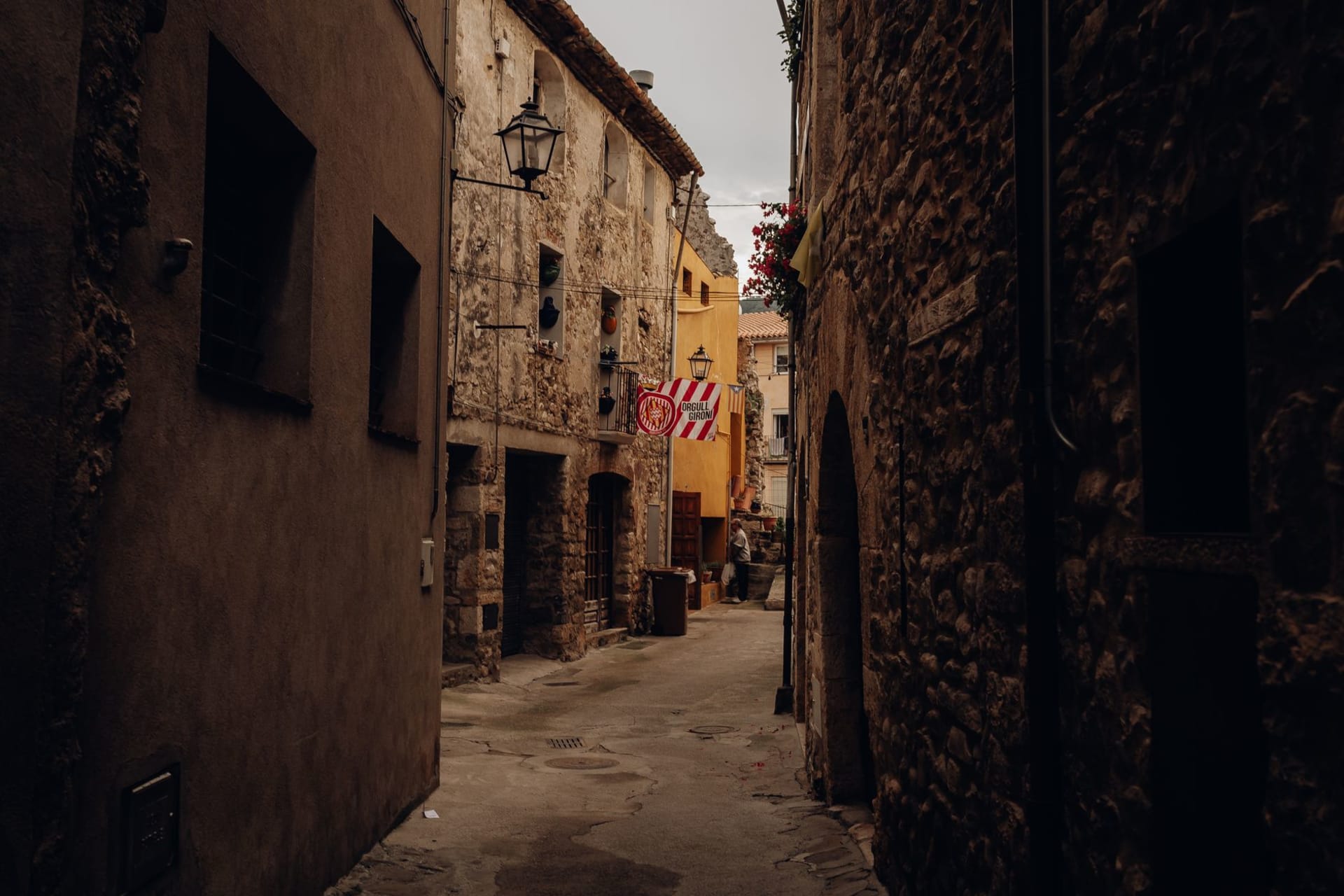
Garrotxa
"I came for the volcanoes and stayed for the beech forest. The mist came with both."
A volcanic landscape of crater lakes and beech forests in inland Catalonia where the mist is a feature, not a problem.

The Garrotxa is the kind of landscape that takes a moment to understand. You drive in from the coast or from Girona, the road climbing through increasingly dramatic hills, and then something changes in the vegetation and the light — it becomes greener, more enclosed, more northern. The volcanic zone of the Garrotxa natural park covers forty square kilometers of extinct volcanoes, their craters now filled with beech and oak forest, their slopes terraced for farmland that has been worked since the Romans came through. I arrived at dusk in November, the mist already sitting in the low ground, the beech trees stripped to their winter architecture, and thought: this does not look like Spain.

The volcanoes here last erupted roughly eleven thousand years ago — recent enough in geological time to have left the craters largely intact, old enough that the forest has had ten millennia to colonize them entirely. The Volcà de Santa Margarida has a Romanesque hermitage sitting in the floor of its crater, reached by a path that spirals down through the trees into the bowl. The Croscat, the most recently active, was partially quarried in the twentieth century, and a cross-section of the cone is now exposed as a kind of geological museum — the layers of red and black volcanic ash visible in sequence, like a birthday cake cut open to reveal its history. Walking these trails in early morning, with the fog still low and the birdsong muffled by it, is one of the stranger landscape experiences I’ve had in Europe: you are in what is recognizably a volcanic terrain but the whole thing is so comprehensively forested that you feel more like you’re in the Ardennes or the Basque Country than anywhere Mediterranean.
Olot is the park’s main town, a mid-sized city that was almost entirely destroyed by an earthquake in 1427 and rebuilt in a style that gives it an unusual architectural coherence. The local art school, the Escola d’Olot, produced a tradition of landscape painters in the late nineteenth century whose work hangs in the Museu Comarcal de la Garrotxa and forms an unexpectedly significant body of plein-air painting. I went in out of curiosity and came out having spent an hour longer than planned, sitting in front of a canvas of the volcanic landscape in autumn that made me feel the painter had understood something about the light here that I was only beginning to grasp. The museum cafe made a very good café amb llet.

La Fageda d’en Jordà is the beech forest that the Catalan poet Joan Maragall wrote about and that every Catalan child learns about in school. It grows across a lava field, its roots navigating the uneven volcanic rock beneath the leaf litter, which gives the forest floor a certain unsteadiness underfoot — you’re always on a slight incline or a gentle depression, the ground moving in waves beneath your feet. In autumn, the combination of orange and gold canopy with the dark trunks and the volcanic black soil underneath produces a palette that shouldn’t naturally occur this far south. I went in October. A family was picnicking somewhere in the middle of it, their voices muffled by the trees, their laughter arriving from somewhere invisible. It felt exactly right.
When to go: October and November for the beech forest in full autumn color and the mist-heavy mornings. Spring (April-May) for wildflowers on the volcano slopes and the countryside at its greenest. The Garrotxa works year-round but these two windows carry a specific atmosphere that the summer months lose.
Keep exploring
More from Catalonia
 catalonia
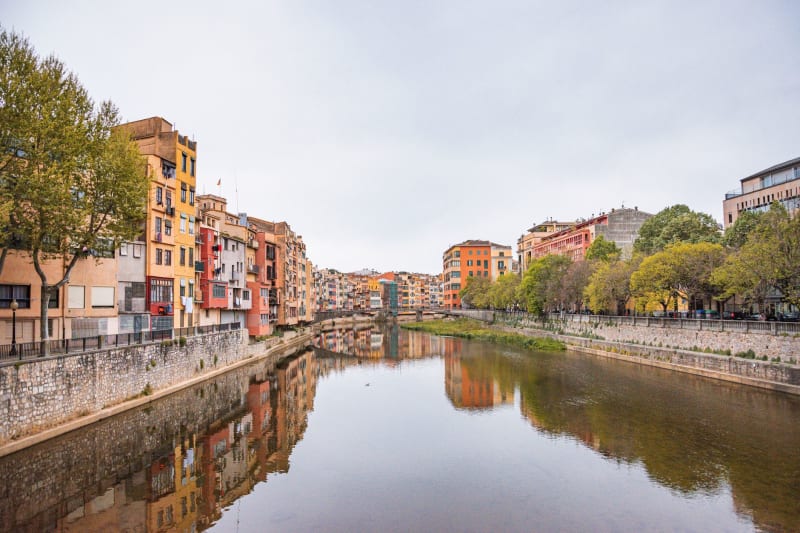
Girona
A medieval city of layered walls and a river-reflected old town that rewards slower travel the way Barcelona rewards its first-timers.
Explore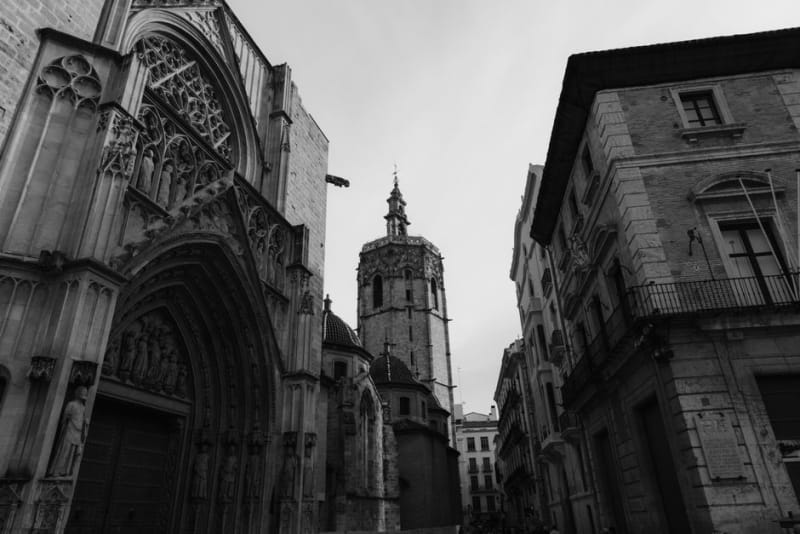 catalonia
La Seu d'Urgell
A Pyrenean cathedral town whose bishop still co-rules Andorra, with a Romanesque church and an old town built for slow walking.
Explore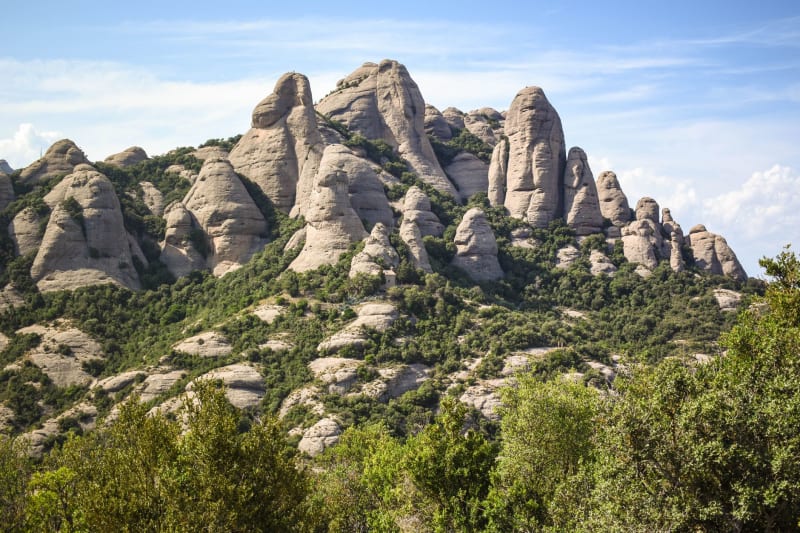 catalonia
Montserrat
A serrated mountain of impossible shapes rising from the Catalan plain, with a monastery clinging to it and the faithful still climbing.
Explore catalonia
Penedès
Catalonia's cava country — rolling vineyards south of Barcelona where sparkling wine has been made since before anyone called it that.
Explore catalonia
Priorat
A rugged, slate-soiled wine region where monks planted the first vines eight centuries ago and Garnacha still tastes like the mountain it grew on.
Explore catalonia
Ripoll
A quiet Pyrenean foothill town built around the monastery where Wilfred the Hairy is buried, often called the birthplace of Catalonia.
Explore