
Schiltach
"Every building here is crooked in a different direction, and somehow the overall effect is perfect."
A half-timbered medieval town wedged so tightly into a river valley that the buildings seem to lean together for warmth.

Schiltach hides. The road drops into the Kinzig valley and then follows the Schiltach river through a gorge so narrow that for a long stretch the trees meet overhead and you drive in a kind of tunnel of light. Then the valley widens by just enough and the town appears: a cluster of half-timbered buildings on a triangular wedge of land where the Schiltach flows into the Kinzig, the houses climbing the slope in tiers, each one at a slightly different angle to the hill it sits on. It looks, at first, like a fairy tale illustration that someone has made physically accurate.

The Marktplatz is the reason people come, and it earns the attention. It’s steeply sloped — one end several metres higher than the other — and lined on three sides by buildings that date from the sixteenth and seventeenth centuries, their timber frames painted in the dark reds and ochres and greens that distinguish Black Forest half-timbering from anything you’d see in Alsace or Franconia. The Rathaus sits at the upper end of the square, its facade rebuilt after a fire in 1590 and looking improbably intact for something that old. On the morning I arrived, a man was sweeping the cobblestones in front of his shop with a long-handled brush, moving methodically from one side to the other, and the sound of it on the stones was the only sound in the square. This is a town where the tourists have not yet learned to arrive at breakfast.
The river industry is what shaped this place. Schiltach was for centuries a centre of the timber trade — logs floated down the rivers to the Rhine and beyond — and the town grew wealthy and orderly on that traffic. The Schiltach river is still clear enough that you can see the stones on the bottom from the bridge, the water running fast and cold off the Black Forest ridges above. I walked along the mill path that follows the river downstream for about a kilometre, passing the remains of old tanning works and a small museum in a converted mill that explained the raft-floating trade with the careful enthusiasm of a place that understands its history is specific and interesting and not available elsewhere.
The food here is what you eat in the forest: Maultaschen in a broth made from smoked pork, bread with lard and chives, and a local Kirschwasser that tastes less like cherry liqueur and more like something distilled directly from the idea of winter. I had all of this at a Gasthaus where the tablecloths were checked in green and the ceiling beams were hung with old cowbells, and where the owner came out to check on the table with the particular interest of someone who knows that most visitors are only passing through and wants to make sure the passage counts for something.
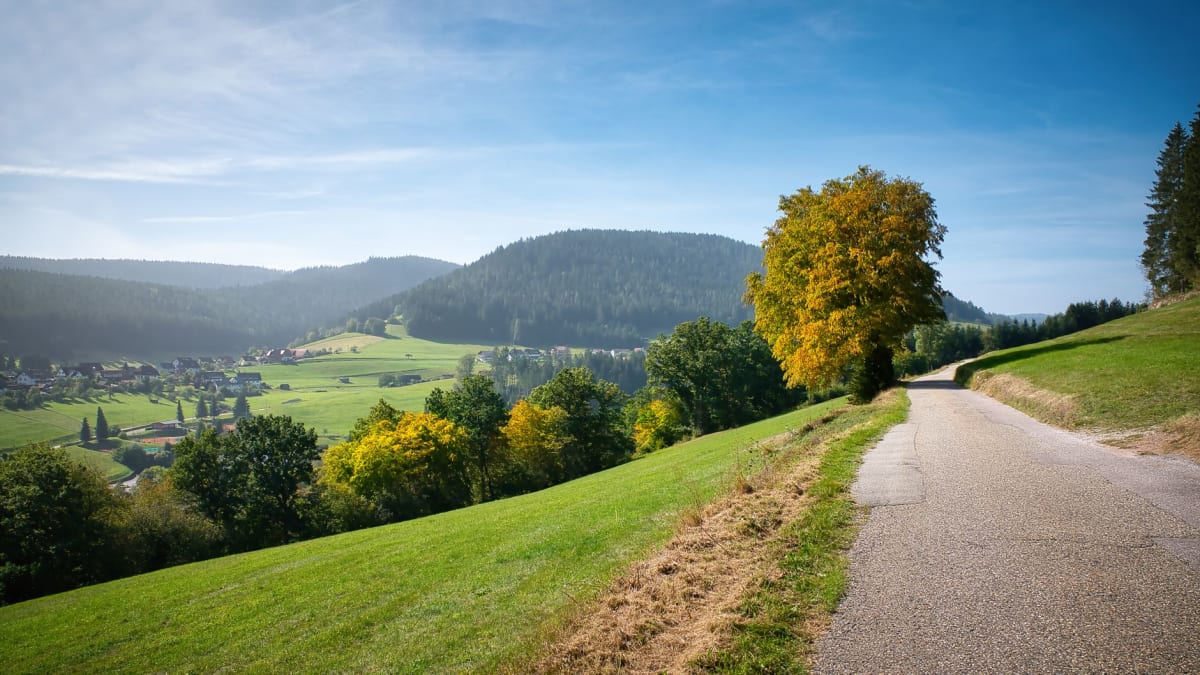
When to go: May through June for the valley at its greenest and the river running high with snowmelt. September and October bring a particular quality of light — low and golden, cut by long tree shadows. Schiltach is quiet in winter and beautiful for it.
Keep exploring
More from Black Forest
 black-forest
Schluchsee
The largest lake in the Black Forest, a high reservoir of cold dark water ringed by spruce, where Germans swim, sail, and walk with a thoroughness that I came to genuinely admire.
Explore black-forest
Titisee
A glacial lake so still at dawn it looks like a mirror that the forest is using to check its reflection.
Explore black-forest
Todtnau
A small mountain town at the foot of the Feldberg that most people drive through on the way to somewhere else, which is their loss entirely.
Explore black-forest
Triberg
Germany's highest waterfalls and the world capital of cuckoo clocks — a place that earns its tourist reputation by actually delivering.
Explore black-forest
Wutachschlucht (Wutach Gorge)
A 30-kilometer wild river gorge where waterfalls, orchids, and a ruined castle sit inside one of Germany's oldest nature reserves.
Explore black-forest
Baden-Baden
A spa town of such practiced elegance that arriving in hiking clothes feels like showing up to the opera in a raincoat.
Explore