
Europe
Black Forest
"I came for the clichés and stayed because nothing here is one."
A landscape so dense with dark pines and half-timbered farmhouses that you start to understand where every fairy tale came from.

I drove into the Black Forest from Freiburg on a Tuesday in October, and by the time the road had coiled up through the first ridge of firs, I had completely forgotten that anything existed outside those trees. That’s the thing about the Schwarzwald that no postcard prepares you for: it doesn’t feel curated. It feels genuinely old, like a place that predates the idea of tourism by several centuries and hasn’t bothered to adjust.
The villages do not disappoint, but they surprise in the right ways. Schiltach, wedged into a river valley so narrow the buildings seem to lean toward each other for warmth, has a medieval market square that looks like a stage set except that people actually live there. Triberg throws itself at you with cuckoo clocks and waterfalls, and you resist and then surrender because the waterfalls — Germany’s highest — are legitimately beautiful in autumn mist. The real pleasure, though, is what happens between villages: the forest itself, its silence interrupted only by woodpeckers and the occasional cowbell drifting up from a pasture somewhere below the treeline.
I ate Schwarzwälder Kirschtorte exactly once, in a bakery in Titisee, and it tasted nothing like the version I’d grown up believing was authentic. More cream, better cherries, a sponge that actually absorbed the Kirschwasser rather than performing it. I also ate Maultaschen — fat pasta pockets stuffed with spinach and meat — at a Gasthof where the walls were hung with antlers and a wood stove was doing serious work in the corner. That combination, the darkness outside and the warmth inside, is the Black Forest’s actual offer. Not scenery. Shelter.
When to go: September through November for fog in the valleys and autumn color on the hillsides — this is when the forest looks most like itself. May and June work well for hiking without the summer crowds. Avoid July and August: the lake at Titisee turns into a theme park, and the roads clog with camper vans.
What most guides get wrong: They treat the Black Forest as a day trip from Freiburg or a quick loop by car. You need at least three nights, and you need to walk. The Westweg trail runs the full length of the forest north to south, but even two or three hours on any marked path will take you somewhere that the scenic overlooks never reach — into the actual quiet, where the light comes through the canopy in columns and the ground is so thick with needles that your footsteps make no sound at all.
Explore
Places in Black Forest
 black-forest
Baden-Baden
A spa town of such practiced elegance that arriving in hiking clothes feels like showing up to the opera in a raincoat.
Explore black-forest
Calw
Hermann Hesse's birthplace on the Nagold river — a medieval town that wears its literary history lightly and is better for it.
Explore black-forest
Feldberg
The Black Forest's highest point at 1493 metres — a bald summit above the treeline where the weather arrives without warning and the views stretch to the Alps.
Explore black-forest
Freiburg im Breisgau
A cathedral city with open-air streams running through its streets and more sunshine than anywhere else in Germany.
Explore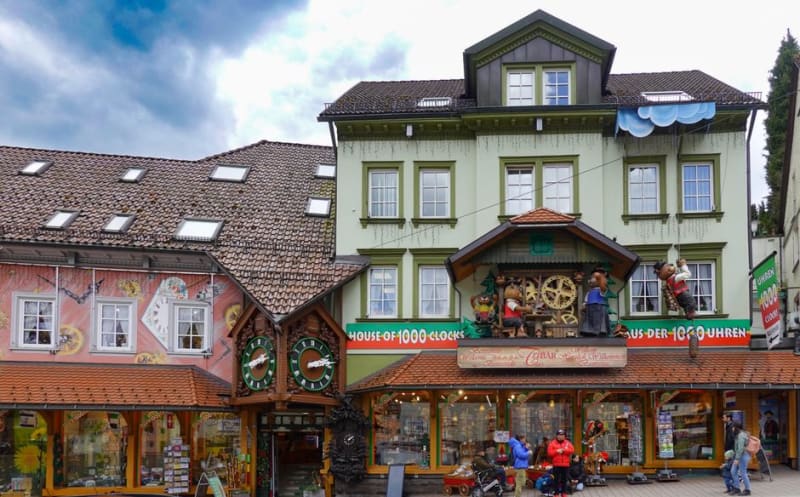 black-forest
Furtwangen and the German Clock Museum
A small university town in the Black Forest where 8,000 timepieces trace two centuries of obsessive craftsmanship.
Explore black-forest
Gengenbach
A medieval wine town in the Kinzig valley so well-preserved it looks like the eighteenth century simply forgot to end here.
Explore black-forest
Sasbachwalden
A flower-box village in the Ortenau wine country where traditional Black Forest architecture and serious Pinot Noir share the same hillside.
Explore black-forest
Schiltach
A half-timbered medieval town wedged so tightly into a river valley that the buildings seem to lean together for warmth.
Explore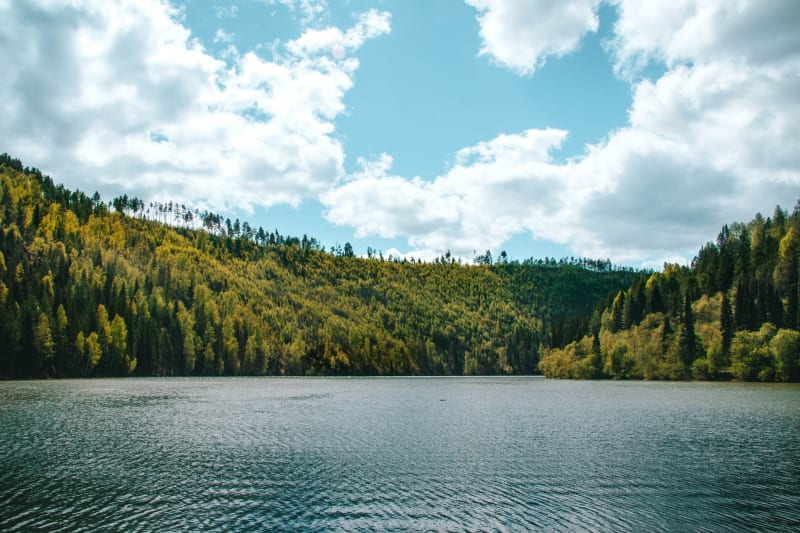 black-forest
Schluchsee
The largest lake in the Black Forest, a high reservoir of cold dark water ringed by spruce, where Germans swim, sail, and walk with a thoroughness that I came to genuinely admire.
Explore black-forest
Titisee
A glacial lake so still at dawn it looks like a mirror that the forest is using to check its reflection.
Explore black-forest
Todtnau
A small mountain town at the foot of the Feldberg that most people drive through on the way to somewhere else, which is their loss entirely.
Explore black-forest
Triberg
Germany's highest waterfalls and the world capital of cuckoo clocks — a place that earns its tourist reputation by actually delivering.
Explore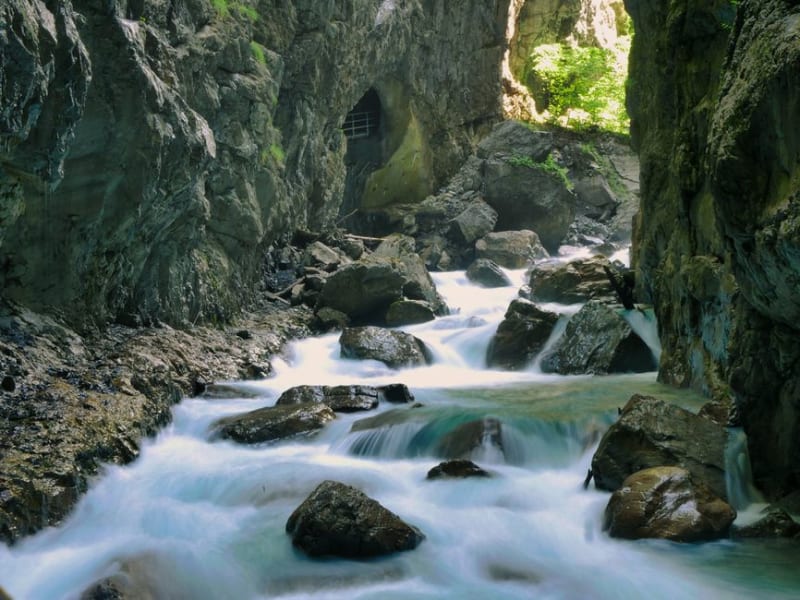 black-forest
Wutachschlucht (Wutach Gorge)
A 30-kilometer wild river gorge where waterfalls, orchids, and a ruined castle sit inside one of Germany's oldest nature reserves.
Explore