
Maó
"Gin on ice at noon in a harbor that once served the entire British Mediterranean fleet — context changes everything."
Menorca's capital above the deepest natural harbor in the Mediterranean, where the British left behind a gin tradition the island has not seen fit to abandon.

The harbor at Maó is so large it takes a moment to understand what you’re looking at. Seven kilometers long and anywhere from a hundred to five hundred meters wide, cut deep into the limestone so that the battleships of the eighteenth-century British Mediterranean fleet could anchor here in full confidence. They stayed for seventy years, from 1708 to 1782, long enough to change the island’s drinking habits permanently. The Xoriguer gin distillery, operating on the waterfront since the 1700s, still uses the same copper pot stills and the same juniper-forward recipe they developed for the British sailors who needed something to drink while they waited for orders. I tried it neat at the distillery bar at eleven in the morning, which felt appropriate and also quite strong.
The city sits on a limestone escarpment above the port, and the view from the top — from the Plaça de la Constitució or from the ramparts on the eastern edge of town — is one of those panoramas that rearranges your sense of scale. The harbor stretches away under the afternoon light, the water shifting between deep blue and green depending on the depth, and on the far side the countryside runs flat and green to the horizon. There are no mountains on Menorca, which after Mallorca feels like a sudden pressure release. The island breathes differently here.

The market in the Plaça Espanya has been running on Tuesday and Saturday mornings since anyone can remember, and it sells what the island produces with an efficiency that suggests the vendors don’t need to try hard to move their stock. Cheeses — mahón cheese, which gets its name from this city and has a particular saltiness from the milk of cows that graze on sea-wind-battered grass — come in wheels that the vendors cut to order. Local almonds. Honey that is seriously good. I bought more of everything than I could carry sensibly and had to reorganize my bag on a bench in the square.
The British left more than gin. The Georgian houses on some of the upper streets — Carrer de ses Moreres, Carrer d’Isabel II — have sash windows, that particular characteristic British architectural element, appearing in a Mediterranean setting with an incongruity that should be jarring and somehow isn’t. The city absorbed the influence and continued. You find this throughout the harbor area, where warehouse architecture mixes styles across three centuries of competing occupations with a casualness that suggests the city has long since stopped being surprised by its own history.

The caldereta de llagosta — Menorca’s lobster stew — can be found at restaurants along the port quay at prices that require you to commit in advance. Order it with a half-bottle of local white wine and no plans for the afternoon. The stew takes time to deliver and more time to finish, and rushing either feels like a category error.
When to go: May through June and September through November. The market runs year-round on Tuesday and Saturday mornings. The gin distillery is open for visits most of the year — call ahead in January and February. The harbor is beautiful in winter storms, when the wind comes off the sea and the water turns gray-green and dramatic, and the cafes around the port fill with locals who have nowhere else to be.
Keep exploring
More from Balearic Islands
 balearic-islands
Palma de Mallorca
The Balearics' only real city — a Gothic cathedral, market stalls heaving with sobrassada, and a waterfront finally reclaimed from the traffic.
Explore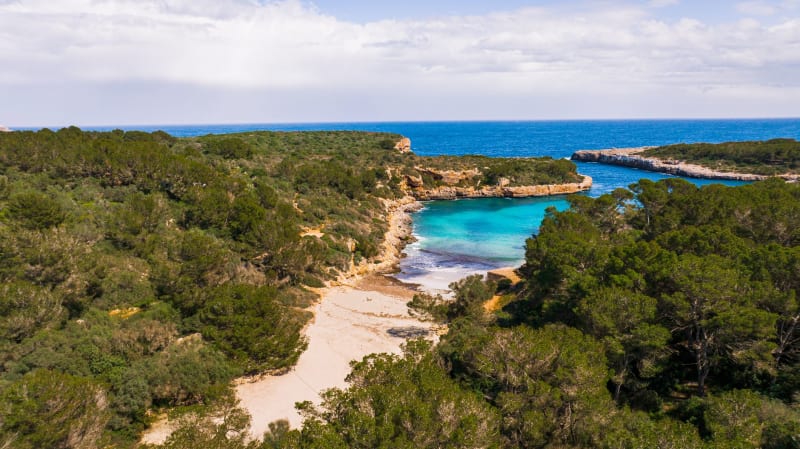 balearic-islands
Sant Joan de Labritja
The rural north of Ibiza — whitewashed fortified churches, red-earth tracks, and the island's best hippy market still run by the people who invented it.
Explore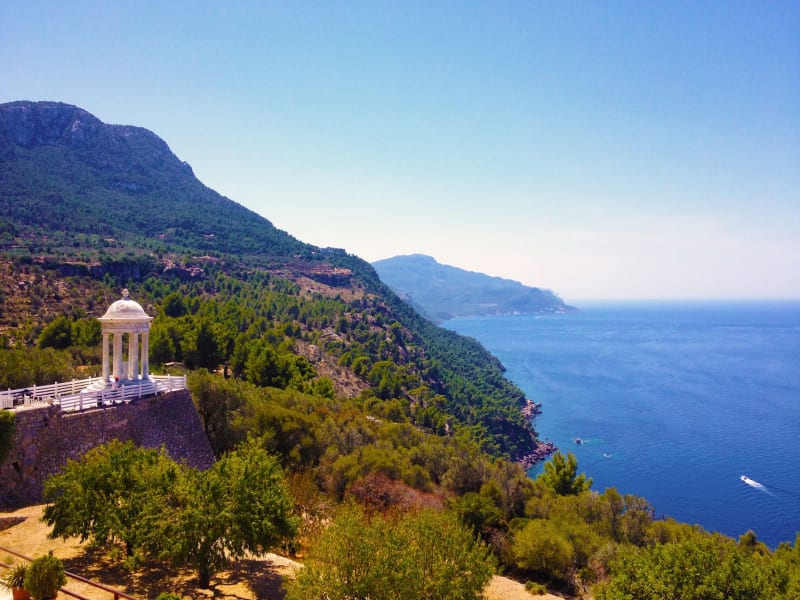 balearic-islands
Sóller
An orange-growing valley town in the Tramuntana, connected to Palma by a 1912 wooden train that is not a tourist attraction but a functioning line.
Explore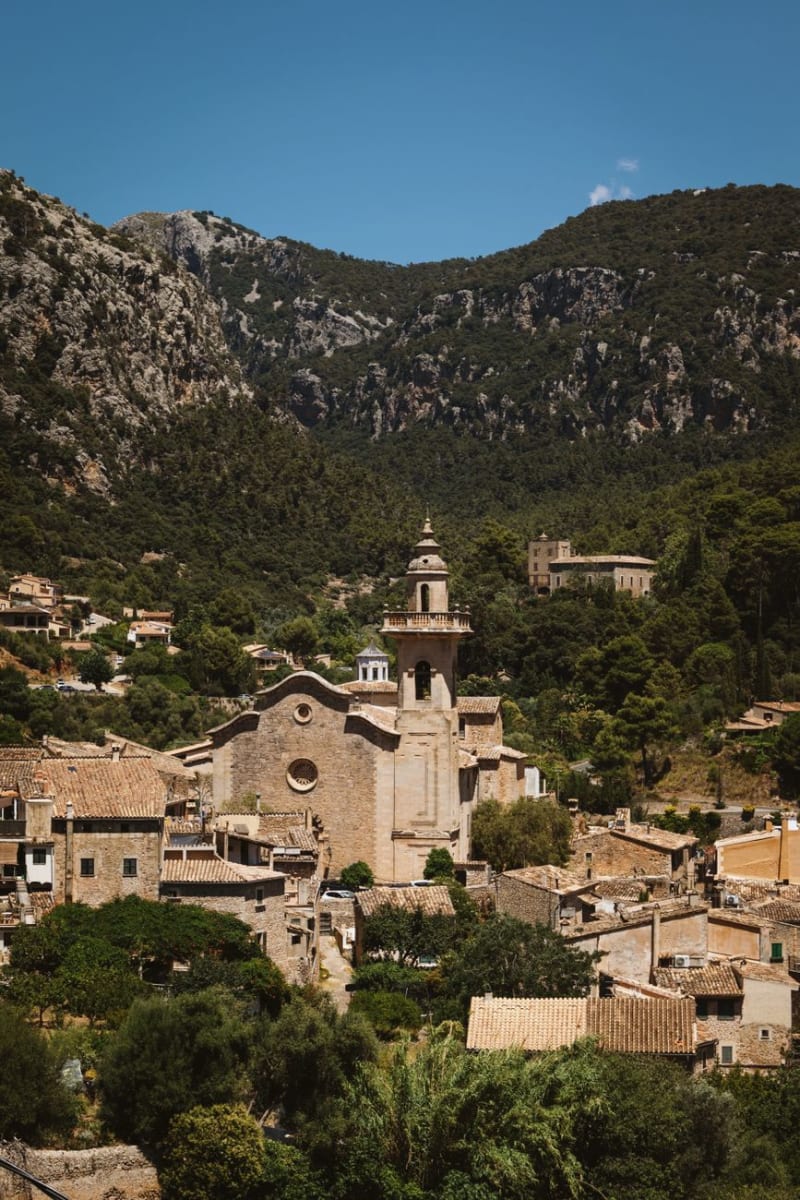 balearic-islands
Valldemossa
A honey-stoned mountain village in Mallorca's Tramuntana, where Chopin spent one miserable, immortal winter.
Explore balearic-islands
Alcúdia
A walled Mallorcan town where Roman ruins, medieval gates, and a wetland reserve sit quietly behind the resort strip's noise.
Explore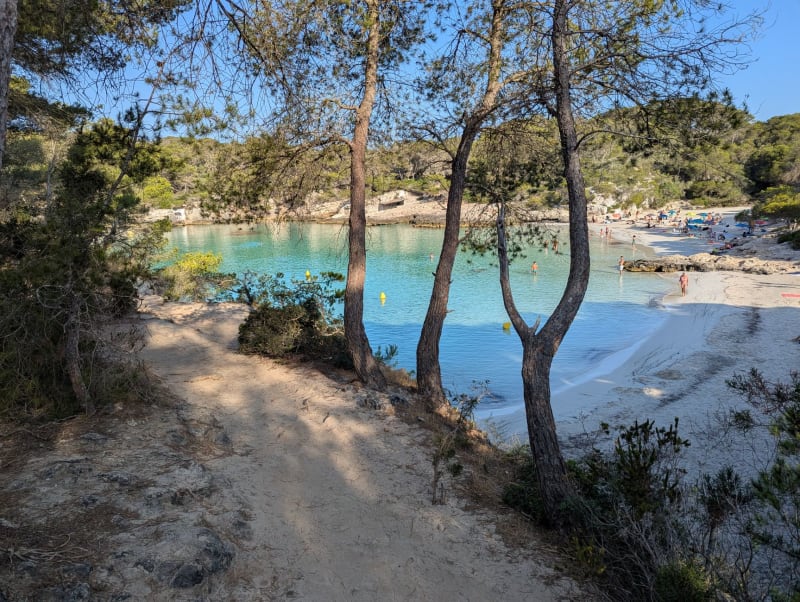 balearic-islands
Cala Macarella
The cove on Menorca's south coast that all the photographs don't quite prepare you for — turquoise, limestone, pine, and no road that can drive you there directly.
Explore