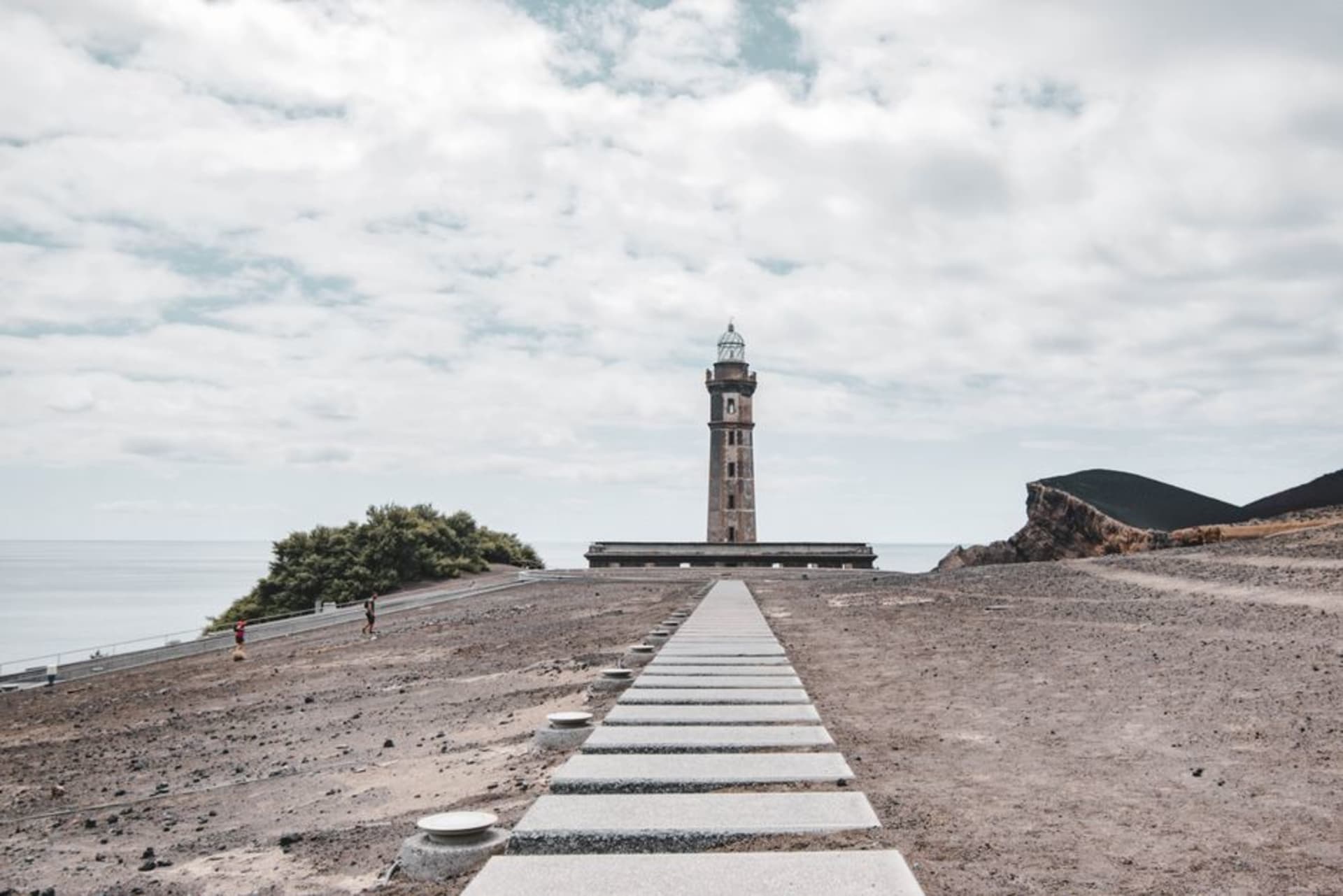
Capelinhos Volcano
"Lia asked me what planet we were on, and honestly, standing on that ash field, I didn't have a great answer."
A gray lunar landscape on Faial's western tip, born from a thirteen-month eruption that buried a lighthouse and a village in ash.

Faial had been all green hills and blue hydrangea hedges for two days when we drove out to Capelinhos, and the landscape just stops being Azorean about a kilometer before you get there. It goes gray, then grayer, then you’re standing on what looks like the surface of the moon with the Atlantic slamming into it. The eruption happened between 1957 and 1958 — thirteen months of a new volcano building itself out of the sea, adding roughly two and a half square kilometers to the island and burying the old Capelinhos lighthouse up to its lantern room in ash and pumice.
I’d read about it before we went, but nothing prepares you for actually seeing that lighthouse half-swallowed by its own foundation, tilted slightly, still standing sentinel over a landscape that erased the village around it. Almost 2,000 people left Faial for good after the eruption, many resettling in the US under a special immigration act Congress passed because of the disaster — which is a strange thing to think about while walking across ash that’s still, seventy years later, barely holding a scrub of vegetation.
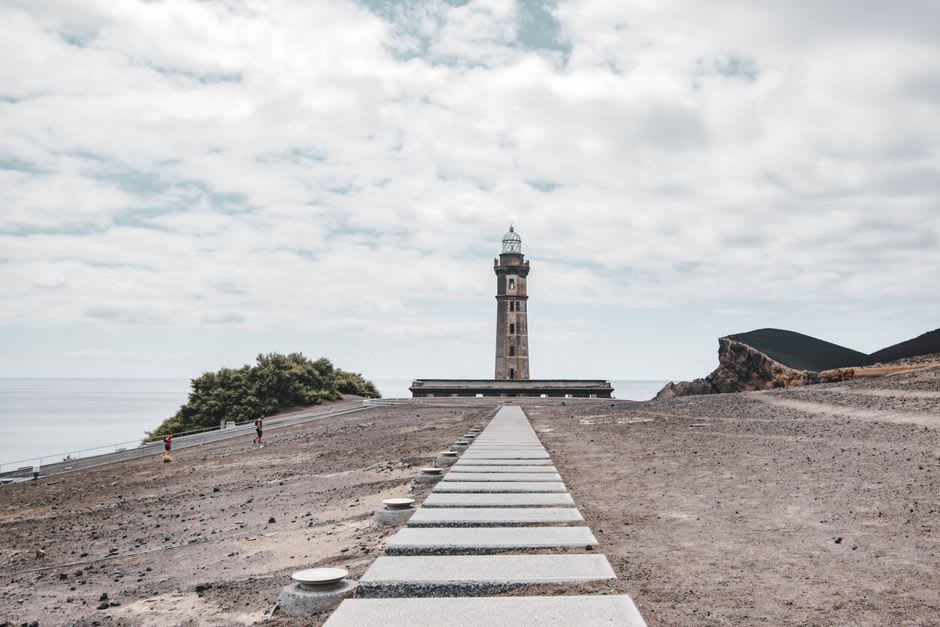
There’s an interpretive center built mostly underground now, which I was skeptical of walking in — these things can go either way — but it turned out to be one of the better volcano museums I’ve seen, tracing the eruption almost day by day through old photographs and seismograph readings, and ending with a walkway that pushes you right back out onto the ash plain so the transition from museum to reality is immediate. We spent close to an hour just walking the black sand and pumice fields afterward, picking up chunks of the lightweight volcanic rock that still floats if you throw it in water, which Lia tested about six times because she didn’t believe me the first five.

What stuck with me longest wasn’t the destruction, honestly, it was the quiet. No birds nesting yet in most of the ash zone, no real soil, just wind and surf and this feeling of standing somewhere genuinely new, geologically speaking, younger than my own parents.
When to go: Visit on a clear afternoon when the low sun turns the ash gold-gray and cuts the lighthouse’s shadow long across the plain; the site is exposed and windy year-round, so bring a proper jacket even in summer.
Keep exploring
More from Azores
 azores
Corvo Island
Europe's smallest municipality — one village, one road, one volcanic crater, and a quiet so complete it resets something in you.
Explore azores
Faial Island
The blue island of the Azores — hydrangeas, a marina full of Atlantic crossers, and a volcanic crater that swallowed a village in 1957.
Explore azores
Flores Island
The westernmost point of Europe, where waterfalls fall directly into the ocean and the continent feels like a rumour.
Explore azores
Furnas
A thermal valley where the earth cooks your lunch and the sulphur gets into everything, including your idea of what a landscape should be.
Explore azores
Graciosa Island
The pale island — whitewashed windmills, calm seas, and a thermal cave so strange it was used as a wine cellar for a century.
Explore azores
Lagoa do Fogo
São Miguel's highest crater lake, hidden in cloud most of the day, and heartbreakingly clear when it finally shows itself.
Explore