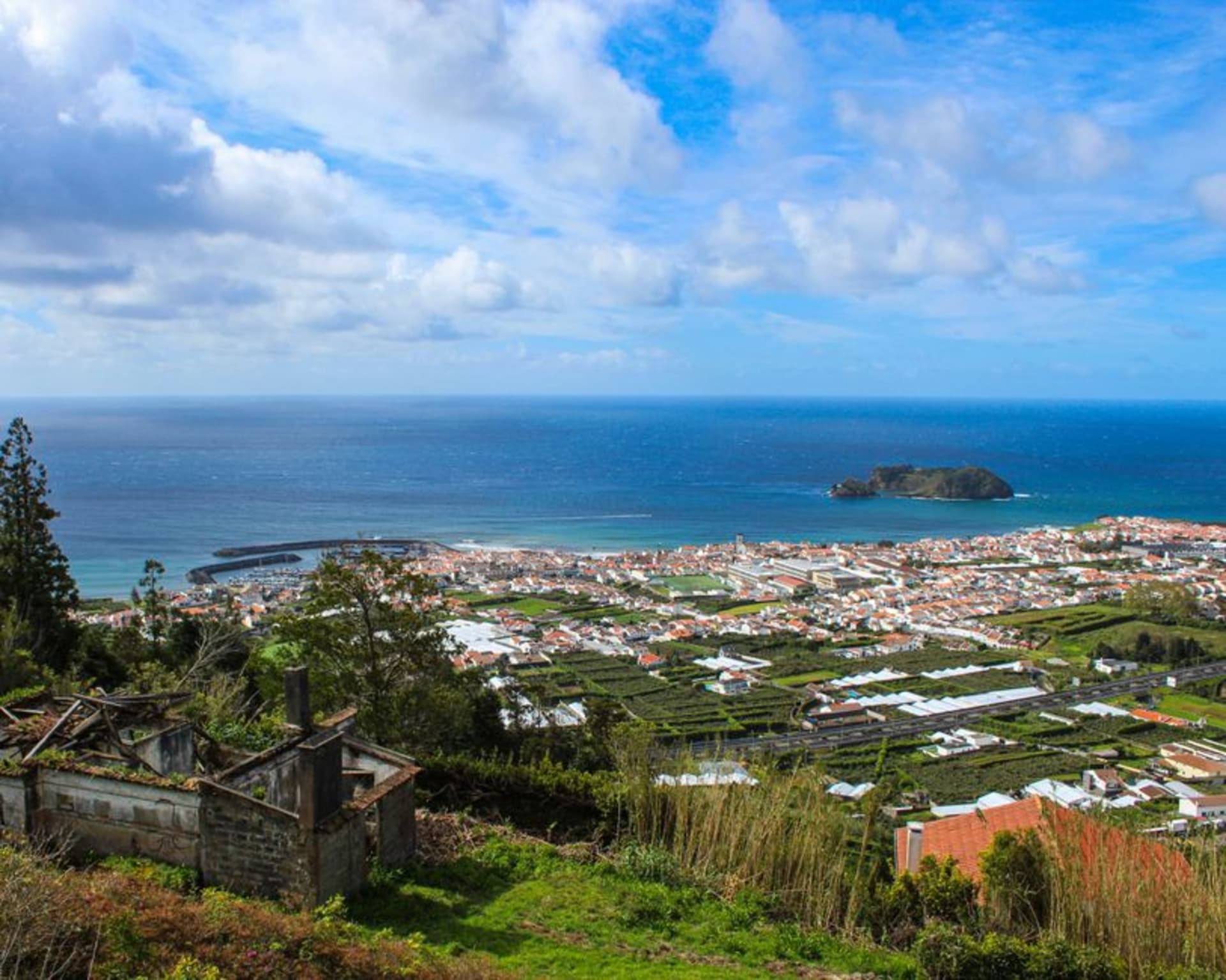
Angra do Heroismo
"I stood on the Monte Brasil ramparts at sunset and realized half of Portugal's colonial fleet once anchored right below where I was standing."
A UNESCO-listed harbor capital on Terceira where black basalt buildings and pastel facades still remember four centuries of Atlantic crossings.

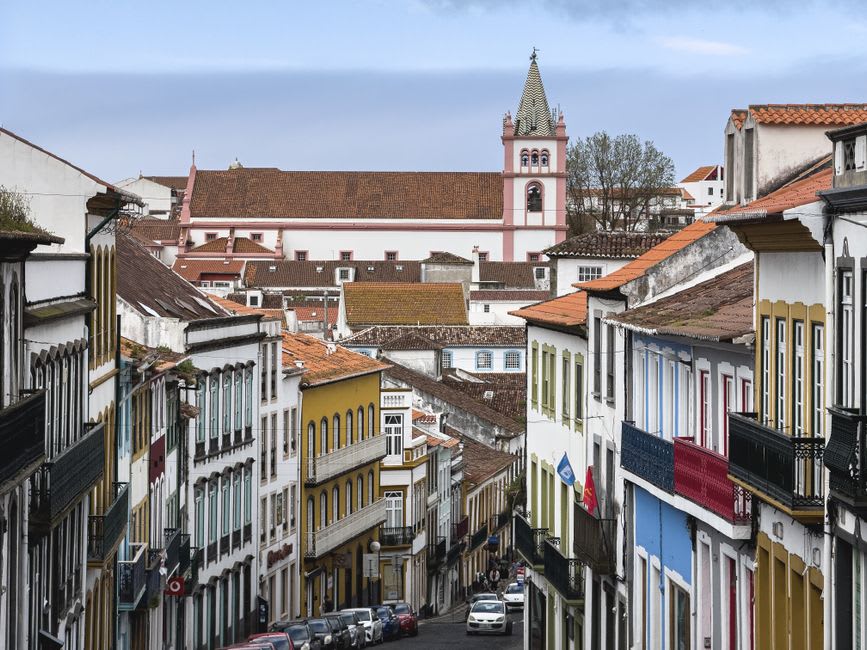
Lia and I landed in Terceira without much of a plan, which is usually how our best stops happen. Angra do Heroismo wasn’t even the reason we booked the flight — Sao Miguel was — but a friend in Ponta Delgada told us we’d be idiots to skip it, and for once someone’s travel advice didn’t oversell the place. We walked in from the marina at dusk, and the town just sort of unfolded: black volcanic stone underfoot, whitewashed walls the color of old cream, window frames painted in that faded ochre and blue you only really see in the Azores and maybe parts of Bahia.
What got me first was how seriously this small town takes its own history without turning it into a theme park. Angra was the obligatory stopover for ships crossing the Atlantic for something like three hundred years — Columbus supposedly put in here, Vasco da Gama’s fleet touched land nearby — and UNESCO listed the historic center back in 1983, partly because a 1980 earthquake nearly flattened it and the rebuild was done with real care instead of concrete shortcuts. You feel that restraint everywhere: no garish signage, no fast-food chains muscling into the main square, just churches, a scattering of good bakeries, and old merchant houses that clearly used to matter.
We climbed Monte Brasil on our second morning, which is technically an extinct volcanic cone but functions as the town’s green lung — free-roaming deer, walking trails, and at the top, the star-shaped Sao Joao Baptista fortress that the Spanish built in the 1590s when they briefly controlled Portugal and needed to guard the harbor from English and French raiders. From up there the whole bay opens out, and you can actually trace the old shipping lanes with your eyes, imagining caravels queuing to take on fresh water before the long haul to the Americas or back to Lisbon. Lia pointed out that it’s one of the few places we’ve been where the view explains the history instead of the other way around.
Dinner both nights was simple and cheap in a way that made me a little suspicious of every overpriced restaurant we’ve eaten at since — grilled limpets with garlic butter, a bottle of Terceira’s slightly funky local wine, and a waiter who seemed genuinely confused that we wanted the bill quickly instead of lingering. That, more than the fortress or the cathedral, is what I think about when Angra comes up: a town that isn’t performing for tourists, that still runs on its own clock.
When to go: Late spring through early autumn (May-September) brings the calmest Atlantic weather and the best chance of clear views from Monte Brasil; June’s Sanjoaninas festival fills the streets with music if you want the town at full volume.
Keep exploring
More from Azores
 azores
Caldeira Velha
A warm volcanic waterfall and mineral pool tucked into fern-covered forest on Sao Miguel's flanks near Lagoa do Fogo.
Explore azores
Capelinhos Volcano
A gray lunar landscape on Faial's western tip, born from a thirteen-month eruption that buried a lighthouse and a village in ash.
Explore azores
Corvo Island
Europe's smallest municipality — one village, one road, one volcanic crater, and a quiet so complete it resets something in you.
Explore azores
Faial Island
The blue island of the Azores — hydrangeas, a marina full of Atlantic crossers, and a volcanic crater that swallowed a village in 1957.
Explore azores
Flores Island
The westernmost point of Europe, where waterfalls fall directly into the ocean and the continent feels like a rumour.
Explore azores
Furnas
A thermal valley where the earth cooks your lunch and the sulphur gets into everything, including your idea of what a landscape should be.
Explore