
Caldeira Velha
"I slid into water warmer than the air around us, under ferns dripping with condensation, and forgot for a second that this was a normal Tuesday."
A warm volcanic waterfall and mineral pool tucked into fern-covered forest on Sao Miguel's flanks near Lagoa do Fogo.

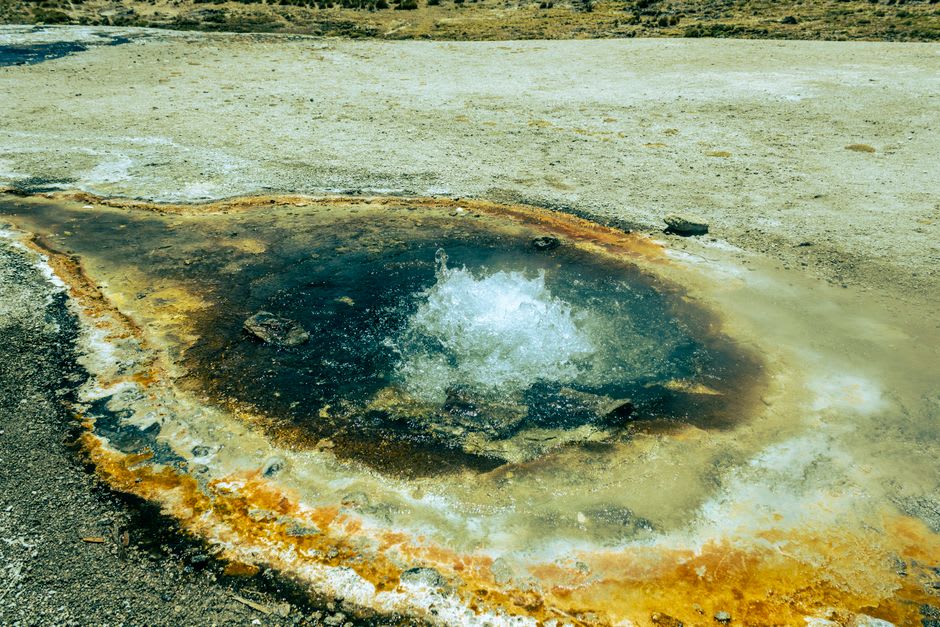
We almost drove past Caldeira Velha without stopping, which in hindsight would have been a genuine mistake. It’s a small roadside stop on the way up toward Lagoa do Fogo, easy to underestimate from the parking lot, but the path in drops you almost immediately into a different climate — dense fern cover, moss on every surface, the air suddenly thick and mineral-smelling from the sulfur dissolved in the water. The waterfall itself isn’t huge, maybe four or five meters, but it’s fed by a hot spring, so the pool underneath sits somewhere around 27 to 30 degrees Celsius depending on the day, genuinely warm rather than just “not painfully cold” like most natural swimming spots in the Azores.
Lia got in before I finished taking photos, which is basically always how it goes with us at hot springs, and called back that the rock under her feet was slightly slick with the iron-orange mineral deposits that stain the whole pool bed a rust color. That staining is from dissolved iron in the volcanic water, and it’s part of why the place has this slightly otherworldly look even in photos — the water itself runs a pale, faintly cloudy green-gold, not the postcard turquoise you’d expect, and it’s better for it.
There’s a second, cooler pool a short walk further up that most people skip because the warm one right by the entrance is so easy to just settle into, but we pushed on and had it entirely to ourselves for maybe twenty minutes — no crowd noise, just water moving over rock and birds somewhere up in the canopy. Sao Miguel has bigger, more famous thermal spots, Furnas chief among them, but Caldeira Velha felt smaller in scale and somehow more intimate because of it, less like a facility and more like a spring someone happened to build a changing hut next to.
We stayed until our fingers pruned, got dressed in the small wooden changing rooms, and drove the rest of the way up to Lagoa do Fogo smelling faintly of sulfur for the rest of the afternoon, which Lia found funnier than I did.
When to go: Visit early morning or late afternoon on a weekday to avoid tour-bus crowds; the pools are pleasant year-round since the water’s warmed geothermally, but a cooler day makes the temperature contrast feel even better.
Keep exploring
More from Azores
 azores
Capelinhos Volcano
A gray lunar landscape on Faial's western tip, born from a thirteen-month eruption that buried a lighthouse and a village in ash.
Explore azores
Corvo Island
Europe's smallest municipality — one village, one road, one volcanic crater, and a quiet so complete it resets something in you.
Explore azores
Faial Island
The blue island of the Azores — hydrangeas, a marina full of Atlantic crossers, and a volcanic crater that swallowed a village in 1957.
Explore azores
Flores Island
The westernmost point of Europe, where waterfalls fall directly into the ocean and the continent feels like a rumour.
Explore azores
Furnas
A thermal valley where the earth cooks your lunch and the sulphur gets into everything, including your idea of what a landscape should be.
Explore azores
Graciosa Island
The pale island — whitewashed windmills, calm seas, and a thermal cave so strange it was used as a wine cellar for a century.
Explore