Natural Pool
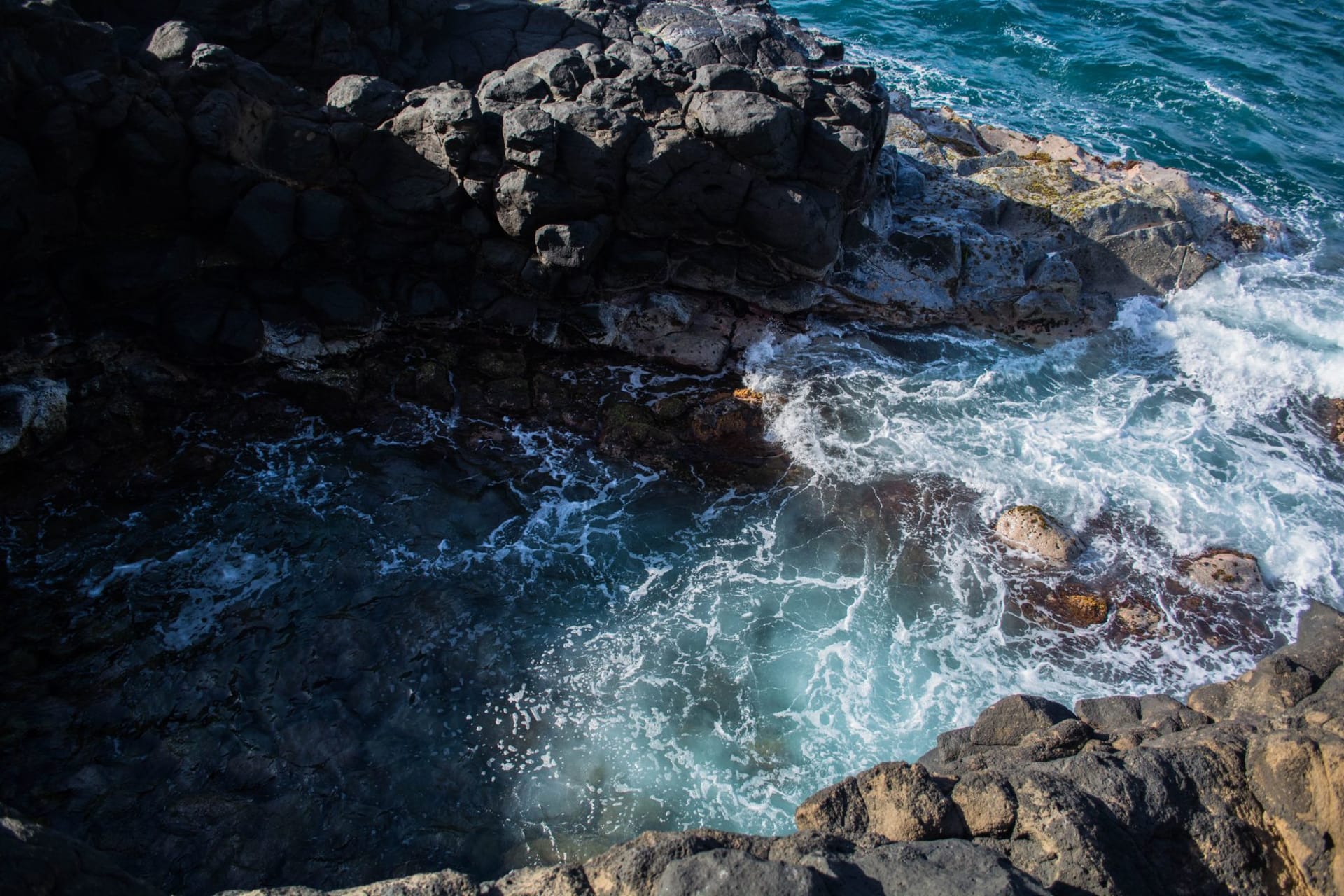
"Inside the rock: still water, blue sky. Outside: the full force of the Atlantic. The wall between them is one meter of basalt."
A geologically improbable circle of calm water carved into volcanic rock while the Atlantic rages three meters away.

I went alone and early, which is the only sensible approach to Conchi — the natural pool on Aruba’s wild northeastern coast, accessible by rough track through the national park or on foot from the coastal trail. I’d rented a Jeep specifically for this morning, having learned from talking to a woman at my guesthouse in Noord that the tours arrive by nine and the pool becomes a different experience — still beautiful, but no longer contemplative. I left before six-thirty with a thermos of coffee and the Jeep’s navigation set to “Arikok National Park entrance” and figured out the rest from there.
The track is genuinely rough. The red-dust road through the park crosses dry riverbeds and loose volcanic rock, and the scrubland on either side is close and thorny. I took it slowly, stopping twice when iguanas crossed the road with the unhurried air of creatures who predate the automobile. The coast appears suddenly — a bluff above the Atlantic, and below it the sound of serious water moving. I parked, walked down a path marked by small cairns, and rounded a shoulder of black rock to find Conchi.

It looks impossible. The Atlantic is building here, waves coming in off the open ocean and hitting the volcanic rock with a sound like controlled explosions — spray lifting ten, fifteen meters sometimes. And inside the basalt wall, separated from that violence by one or two meters of solid rock, is a circular pool of complete calm. The water is clear and aquamarine. A sea urchin was visible on the bottom at one and a half meters depth. I sat on the edge and drank my coffee and waited to feel like I understood the geology. I don’t think I ever did. The fact of this place — that erosion created something protective rather than merely destructive — feels like an exception to how the world usually works.
Swimming in Conchi requires navigating a slippery rock entry — wear water shoes if you have them, and don’t bring anything you can’t afford to lose to the water. Once in, the pool is three to four meters deep at its center, the water faintly brackish from the wave infiltration, and the feeling of swimming in a protected circle while the ocean roars on the other side of the wall is the strangest and best swimming experience Aruba offers. A small green turtle swam with me for perhaps two minutes before finding something more interesting than a Frenchman with bad technique.

The tours arrive by UTV — all-terrain vehicles, caravaning through the park from the main road — and the first convoy appeared at eight fifty-five, around a dozen vehicles with guides narrating through headsets. The pool changes: it’s still the pool, the rock and the water are the same, but the quiet that makes Conchi’s geology feel like something addressed to you personally dissolves into a group experience. Both are legitimate. Mine was better.
The hike is an alternative to driving — approximately 2.5 kilometers from the Arikok Park center through trail marked with yellow arrows, taking about forty-five minutes one way in the morning cool. Hiking in the afternoon heat is genuinely unpleasant and potentially dangerous without significant water reserves.
When to go: The natural pool exists year-round, but December through April brings the clearest water and most manageable track conditions. Aim to arrive at first light — six to seven in the morning — if you want the pool to yourself before the UTV tours begin their circuits. Bring more water than seems necessary; the combined heat and exertion of the track or hike depletes you faster than you expect.
Keep exploring
More from Aruba
 aruba
aruba Noord
A quiet inland district where the island's Catholic heart beats steadily, far from the beach-bar logic of the coast.
Explore aruba
aruba Oranjestad
A small Dutch colonial capital where keshi yena and pastechi coexist with cruise ship crowds who see almost none of it.
Explore aruba
aruba Palm Beach
Aruba's main resort strip — loud, high-rise, and impossible to resist once you surrender to its logic.
Explore aruba
aruba San Nicolas
Aruba's second city and its most honest one — a refinery town turned mural district that doesn't need your approval.
Explore aruba
aruba Savaneta
Aruba's oldest settlement, a quiet fishing village on the south coast that predates Oranjestad and still moves at its own unhurried pace.
Explore aruba
aruba Seroe Colorado
The island's quiet southeastern corner, where a former oil-company town ends and the wild Atlantic coast begins.
Explore