Dubai's Two Cities — The Creek, the Desert, and the Space Between
The Creek at Seven in the Morning
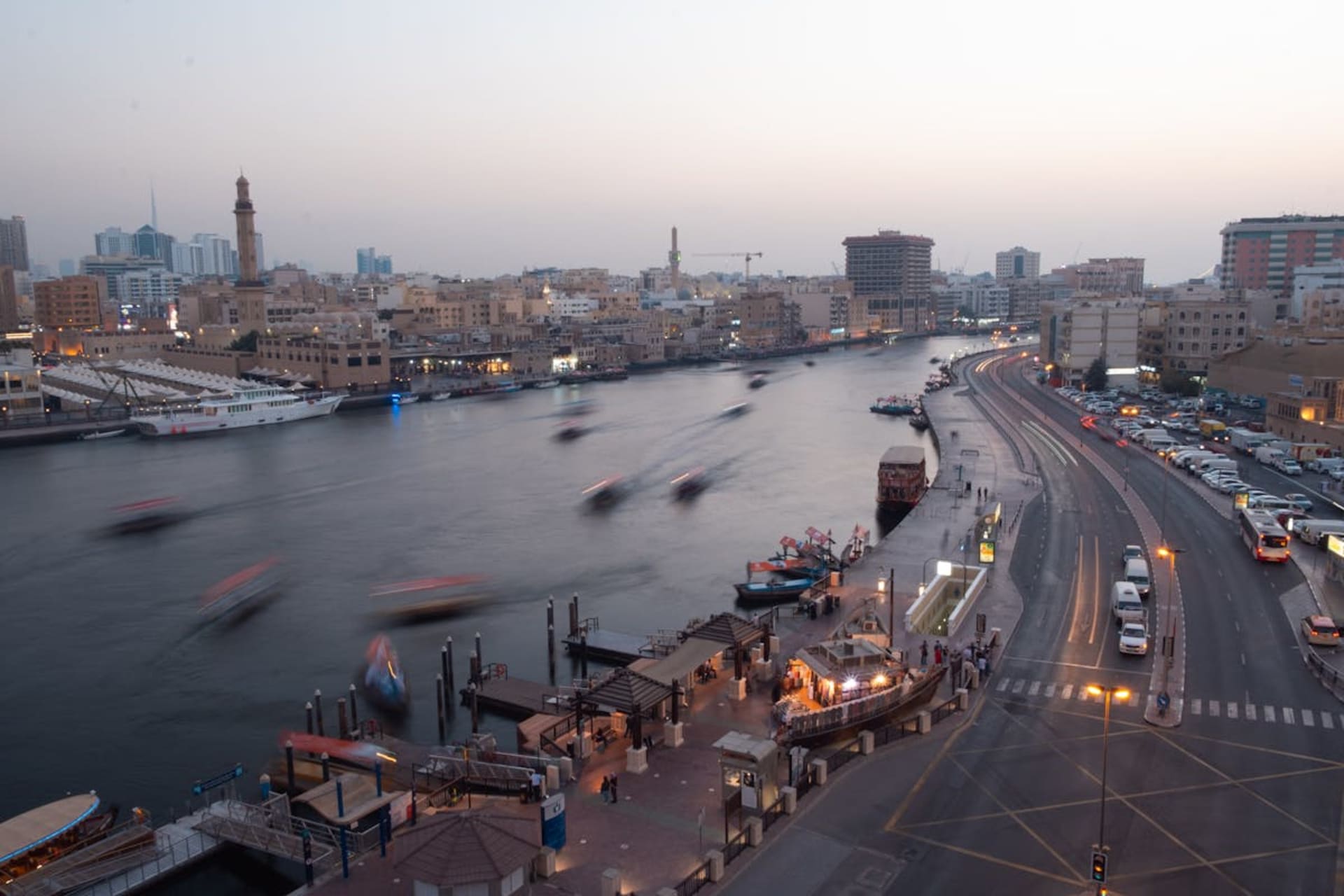
I arrived at the Dubai Creek before the tour groups, before the souk vendors had finished their tea, before the city had decided what version of itself to present. The abra — a wooden water taxi that costs one dirham and takes three minutes — carried me across from Bur Dubai to Deira, and the crossing felt like time travel more than transport. On one side, the old wind-tower houses of the Al Fahidi district, coral stone and teak and courtyard architecture designed to catch whatever breeze the Gulf offers. On the other, the spice souk, where saffron and cardamom and dried lime sit in open sacks and the air smells the way I imagine medieval trading posts smelled — intense, layered, and fundamentally honest about what is being sold.
The Creek is where Dubai began. Before the oil, before the towers, before the Palm Jumeirah was a twinkle in a developer’s eye, this was a trading port — pearls going out, spices and textiles coming in, dhow captains navigating the Gulf by stars and memory. The trade still happens. The dhows moored along the Deira waterfront are loaded with washing machines, electronics, and textiles bound for Iran, Pakistan, East Africa. The loading is done by hand, by men who carry refrigerators on their backs down gangplanks with a casualness that makes you reconsider your complaints about carrying groceries up two flights of stairs.
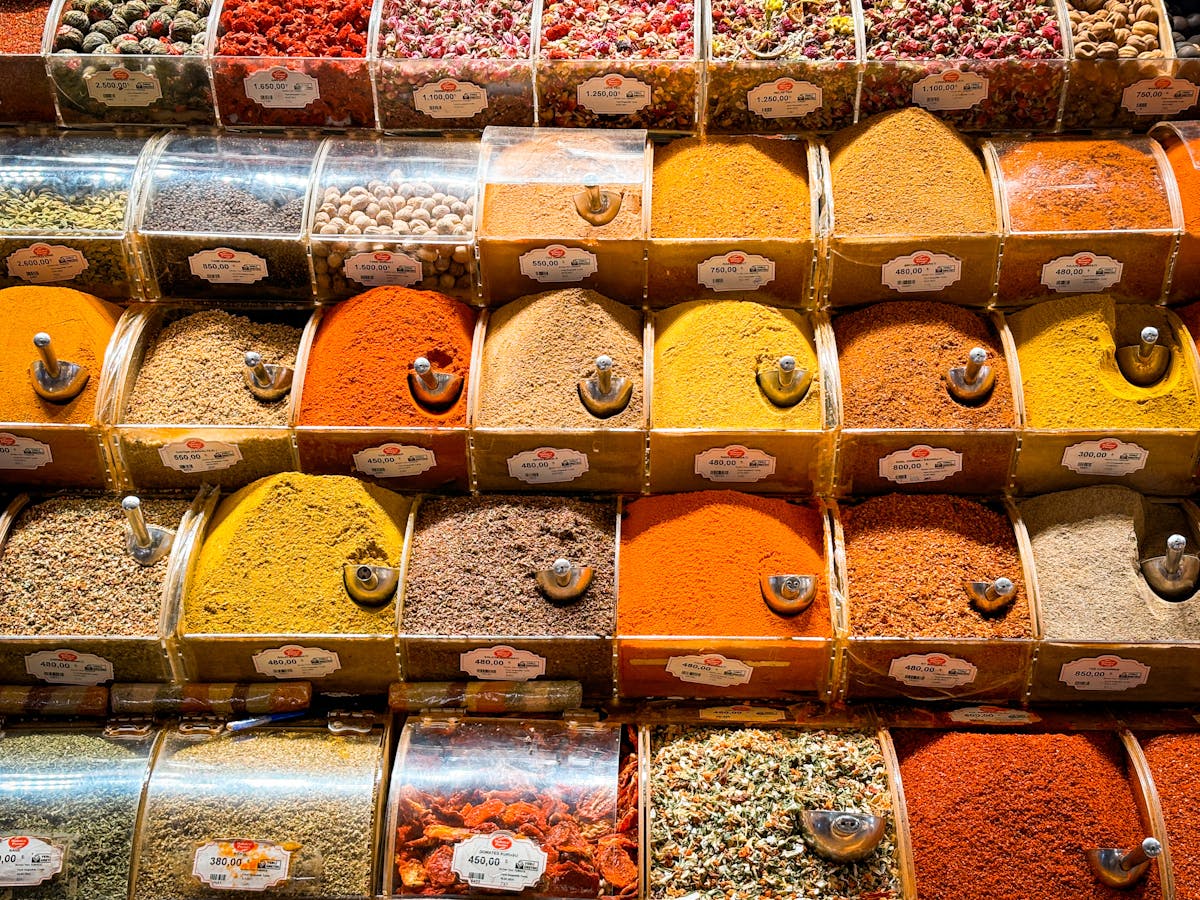
I walked the spice souk slowly, which is the only way to walk it. A vendor named Khalid — Pakistani, twenty years in Dubai, more than half his life — explained the difference between Iranian and Kashmiri saffron with the precision of a sommelier distinguishing Burgundy from Bordeaux. He made me smell both. He was right. The Iranian was more floral, the Kashmiri more earthy. I bought both, because refusing seemed rude and because saffron at souk prices is a gift compared to what it costs in Paris or Mexico City.
The Food Nobody Writes About
The conventional wisdom about Dubai food is that you eat at hotel restaurants and pay accordingly. This is like saying you eat in Paris only at the Ritz. The conventional wisdom is wrong, and it is wrong in a way that costs you both money and experience.
Dubai’s immigrant communities have built one of the great eating cities of the world, and almost nobody outside the city knows it. In Karama — a neighborhood of low-rise apartment buildings and modest shopfronts that looks nothing like the Dubai of the postcards — I ate a chicken biryani at a Pakistani restaurant where the rice was layered with saffron and fried onions and slow-cooked until each grain separated with a fork, and the bill was eighteen dirhams. Five dollars. For what was, without exaggeration, one of the best biryanis I have eaten in my life.
In Satwa, a Lebanese grill called Al Mallah serves shawarma that would hold its own in Beirut — the meat carved from a rotating spit, the garlic sauce made fresh, the bread blistered from a clay oven. The line at lunch extends out the door and into the parking lot. In Bur Dubai, the South Indian dosa counters serve paper-thin crepes filled with spiced potato, accompanied by sambar and coconut chutney, for less than the price of a coffee at the Dubai Mall. I ate three meals a day in these neighborhoods for a week and spent less per day than the cost of a single appetizer at most hotel restaurants.
The secret is not really a secret — every Dubai resident knows these places, every taxi driver can recommend his favorites. The information gap exists only in the travel media, which persists in treating Dubai as a luxury destination and therefore writes only about luxury dining. The city is not a luxury destination. It is a city where luxury exists alongside extraordinary street food, and the street food is better.
Al Fahidi at Dusk
The Al Fahidi Historical District is what Dubai looked like before everything changed, and walking through it at dusk, when the light is amber and the narrow lanes are in shadow and the wind towers catch whatever breeze exists, you understand something about the city that the skyline does not communicate. People lived here. Not in the performative, museum-exhibit sense — though the district now houses galleries and cafes and a boutique hotel — but in the sense that these walls absorbed the heat of Gulf summers and these courtyards hosted conversations and these rooms sheltered families who made their living from the sea.
The wind towers are the detail that stays with me. Before air conditioning — which arrived in the Gulf in the 1960s and changed everything — these towers were the only technology available for cooling interior spaces. They catch the wind above the roofline and funnel it down into the rooms below, creating a draft that lowers the temperature by several degrees. The engineering is simple and elegant, and standing beneath one, feeling the air move, you appreciate the ingenuity of people who built comfort from architecture rather than electricity.
The Coffee Museum in Al Fahidi is a small, lovingly curated space that traces the history of coffee from its Ethiopian origins through the Arab world that gave it its name — qahwa — to the global commodity it became. The Emirati coffee served here is different from anything you have tasted: brewed with cardamom and saffron, poured from a dallah pot into tiny cups, served with dates. It is bitter, fragrant, and ceremonial. The ritual of serving it — the host pours, the guest drinks, the cup is refilled until the guest shakes it to indicate enough — is a social code that has governed hospitality in this region for centuries.
The Desert at Sunset
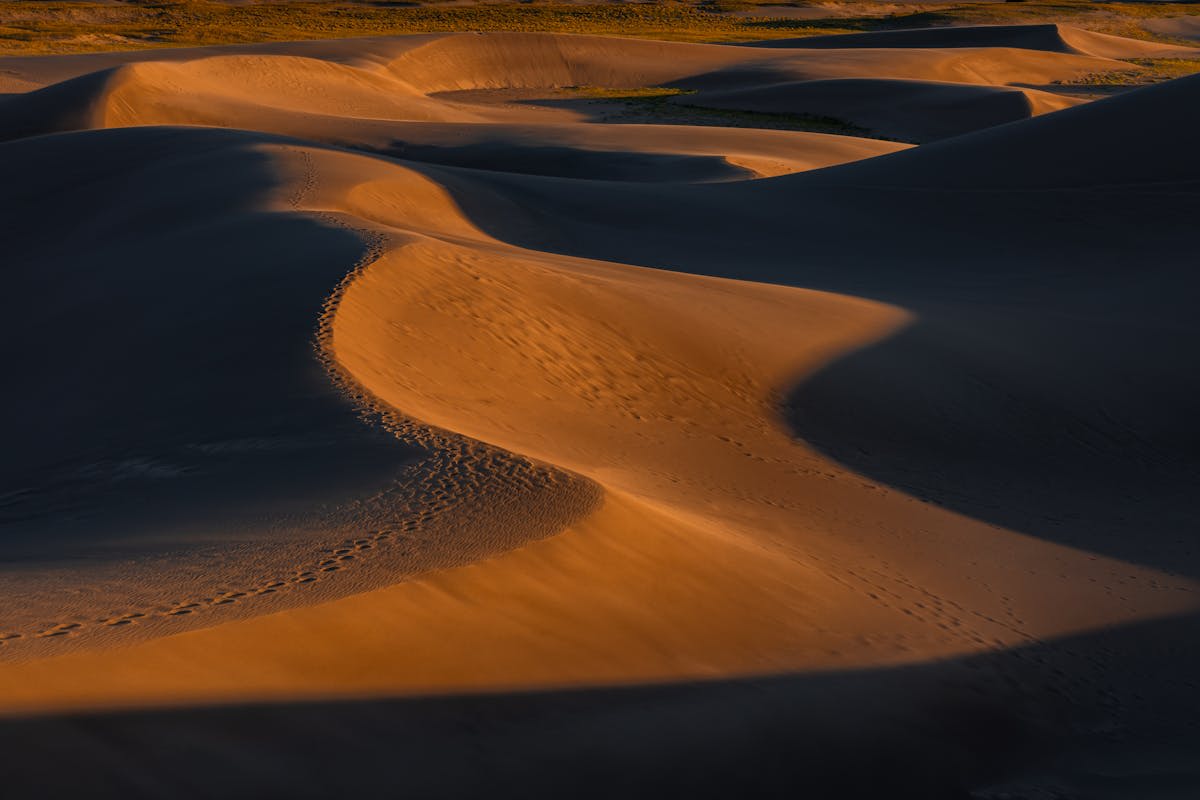
I drove out of Dubai on a Thursday evening, heading south toward the Al Marmoom conservation reserve, and watched the city disappear in the rearview mirror with a speed that still surprises me. Twenty minutes from the last traffic light, the desert begins. Not gradually — abruptly. The asphalt narrows, the sand encroaches, and then you are driving on a track between dunes that glow orange in the low light.
My guide, Mohammed, grew up in Ras Al Khaimah before moving to Dubai for work. He talked about the desert the way my grandfather talked about the Loire Valley — as the place where the real country lives, beneath and beyond the cities. He stopped the truck on a dune ridge and killed the engine, and the silence that settled was the kind of silence that has weight. You feel it in your chest. The dunes stretched to the horizon in every direction, their shadows lengthening as the sun dropped, and the only sound was wind moving sand grain by grain across the surface.
We drove deeper, following tracks that Mohammed read like a language I could not understand — tire marks here, oryx prints there, a snake trail crossing the ridge. He stopped at a camp — not the tourist camps with belly dancers and buffet dinners, but a Bedouin-style setup with carpets on the sand, a fire pit, and a sky that was already filling with stars. He made Arabic coffee on the fire. We sat. He told me about his grandfather, who navigated the desert by stars and by the taste of the sand — different minerals in different regions, identifiable by a practiced tongue. I could not verify this. I believed him.
What the Contrasts Teach You
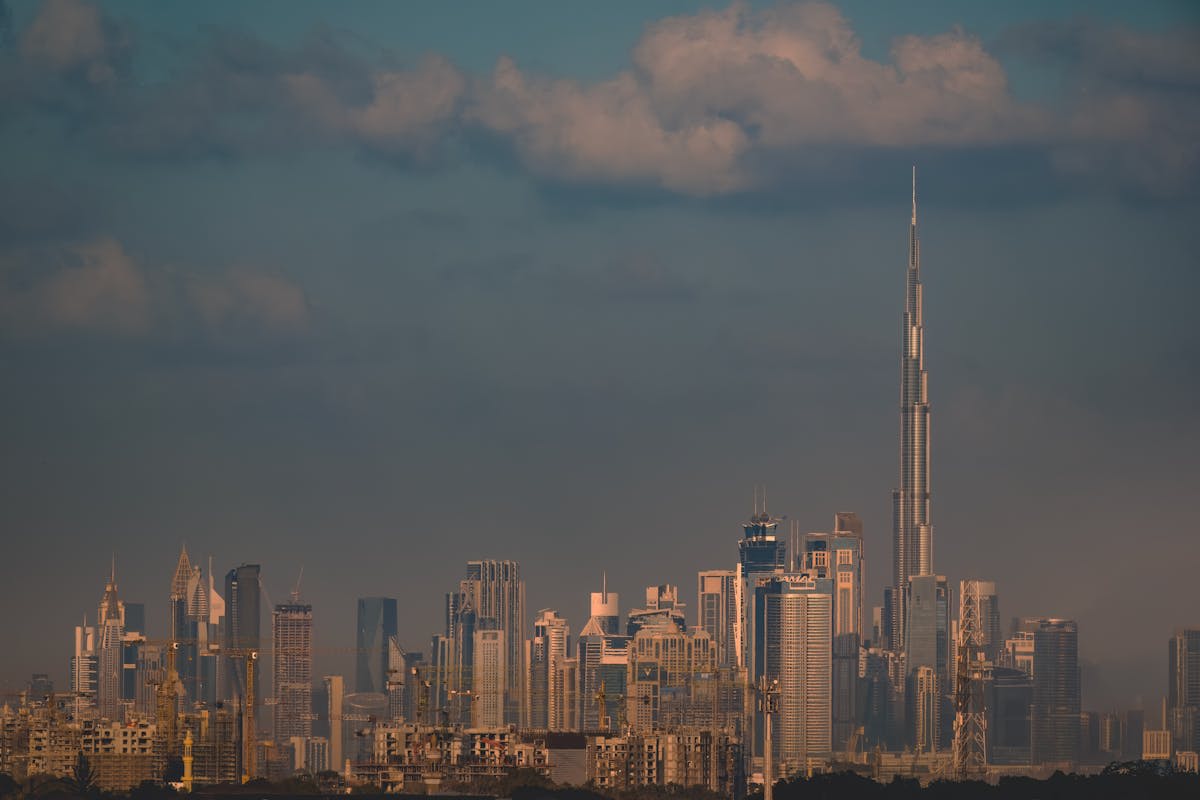
Dubai is a city of contrasts, and I hesitate to write that sentence because it is the most overused observation in travel writing. But the contrasts here are not decorative — they are structural. The Creek and the Marina exist simultaneously, separated by twenty kilometers and several centuries. The Pakistani biryani joint and the Michelin-starred restaurant exist in the same postal code. The wind tower and the Burj Khalifa are both solutions to the same problem — how to live comfortably in a place where the climate is trying to kill you — separated by a hundred years of technology and ambition.
What struck me, after a week of moving between these worlds, is that neither one is more “real” than the other. The Creek is not the authentic Dubai that the towers have replaced. The towers are not the future that has made the Creek irrelevant. Both are happening at the same time, in the same city, and the tension between them is what gives Dubai its particular energy. The city is not confused about its identity. It is holding two identities at once, and doing so with more grace than it gets credit for.
I have lived in Mexico City for four years, and Mexico City does something similar — the Aztec ruins beneath the colonial cathedral beneath the modern skyscrapers, layers of civilization coexisting in the same square kilometer. Dubai does it differently, more deliberately, with more money and less history, but the principle is the same. A city is not one thing. A city is everything it has been and everything it is becoming, and the interesting ones do not hide the seams.
Voyagez avec intention
Guides sélectionnés, destinations paisibles et récits qui valent la peine d'être lus — envoyés quand nous avons quelque chose qui mérite d'être partagé.
Pas de spam. Désabonnement à tout moment.