Walking the Wild Wall -- Jinshanling to Simatai
The Drive Out
The alarm went off at four-thirty, which is not an hour I associate with voluntary activity. But the driver was waiting outside the hotel in the dark, and the plan — hatched over beers the previous evening with a Canadian couple who had done the hike the year before — required an early start. “You want the wall to yourself,” the Canadian had said, with the quiet certainty of someone delivering a medical diagnosis. “Leave Beijing before five. By the time the tour buses arrive at Badaling, you will be alone on the ridgeline at Jinshanling. Different wall, different century, different experience.” He was right about all three.
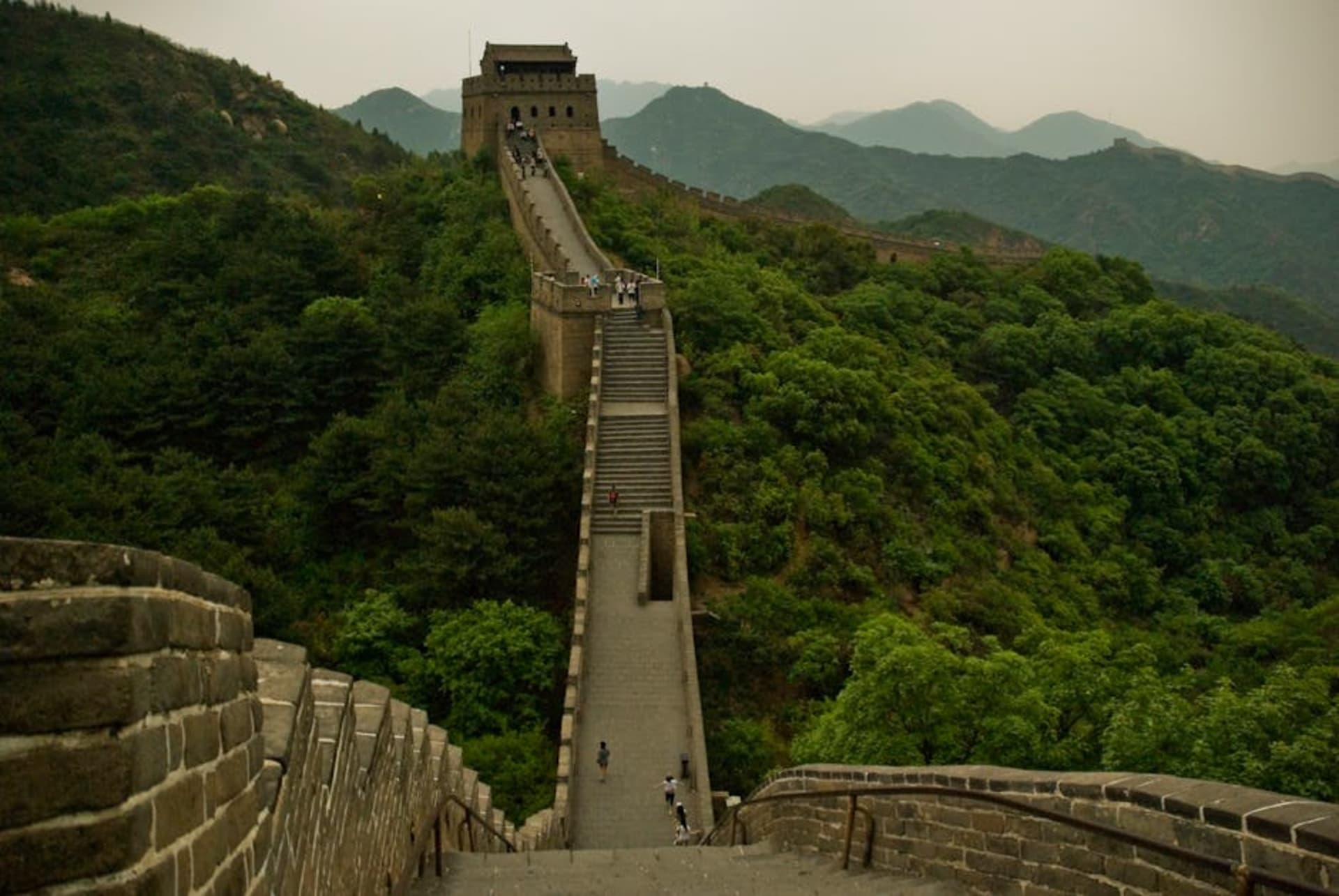
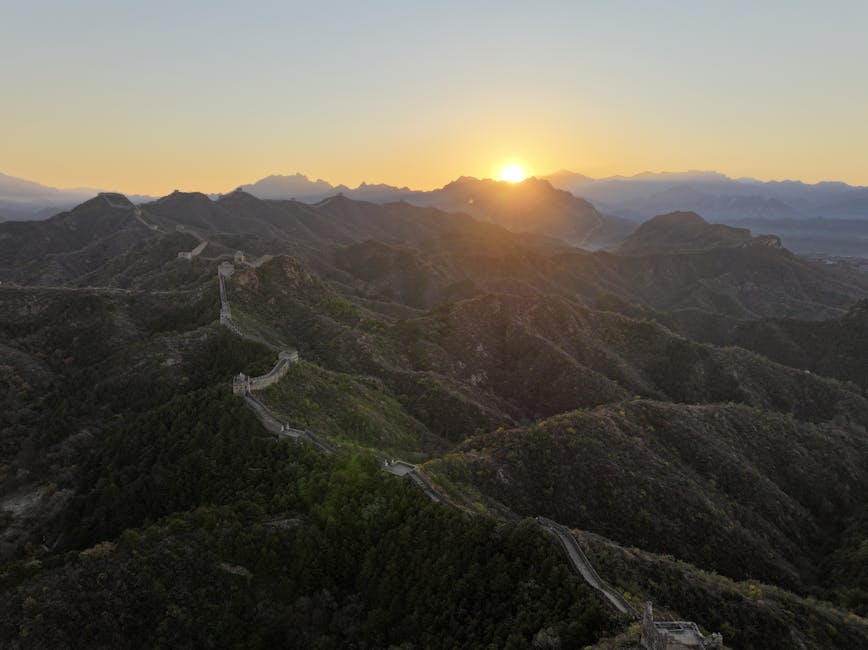
The drive takes two hours northeast from Beijing, through suburbs that give way to countryside that gives way to mountains so suddenly it feels like a scene change in a film. The Great Wall appears on the ridgeline above like a line drawn by someone who refused to accept that mountains should interrupt architecture. It follows the peaks with a stubbornness that is the wall’s defining quality — not beauty, not strength, but stubbornness. Wherever the ridge goes, the wall goes. However steep the climb, however narrow the summit, the builders carried their stones up and laid them along the spine of the earth and dared the centuries to remove them. The centuries have tried. They have not entirely succeeded.
The First Hours
The trailhead at Jinshanling is quiet at seven in the morning. A woman sells bottled water and instant noodles from a stand that looks like it has been there since the Ming Dynasty, though it has probably been there since Tuesday. The entrance fee is modest. The path climbs steeply to the wall, and then you are on it — and the scale hits you like something physical.
The wall here is partially restored, which means the walking surface is uneven but manageable, the watchtowers are mostly intact, and the vegetation is trying — with varying degrees of success — to reclaim the stonework. Wild bushes grow from the crevices. Grass pushes through the mortar. The steps are worn smooth by centuries of soldiers’ feet and, more recently, by hikers’ boots, though not many — I counted eleven people in the first two hours, and most of them were heading in the opposite direction. The solitude is not accidental. Jinshanling is two hours from Beijing, which in a country where most tourists optimize for convenience is enough to filter out ninety percent of visitors. What remains is the wall itself, the mountains, and the particular quality of Chinese morning light that makes stone look warm.
The watchtowers come at intervals — close enough that each one is visible from the last, which was the point. The signal fire system required line-of-sight communication: a garrison spots an approaching army, lights a fire, the next tower sees it and lights its own, and within hours the capital knows. Standing inside one of these towers, looking through the arrow slits toward Mongolia, I tried to imagine the soldier who stood here five hundred years ago, watching the horizon for movement, knowing that his job was to be the first link in a chain of fire that could mobilize an empire. The view has not changed. The horizon is the same. The silence is the same. Only the soldier is gone.
The Ridge
The section between Jinshanling and Simatai is where the wall gets wild. The restoration fades, the steps become irregular, and in places the wall narrows to barely a metre wide with steep drops on either side. This is not dangerous — the stonework is solid, the footing is reasonable if you watch your steps — but it is thrilling in the way that any walk along a ridgeline is thrilling: the awareness that you are on the highest line in the landscape, that the world falls away on both sides, that the path was not built for your comfort but for a military purpose that did not care whether you enjoyed the view.
I enjoyed the view. The mountains roll in every direction, green in spring, and the wall runs along them like a grey thread stitching the peaks together. In some places it climbs so steeply that the “path” is essentially a staircase carved at an angle that would violate building codes in any modern country. In others it dips into saddles where wildflowers grow between the stones and the only sound is wind and birds and the occasional distant engine from a village in the valley below. I stopped at a crumbling watchtower around the midpoint, sat on a stone that had been placed there during the Ming Dynasty, ate a sandwich I had packed at the hotel, and experienced one of those rare travel moments where the internal monologue goes quiet and you are simply present — on a wall, on a mountain, in a country that has been thinking about walls for longer than most civilizations have existed.
The wall does something to your sense of time. Walking along it, touching stones that were laid centuries ago, looking through arrow slits that framed the same mountains they frame today, you begin to understand that this structure is not a relic. It is a continuing argument. The builders said: this ridge is ours, and we will mark it. The centuries said: we will erode you. The wall said: try. And here it is, five hundred years later, still on the ridge, still marking the line, still winning the argument — though the edges are softer now, and the soldiers have been replaced by a French guy eating a ham sandwich and taking photographs.
The Descent
The final section before Simatai has been closed and reopened several times, and the current arrangement involves descending from the wall and walking through a valley before reaching the Simatai section, which has been restored with night lighting and a cable car. The contrast is jarring — from the wild wall’s crumbling authenticity to Simatai’s polished, illuminated version — but not unwelcome. Both are the Great Wall. Both are real. They are simply different centuries of the same idea, and standing at Simatai in the late afternoon, looking back at the ridgeline I had just walked, I could see the wild sections threading through the mountains like a scar that the landscape has decided to keep.
The driver was waiting in the car park. He asked if I was tired. I was exhausted — five hours of walking on uneven stone at altitude will do that — but the exhaustion felt earned in a way that gym exhaustion never does. I slept in the car on the drive back to Beijing, and when I woke, the city’s ring roads and glass towers felt like a different country from the one I had been walking through that morning. Which, in a sense, it was. China contains both: the ancient wall and the modern skyline, the crumbling watchtower and the bullet train, the signal fire and the 5G network. It is a country that has not discarded its past but has built its future on top of it, layer upon layer, dynasty upon dynasty, until the present sits on a foundation so deep that you could spend a lifetime digging and never reach the bottom.
What the Wall Teaches
I have walked trails in Patagonia, in the Atlas Mountains, along the coasts of Portugal and Japan. The Great Wall hike is different from all of them, and the difference is this: on every other trail, you are walking through nature. On the Great Wall, you are walking through a decision. Someone decided that this ridge needed a wall. Someone carried stones up this mountain. Someone laid them in place, built the towers, stationed the soldiers, lit the fires. The trail is not a path through the wilderness — it is a path through human will, and the will in question operated on a scale that is difficult to comprehend even when you are standing on the evidence.
I came down from the wall with sore knees, sunburned forearms, and a recalibrated sense of what human beings are capable of when they commit to an idea and refuse to stop. The Great Wall is not beautiful in the way that a karst landscape or a coral reef is beautiful — it is not natural beauty, not effortless, not given. It is beautiful in the way that any act of enormous, sustained, slightly insane commitment is beautiful. It is a love letter written in stone across ten thousand kilometres, addressed to no one in particular, and signed by a civilization that believed — and continues to believe — that the right response to a mountain is not to go around it but to build on top of it.
Voyagez avec intention
Guides sélectionnés, destinations paisibles et récits qui valent la peine d'être lus — envoyés quand nous avons quelque chose qui mérite d'être partagé.
Pas de spam. Désabonnement à tout moment.