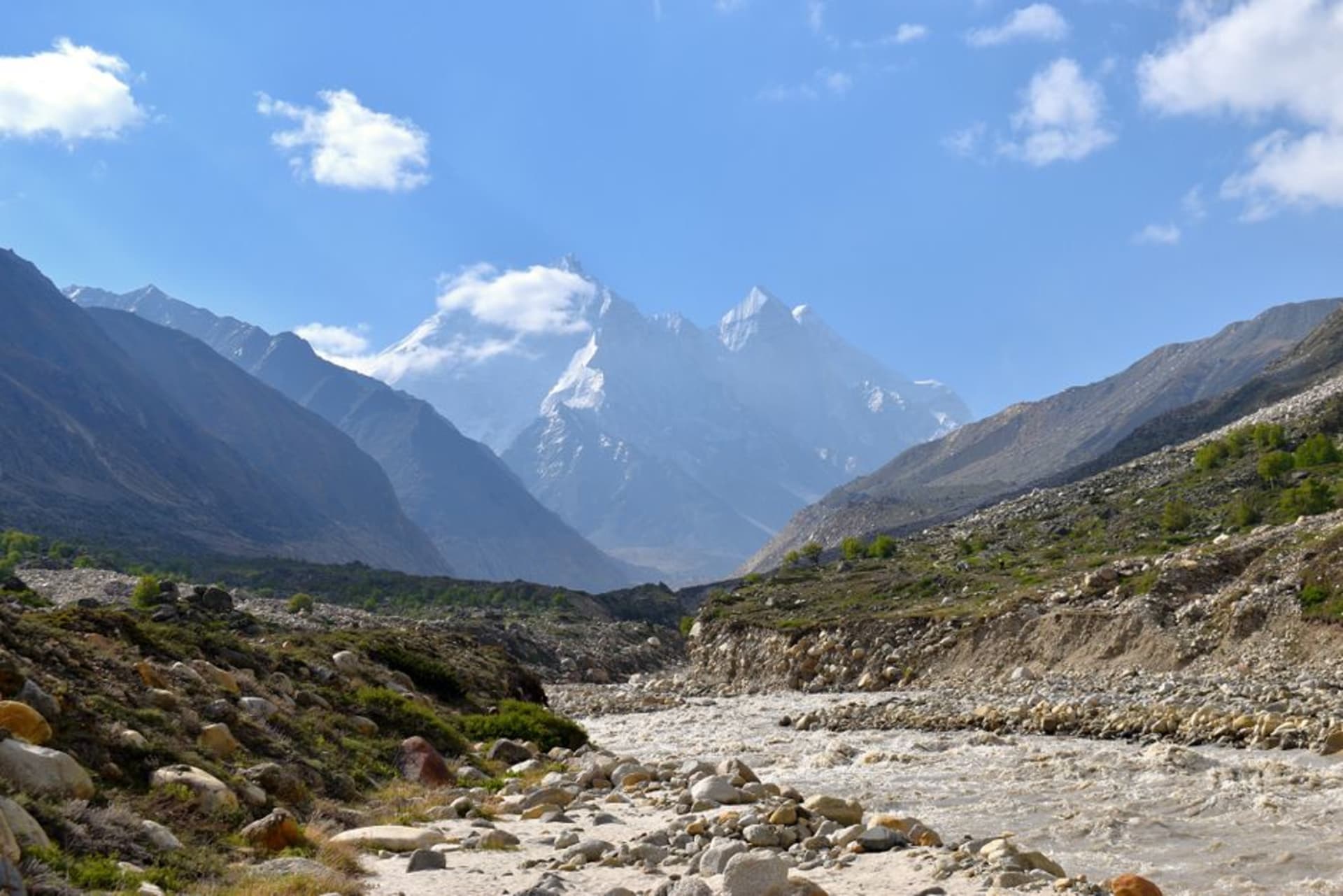
Gangotri
"I stood in the spray of the Bhagirathi at six in the morning, teeth chattering, watching a sadhu bathe like the cold meant nothing to him."
A high-altitude pilgrimage town in the Garhwal Himalayas where the Ganges begins its journey, wrapped in incense smoke and glacial cold.

Lia had wanted to go to Gangotri since before I met her, some half-remembered photo from a guidebook of a temple wedged between rock and river. We finally made it in early October, after the monsoon crowds had thinned and before the road closed for winter, and the town hit me differently than I expected. I’d pictured something more serene. Instead it’s a cluster of guesthouses and dhaba stalls clinging to a ledge above the Bhagirathi, thick with woodsmoke, mule bells, and the low chant of pilgrims queuing for the Ganga aarti at dusk. The 18th-century temple itself, grey stone with a sharp pyramidal roof, is smaller than photos suggest, but the setting does the work — deodar forest on one side, glacier-fed water roaring past on the other, cold enough that my hands ached just filling a bottle from it.
We didn’t have the days or the gear to push on to Gaumukh, the actual glacial snout eighteen kilometers upriver where the Ganges technically begins, and I still feel the small sting of that. Everyone we met in Gangotri — porters, other travelers, the chai-stall owner who kept refilling our glasses without being asked — talked about Gaumukh like it was the real pilgrimage and the temple town just the antechamber. Next time, Lia said, and I believed her, because she’d already started asking a trekking guide about permits before we’d finished our tea.

What stayed with me wasn’t the temple exactly, it was the discipline of the people around it. Elderly pilgrims, some barely able to walk, making the trip up from the plains in buses and shared jeeps just to touch the water once. A man in his eighties dunked himself fully in the river at dawn, came up gasping, and laughed. I asked our guesthouse owner if he ever got used to the cold and he shrugged and said the river doesn’t care how many times you’ve done it. That felt like the honest version of the place — less mystical postcard, more a town that exists purely because water starts here and people need to be near that fact.

The altitude got to me more than I admitted at the time. Gangotri sits above 3,000 meters, and even a short walk to the riverbank left me winded the first evening. Lia handled it better, or pretended to. We ate simple food — dal, rice, aloo sabzi reheated too many times — in a dhaba with a tin roof that rattled whenever the wind picked up off the glacier valley, and slept under three blankets each even in early October. It’s not a comfortable place. I don’t think it’s supposed to be.
When to go: Visit between May and June or September to mid-October, when the road from Uttarkashi is open and the weather is clear; the temple and town close completely from around Diwali to April as the valley snows in.
Keep exploring
More from Uttarakhand
 uttarakhand
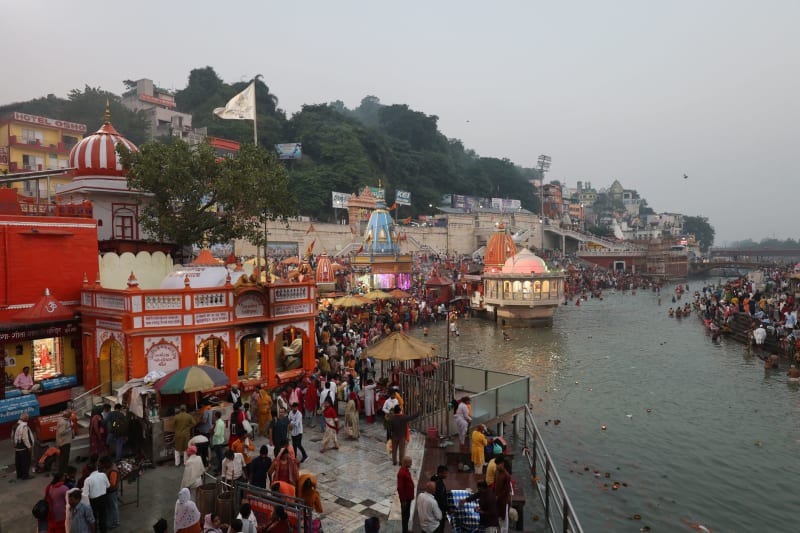
Haridwar
The gateway where the Ganges finally leaves the Himalayas and enters the plains, and where the evening fire ceremony on the river has been performed every single day for centuries without interruption.
Explore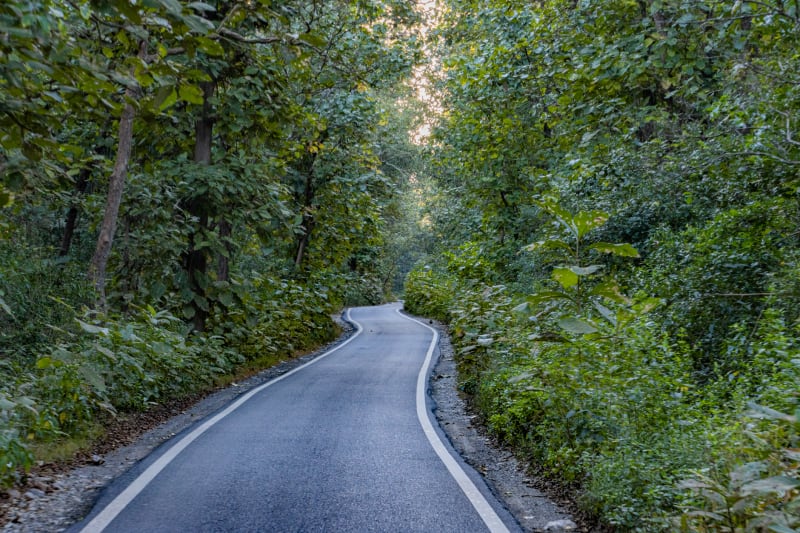 uttarakhand
Jim Corbett National Park
India's oldest national park, where sal forests and river grasslands hold the country's most significant Bengal tiger population and every jeep track feels like a sentence that might end in something large.
Explore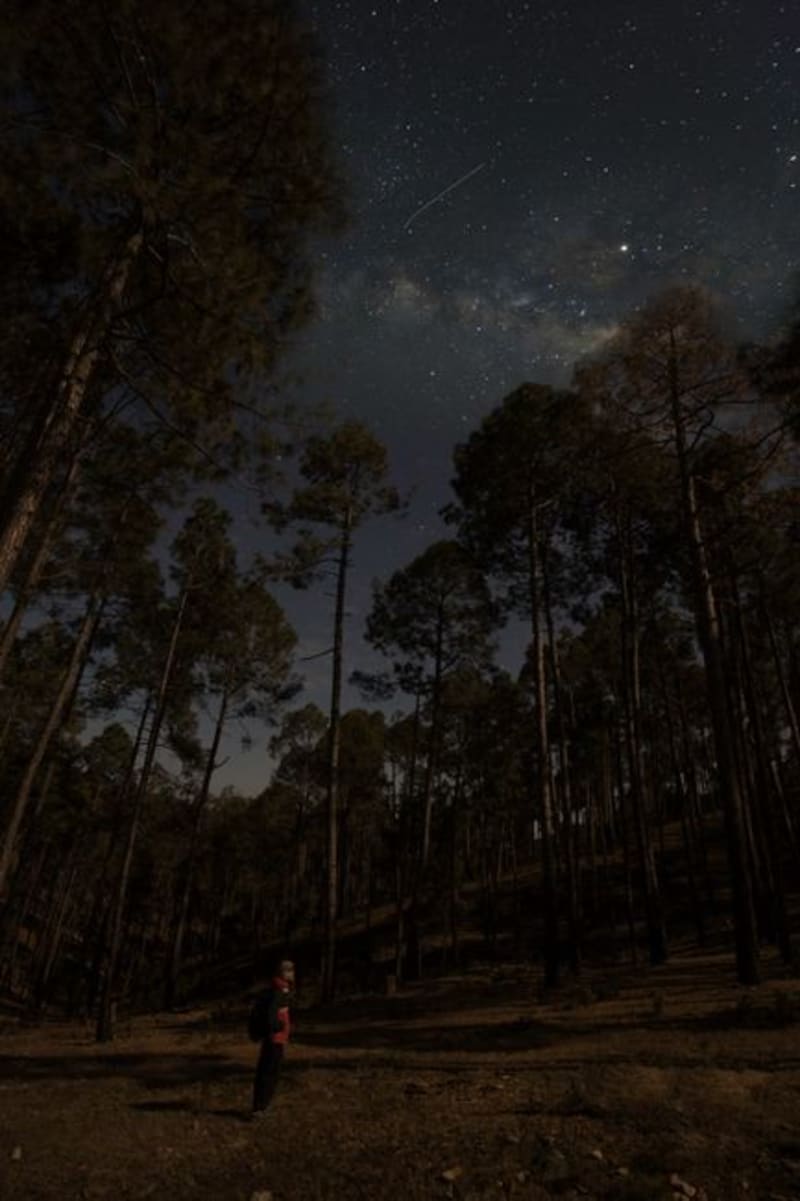 uttarakhand
Kausani
A ridge-top village in Kumaon where a wall of snow peaks fills the horizon and Gandhi once found the quiet to write.
Explore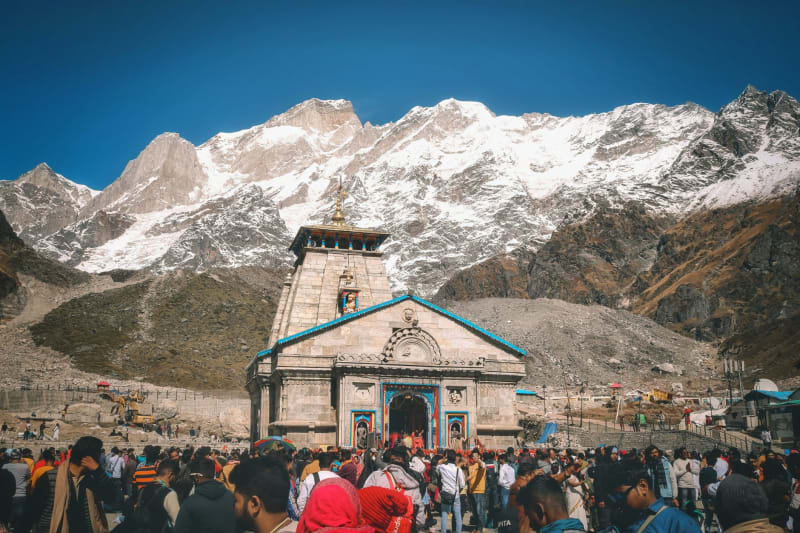 uttarakhand
Kedarnath
A twelfth-century stone temple dedicated to Shiva, standing at 3,583 meters beneath the Kedarnath glacier, reached by a sixteen-kilometer mountain trek walked by hundreds of thousands of pilgrims each season.
Explore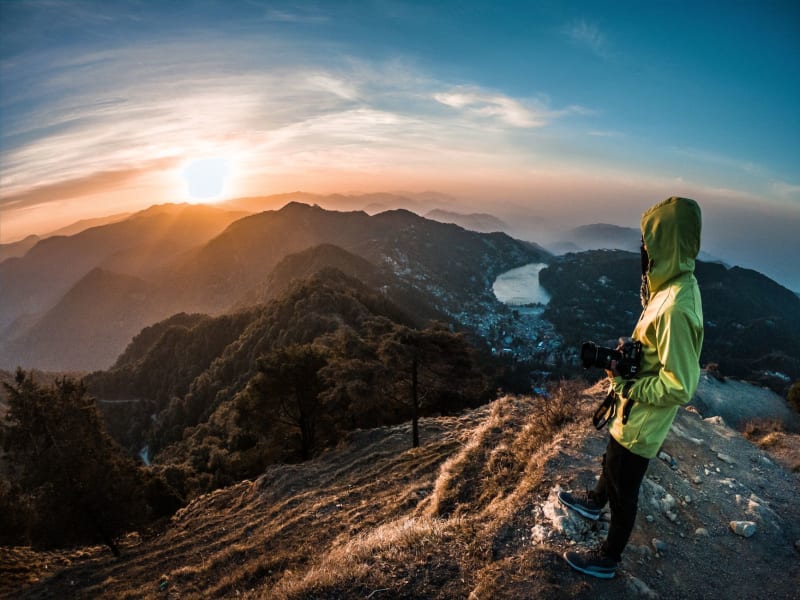 uttarakhand
Lansdowne
A Garhwal Rifles cantonment town at 1,706 meters where the British military built a hill station so orderly and forested that it has remained improbably quiet for a hundred and thirty years, mostly because no one quite remembers it exists.
Explore uttarakhand
Munsiyari
A remote Himalayan village in the far east of Kumaon staring straight at the five snow peaks of the Panchachuli, where the road ends and the high mountains begin.
Explore