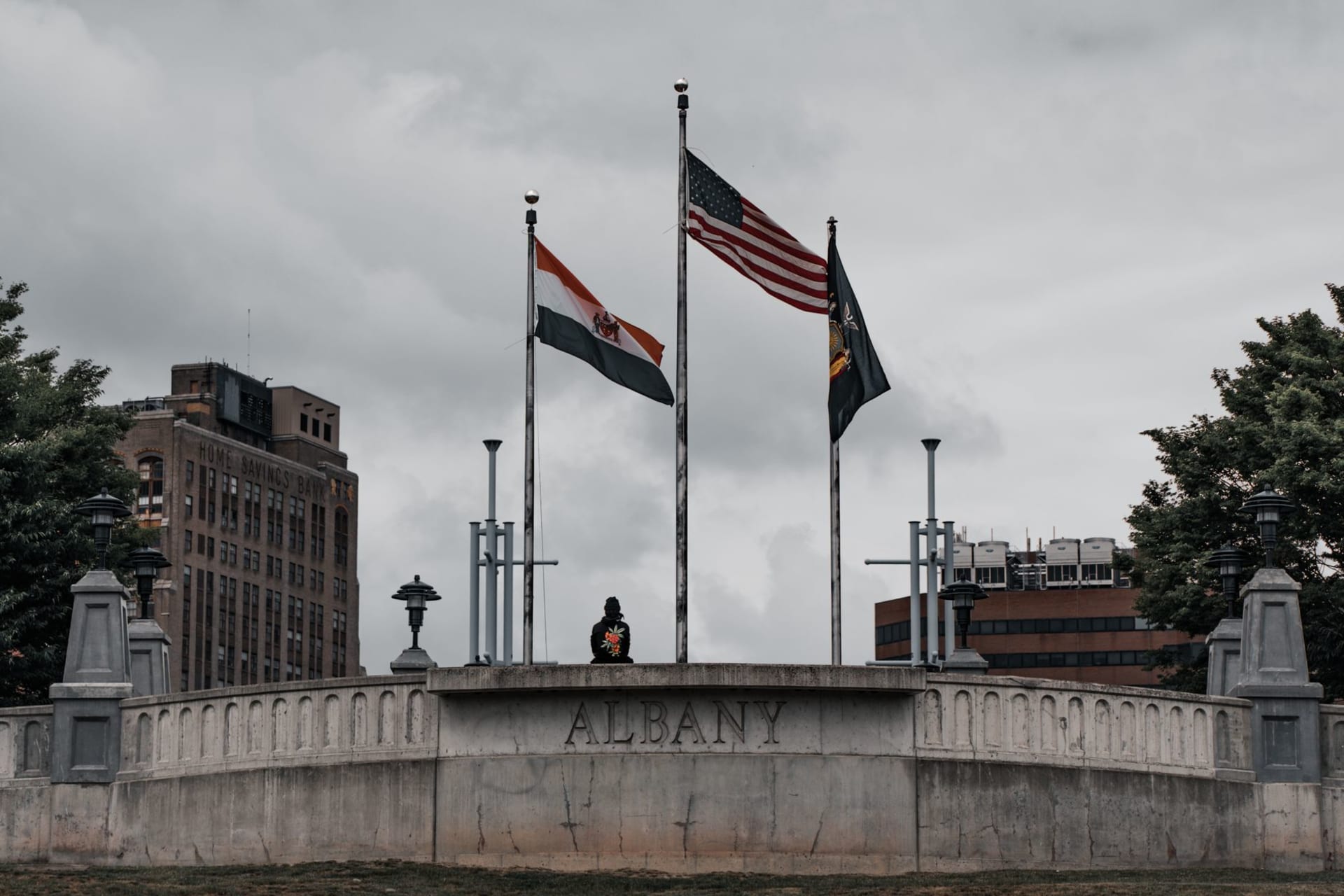
Auburn
"In Auburn, every street seems to lead back to the stadium, and every conversation eventually leads back to football."
A red-brick college town built entirely around one gleaming stadium and the oak-lined campus feeding into it. Lia and I arrived on a quiet Tuesday between football weekends and still felt the town's orange-and-blue pulse, from Toomer's lemonade to the eagle circling before kickoff.

We rolled into Auburn under a canopy of live oaks, past brick storefronts painted in various shades of orange and navy, and it took about ten minutes to understand that this small Alabama town runs almost entirely on college-football time. Even in the off-season, Lia and I found ourselves swept along by it — strolling past Jordan-Hare Stadium’s towering concrete bowl, empty and echoing, and past students in Auburn gear who seemed to treat the campus itself as sacred ground. It’s a town built around a university, and the university is built around Saturdays in the fall.
Toomer’s Corner and downtown
At the intersection of College Street and Magnolia Avenue stands Toomer’s Corner, marked by a pair of live oak trees that Auburn fans famously “roll” with toilet paper after every big win — a tradition so beloved that when the original trees were poisoned by a rival fan in 2010, the entire state seemed to mourn. We bought fresh-squeezed lemonade from Toomer’s Drugs, a pharmacy-turned-institution that’s been serving it since the 1890s, and drank it on a bench watching students cut across campus with backpacks and iced coffees, the whole scene lazy and golden in the afternoon light.

Jordan-Hare and the eagle
We talked our way into a stadium tour, and standing alone in the stands of Jordan-Hare — capacity over 88,000, one of the loudest venues in college sports — gave a strange, hushed sense of a place waiting to roar. Our guide told us about War Eagle VII, the golden eagle that flies a pregame lap over the crowd before every home game, a tradition unlike anything else in American sports. Lia, unconvinced an eagle could really fly a stadium loop on command, watched a video on the guide’s phone three times before admitting it was real and, frankly, kind of magnificent.

Chewacla and the quieter side
Ten minutes south of campus, Chewacla State Park offered the antidote to all that stadium energy: a spring-fed lake, a modest waterfall, and mountain-biking trails threading through pine forest. We swam in cool water while a few local families grilled nearby, and it was easy to forget, briefly, that we were minutes from one of the country’s great football shrines. Back in town that evening, we ate barbecue at a smoky roadside joint where the TV, unsurprisingly, was tuned to Auburn highlights on a loop.
Getting There
Auburn-Opelika Regional Airport handles limited flights, so most visitors fly into Atlanta’s Hartsfield-Jackson, about a two-hour drive west on I-85, or Montgomery Regional, roughly fifty minutes south. The drive from Atlanta cuts through rolling Georgia and Alabama countryside and is straightforward enough that renting a car is the easy choice — once in Auburn, campus and downtown are entirely walkable, but a car makes Chewacla and nearby Opelika easy side trips.
Keep exploring
More of Alabama
Keep exploring
More from Alabama
 united-states
Montgomery
Alabama's capital carries two founding stories at once — the birthplace of the Confederacy and the birthplace of the civil rights movement — laid out block by block along the same downtown streets. Lia and I walked from the Legacy Museum to Rosa Parks's bus stop and back, unable to speak for most of it.
Explore united-states
Dothan
A quiet peanut-farming city in Alabama's Wiregrass region, famous for a sea of painted fiberglass peanuts and a genuine small-town warmth. Lia and I came for a strange photo op and stayed for the boiled peanuts, the murals, and the slow, unhurried pace of the Southeast's back roads.
Explore united-states
Birmingham
An Alabama city forged in iron and tempered by history, where a giant statue of Vulcan watches over the valley and the streets remember the movement that changed America. We came for the civil-rights sites and stayed for the warmth of the people. Birmingham does not flinch from its past, and that honesty moved us.
Explore united-states
Tuscaloosa
A river town wrapped around a crimson-clad university, where Saturday football turns the streets into a sea of houndstooth and barbecue smoke. Lia and I arrived expecting a college pit stop and left having fallen for the Black Warrior River, the pulled pork, and a city that wears its pride loudly and warmly.
Explore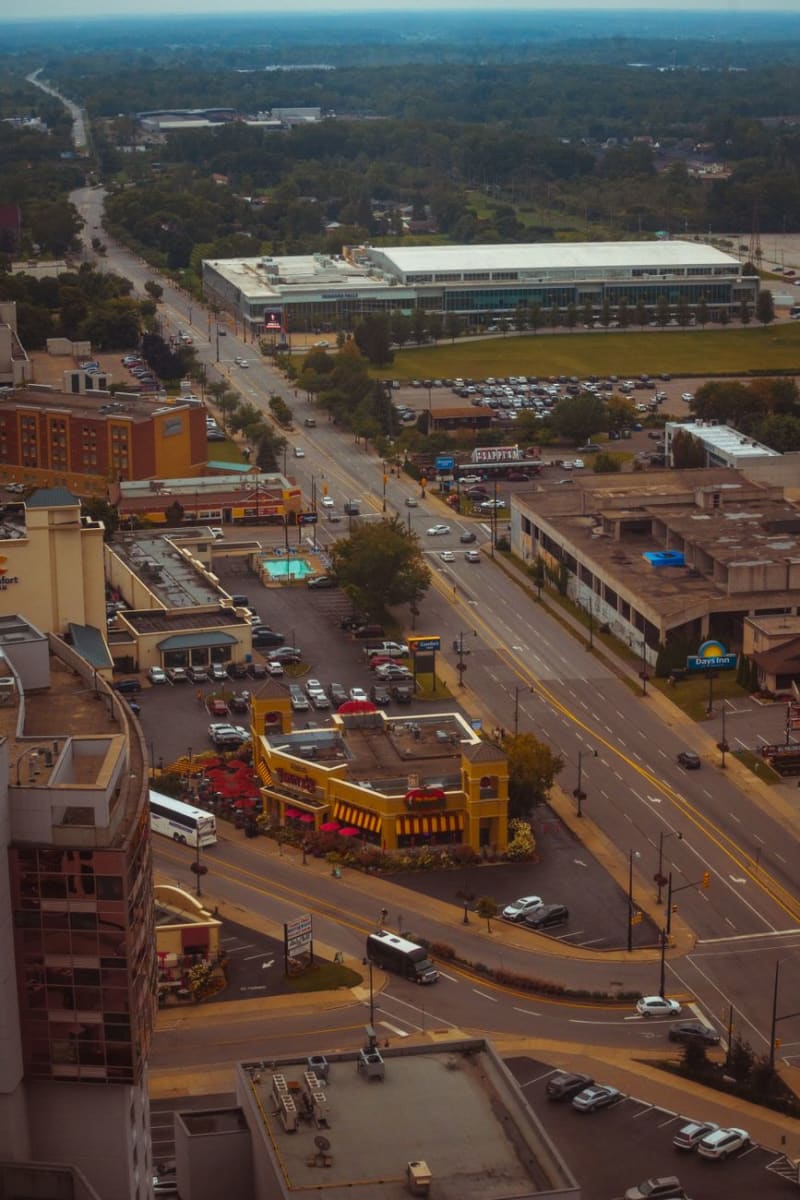 united-states
Huntsville
A former cotton town turned Rocket City, where Saturn V boosters loom over the highway and a walkable downtown of breweries and murals sits improbably close to the launch pads that sent astronauts to the moon. Lia and I came for the rockets and left obsessed with the barbecue.
Explore united-states
Florence
A Tennessee River town where W.C. Handy's blues roots meet a Frank Lloyd Wright house tucked among quiet streets. Lia and I came chasing music history and left humming riffs we picked up in a converted cotton warehouse, the river running slow and brown beside us the whole time.
Explore