
One of Italy's most intact medieval cities, climbing a steep Apennine slope with such architectural conviction you half expect the 14th century to answer back.

There’s a particular quality of silence in towns that genuinely stopped developing sometime in the 1300s. Gubbio has it. The streets are narrow enough that two people with bags can’t pass comfortably, the stone is the grey of thunderclouds, and the whole city presses itself against a hillside with the urgency of something that knows what’s at the bottom. I arrived on a Tuesday afternoon in late October and had the Piazza Grande almost entirely to myself.
The Consoli Palace and the Impossible Piazza
The Palazzo dei Consoli is one of the defining Gothic public buildings of medieval Italy, and it earns this designation by being genuinely strange: it sits on the edge of the Piazza Grande, which is an artificial terrace supported by enormous arches above the lower city, creating a public square that hangs in mid-air above the medieval streetscape. Standing on the piazza you look out over rooftops and then the Umbrian countryside beyond. The building itself holds the Eugubine Tablets — seven bronze inscriptions in Umbrian, the best-preserved evidence of the ancient Italic language — displayed in a room with the matter-of-fact confidence of a museum that doesn’t need to sell you anything.
Climbing the Hill
The cable car — actually a cage lift attached to the mountain — rises from the upper city to the Basilica of Sant’Ubaldo near the summit of Monte Ingino. The cages hold three people standing; locals use it as routine transportation. At the top, the basilica holds the three enormous wooden ceri — ceremonial candlestick-shaped structures weighing 400 kilos each — that are raced down through the city streets during the Corsa dei Ceri in May. The view from the summit takes in Gubbio’s grey roofscape and the Valle del Metauro spreading out below: wide, agricultural, startlingly flat compared to what you’ve just climbed.
Ceramics and the Maze of Streets
Gubbio has been producing majolica ceramics since the Renaissance, and the shop windows in the lower city still display the deep reds and metallics that made the town’s 15th-century master Maestro Giorgio famous enough that popes sent him commissions. I bought a small bowl — wine red, slightly irregular — from a workshop on the Via dei Consoli where the potter was actually at the wheel. The sound of the old city is the sound of workshops: the occasional creak of a kiln door, footsteps on stone, someone hammering something two streets away.
After Dark
Gubbio after seven is a ghost town in the best sense. The restaurants off the main streets are genuinely local — the menus run to strangozzi with guanciale, roast pigeon, and a predictable truffle variation on everything. I ate at a trattoria near the Roman theater (there’s always a Roman theater) and the owner brought out a local wine I’d never heard of without being asked. The street outside was empty. A dog crossed it slowly. The medieval city was doing what it always does, which is nothing, impeccably.
When to go: May 15 for the Corsa dei Ceri, one of the most visceral medieval festivals in Italy. April and October otherwise — the shoulder seasons give you the city at its most atmospheric. Summer crowds are lighter here than in Assisi or Orvieto. Avoid the Christmas light installation if you want the original city; embrace it if you don’t.
Keep exploring
More from Umbria
 umbria
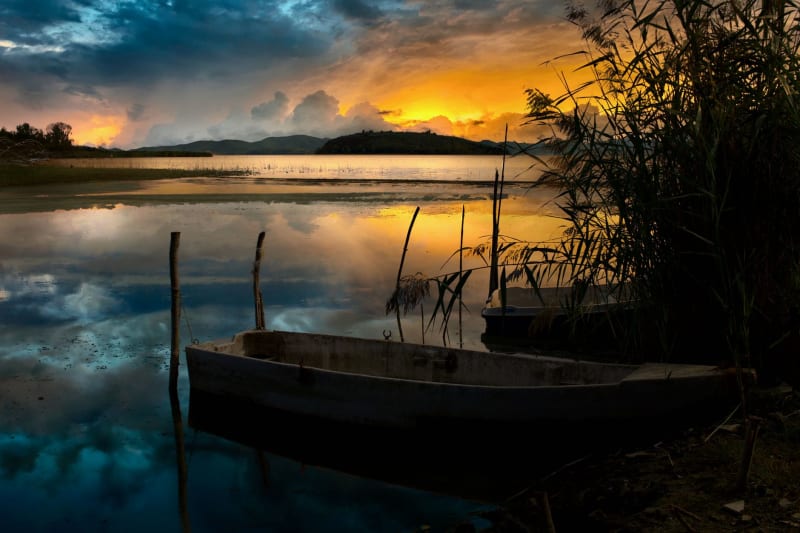
Lago Trasimeno
Central Italy's largest lake, shallow and silver-green, ringed by olive groves and medieval fishing villages that still cast nets in the morning.
Explore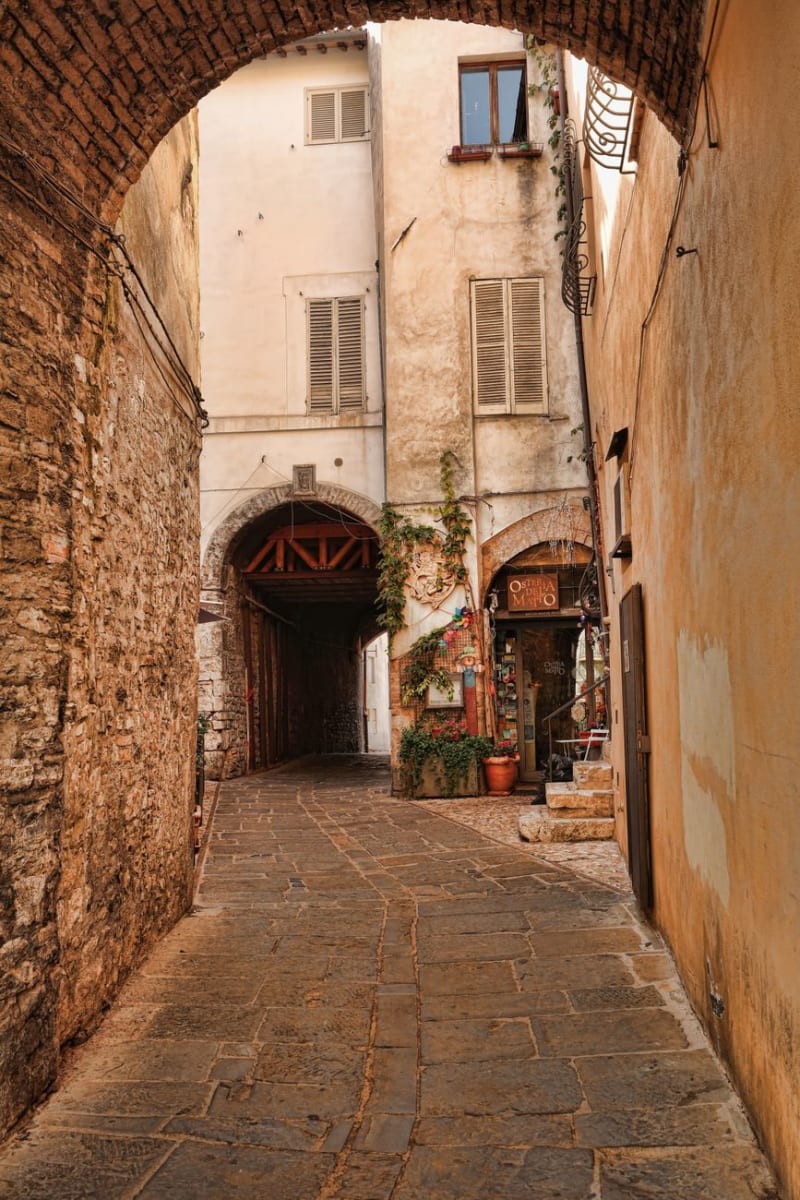 umbria
Montefalco
A hilltop town Umbrians call the balcony of the region, ringed by Sagrantino vineyards and crowned by a frescoed church that stops you cold.
Explore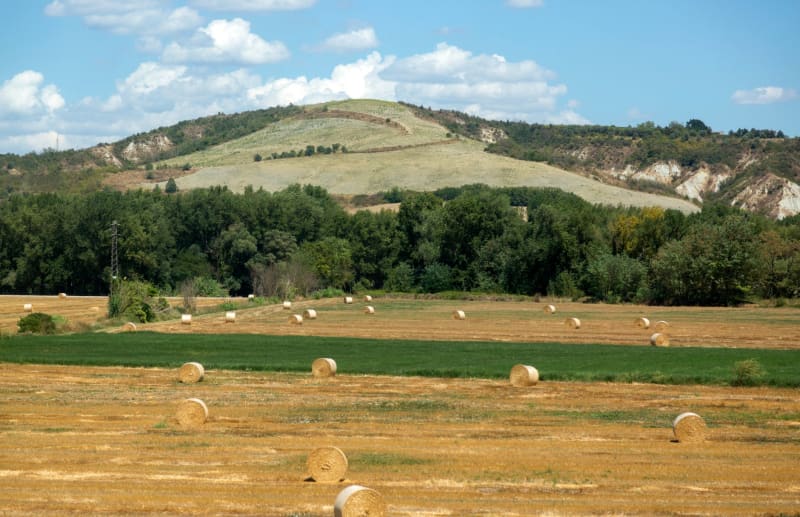 umbria
Norcia
A mountain town that earthquake and altitude have conspired to preserve, famous across Italy for black truffles and pork cured with a precision that borders on philosophy.
Explore umbria
Orvieto
A city balanced on a sheer volcanic plug above the Tiber valley, its striped cathedral so ornate it looks like a fever dream someone forgot to wake up from.
Explore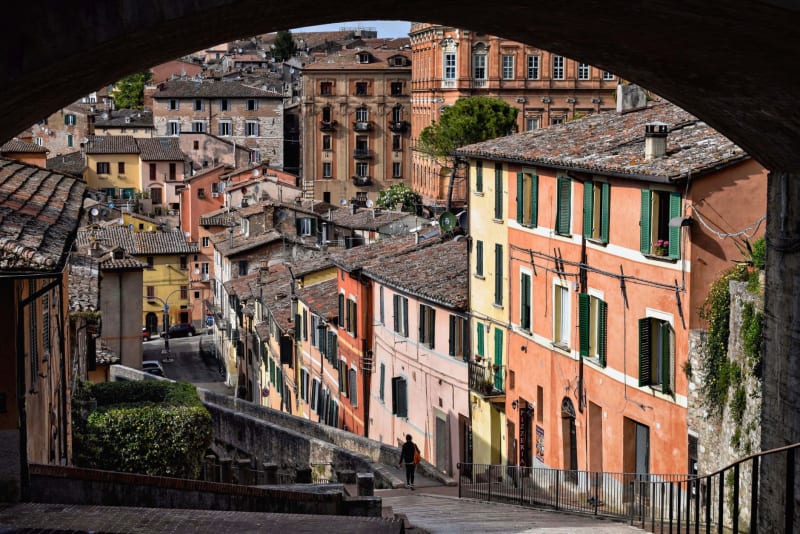 umbria
Perugia
A medieval hilltop capital where Etruscan walls prop up Renaissance palaces and students outnumber tourists three to one.
Explore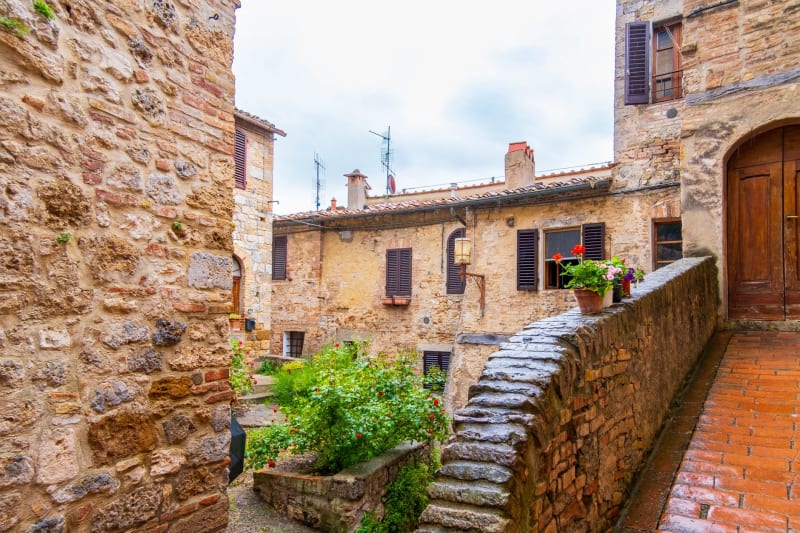 umbria
Spello
A Roman colony on Monte Subasio whose steep lanes overflow with flower boxes and whose Pinturicchio chapel is worth the detour from anywhere on the Umbrian plain.
Explore