
Maubisse
"I needed a sweater in Timor-Leste. I was not prepared for how happy that made me."
A mountain town wrapped in coffee plantations where the air at 1400 meters actually requires a jacket and the colonial-era pousada watches over a valley that rolls on forever.

The drive south from Dili into the highlands takes you through a series of altitude-related revelations. First the lowland scrub gives way to dusty eucalyptus, then to something greener. Then the road climbs in earnest — switchbacks that require full attention — and the temperature drops degree by degree until you arrive in Maubisse and realize you are cold, genuinely cold, for the first time since you landed in a country that seemed to have no intention of allowing such a sensation.
Maubisse sits at around 1400 meters in the central highlands, and the coffee grown in the valleys and terraced slopes around it is some of the best in the world. Not “best in the region” — best. It’s sold under various fair-trade certifications in European specialty cafés, and standing here in the source, drinking a cup made with water off a wood fire, costs almost nothing.
The Old Portuguese Pousada
On a hill above the town sits a fortified pousada from the Portuguese era — part guesthouse, part former garrison — with views down into a valley of green ridges that seem to go on until they dissolve into weather. Lia and I took a room here, which was a straightforward decision once we saw the view from the terrace.
The building itself is thick-walled and cool and slightly crumbling in ways that feel authentic rather than neglected. The staff brought tea without being asked and left us alone, which is the two things I most want from any accommodation. In the evening the valley filled with mist that rose from the coffee plants until only the highest ridges were visible, orange in the last light.
Coffee Country Up Close
The Cooperativa Café Timor organization operates in this region and has been working with smallholder farmers since before independence. You can visit processing stations and see the full arc from cherry to green bean — the wet-processing pulpers, the raised drying beds, the sorting done entirely by hand.
What struck me, more than the process, was the scale of the investment in quality. These are farmers at the absolute edge of the global economy operating with a precision that would satisfy a roaster in Copenhagen. I bought several kilograms to carry back, wrapped in newspaper, stuffed into my bag.
Walking the Hills
From Maubisse, you can walk into the surrounding hillsides on paths that connect villages, and the landscape rewards it. Terraced gardens. Women in tais cloth. Children who find you funny and are not shy about showing it. The trees here are a mix of native species and introduced eucalyptus and pine, and when the cloud comes through in the morning, the whole thing looks more like the Azores than Southeast Asia.
I walked for three hours one morning with no particular destination and came back having seen: a funeral procession carrying photographs and a pig, two women arguing good-naturedly over the price of something wrapped in cloth, and a view down a valley so large and green I had to sit and just look at it for a while.
From Here, Tatamailau
Maubisse is the natural staging point for an ascent of Tatamailau, at 2986 meters the highest peak in Timor-Leste. Most people make the attempt starting at 2 a.m. to reach the summit for sunrise. I did not do this, partly out of respect for my knees and partly because I was enjoying the lowland view too much to hurry anywhere. But if you’re inclined, it’s a serious and rewarding hike.
When to go: The highlands are pleasant year-round due to altitude, but June through September is peak dry season — clear mornings, cold nights, excellent visibility. The harvest season (May–July) means the coffee co-ops are most active if you want to see processing in full swing. Bring a layer regardless of when you come.
Keep exploring
More from Timor-Leste
 timor-leste
Mount Ramelau
The highest peak in Timor-Leste, a pre-dawn pilgrimage to a statue of the Virgin Mary above a sea of cloud where the sun rises over both halves of the island at once.
Explore timor-leste
Oecusse
A coastal exclave cut off from the rest of Timor-Leste by Indonesian West Timor, reachable only by ferry, small plane, or a border crossing through someone else's country.
Explore timor-leste
Same
A market town on the island's drier southern coast where the landscape turns savanna and the light becomes something harsher and more honest.
Explore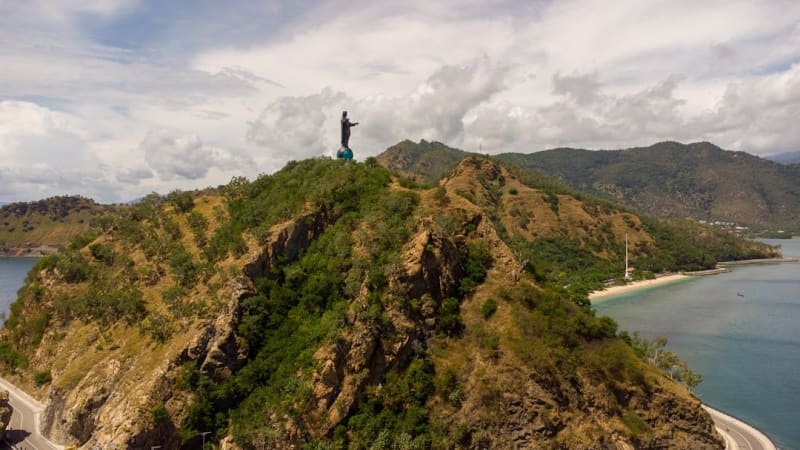 timor-leste
Tutuala
The eastern tip of the island — a village perched above a sacred bay, a sandbar island visible across turquoise shallows, and the feeling of having arrived at the edge of something.
Explore timor-leste
Viqueque
An eastern lowland town ringed by flooded rice paddies and water buffalo, a quiet gateway to Timor-Leste's least-visited south coast.
Explore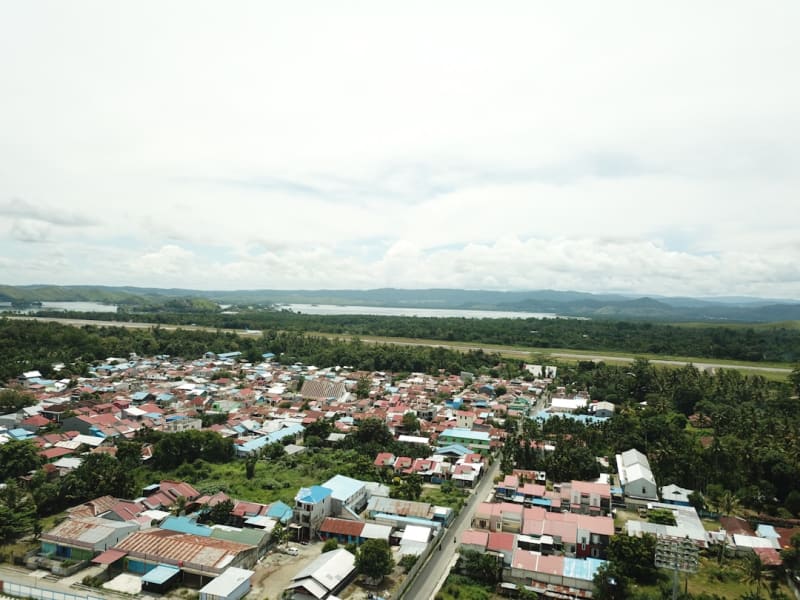 timor-leste
Ainaro
A highland district in the shadow of Tatamailau, the island's highest peak, where the morning mist doesn't lift until nearly noon and the coffee tastes of altitude.
Explore