
Viqueque
"Nobody in Viqueque asked us why we'd come, because almost nobody comes, and I think they'd genuinely stopped expecting an answer."
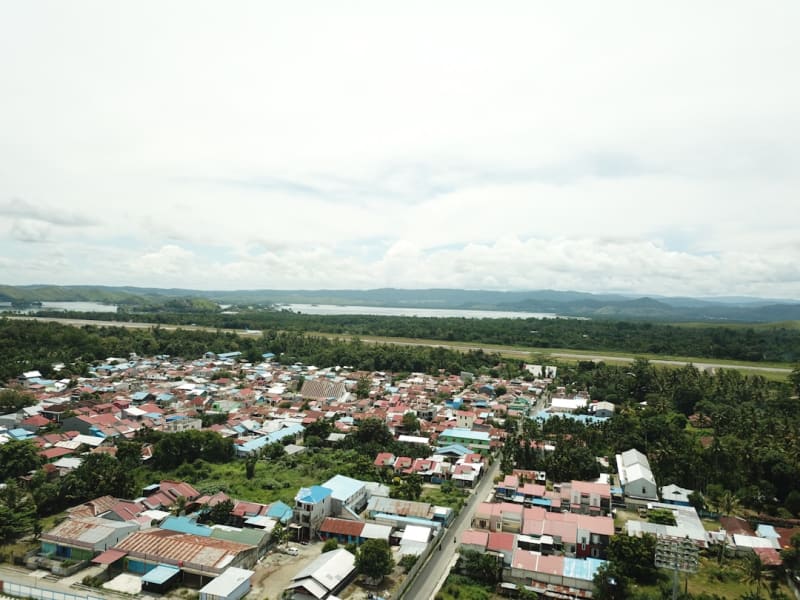
An eastern lowland town ringed by flooded rice paddies and water buffalo, a quiet gateway to Timor-Leste's least-visited south coast.

Viqueque wasn’t on our original route at all - we added it after a guy running a losmen in Baucau told us the south coast down that way was “still how Timor used to be,” which is the kind of throwaway line that makes me change plans immediately. The drive down from the north coast crosses the central mountains and drops you into a completely different landscape: flat, green, humid, rice paddies stretching out in neat flooded squares with water buffalo standing knee-deep and egrets picking through the mud around them. It felt less like Southeast Asia’s mountainous interior and more like something out of the Mekong Delta.
The town itself is modest - a market street, a few churches, motorbikes outnumbering cars by a wide margin - but it has real historical weight. Viqueque was the epicenter of a major 1959 rebellion against the Portuguese, and later a stronghold of Falintil resistance during the Indonesian occupation, and you can feel that history sitting just under the surface in conversations with older residents, even if nobody makes a show of it. We ate lunch at a warung on the main street, grilled fish and rice with a chili sambal that had Lia reaching for water every third bite, and the owner, once he realized we spoke a little Tetum, talked for twenty minutes about his father’s years fighting in the hills.

What actually kept us there two extra nights was the coast itself. South of town the road deteriorates into a rutted track toward beaches with names most guidebooks don’t bother printing - black volcanic sand in places, pale sand in others, and not another tourist in sight the entire time. We hired a local guy with a motorbike to take us to one near Beacou, and spent an afternoon watching fishermen haul in a net by hand while their kids ran the shallows chasing crabs. It’s not postcard-pretty in the manicured sense; it’s working coastline, and that’s exactly what made it feel real.

I’ll admit the infrastructure is thin - one real guesthouse in town when we visited, patchy phone signal past the paddies, and you need decent Tetum or Portuguese or a lot of patience with hand gestures. But that thinness is precisely why it stuck with me more than almost anywhere else on the island.
When to go: Dry season, roughly May through October, when the south coast track is passable and the paddies are at their most photogenic green before harvest.
Keep exploring
More from Timor-Leste
 timor-leste
Ainaro
A highland district in the shadow of Tatamailau, the island's highest peak, where the morning mist doesn't lift until nearly noon and the coffee tastes of altitude.
Explore timor-leste
Atauro Island
A volcanic sliver in the Banda Sea where marine biologists run out of superlatives and the reefs are so dense with fish they seem to breathe.
Explore timor-leste
Balibo
A hillside border town where five foreign journalists were killed in 1975, now a solemn memorial site with sweeping views toward Indonesian West Timor.
Explore timor-leste
Baucau
Timor-Leste's second city sits on a limestone plateau above the sea, its Portuguese-era pousada and salt-bleached market frozen in a particular, dignified kind of time.
Explore timor-leste
Com
A coastal fishing village on the Banda Sea where the snorkeling starts ten meters from the beach and the pace of life is measured in tides.
Explore timor-leste
Dili
A sun-bleached capital where Portuguese colonial facades crumble gracefully into a harbor that glitters like hammered tin at dusk.
Explore