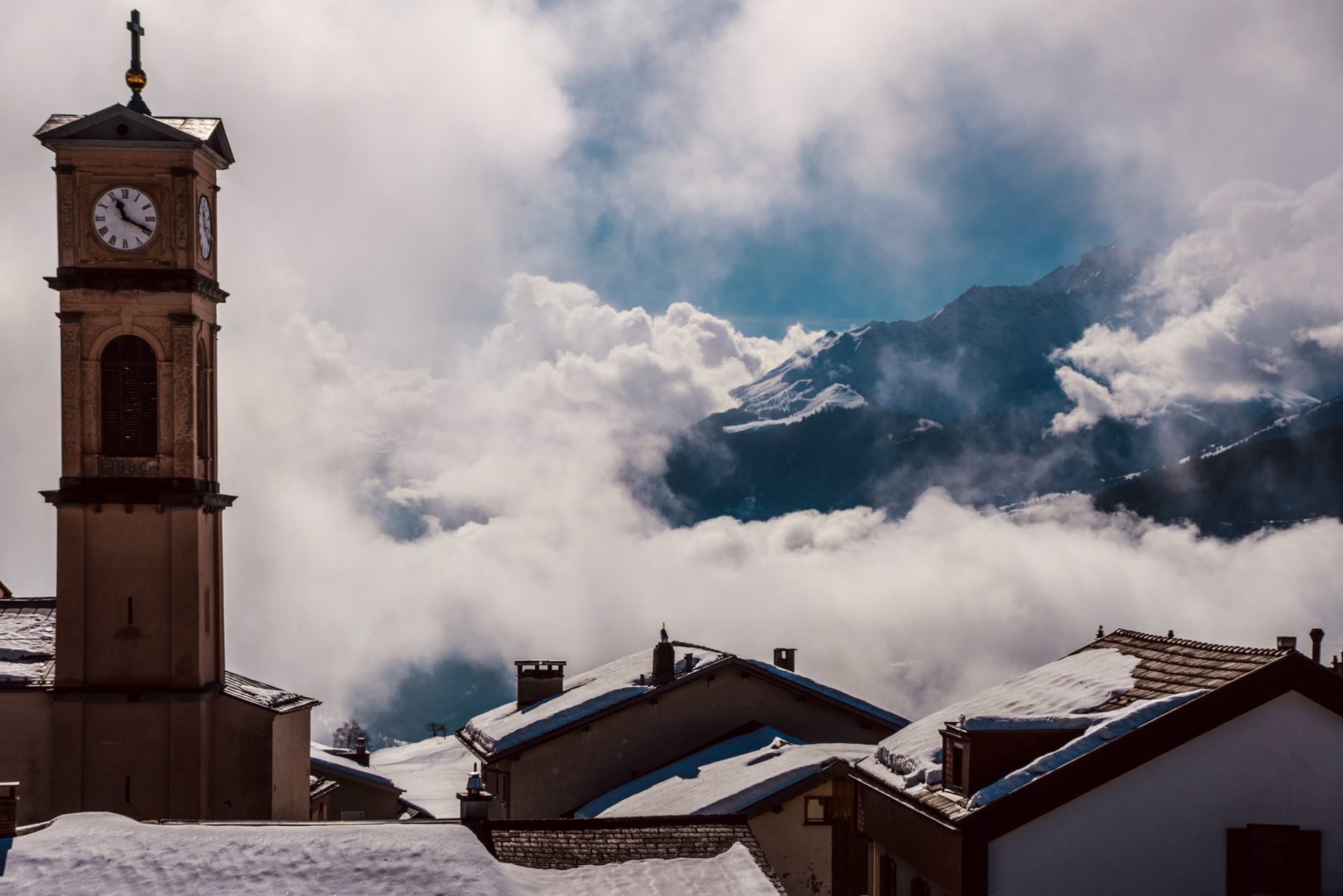
A Valais resort perched on a sun-facing shelf above the Bagnes valley, famous for its off-piste terrain and for attracting a specific kind of person who arrives by private jet and leaves with frostbitten cheeks.

Up on the Shelf
Verbier doesn’t sit in a valley. It spreads across a broad south-facing terrace at around 1,500 meters, looking out at the Grand Combin — 4,314 meters of glaciated summit that turns pink at sunset in a way that seems almost aggressive. The village gets sun when the valley below is still in blue shadow, which explains why people built here in the first place. The light in the morning, slanting across the snow-covered rooftops while Le Chable sits grey and cold below, is one of those small geographical rewards you only understand once you’re standing in it.
The approach by telecabin from Le Chable takes about eight minutes. I remember looking down at the valley floor as it shrank beneath me and thinking: this is exactly the kind of place that invents its own weather.
The Four Valleys System
Verbier anchors the Four Valleys ski domain — technically the largest in Switzerland, connecting Verbier, Nendaz, Veysonnaz, and Thyon. On paper, 410 kilometers of marked runs. In practice, what matters is the terrain directly above Verbier: the Mont-Fort glacier at 3,330 meters, accessible by a series of gondolas, and the north-facing bowls below it that hold powder long after it’s been scraped off everywhere else.
The off-piste reputation here is real and not inflated. The Vallon d’Arbi, the Stairway to Heaven, the col routes over toward Zermatt and Saas-Fee for guided ski tours — these are genuine backcountry experiences that require competence and good company. I skied the Vallon d’Arbi on a clear March morning after fresh snow with a guide I’d hired through the ski school, and the thirty minutes of untracked powder through a glacial bowl felt like a reasonable justification for the entire trip. Which is saying something, given what Verbier costs.
The Village at Ground Level
Verbier’s reputation for wealth is accurate. The chalet prices are ludicrous. The après-ski at the Farm Club is famous and should probably be experienced once for anthropological reasons. The Place Centrale has outdoor terraces that fill up from about 3pm onwards with people in very good ski gear drinking Glühwein or beer depending on their self-image.
But there’s a functioning village underneath all of that. The Co-op supermarket sells good cheese. There are a few restaurants where locals actually eat — the Pizzeria at the back of Le Chalet Mouton being one of them, where the pizza is charred correctly and the wine list is short and sensible. You find these places by walking away from the obvious and keeping your eyes open.
Summer Verbier
Most people don’t think about Verbier in summer, which means summer is underrated. The trails that open from June onward cover the same terrain as the ski runs but with wildflowers in the meadows and marmots making their alarm calls from the rock fields above the tree line. The Mont-Fort gondola runs in summer for hikers, and the ridge walk at the top in July — clear air, 360-degree views, the Combin and Mont Blanc both visible — is the kind of thing that makes you feel briefly and genuinely grateful for having legs.
When to go: Mid-January through March for the best skiing — snow is reliable above 2,000 meters, and the north-facing bowls hold powder well. Late June through early September for hiking and dramatically lower prices. Christmas week is the most expensive and most crowded; arrive a week later in early January if you want the same mountains with quieter lifts.
Keep exploring
More from Swiss Alps
 swiss-alps
 Wengen
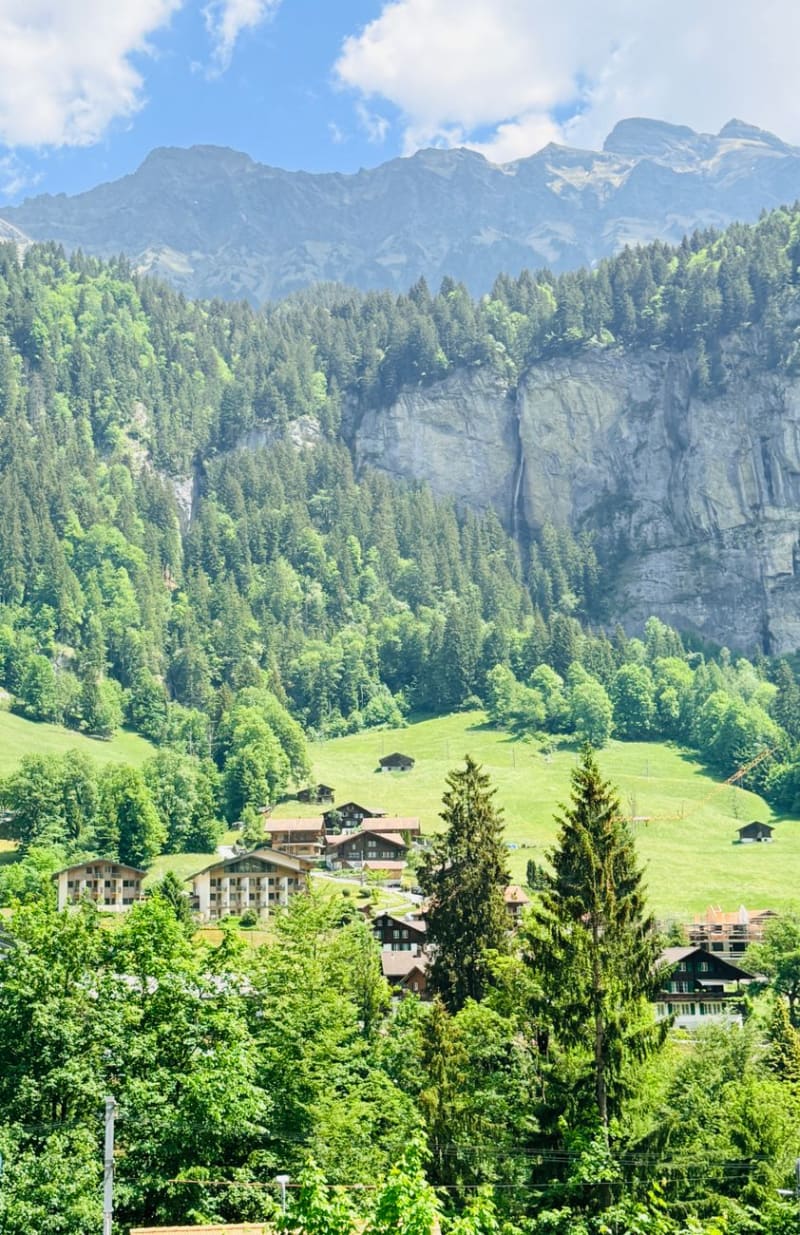
A car-free mountain village perched on a sunny terrace above the Lauterbrunnen valley, staring straight across at the Jungfrau.
Explore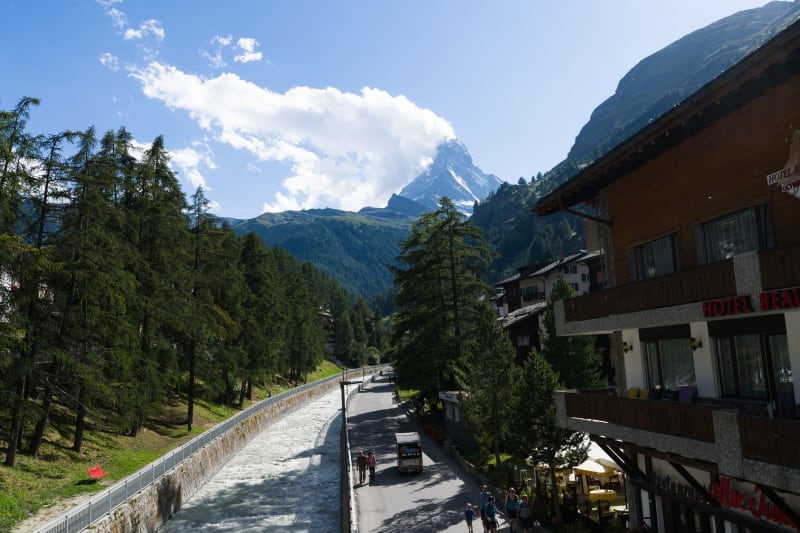 swiss-alps
 Zermatt
A car-free village pinned beneath the Matterhorn where every street corner frames that impossible pyramid of rock like a painting someone forgot to take down.
Explore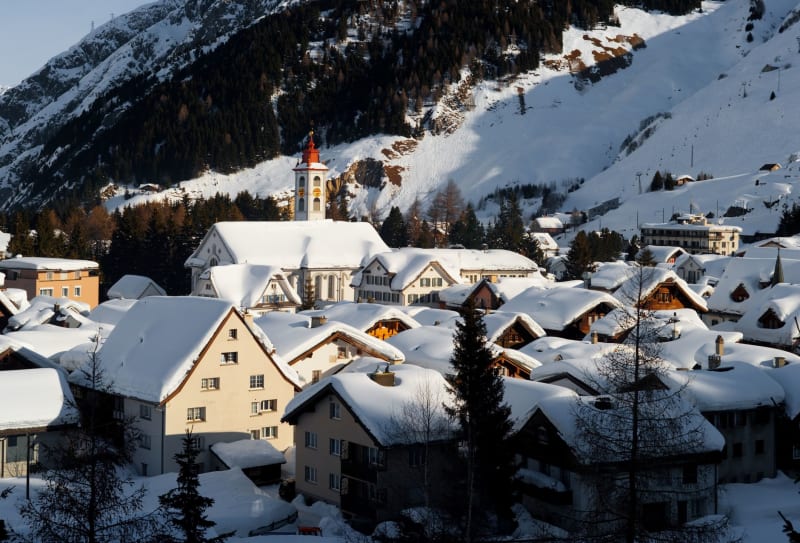 swiss-alps
 Andermatt
A crossroads village at the center of Switzerland where four major alpine passes meet and where a massive Egyptian-funded ski resort has been grafted onto a genuinely old mountain town.
Explore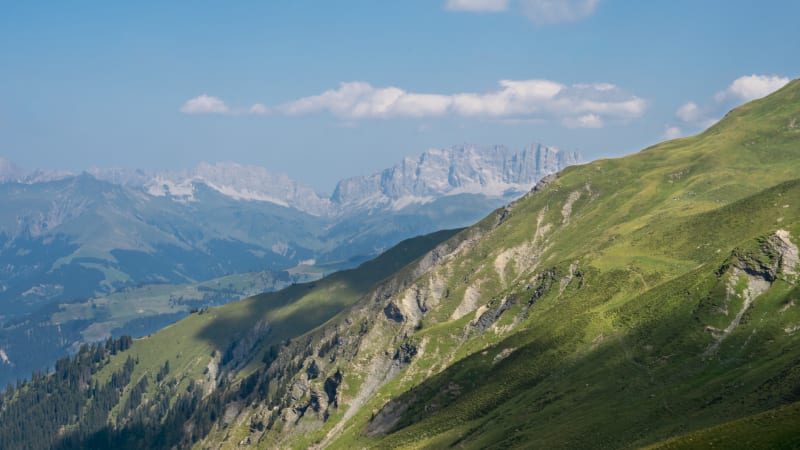 swiss-alps
 Arosa
A high Graubünden resort in a closed mountain valley with no through road, where the end of the road means the beginning of something quieter and more considered than most Swiss resorts bother to be.
Explore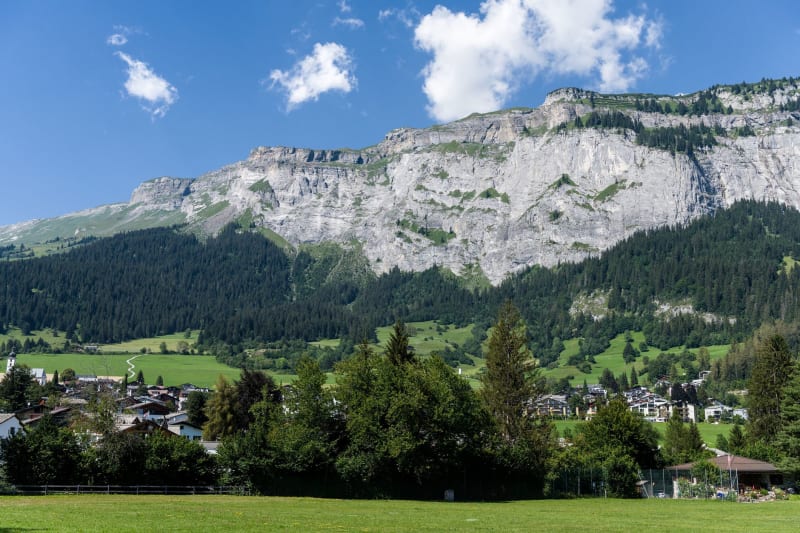 swiss-alps
 Champéry
A Valais village of painted wooden chalets at the foot of the Dents du Midi that serves as the Swiss anchor of the Portes du Soleil, one of the largest cross-border ski domains in the world.
Explore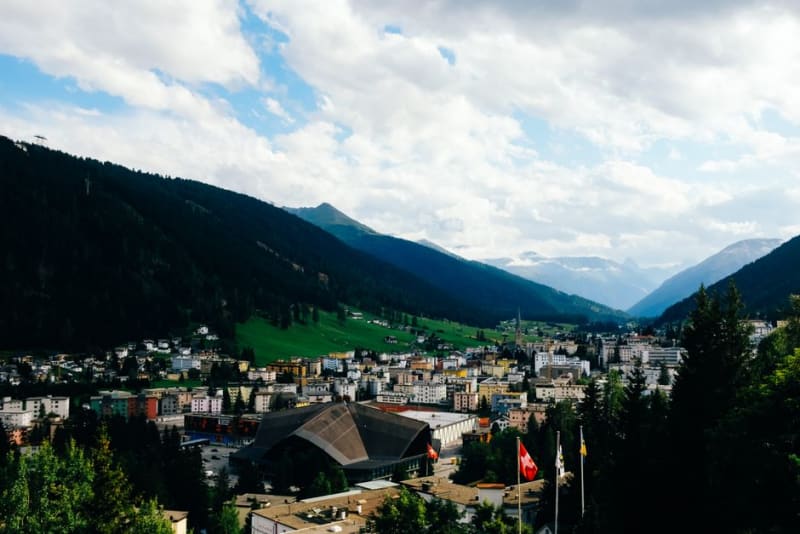 swiss-alps
 Davos
A high-altitude town in the Graubünden Alps, best known for hosting the World Economic Forum every January.
Explore