Brokopondo Reservoir
"The lake looks like a place something ended. The life in it says otherwise."
One of the world's largest man-made lakes, where a flooded forest of dead trees emerges from dark water at low season and Maroon villages dot the shoreline of a landscape that is simultaneously haunting and unexpectedly alive.

The Afobakka Dam went up in 1964, and behind it the Suriname River backed up until it covered more than 1,500 square kilometers of rainforest and Maroon villages. The people were relocated — not always willingly, not always well. The trees drowned in place. Six decades later, the bleached trunks still stand in the water, tens of thousands of them, turning the reservoir into something that looks like a flooded ghost town if ghost towns had canopies.
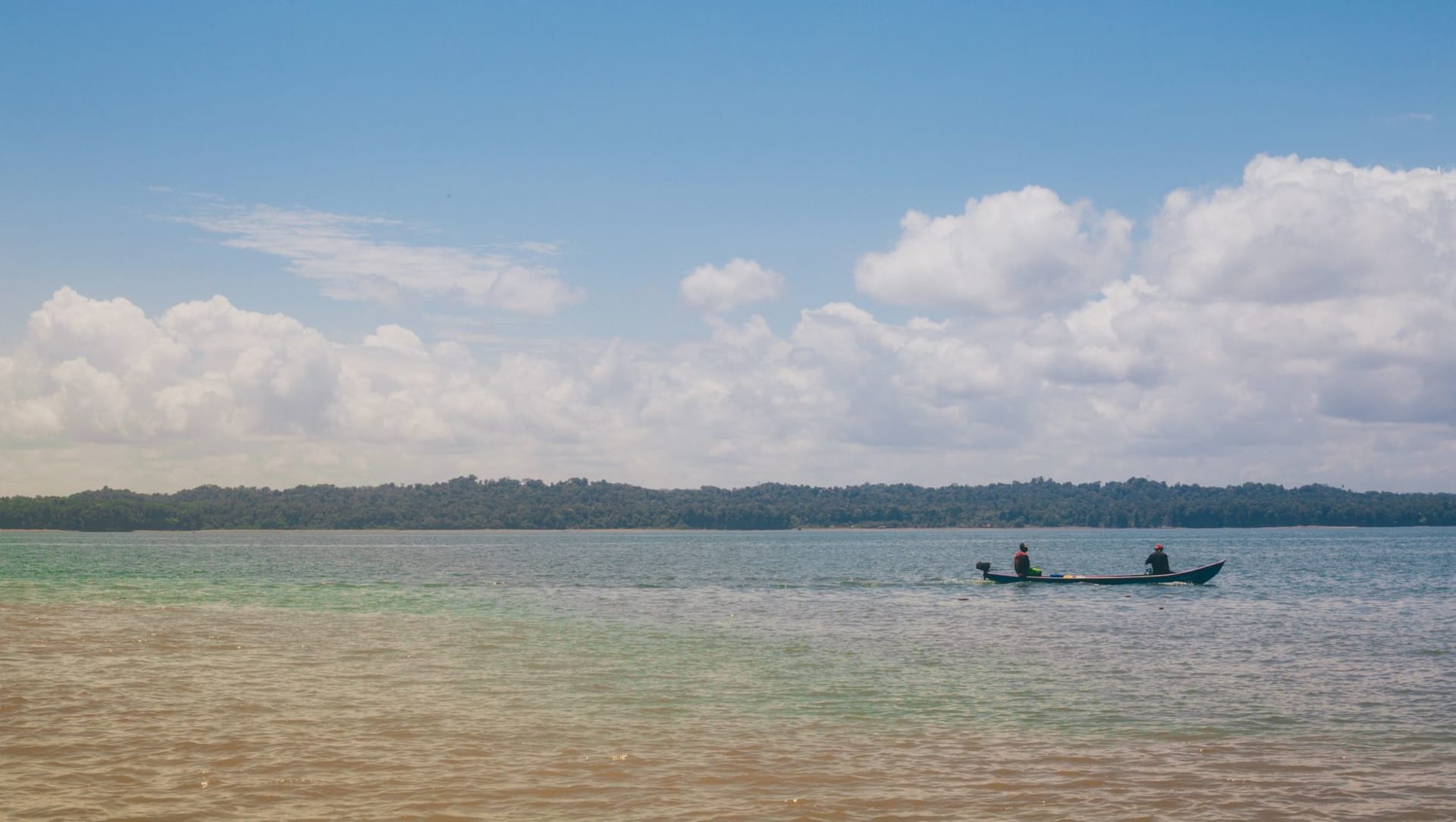
Getting onto the reservoir requires arranging a boat from the town of Brokopondo or from one of the Maroon villages along the shore. The water is dark brown-black with tannins leached from the submerged forest floor, and in the afternoon light it goes nearly black and reflects the sky in a way that inverts everything.
On the Water
The experience of crossing the reservoir by dugout canoe or motorized pirogue is not comfortable. The sun is direct, the wind can pick up fast, and the scale of the lake makes navigation genuinely challenging if you don’t know the channels through the standing deadwood. What it offers in return is something difficult to categorize — a kind of drowned-world beauty that feels both unnatural and somehow inevitable, as if this is simply what happens to forests given enough time and water.
The dead trees have become habitat. Kingfishers perch on the bare branches. Black vultures dry their wings in the morning sun from the highest points. Caimans lie on the submerged stumps at the water surface. The lake is teeming with fish, and fishing boats from the surrounding villages work it constantly.
The Maroon Villages
The communities along the reservoir belong predominantly to the Saramaka people, one of Suriname’s Maroon groups — descendants of enslaved Africans who escaped from colonial plantations and established independent communities in the interior. The villages are striking: wooden houses painted in the bold geometric patterns characteristic of Saramaka art, the women in bright wraps, children swimming from the dock in the late afternoon.
Visiting requires respect and some arrangement in advance. Several villages accept visitors as part of community tourism initiatives, offering guided canoe trips, craft demonstrations, and meals. The woodcarving here — calabash gourds, canoe paddles, stools — follows a visual tradition developed over centuries in the interior, and it’s not the diluted souvenir version. The real pieces are functional objects that happen to be extraordinary.
The Interior Road
The road from Paramaribo to Brokopondo passes through a transition zone between coastal lowland and interior highland that is itself interesting — settlements thinning, vegetation thickening, the road getting worse in increments. The drive takes about two hours under normal conditions. From Brokopondo town, boat arrangements take you onto the water.
Some visitors use the reservoir as a staging point for deeper interior trips into the Central Suriname Nature Reserve, continuing south by boat and then foot into genuine wilderness. Properly planned, the reservoir becomes not a destination in itself but a threshold.
What It Leaves You With
I found the reservoir unsettling in the best way — the kind of place that keeps reappearing in your mind a few days later. The drowned forest, the Maroon villages painted in patterns developed to replace all the visual culture that was stripped away in the Middle Passage, the birds on the dead branches, the dark water. It adds up to something that doesn’t quite have a category.
When to go: The short dry season (February–April) or the long dry season (August–November) are best for boat travel on the reservoir. During the wet seasons the water level rises and conditions can become rough. Plan to arrive at the lake by mid-morning to avoid afternoon thunderstorms, which build quickly and are dramatic.
Keep exploring
More from Suriname
 suriname
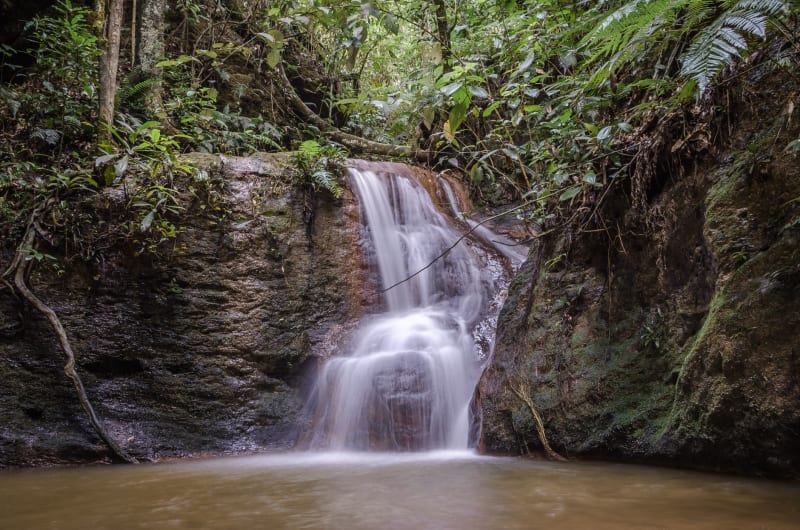
Brownsberg Nature Park
A highland plateau rising 500 meters above the flooded forest of Brokopondo Reservoir, where the dawn mist sits in the canopy and toucans argue over the fruit trees before breakfast.
Explore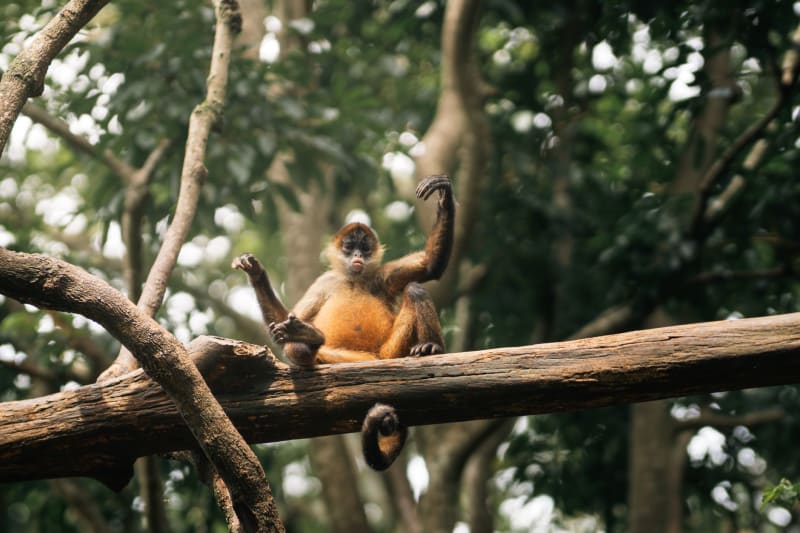 suriname
Central Suriname Nature Reserve
A UNESCO World Heritage wilderness covering nearly 1.6 million hectares of pristine Amazonian rainforest — one of the last places on earth where you can be genuinely beyond the edge of any map that matters.
Explore suriname
Commewijne District
A slow river district east of Paramaribo where plantation ruins and wooden colonial drawbridges sit alongside working spice farms, best explored by bicycle along a road that runs flush with the water.
Explore suriname
Galibi Nature Reserve
A remote Atlantic coastline where leatherback and olive ridley sea turtles haul themselves ashore at night to nest, watched over by Carib Amerindian communities who have guarded this stretch of beach for generations.
Explore suriname
Jodensavanne
The overgrown ruins of one of the oldest Jewish settlements in the Americas, where a 17th-century synagogue stands in the jungle above the Suriname River.
Explore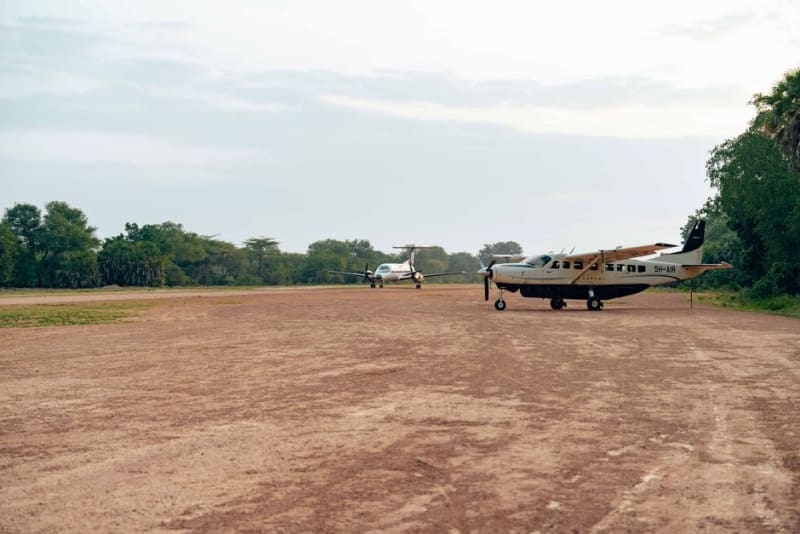 suriname
Kabalebo
A remote rainforest reserve tucked against the Guyana border, reachable only by small plane and defined by silence and unbroken jungle canopy.
Explore