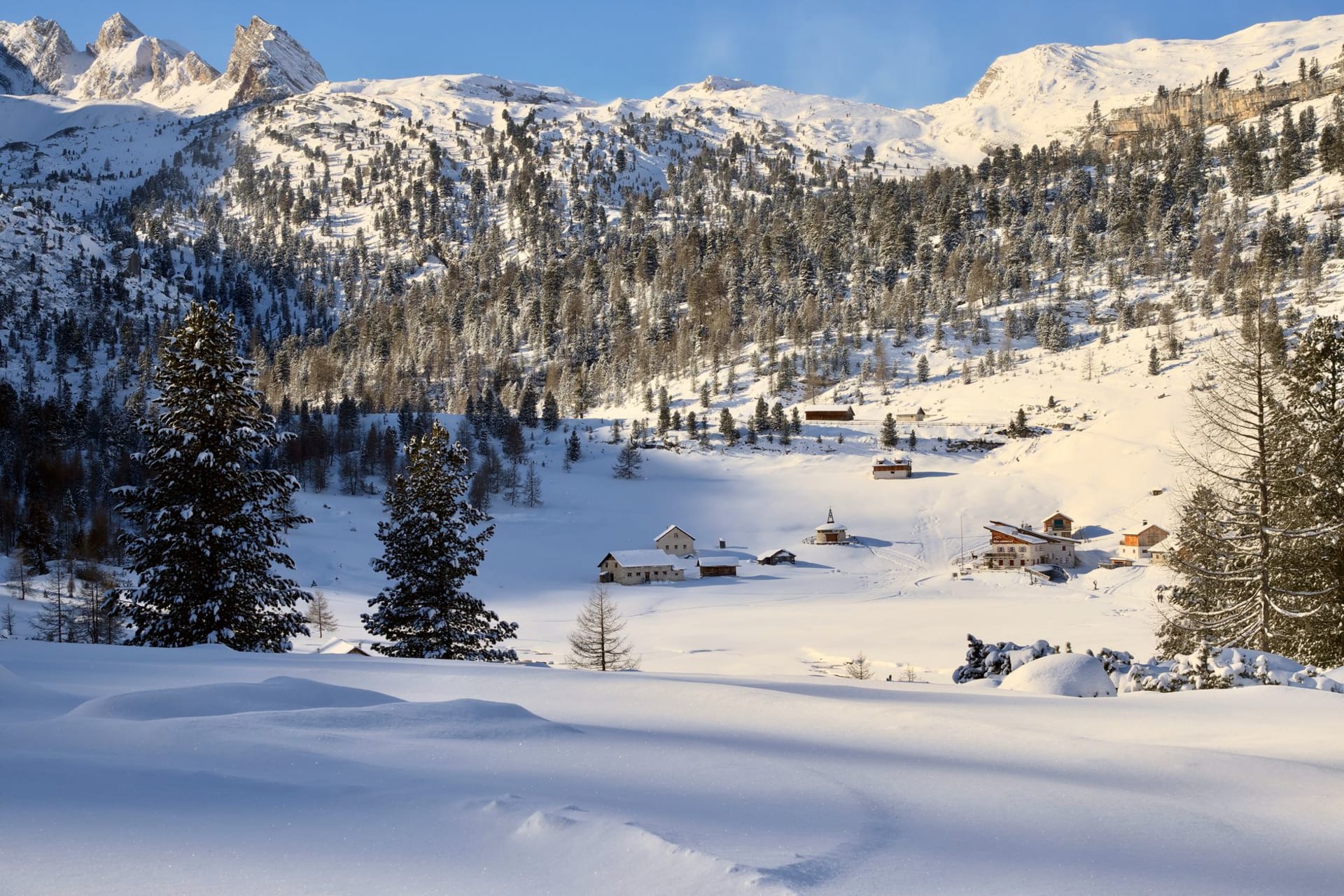
Val Pusteria
"The through-valley everyone uses to reach somewhere else, which turns out to be the point."
The long eastern valley of South Tyrol running from Brunico to the Austrian border, quieter than the Dolomite tourist circuit, lined with Baroque churches and working farms with the Sesto Dolomites rising at its far end.

A Valley of Passage
The Puster Valley — Val Pusteria in Italian, Pustertal in German — has functioned as a transit route for centuries, connecting the Inn Valley in Austria to the Adige corridor in Italy via a wide, relatively flat pass. The Romans used it. Medieval merchants used it. The modern railway uses it. The valley itself sometimes gets treated as scenery between destinations rather than a destination, which is an error I made on my first visit and corrected on my second.
The pace here is different from the Dolomite valleys to the south. There are no famous lakes and fewer international visitors. The villages — San Lorenzo, Valdaora, Monguelfo, Dobbiaco — have the steady, unhurried quality of agricultural communities that have been producing hay and raising cattle long before tourism arrived and expect to continue after it leaves.
The Church Trail
Someone at some point in the 17th and 18th centuries decided that the Puster Valley required a large Baroque church in every village, and the builders obliged. They vary in scale and ambition but share a certain confidence: white-plastered facades, onion domes on the bell towers, interiors where the gold and frescoes argue politely with each other for attention. The one at Innichen (San Candido), near the Austrian border, dates partly from the 12th century and has a Romanesque collegiate church attached to it that precedes the Baroque additions by five hundred years.
I drove the valley with no particular agenda, stopping when a tower or facade caught my eye from the road. Stopped eight times. Lost an afternoon productively.
Dobbiaco and the Lake
Dobbiaco, near the eastern end of the valley, is the junction town for the Val di Landro heading south toward the Tre Cime and Lago di Braies. It has a population of around 3,000 and an outsized number of well-maintained hotels from the early 20th century, when it was a resort for Viennese and Bavarian visitors. Gustav Mahler composed his Ninth Symphony here in 1909, in a hut in the surrounding meadows — there is, of course, a museum.
The Lago di Dobbiaco, a twenty-minute walk from the village center, is small by Dolomite standards but surrounded by reed beds and wetland that attract migrating birds in spring and autumn. I walked the perimeter path on a September morning and heard more bird calls than I could identify, which I found satisfying.
The Food Economy
The valley’s food is tied directly to the farm economy: dairy products produced locally and sold at farm gates and village cooperatives, Speck from family curers, rye bread in dense rounds. At a Jausenstation — a farmhouse refreshment stop, a South Tyrolean institution — above Monguelfo, I ate a plate of cold cuts, two types of cheese, and rye bread with butter, sitting on a wooden bench above the valley with a small glass of house wine, for an amount of money I’m slightly embarrassed to describe because it was so low.
These farm stops require some navigation — they’re not always signed from the main road, and their hours are approximate — but the effort is repaid every time.
When to go: May and June for the valley at its greenest, before the main summer season. September and October for harvest quiet and the first larch color at the valley’s eastern end. The valley floor is accessible year-round; winter brings Nordic skiing around Dobbiaco on the same flat terrain that makes summer cycling comfortable.
Keep exploring
More from South Tyrol
 south-tyrol
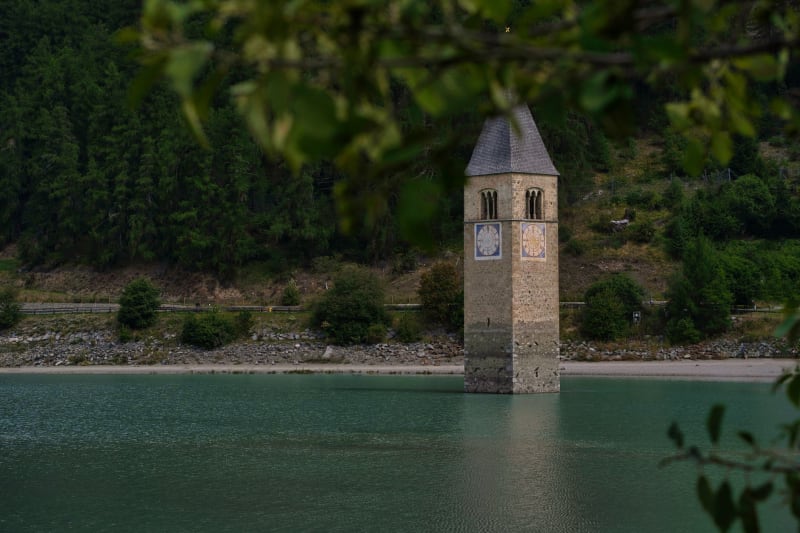
Val Venosta
The long western valley of South Tyrol, running from Merano to the Swiss border through apple orchards, medieval castles, and a high-altitude dryness unlike anywhere else in the Alps.
Explore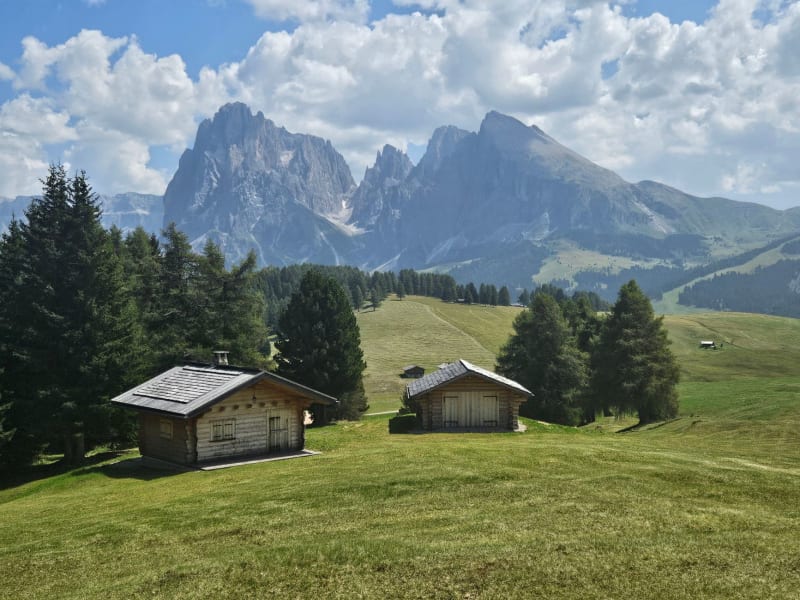 south-tyrol
Alpe di Siusi
Europe's largest high-altitude alp — a vast treeless plateau of summer wildflowers and winter snowfields suspended above the valleys, with the Dolomite spires of the Sassolungo as a backdrop that looks fabricated.
Explore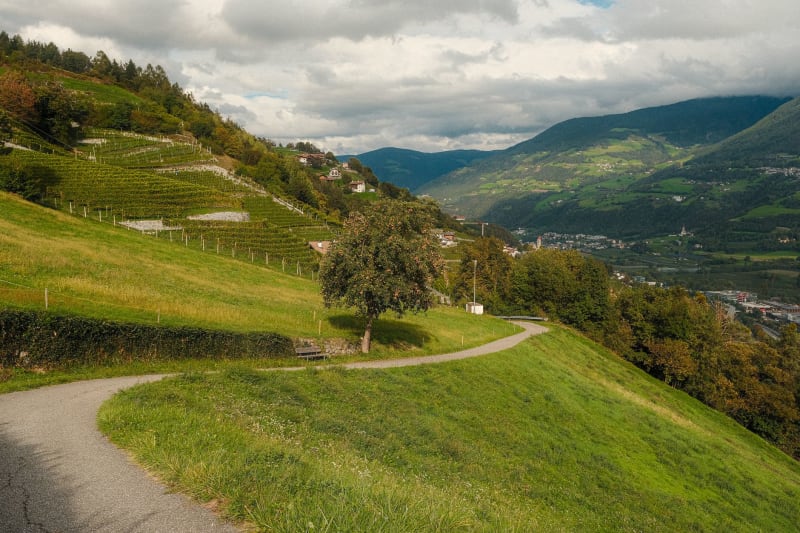 south-tyrol
Bolzano
A bilingual city where Italian espresso culture and Austrian Stuben coexist under the same arcaded porticoes, and a 5,300-year-old man stares at you from behind refrigerated glass.
Explore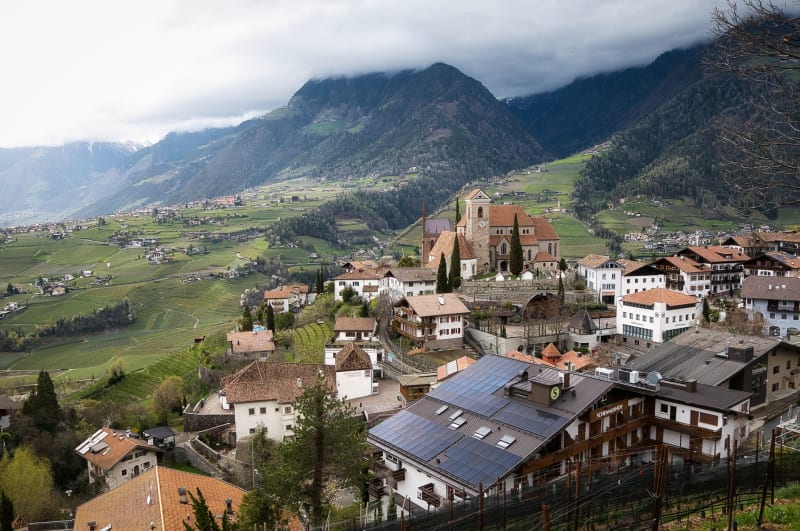 south-tyrol
Bressanone
One of the oldest cities in the Alps, shaped by a thousand years of episcopal authority, where a Baroque cathedral and vine-covered cloisters occupy the center and the surrounding hills produce wine that gets quietly exported and rarely celebrated.
Explore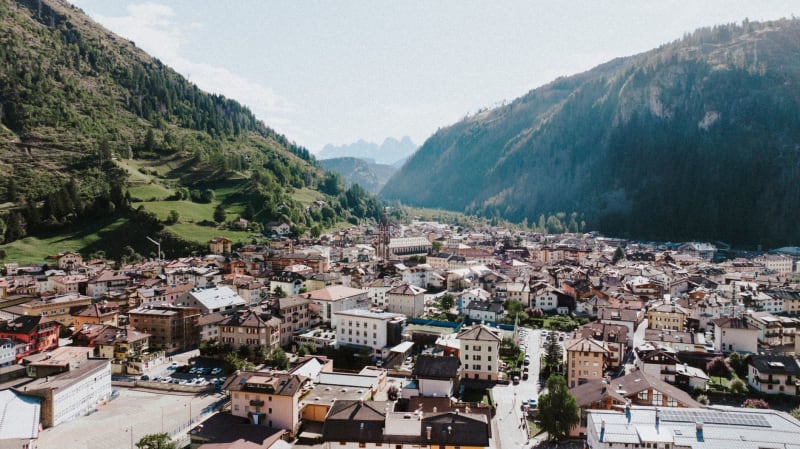 south-tyrol
Brunico
The market town of the Puster Valley, compact and unhurried, where a medieval high street runs uphill toward a bishop's castle and the world's most obsessive mountaineer has built a chain of museums.
Explore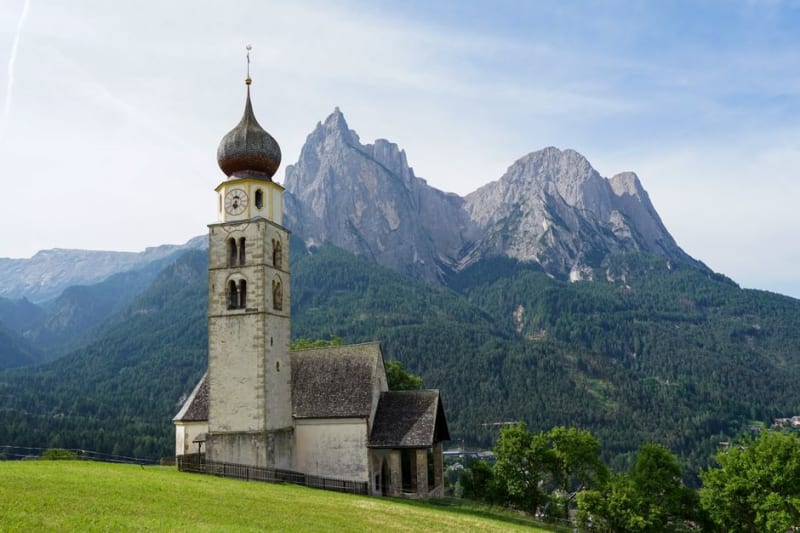 south-tyrol
Castelrotto
A village of onion-domed church spires and flower-heavy balconies perched above the wide green meadows of the Alpe di Siusi.
Explore