
Mogadishu
"The city smelled of salt and construction dust, and somehow both felt like optimism."
A capital rebuilding itself block by block, where crumbling Ottoman arches share street corners with brand-new cafés and the Indian Ocean crashes into a shoreline that has no intention of being forgotten.

Nobody warns you about the light in Mogadishu. I had read enough grim dispatches to arrive braced for grimness, and instead the Indian Ocean threw off a silver glare that made every white-washed wall look like it was generating its own heat. The city caught me off guard on day one, and it never really stopped.
Hamarweyne: The Old City Still Standing
The historic district of Hamarweyne is where Mogadishu’s layered past is most legible. Arab traders, Portuguese explorers, Italian colonists, and generations of Somali merchants have all left something behind, and the result is an architectural conversation that ranges from crumbling arched doorways to freshly painted shopfronts selling Chinese electronics. I spent a morning just walking the narrow lanes between the old port and the cathedral ruins, stepping over cats and past men playing cards in doorways. Restoration crews were patching plasterwork on a corner building. A boy tried to sell me a Somali flag phone case. I bought it.
The old mosque, Masjid al-Qiblatayn, is one of the oldest in sub-Saharan Africa. I stood inside and let the coolness settle over me. There is something about a space that has held prayer for that long that quiets whatever background noise I have in my head.
The Lido Beach Surprise
Lido Beach is the detail that doesn’t fit any narrative you arrive with. On weekend afternoons, families spread out across the sand, kids race into waves, and vendors push carts of grilled corn and fresh mango juice. The beach had been off-limits for years during the worst of the violence, and its reclamation as a public space feels deliberate and hard-won. I ordered a plate of grilled lobster from a woman running a small grill at the edge of the sand. It cost almost nothing. It tasted like something people had been waiting a long time to be able to eat in the open.
The water is warm, the color an almost aggressive turquoise. Fishermen haul nets a hundred meters offshore. You can hear Arabic pop from someone’s phone, kids screaming at a wave, a call to prayer drifting over the dunes.
Food, Tea, and the Rhythm of the Day
Breakfast in Mogadishu is serious business. Canjeero — a spongy, lightly sour flatbread — with liver stew and a glass of shaah, the spiced tea that sweetens the whole morning. The tea is milky, cardamom-forward, slightly too sweet, and I became dependent on it within forty-eight hours. In the afternoon the same tea shops refill with people and argument and laughter, and the city’s pace slows in the manner of somewhere that has decided the midday heat is not worth fighting.
Restaurants in the city center are increasingly confident, serving generous plates of rice and braised goat, pasta dishes that reflect the Italian colonial past without apologizing for them, and fresh seafood that comes off the boats a short distance away.
Navigating Carefully
Mogadishu is not a place you arrive at casually. Security arrangements require advance planning, local contacts, and awareness of current conditions. But the city rewards effort with one of the most complicated, alive urban experiences on the continent.
When to go: The cooler, drier months of November through January offer the most comfortable conditions. Avoid the heavy rains of April–June and October–November. Always verify security conditions with a specialized travel operator before any visit — the situation can shift quickly.
Keep exploring
More from Somalia
 somalia
Puntland Coast
A thousand-kilometer arc of Indian Ocean shoreline in northeastern Somalia where coral reefs run undivested by tourism, sea turtles nest on deserted beaches, and the ancient frankincense trade routes come down from the mountains to meet the sea.
Explore somalia
Sheikh
A mountain town in Somaliland's interior that the British colonial administration used as a hill station for good reason — at 1,500 meters, the air is cool, the views are enormous, and the surrounding highlands feel like a different country entirely from the coastal heat.
Explore somalia
Zeila
One of the oldest port cities in Africa, now a quiet and half-collapsed ghost of its medieval self, sitting at the edge of Somaliland where the Red Sea nearly becomes the Gulf of Aden and the tide reveals coral gardens at low water.
Explore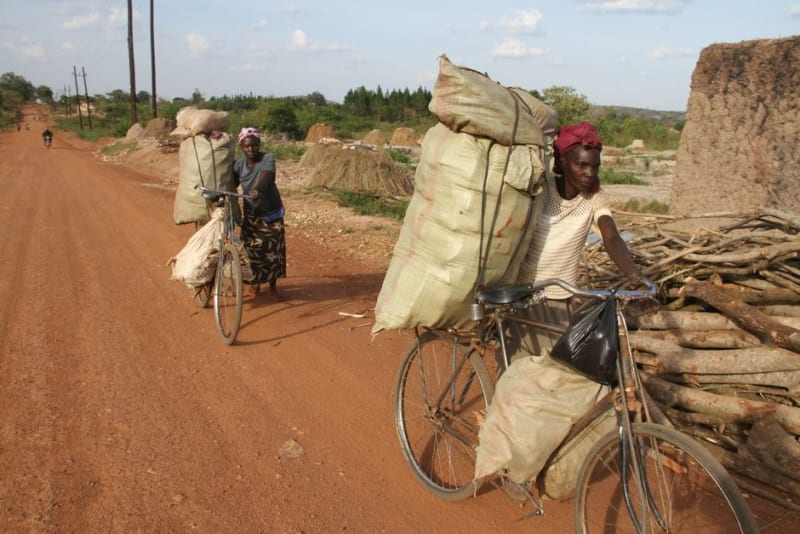 somalia
Baidoa
A red-earth farming city in Somalia's Bay region, where sorghum fields and roadside grain markets reveal the country's agricultural heartland.
Explore somalia
Berbera
A crumbling Ottoman port on the Gulf of Aden where the architecture is slowly losing its argument with salt air, the beach is absurdly beautiful, and the history of trade routes runs so deep you can feel it underfoot.
Explore somalia
Borama
A cool, eucalyptus-shaded university town near the Ethiopian border, quieter and greener than anywhere else I found in the Somali territories.
Explore