
Orava Castle
"The builders looked at an impossible cliff and decided that was exactly where the castle should go."
A medieval fortress stacked in three vertical tiers on a sheer limestone crag above the Orava River — the most dramatic castle silhouette in Slovakia and one of the most structurally audacious in Central Europe.

The castle that shouldn’t exist
My first view of Orava Castle was from the road approaching Oravský Podzámok, and I stopped the car because I wasn’t sure I was interpreting the landscape correctly. There’s a rock — a bare limestone crag rising about 112 meters from the river valley floor — and on top of it, on the sides of it, somehow growing organically from it, there’s a castle. Not a ruined outline of a castle, but an intact complex of towers and walls and courtyards at three distinct elevations, the whole thing appearing structurally improbable from below.
The castle has been here in some form since the thirteenth century, and the successive additions over four hundred years of construction are visible as distinct architectural layers as you climb. The lowest court is oldest. The middle court was added when the lower one proved insufficient. The upper castle sits at the very peak of the crag, accessible by a path that requires actual handrail-assisted climbing in certain sections.
The climb up
The path to the castle entrance begins at river level and switchbacks up the crag, with the walls rising above you as you ascend. The approach is designed, consciously or not, to be impressive: every switchback reveals a new section of fortification overhead, and by the time you reach the gate you’ve understood viscerally why this location was defensible. Nobody was getting a siege engine up that rock.
Inside, the castle is more museum than ruin — the rooms are furnished and interpreted, the courtyards maintained, the chapel restored to working condition. But the architecture itself overwhelms the museum content. The staircases tunnel through solid rock. Corridors run along the exterior face of the crag, with window slits looking straight down to the river far below. The upper palace rooms have ceilings painted in the Renaissance style, a visual reminder that the people who lived here were doing so with genuine sophistication even as the walls outside were built for siege.
The torture chamber, addressed directly
Orava Castle has a torture chamber display, as many Central European castles do. I’ll note it because visitors will encounter it, and because it’s presented with the standard mix of historical information and sensationalism that these displays typically involve. The chamber itself occupies a natural cave in the upper crag, which gives it a genuinely unpleasant atmosphere that the exhibits don’t need to enhance. Whether to include it in your visit is a matter of personal preference.
The Orava valley beyond
The castle is reason enough to come, but the Orava valley surrounding it is worth additional time. The river is wide and clear, running between forested hills and small farming villages that have the agricultural architecture of the Western Carpathian highlands: steep-roofed wooden barns, hay stacks on poles, churches with distinctive wooden steeples. The village of Vlkolínec, about 30 kilometers south, is a UNESCO-listed collection of traditional log houses that have been continuously inhabited since the fourteenth century.
Lia pointed out, looking up at the castle from the riverbank on our way out, that the whole structure looks slightly different depending on where you’re standing — that the relationship between the three tiers shifts constantly as you move around its base. She was right, and it’s worth circling the crag at river level before leaving to catch those variations.
When to go: May through October for full access to all sections of the castle. August brings organized historical events and reenactments. The castle is open year-round but some upper sections close in winter weather. The surrounding valley is beautiful in autumn — October brings the best foliage color in the surrounding forests. Arrive early in summer to avoid midday crowds on the narrow upper paths.
Keep exploring
More from Slovakia
 slovakia
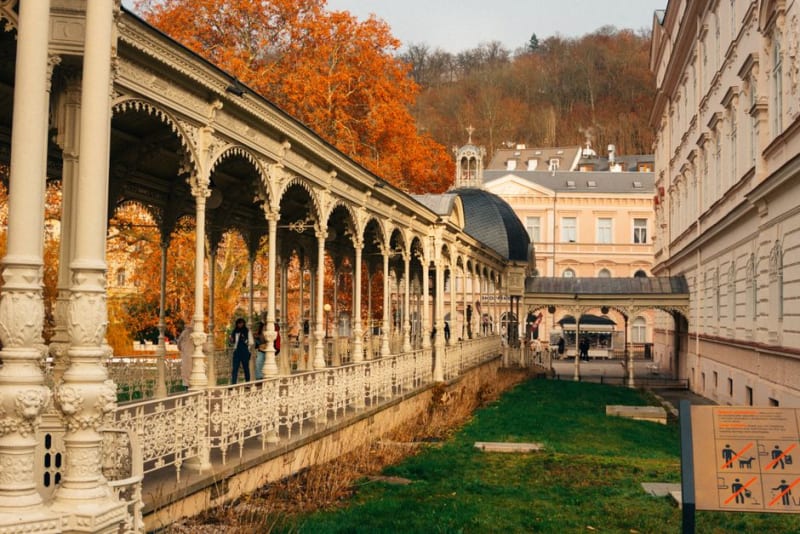
 Piestany
A genteel spa town on the Vah River where locals still smear themselves in warm sulphur mud on a colonnade island.
Explore slovakia
 Slovak Paradise
A national park of deep limestone gorges, wooden ladders bolted to wet rock faces, and waterfalls you have to climb through rather than simply look at — hiking as genuine adventure rather than scenic strolling.
Explore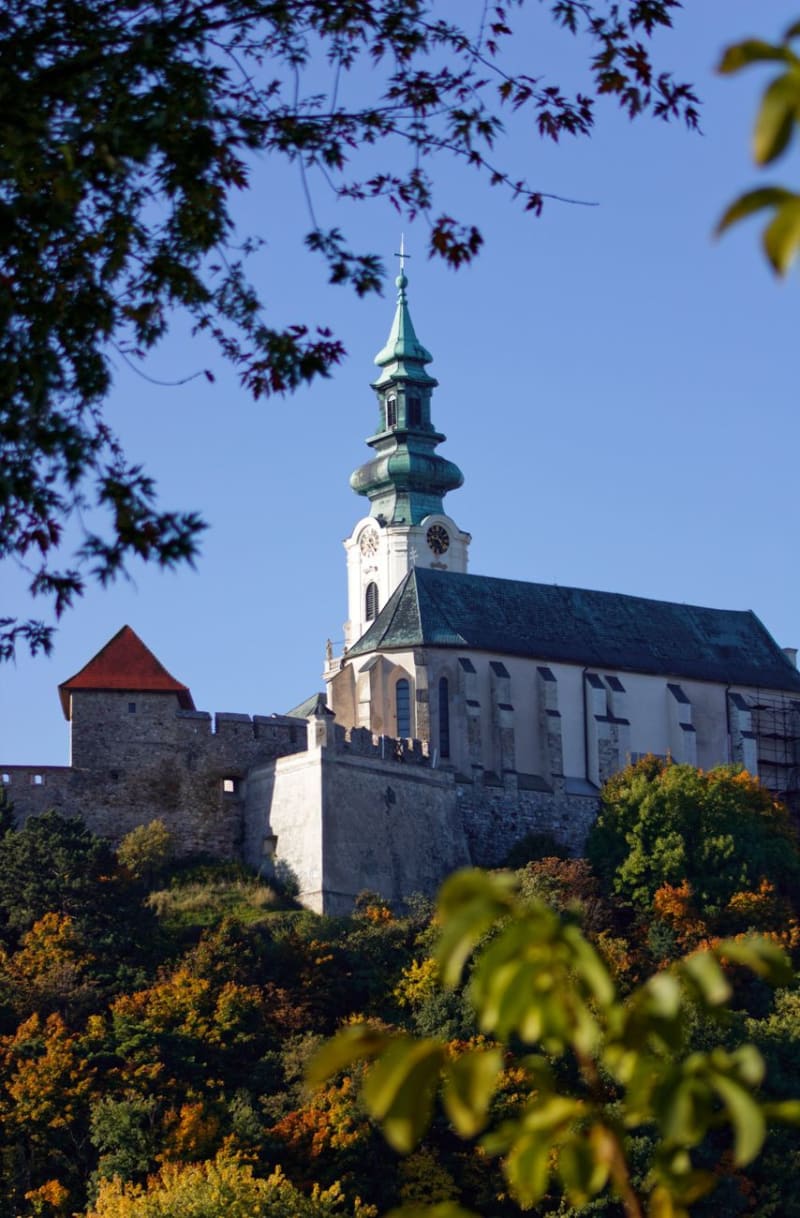 slovakia
 Spiš Castle
One of the largest castle ruins in Central Europe, sprawled across a bare travertine hill above the plains of eastern Slovakia like a stranded white ship.
Explore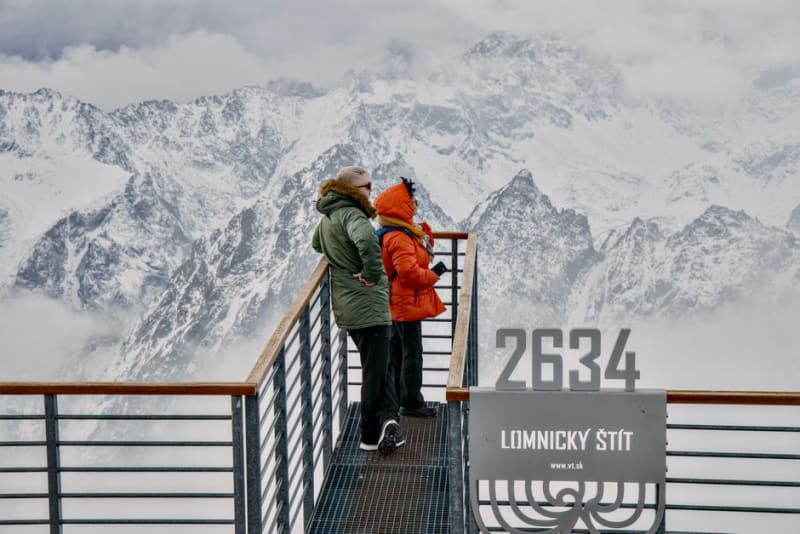 slovakia
 Tatranska Lomnica
A quiet resort village beneath Lomnicky Stit where a century-old funicular hauls you up into thin, sharp mountain air.
Explore slovakia
 Trenčín
A Western Slovak city where a Roman legionary inscription carved into living rock two thousand years ago sits at the base of a medieval castle that has watched the Váh valley ever since.
Explore slovakia
 Banská Štiavnica
A UNESCO-listed mining town folded into Slovak hill country, where baroque fountains share streets with rusting ore-cart infrastructure and the whole place smells faintly of iron and history.
Explore