Eilean Donan Castle
"I've never wanted to be early to a place so badly — I needed that first light on the water before anyone else showed up."
A rebuilt medieval stronghold on its own tidal island where three sea lochs meet, connected to the mainland by a single stone footbridge.
We drove up from Skye in a grey drizzle that didn’t lift until we came around the last bend near Dornie, and then, all at once, there it was — Eilean Donan sitting on its little island like it had grown out of the rock, with Loch Duich, Loch Long, and Loch Alsh all meeting around it. Lia grabbed my arm without saying anything, which is usually how I know a place has actually gotten to her. We pulled the car over on the shoulder before we’d even found the parking lot, just to stand there for a minute.
What got me, once we’d crossed the stone footbridge and I’d read the visitor panels inside, is that almost none of what we were looking at is actually medieval. The castle was first fortified back in the 13th century, but in 1719, during a Jacobite uprising, Spanish troops garrisoned it in support of the rebellion — and British government ships answered by bombarding it into rubble. It sat as a ruin for two centuries. Nobody touched it. Then in 1912, Lieutenant Colonel John MacRae-Gilstrap started rebuilding it stone by stone, a project that took twenty years and gave the castle the very footbridge we’d just walked across.
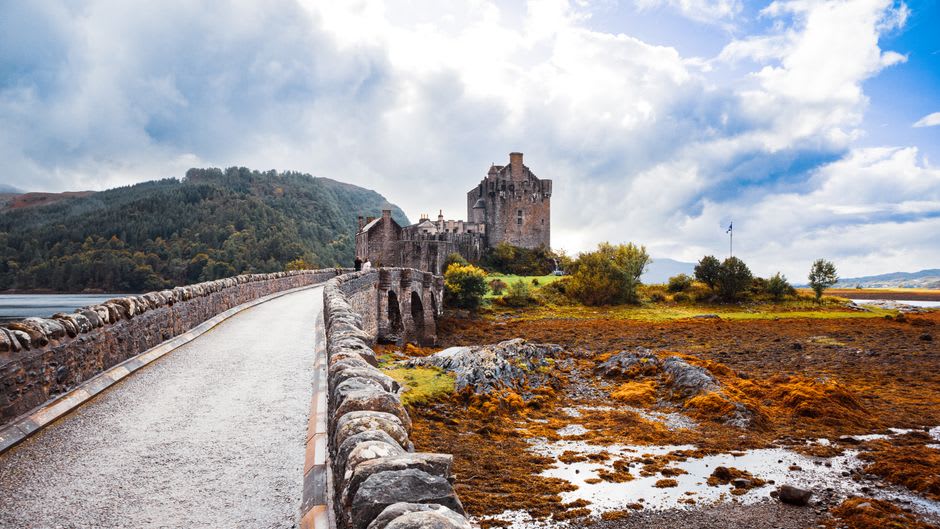
Inside, the banqueting hall has this dark, low-beamed weight to it that made me want to stay quiet, the way you do in a church. I remember Lia pointing out a display about the castle’s film history and laughing — Highlander was shot here in 1986, and so was the James Bond film The World Is Not Enough in 1999 — and it was funny to think that a building rebuilt so painstakingly to look ancient has spent decades doubling as a movie backdrop. We ate lunch after at a tiny café in Dornie, soup and bread, watching the tide shift around the island from our table.
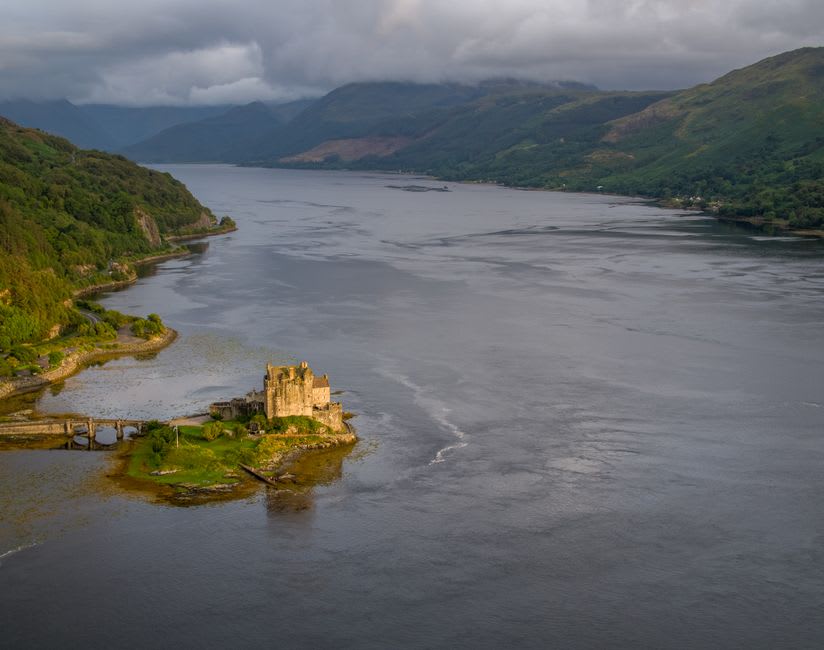
What stays with me most is standing on the footbridge on our way back to the car, looking down three different lochs at once and trying to work out which direction the water was actually flowing. I never figured it out. Lia said that was the point.
When to go: We went in early summer and got lucky with clear water and long light, but honestly the castle earns its atmosphere just as much under grey skies — go late spring through early autumn if you want the lochs at their most vivid, any other time if you don’t mind a bit of moodiness.
Keep exploring
More from Scotland
 scotland
 Glasgow
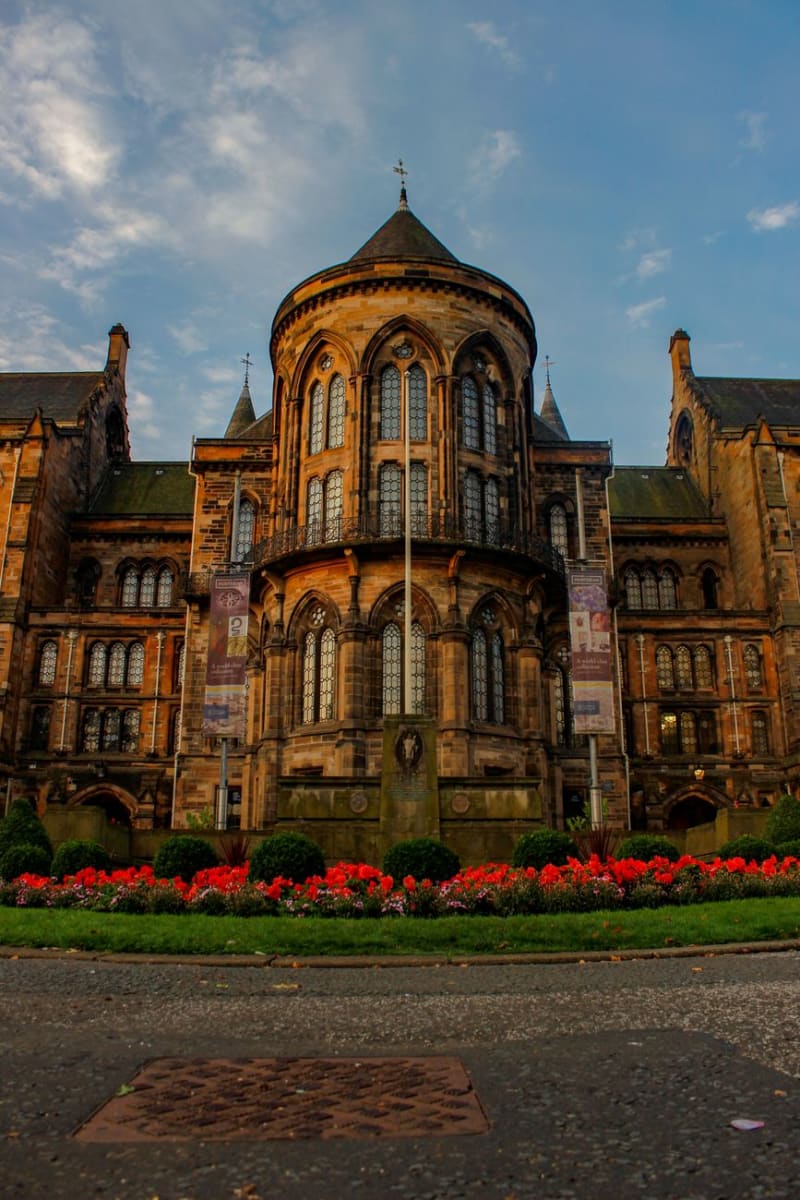
Scotland's biggest, loudest, friendliest city — Victorian sandstone, Mackintosh tearooms, and a music scene that doesn't stop for the rain, which is constant.
Explore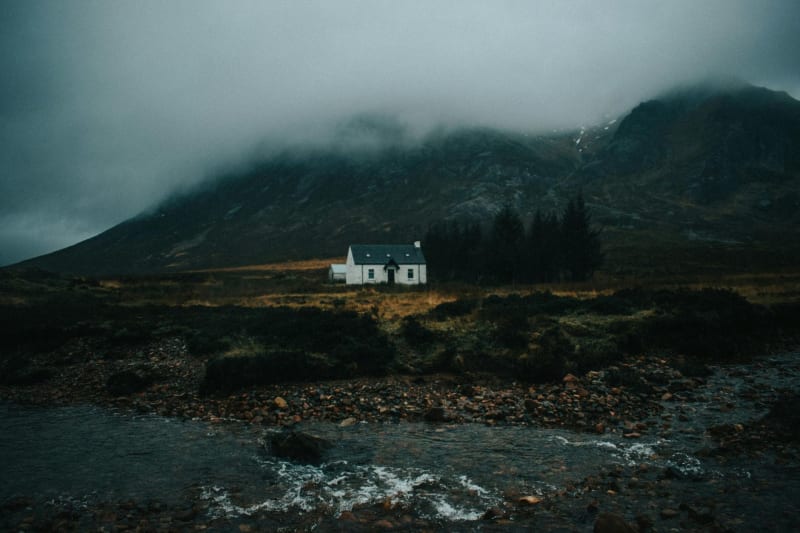 scotland
 Glencoe
A valley so brutally beautiful it feels like the earth is still angry about what happened here in 1692.
Explore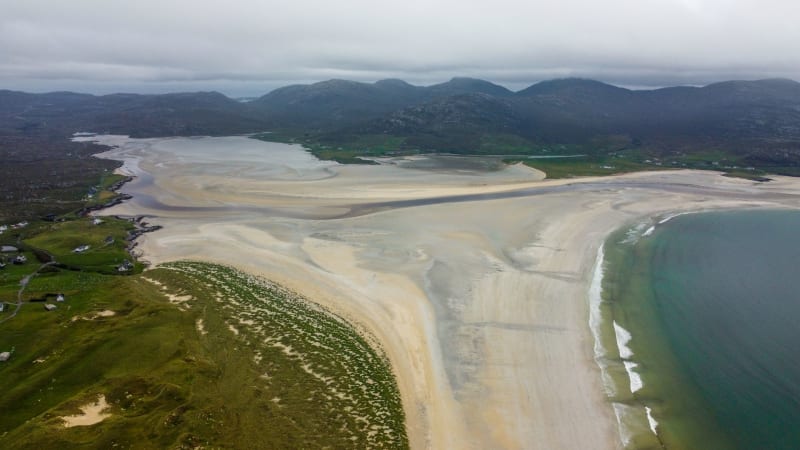 scotland
 Isle of Harris
The Outer Hebrides island where turquoise Caribbean-looking beaches meet treeless peat moors and no one seems bothered by the contradiction.
Explore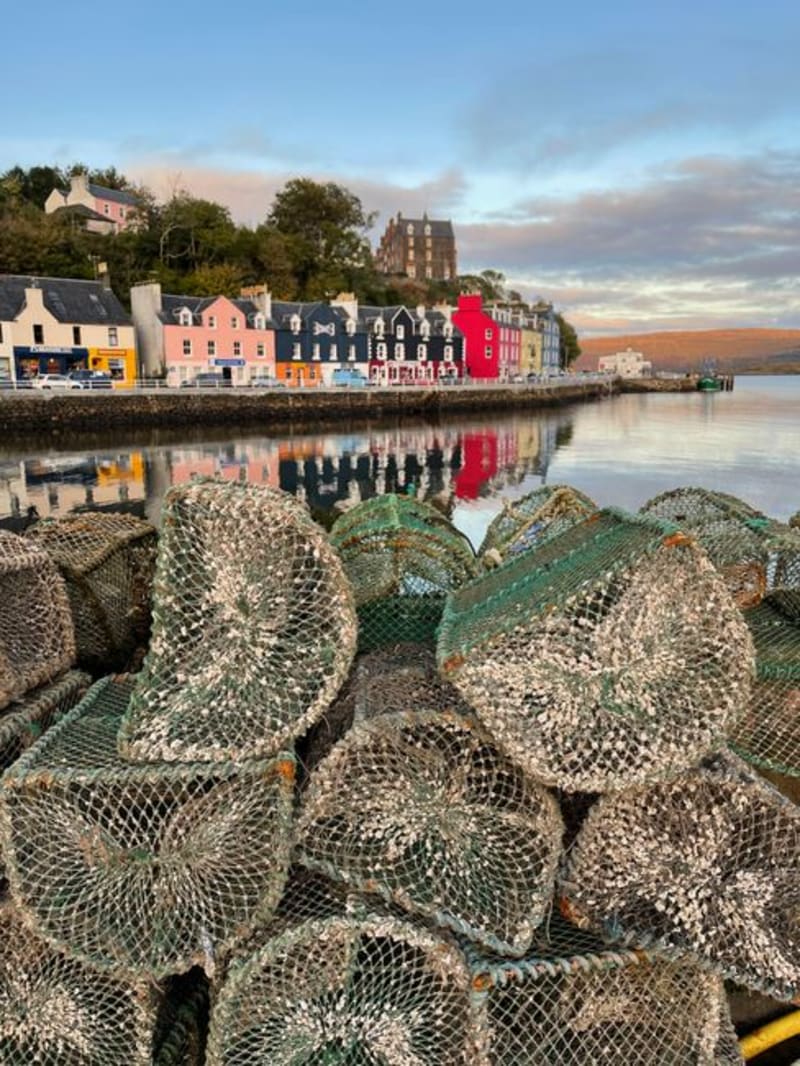 scotland
 Isle of Mull
A wildly colorful harbor town, a castle guarding the Sound of Mull, and eagles wheeling overhead on Scotland's Inner Hebrides.
Explore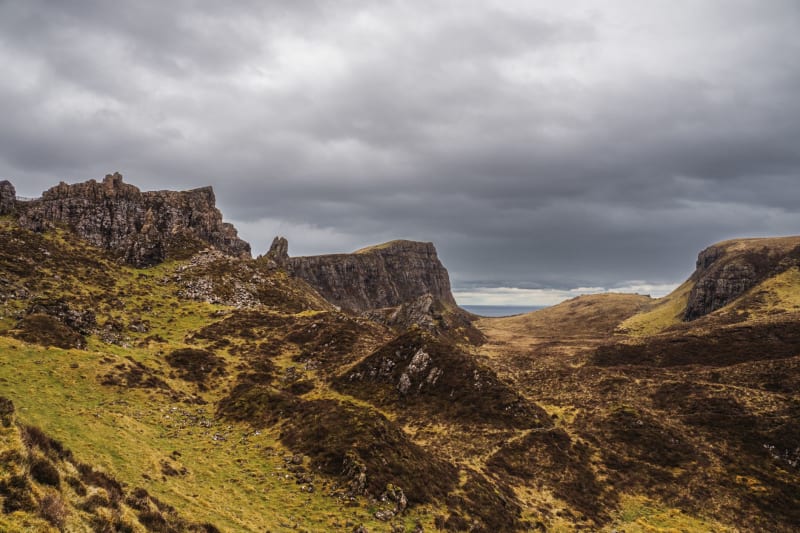 scotland
 Isle of Skye
A Hebridean island where the geology is so violent and the light so strange it feels less like land than like a mood.
Explore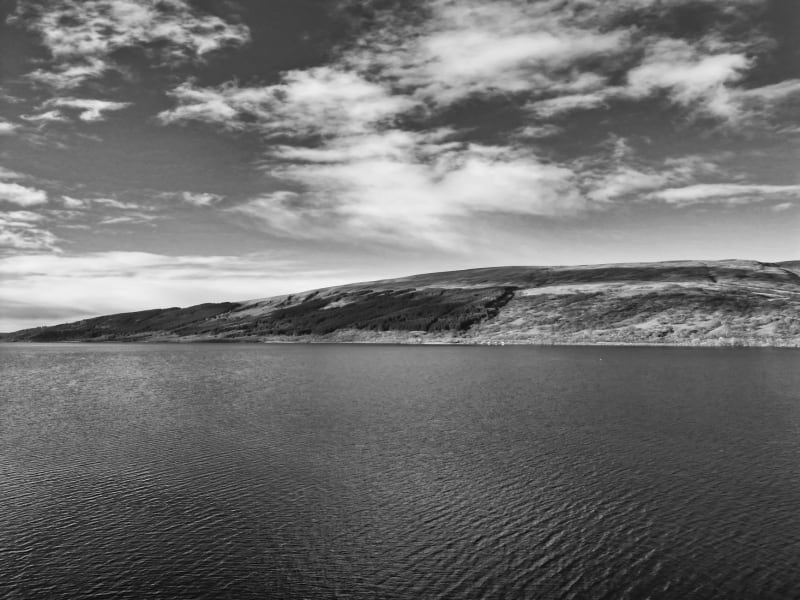 scotland
 Loch Lomond
Scotland's largest loch and its most democratic landscape — serene enough for a Sunday morning canoe and wild enough to humble you by afternoon.
Explore