Villasimius
"I counted eleven shades of blue between the shore and the horizon and gave up trying to name them."
A former tuna-fishing outpost on Sardinia's southeastern tip where the sand is powder-white, the water is improbably turquoise, and flamingos outnumber the umbrellas in the off-season.
I got to Villasimius by accident, really — a rental car detour off the main Cagliari road that turned into three unplanned days. The town itself is unassuming, a low grid of streets a few kilometers back from the coast, built around a fishing and tuna-processing economy that has mostly given way to summer tourism without fully forgetting what it used to be. The old Torre Vecchia still stands watch over the harbor, a squat 16th-century Spanish watchtower built to spot Barbary corsairs, back when this coastline needed spotting for.
Capo Carbonara and the Color Problem
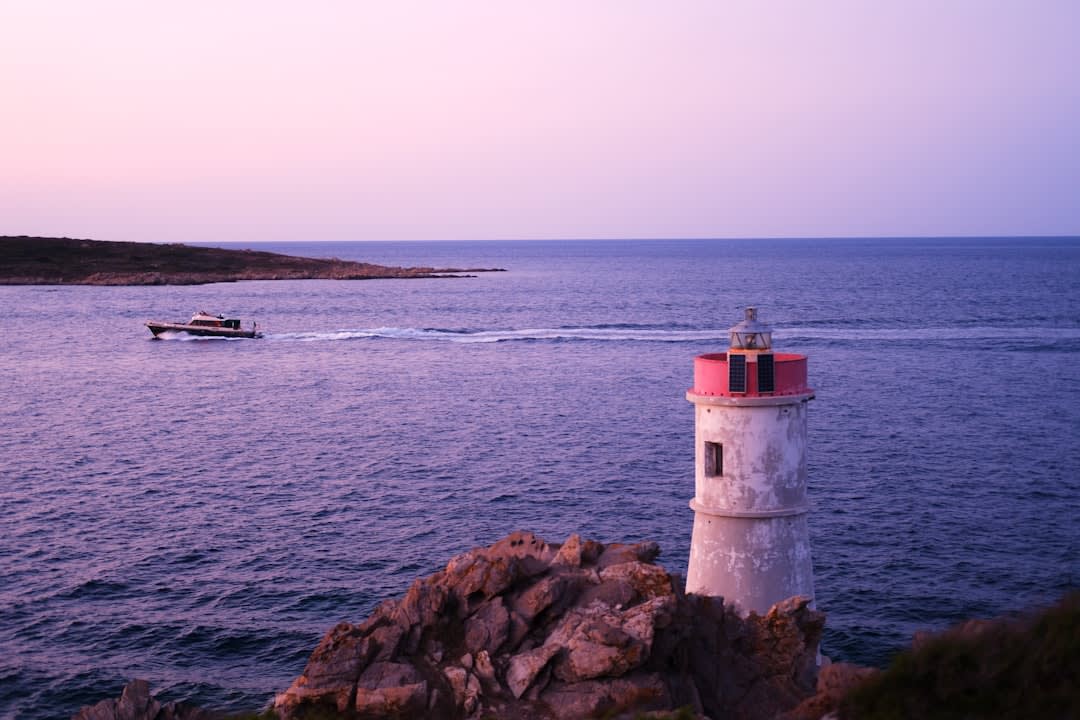
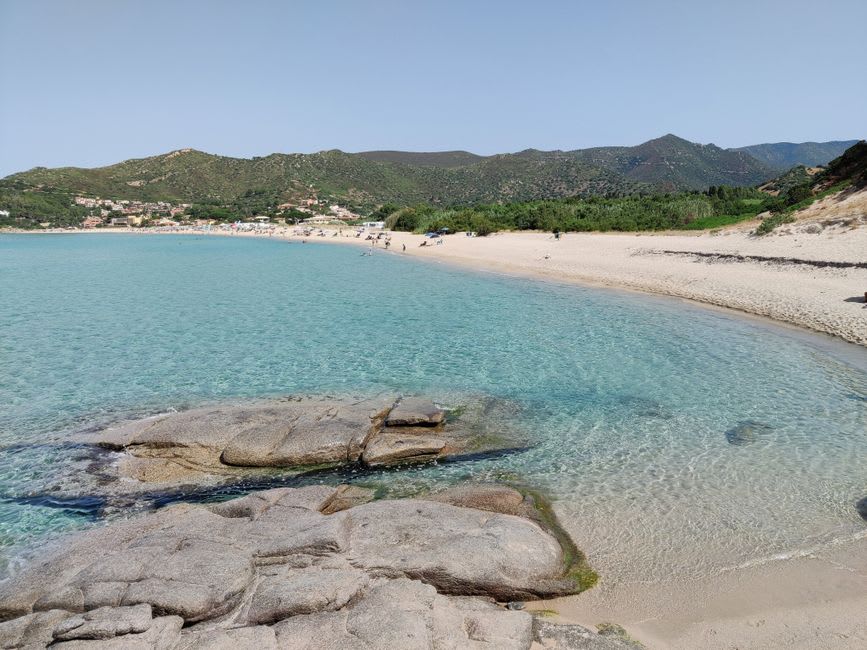
The real business of Villasimius happens at Capo Carbonara, the protected headland and marine reserve at the peninsula’s tip. Spiaggia del Riso gets its name — “rice beach” — from grains of quartz so fine and pale they genuinely resemble rice scattered across the sand, and the water above it does something to light that I still can’t fully explain: pale green in the shallows, then a hard turquoise, then a navy so deep it looks like a different sea entirely, all within fifty meters of shoreline. I swam out past the where-it-changes-color line one September morning and just floated there for twenty minutes, doing nothing, which is not something I do often.
Porto Giunco and the Flamingos
A short walk south, Porto Giunco splits into two facing beaches on either side of a slim isthmus, with the old Torre di Porto Giunco standing at the point between them — you can stand at the tower and watch waves break on two different coastlines simultaneously. Behind the beach, the Stagno di Notteri lagoon hosts a resident population of flamingos that seem entirely unbothered by the swimmers thirty meters away. I watched a group of maybe forty of them wade and preen in perfect indifference to a beach volleyball game happening on the other side of the dune. Nobody else on the sand seemed to find this remarkable, which somehow made it more so.
What’s Underwater
Capo Carbonara’s marine reserve status means the diving here is genuinely serious — not resort-brochure serious, actually serious. Boats run out to Isola dei Cavoli and Secca dei Berni, where the visibility regularly exceeds twenty meters and the granite seafloor drops into canyons thick with gorgonian fans. I’m a mediocre snorkeler at best, but even from the surface near Cala Pira, a smaller cove tucked between headlands north of town, I could see schools of salema and the occasional curious grouper drifting below me in water so clear it barely felt like an obstruction.
When to go: Late June and September deliver warm water without August’s parking wars. The marine reserve boats run reliably from May through October; outside that window, the town settles back into its quieter, fishing-village rhythm, and the flamingos mostly have Porto Giunco to themselves.
Keep exploring
More from Sardinia
 sardinia
 Alghero
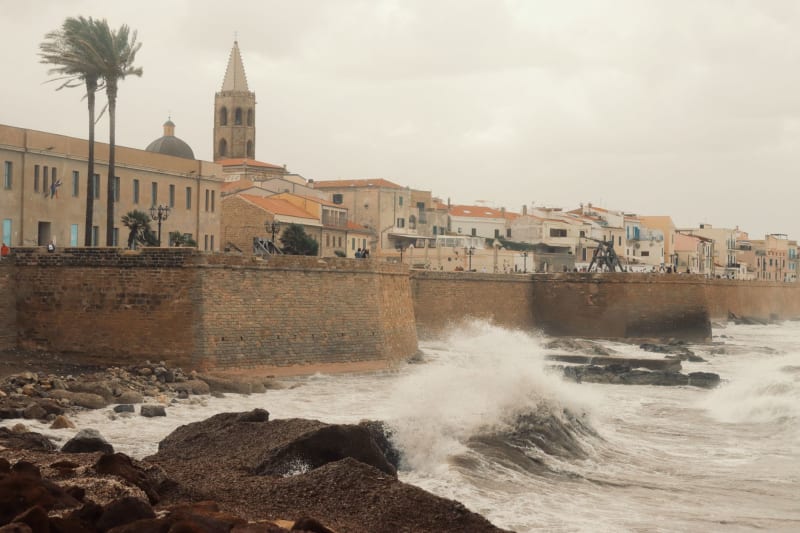
A Catalan-speaking walled port on Sardinia's northwest coast where the menus read like Spanish and the ramparts glow amber above one of the clearest seas in the Mediterranean.
Explore sardinia
 Asinara
A former prison island off Sardinia's northwest tip, now a national park roamed by ghostly white donkeys and abandoned cellblocks slowly returning to nature.
Explore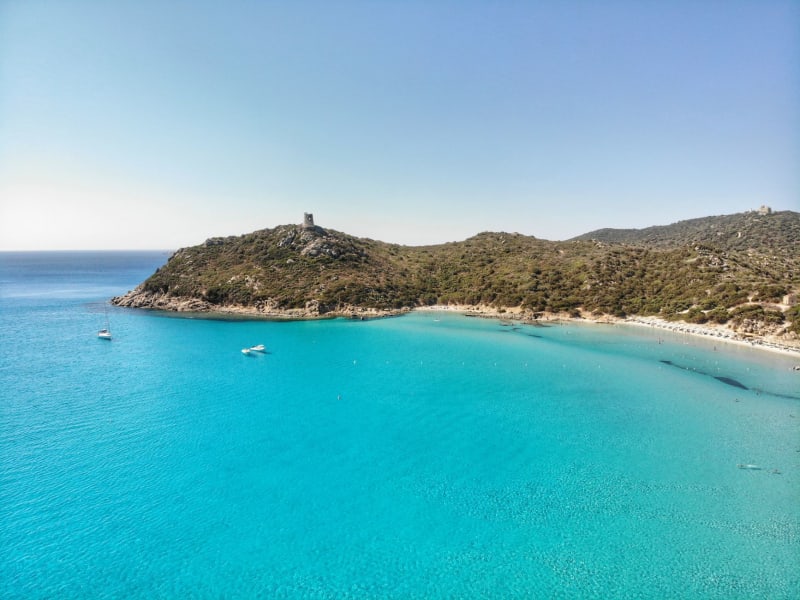 sardinia
 Barbagia
The rugged interior heartland where Sardinian identity was forged in granite and kept alive through centuries of magnificent, deliberate isolation.
Explore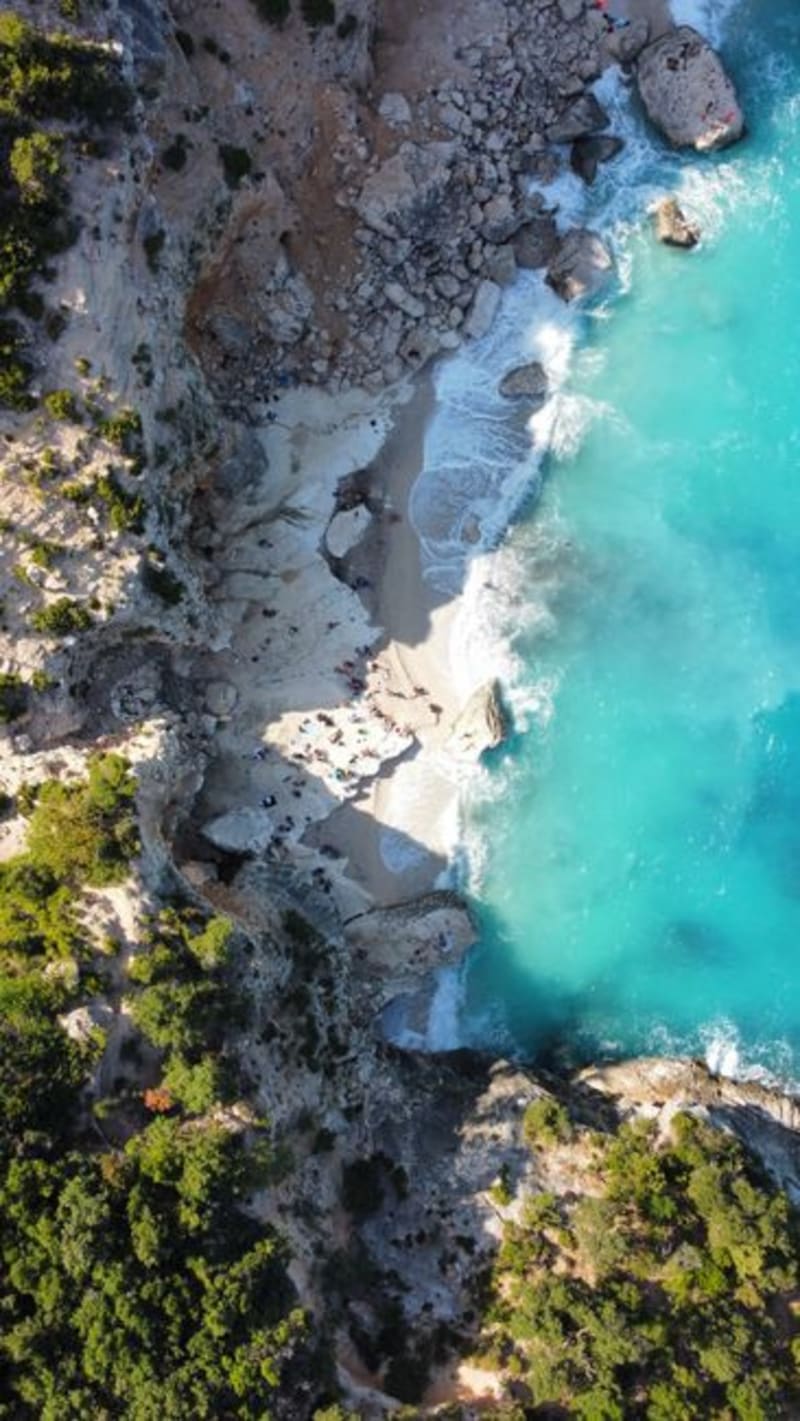 sardinia
 Baunei
A clifftop town perched above the Golfo di Orosei, gateway to the Golgo plateau's sinkholes and the legendary Selvaggio Blu trek along Sardinia's wildest coastline.
Explore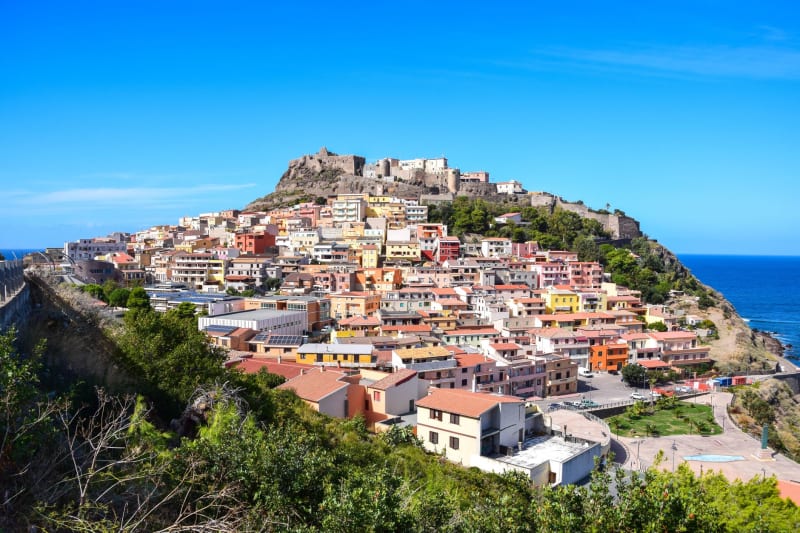 sardinia
 Bosa
A medieval town of faded pastels climbing a riverside hill in western Sardinia, where ancient tanneries line the Temo and the local malvasia wine tastes like nothing you've had before.
Explore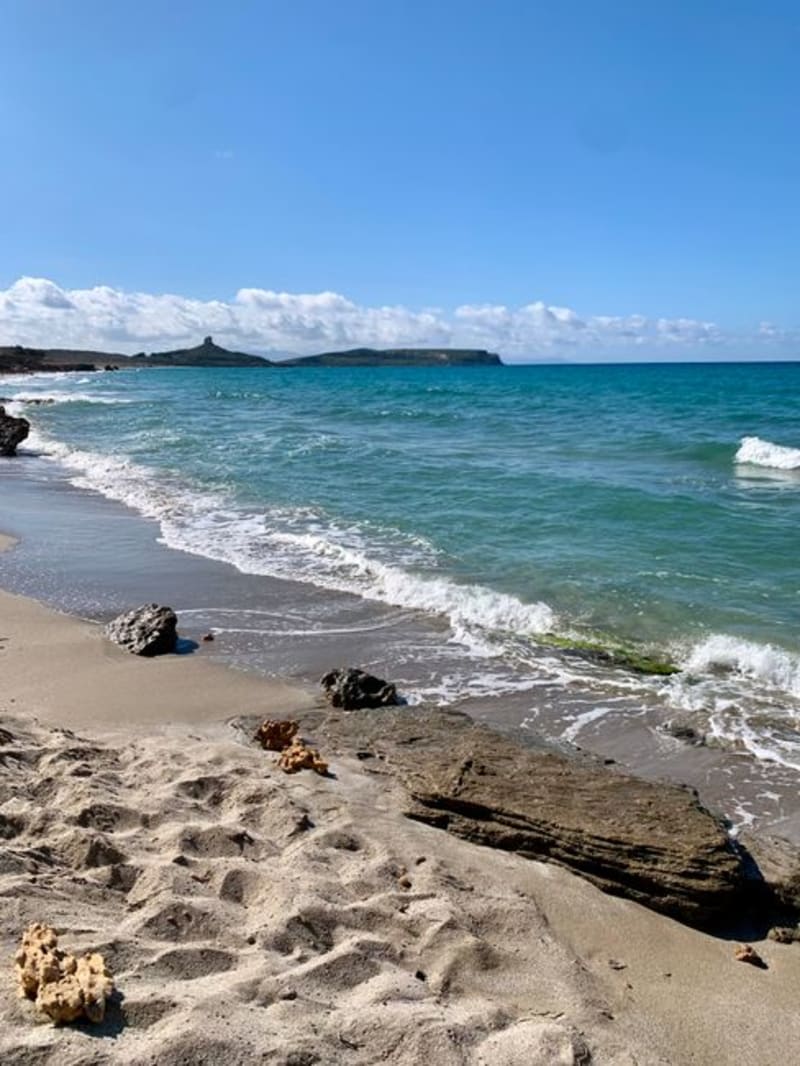 sardinia
 Budoni
An unpretentious east-coast beach town where the sand is soft and the crowd is mostly Sardinian, a low-key alternative to the polish just up the coast.
Explore