Tortoli
"Everyone was headed to the beach at Arbatax. I stayed in town and had the lagoon path entirely to myself."
The unassuming provincial capital of Ogliastra, a working town beside a lagoon that most visitors treat as a gateway to somewhere else, and quietly deserves more than a glance.
Tortoli is Ogliastra province’s administrative center, which sounds like faint praise, and I’ll admit I first treated it exactly that way — a place to rent a car, buy groceries, and move on toward the more photogenic coastline nearby. It took an unplanned extra night, caused by a ferry delay, to actually look at the town itself, and I came away thinking Tortoli gets dismissed mostly because it sits so close to places with better marketing.
The Lagoon Path
Just east of the center, the Stagno di Tortoli lagoon separates the town from the sea, a shallow expanse of brackish water that draws herons, egrets, and the occasional flamingo among reed beds and salt flats. A gravel path circles part of it, and I walked a stretch of it at sunset with almost nobody else around, watching the water turn the color of weak tea in the low light while a heron worked the shallows with the kind of patient, single-minded focus that made my own restlessness feel a little embarrassing.
Arbatax and the Red Rocks
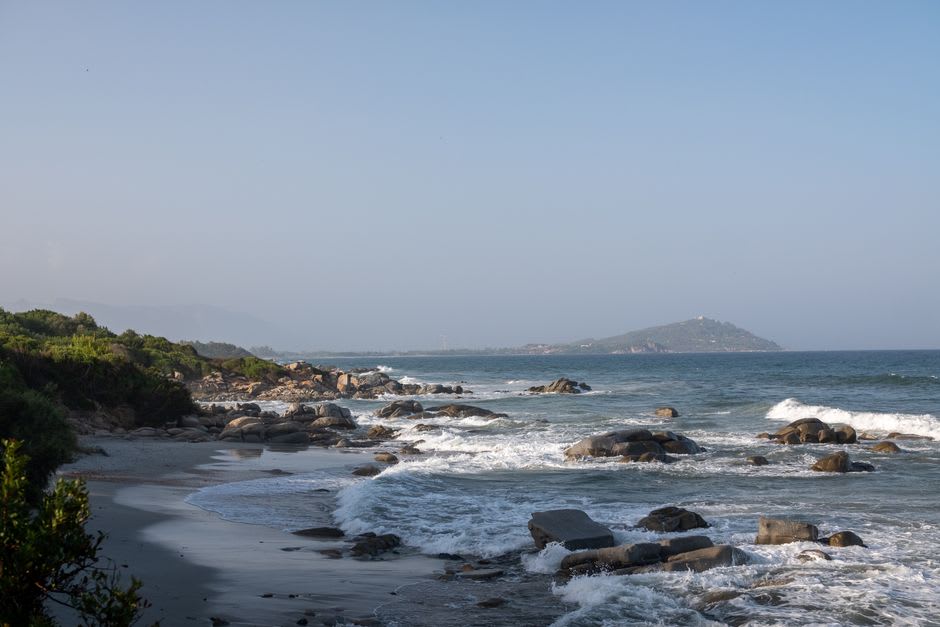
Tortoli’s real calling card sits four kilometers away at its own port hamlet, Arbatax, where a headland of red porphyry rock — Le Rocce Rosse — drops into the sea in a color so deep and rust-toned it looks almost artificially tinted, especially at sunset when the whole formation seems to catch fire. I clambered along the rocks for close to an hour, finding small tidal pools tucked between outcrops, and watched a ferry depart for the mainland silhouetted against the reddened cliffs, the same ferry line that had stranded me here an extra night in the first place.
Ordinary Tortoli, After Dark
Back in the town center after dark, the main corso filled with a crowd that was almost entirely local — kids on scooters, families finishing dinner, no discernible tourist presence beyond myself. I ate a plate of malloreddus alla campidanese, Sardinia’s saffron-tinted gnocchi-like pasta with a rich sausage and tomato sauce, at a trattoria with handwritten specials on a chalkboard, and left thinking that the towns Sardinia treats as mere gateways are often where its actual daily life is easiest to find.
When to go: Any season the ferries run works for passing through, but a deliberate overnight in spring or autumn lets you catch both the lagoon’s bird life and the red rocks at their best late light.
Keep exploring
More from Sardinia
 sardinia
 Villasimius
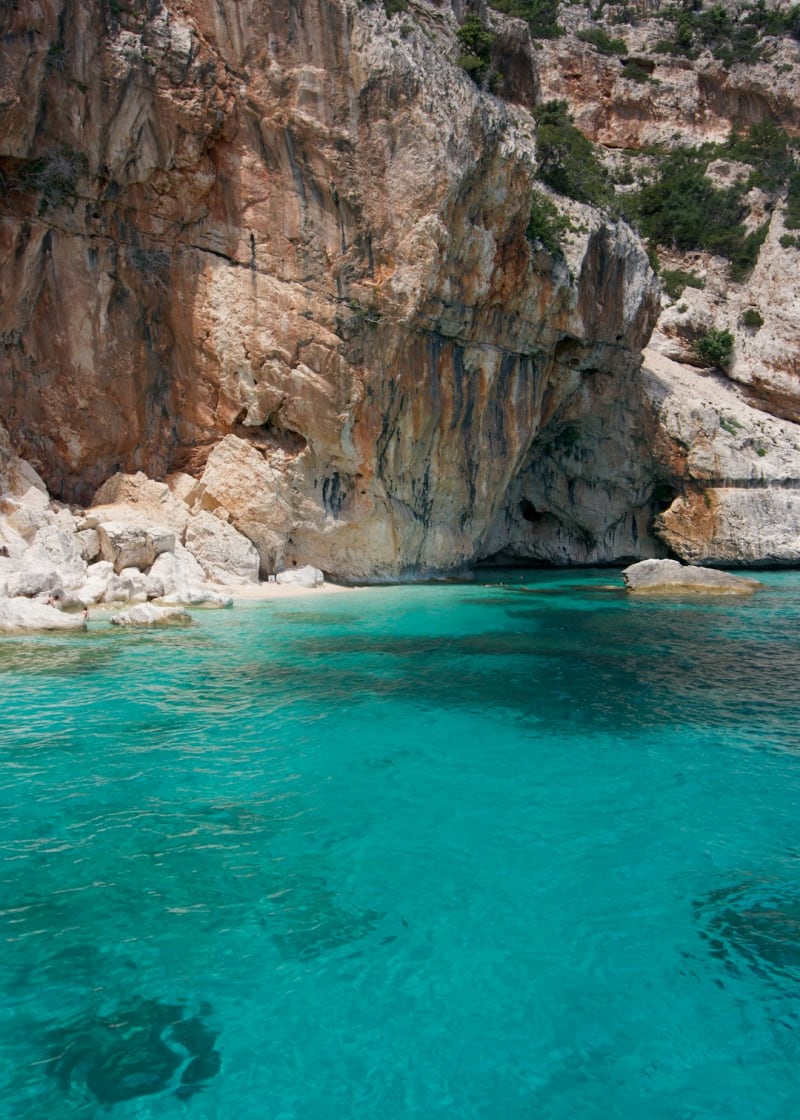
A former tuna-fishing outpost on Sardinia's southeastern tip where the sand is powder-white, the water is improbably turquoise, and flamingos outnumber the umbrellas in the off-season.
Explore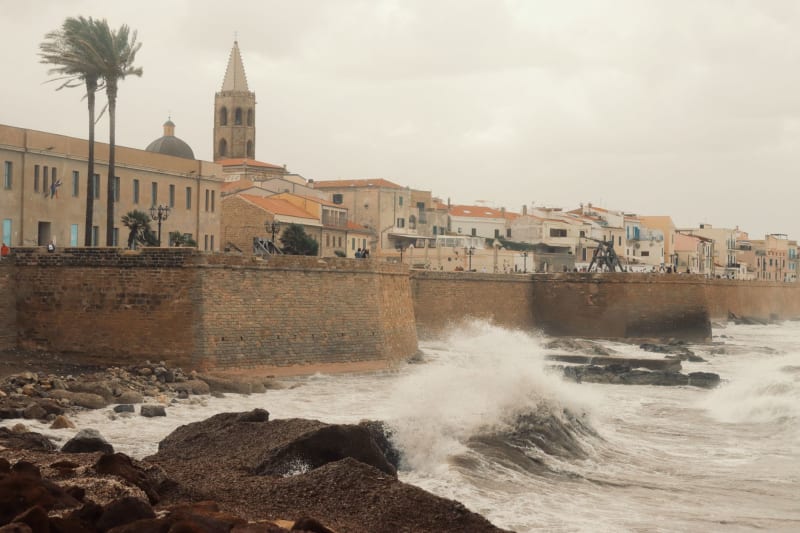 sardinia
 Alghero
A Catalan-speaking walled port on Sardinia's northwest coast where the menus read like Spanish and the ramparts glow amber above one of the clearest seas in the Mediterranean.
Explore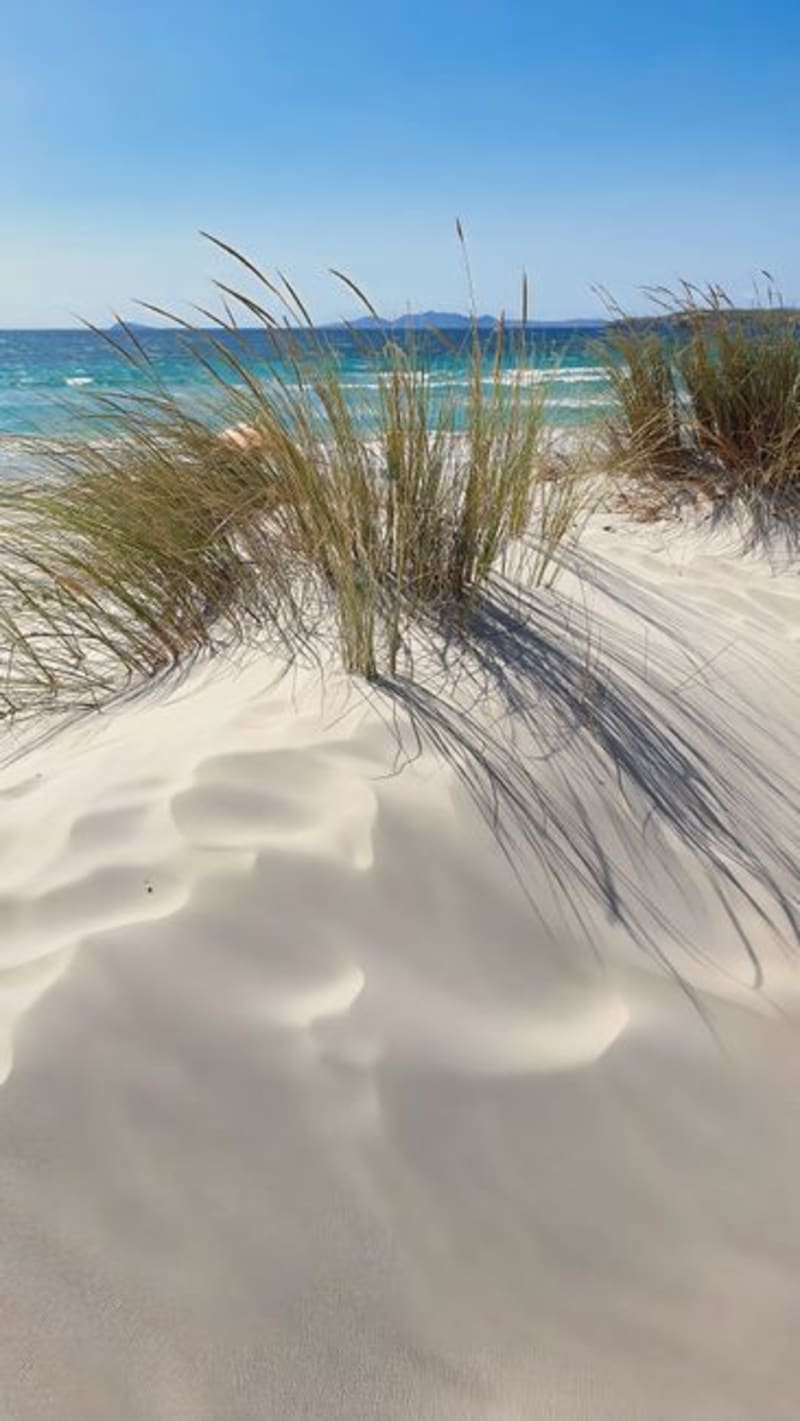 sardinia
 Asinara
A former prison island off Sardinia's northwest tip, now a national park roamed by ghostly white donkeys and abandoned cellblocks slowly returning to nature.
Explore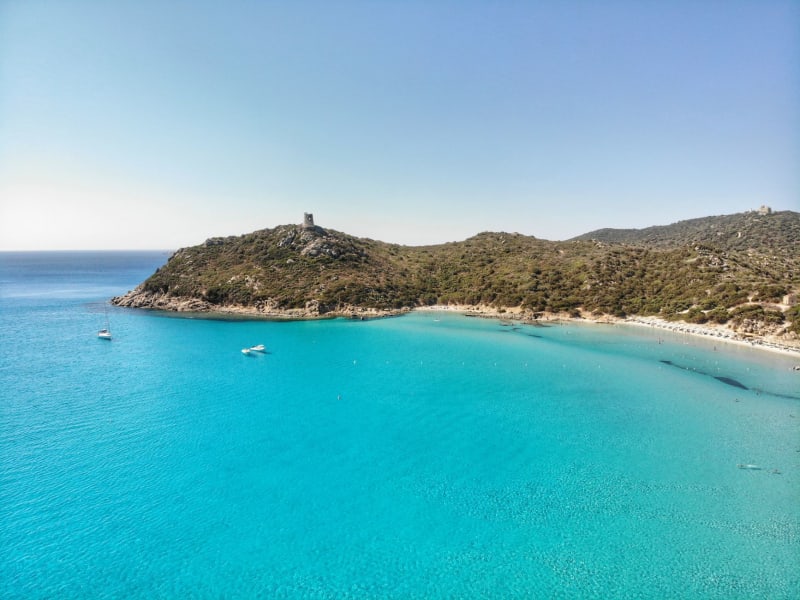 sardinia
 Barbagia
The rugged interior heartland where Sardinian identity was forged in granite and kept alive through centuries of magnificent, deliberate isolation.
Explore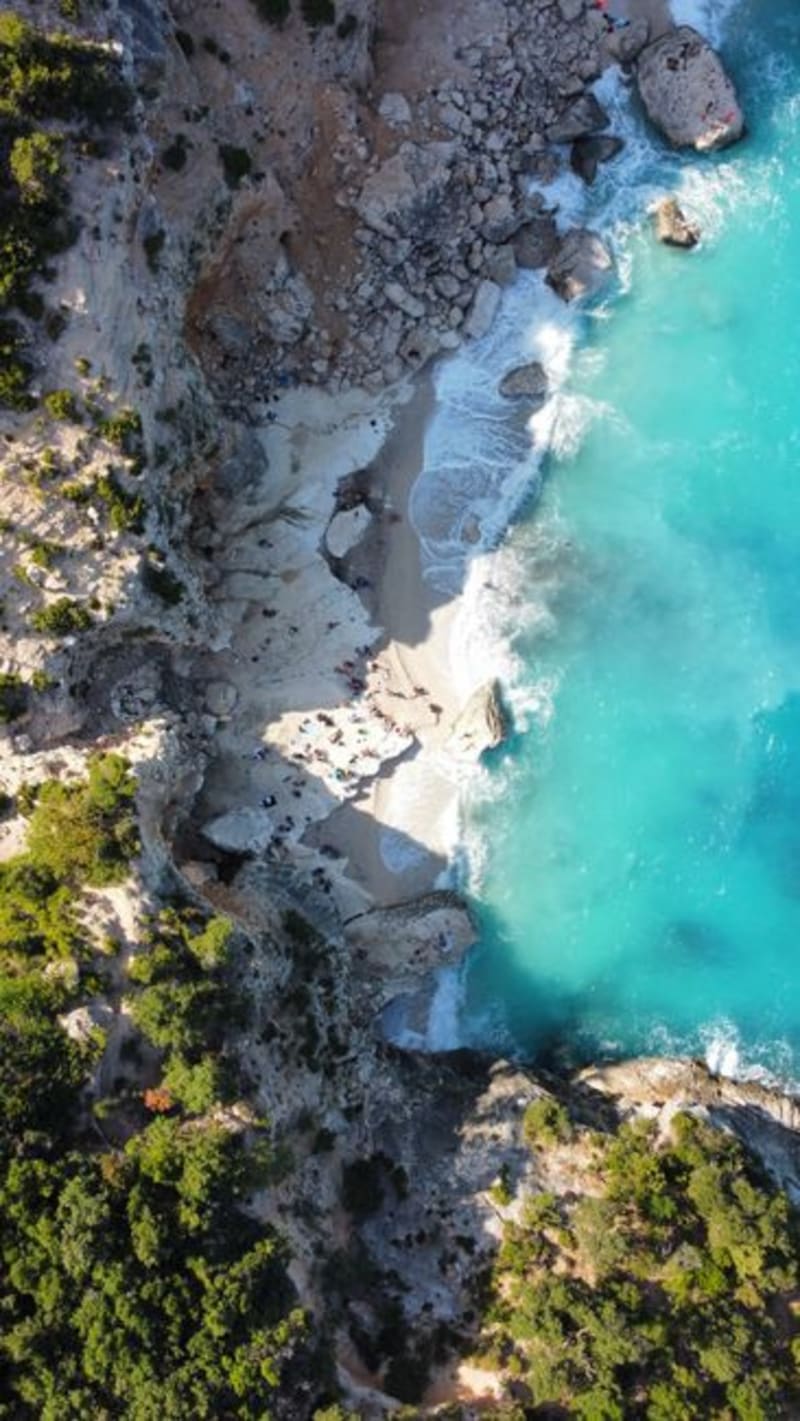 sardinia
 Baunei
A clifftop town perched above the Golfo di Orosei, gateway to the Golgo plateau's sinkholes and the legendary Selvaggio Blu trek along Sardinia's wildest coastline.
Explore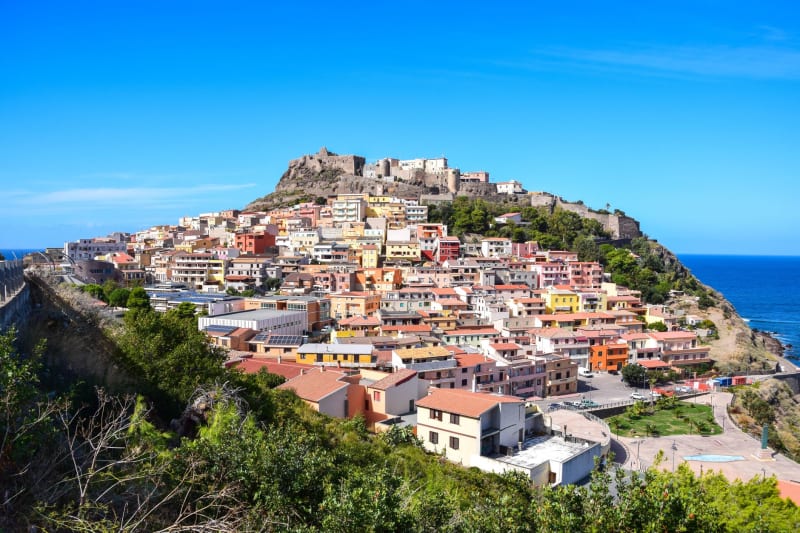 sardinia
 Bosa
A medieval town of faded pastels climbing a riverside hill in western Sardinia, where ancient tanneries line the Temo and the local malvasia wine tastes like nothing you've had before.
Explore