Santa Maria di Leuca
"There is a particular feeling in standing at a point where a country simply runs out, and Leuca gives it to you without ceremony or crowd."
The literal end of Italy, where the Adriatic and Ionian seas meet beneath a lighthouse and a sanctuary, and the road simply stops.
Lia found the map detail before I did — a thin dotted line marking where, according to the fishermen who’ve argued about it for generations, the Adriatic Sea stops and the Ionian begins. It happens directly off the point at Santa Maria di Leuca, the literal heel-tip of Italy’s boot, and there is nothing at the meeting point but open water and a very long view. We drove the last kilometres of the SS274 with the sense of running out of country, which is exactly what happens: the road ends at a cliff, a lighthouse, and a basilica, and beyond that there is only the horizon doing its trick of looking like two different shades of blue stitched together.
The Sanctuary of Santa Maria de Finibus Terrae sits beside the lighthouse, and the name alone — Our Lady of the End of the Earth — tells you what medieval pilgrims felt making this same walk on foot. We climbed the lighthouse’s spiral stair on a windless afternoon in late September, and from the top the geography clicked into place: cliffs running west toward Gagliano del Capo, the De Finibus Terrae grotto directly below where waves pulse in and out of a sea cave, and, if the light is right, a haze on the horizon that locals insist is Greece, though I have never been entirely convinced my eyes weren’t inventing it.
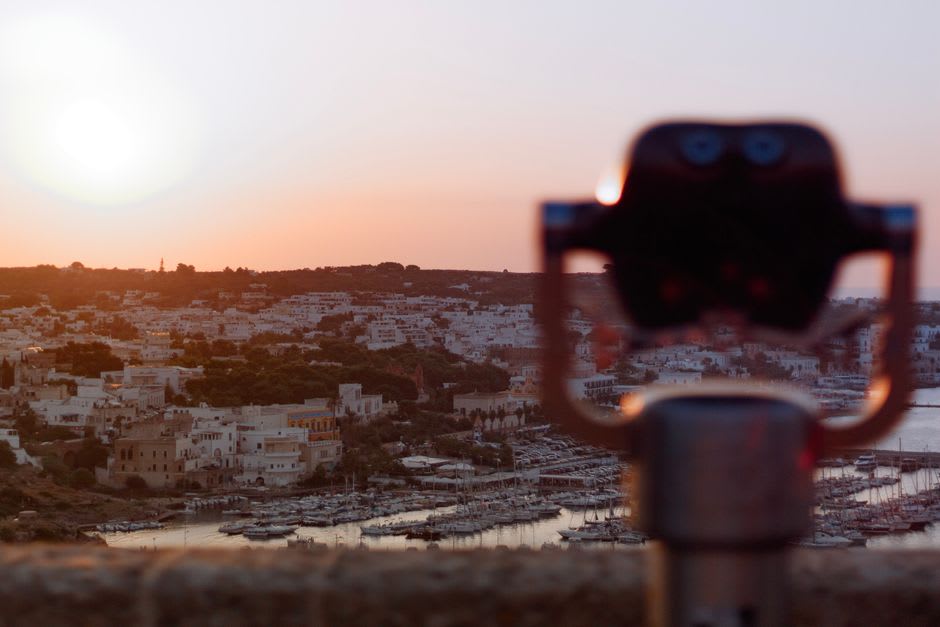
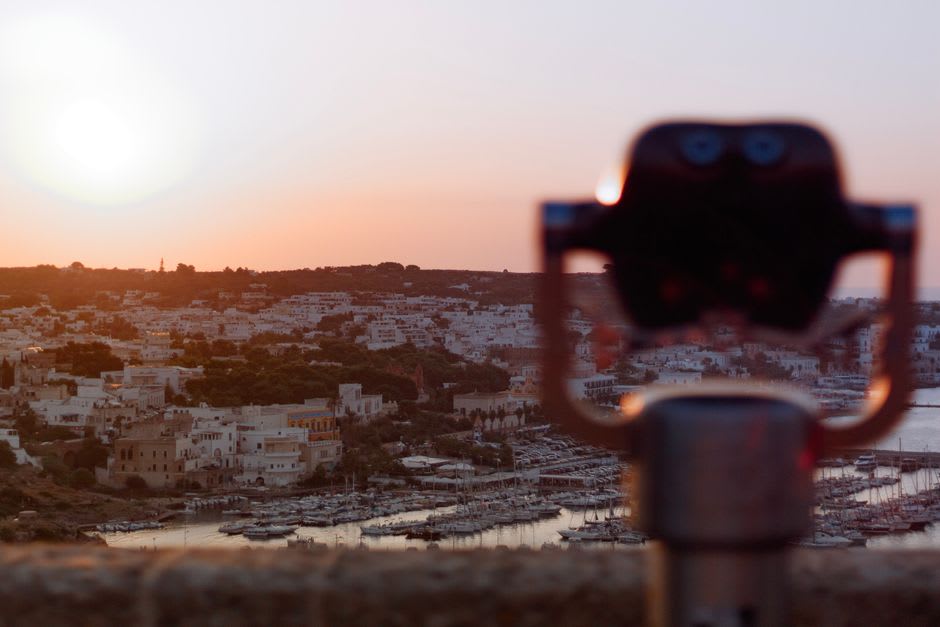
Below the point, the town itself has a strange, layered charm — a scatter of early-twentieth-century liberty-style villas built by wealthy Leccese families as summer residences, now faded and shuttered for most of the year, standing above a working harbour where boat operators run trips along the grotto-riddled coast. We took a small boat out one morning with a captain named Cosimo who knew every cave by name — Grotta del Diavolo, Grotta Porcinara, Grotta delle Tre Porte — and cut the engine inside each one so we could hear the specific echo of water against limestone. Lia said it was the closest she had come to understanding what “grotto” actually means, rather than just a word from a guidebook.
Dinner that night was at a trattoria a few streets back from the harbour, run by a family who seemed mildly amused that we had come all this way just to look at where two seas theoretically meet. We ate ciceri e tria — chickpeas with a mix of boiled and fried pasta ribbons, a Salento dish I hadn’t encountered further north — and the owner told us, unprompted, that the two-seas idea is mostly poetic rather than oceanographic, that the water doesn’t actually change colour at some fixed line. It didn’t matter. Some places earn their myths by being exactly dramatic enough to deserve them, and Leuca, standing at the true bottom of the peninsula with nothing ahead of it but water, has clearly earned this one.
When to go: June and September offer the calmest seas for boat trips into the grottoes and the clearest long-distance views from the lighthouse. August brings day-trippers from across the Salento, and while the town absorbs them without losing its character, the grotto boats book out fast. Winter is quiet and moody, worth it if you want the end of the earth to yourself.
Keep exploring
More from Puglia
 puglia
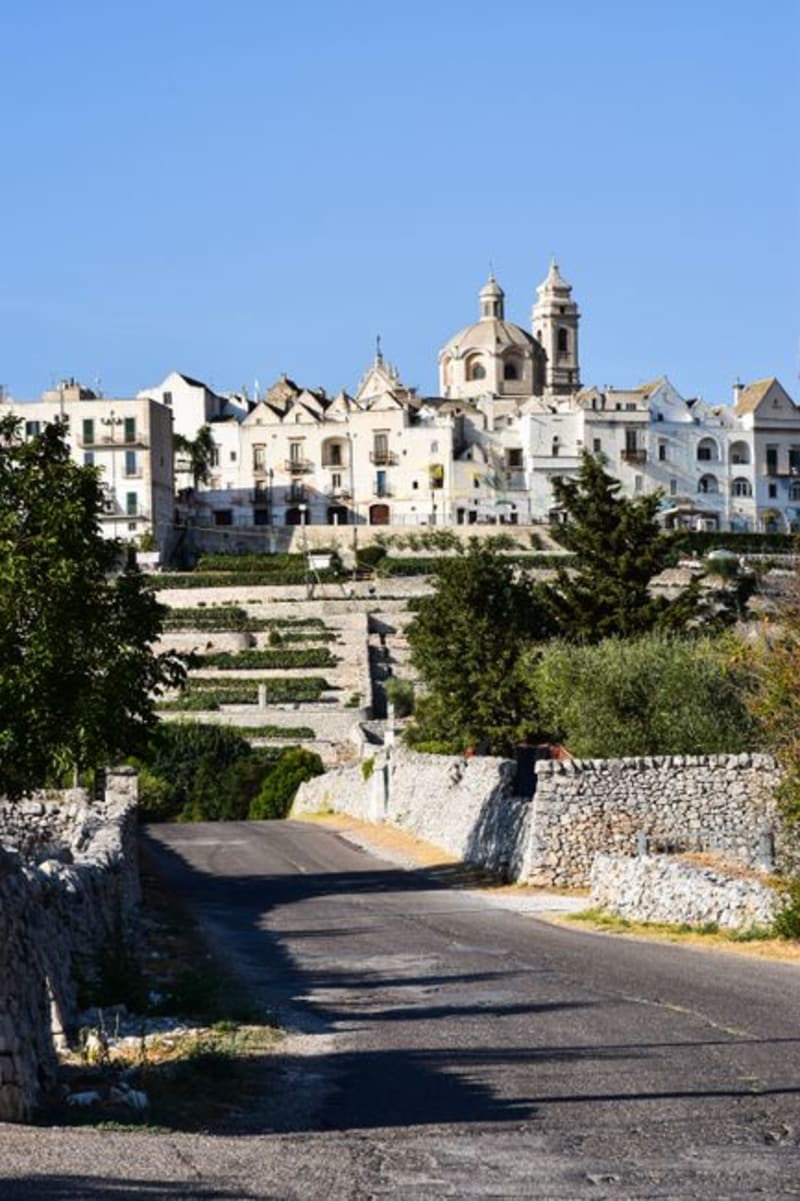
 Santeramo in Colle
A high Murgia countryside town known for its bread and pasta-making tradition, ringed by wheat fields, drystone walls, and masserie that have shifted from sheep farming to agritourism.
Explore puglia
 Saturo
A quiet stretch of the Ionian coast near Leporano where Greek colonists first landed millennia before Taranto existed, and the ruins now sit yards from a public beach.
Explore puglia
 Savelletri
A small Adriatic fishing village near Fasano surrounded by ancient olive groves and luxury masserie, with some of the best seafood on this coast served a few steps from the boats that caught it.
Explore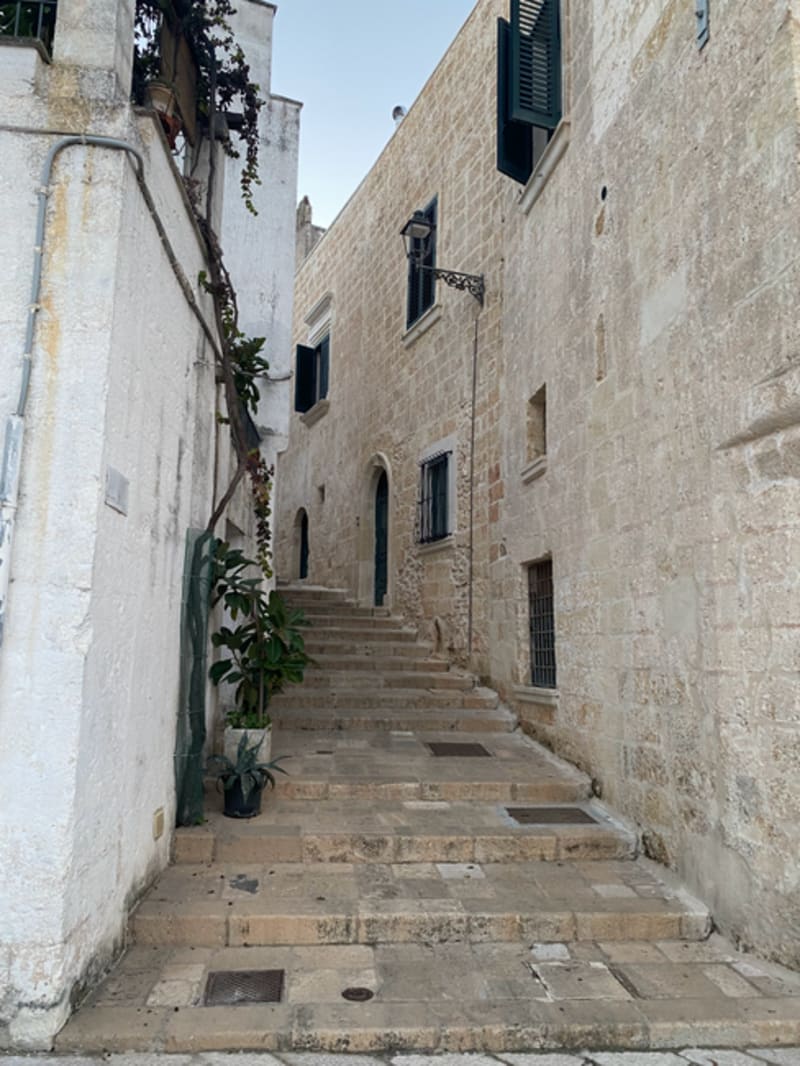 puglia
 Specchia
One of Italy's officially designated 'most beautiful villages,' a hilltop borgo in the deep Salento built almost entirely from pale local stone.
Explore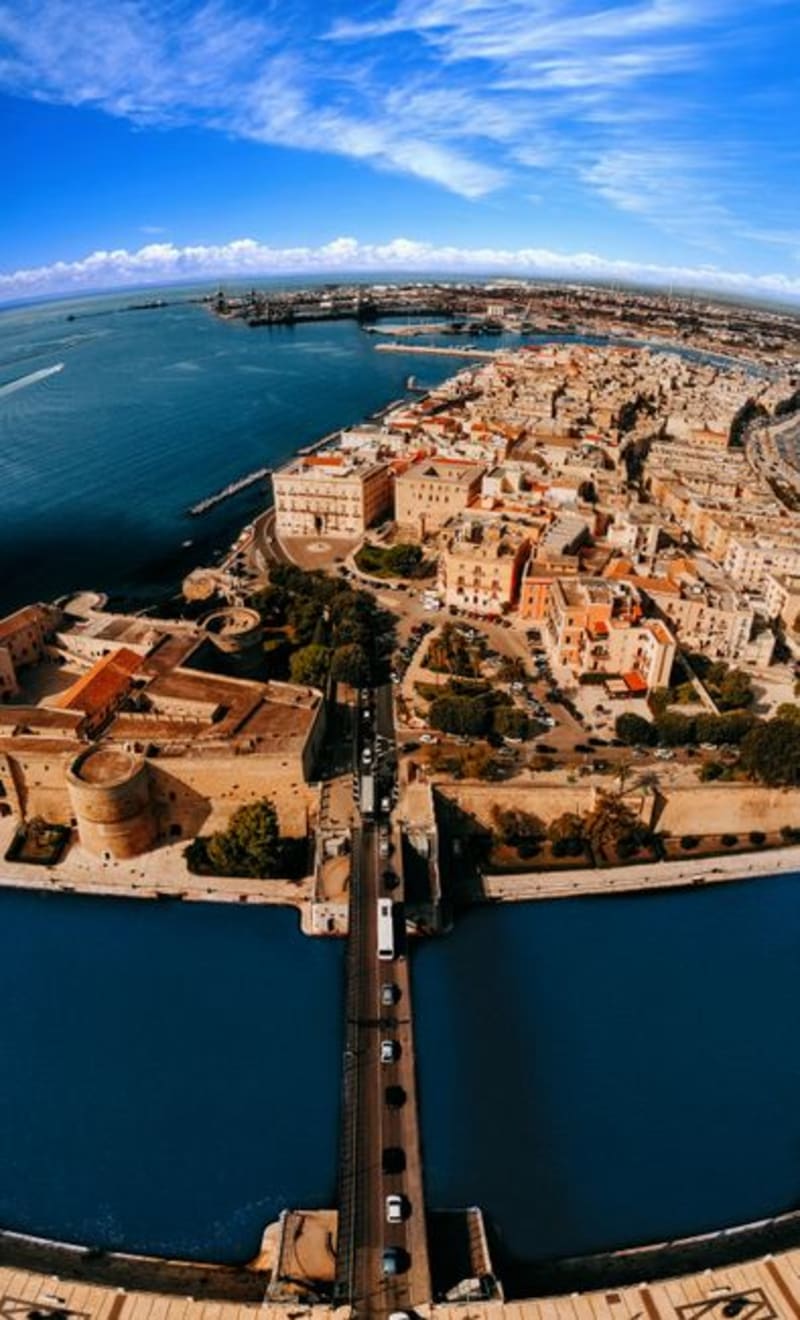 puglia
 Taranto
The city of two seas, where mussel farms fill an inland saltwater lagoon and a Spartan colony's old town sits crumbling and gorgeous on its own island.
Explore puglia
 Torre dell'Orso
An Adriatic cove famous for its twin sea stacks known as the Two Sisters, backed by an Aragonese watchtower and a pine-shaded beach.
Explore