Sannicandro di Bari
"Sannicandro di Bari has an honest-to-God moat around its castle, and about four other visitors seemed to know it."
A modest countryside town in the Terra di Bari with a moated Swabian castle at its heart, surrounded by vineyards and the working masserie of the surrounding plain.
We found Sannicandro di Bari on the map almost by process of elimination, looking for somewhere between Bari and the Valle d’Itria that wasn’t already on our route twice over, and the small notation of a “castello con fossato” — a castle with a moat — was enough to justify the stop. It delivered exactly what it promised: a compact, geometrically severe fortress at the very center of town, still ringed by its defensive water channel, looking considerably more serious than the modest scale of the surrounding streets would suggest it needs to be.
The castle dates to the Swabian period, expanded later under Angevin and Aragonese rule, and its current owners run occasional tours through rooms that alternate between austere medieval stonework and unexpectedly grand later additions — a frescoed hall, in particular, that seemed to belong to an entirely different, wealthier building. Walking the perimeter along the moat, watching a family of ducks paddle past with complete indifference to eight hundred years of history stacked above them, felt like one of those small absurd juxtapositions Puglia produces regularly without any apparent self-consciousness.
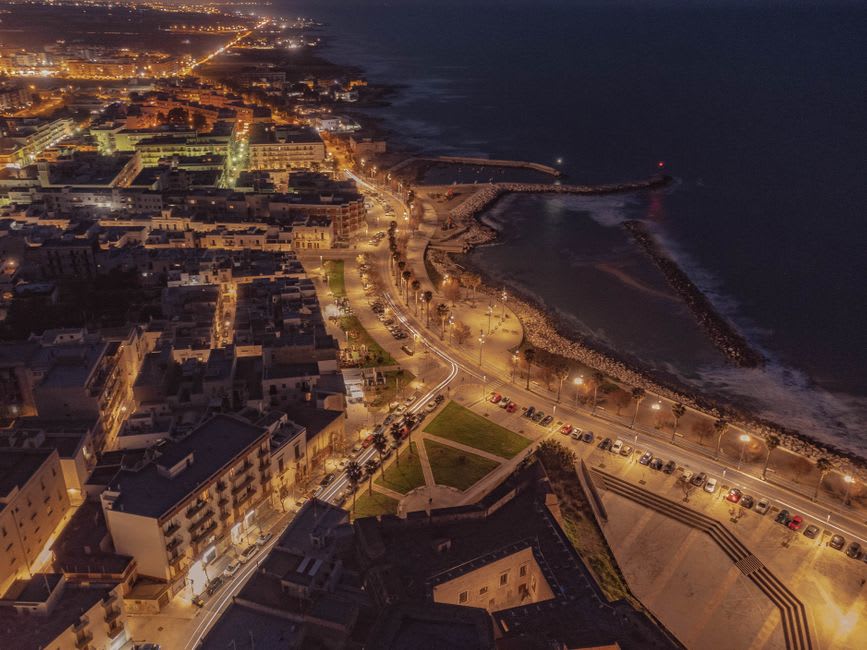
Beyond the castle, the town gives way quickly to countryside — vineyards mostly, feeding into the broader Terra di Bari wine zone, interspersed with masserie in various states of use, some still fully agricultural, others quietly converted into small guesthouses. We stopped at one for a late lunch, served on a shaded terrace facing rows of vines, and ate a simple, generous meal of fava purée with chicory, grilled peppers, and a carafe of the estate’s own uninspiringly labeled but genuinely excellent red.
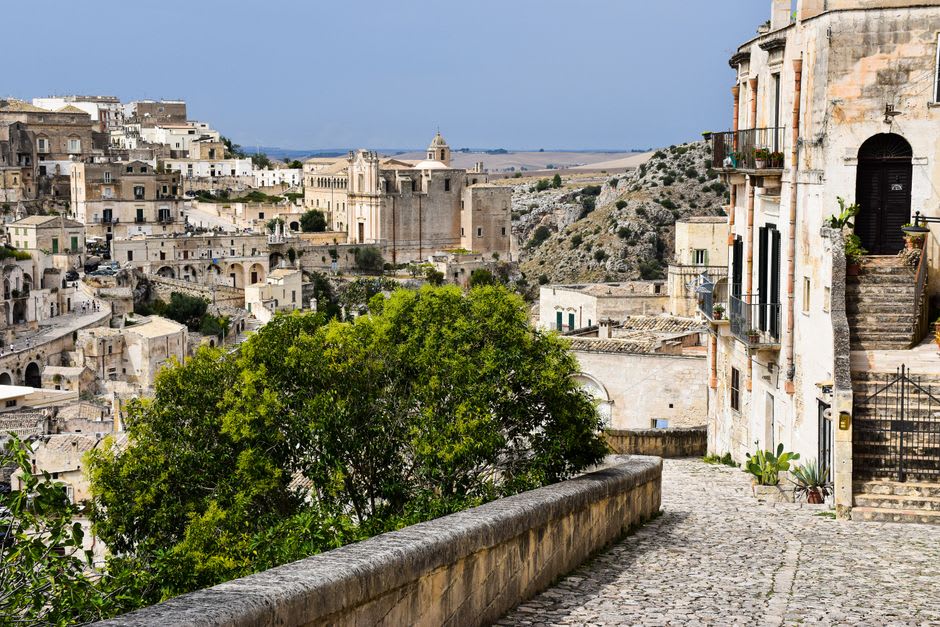
We left in the early evening, castle moat catching the last orange light, having spent barely three hours in a town that most guidebooks don’t mention at all. It is, I’ve come to think, one of the more reliable pleasures of traveling through inland Puglia: how often the places with no entry in any guide turn out to have the most specific, least negotiable charm.
When to go: Spring and early autumn for the vineyard countryside at its most active, though the castle and its moat are a worthwhile stop in any season, particularly late afternoon when the light is at its best for photographs.
Keep exploring
More from Puglia
 puglia
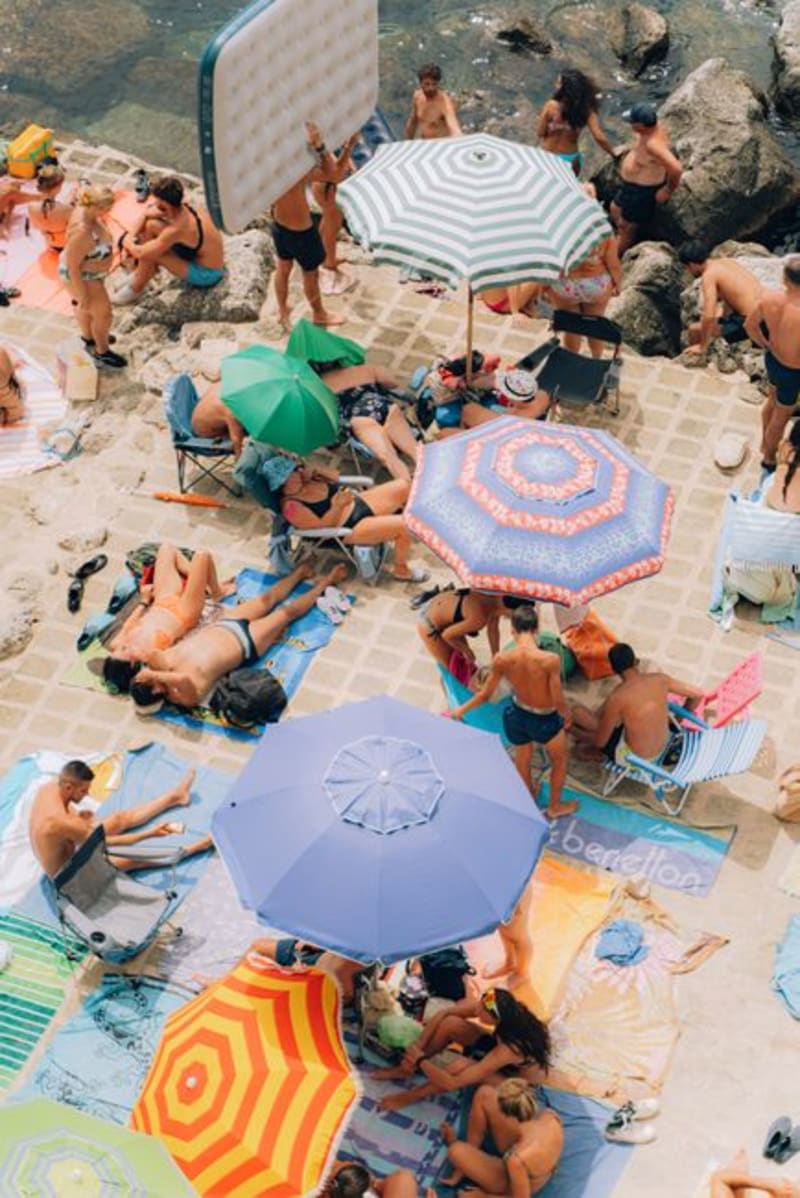
 Santa Cesarea Terme
A thermal spa town built above sulphur caves on Salento's Adriatic cliffs, where the sea itself steams faintly and the architecture went unapologetically Moorish.
Explore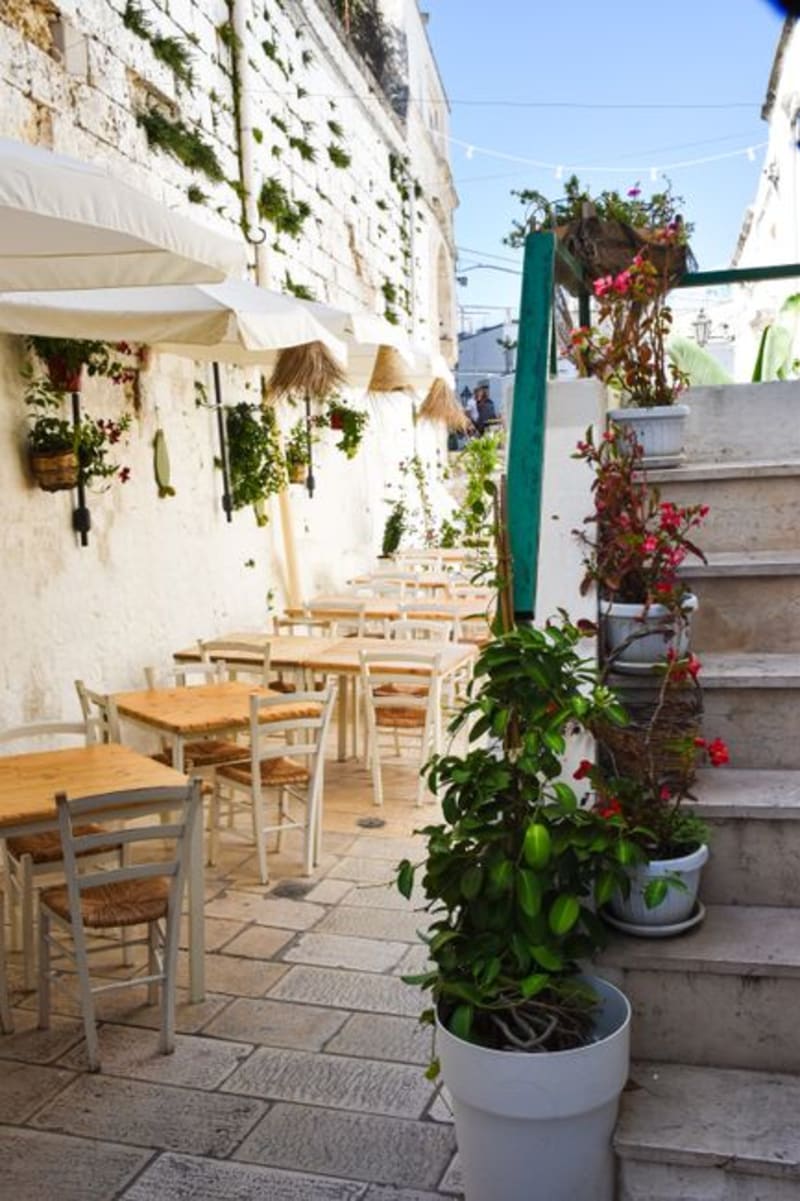 puglia
 Santa Maria al Bagno
A quiet Ionian marina near Nardò with pastel villas, a small rocky harbour, and a set of murals telling a Jewish refugee story most visitors to this coast never hear.
Explore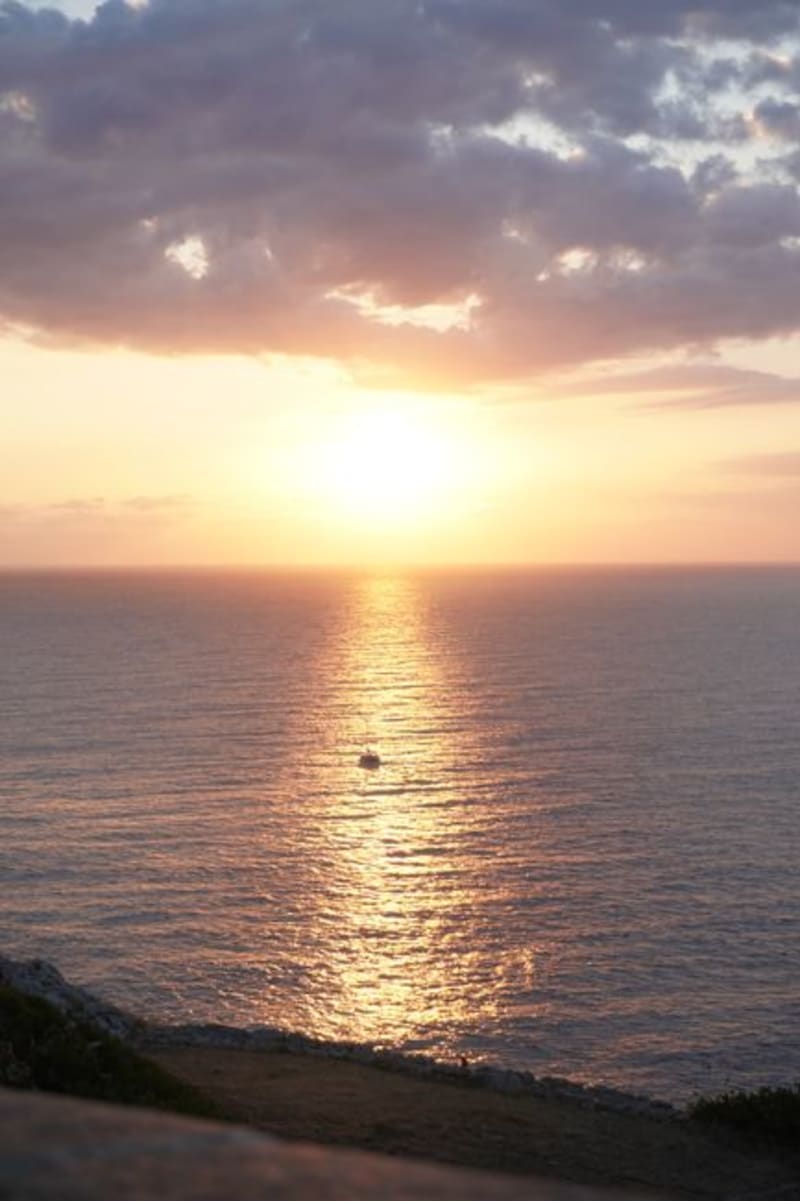 puglia
 Santa Maria di Leuca
The literal end of Italy, where the Adriatic and Ionian seas meet beneath a lighthouse and a sanctuary, and the road simply stops.
Explore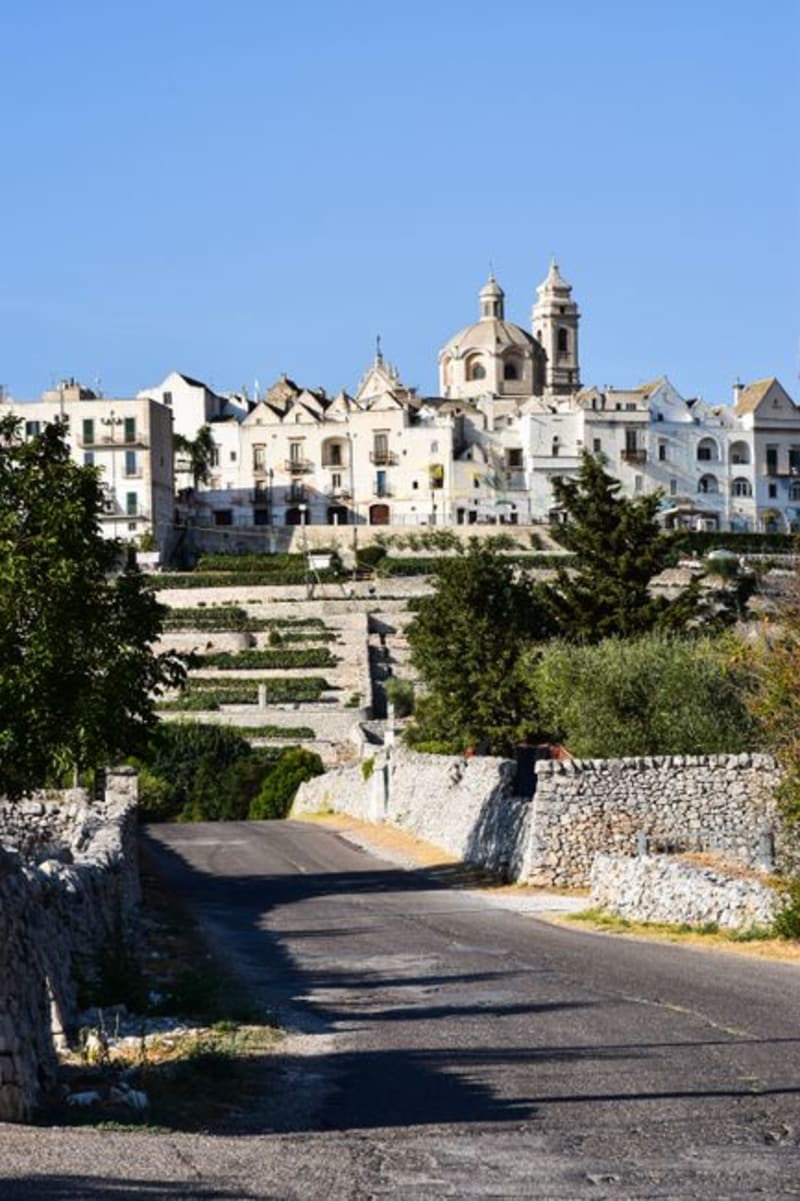 puglia
 Santeramo in Colle
A high Murgia countryside town known for its bread and pasta-making tradition, ringed by wheat fields, drystone walls, and masserie that have shifted from sheep farming to agritourism.
Explore puglia
 Saturo
A quiet stretch of the Ionian coast near Leporano where Greek colonists first landed millennia before Taranto existed, and the ruins now sit yards from a public beach.
Explore puglia
 Savelletri
A small Adriatic fishing village near Fasano surrounded by ancient olive groves and luxury masserie, with some of the best seafood on this coast served a few steps from the boats that caught it.
Explore