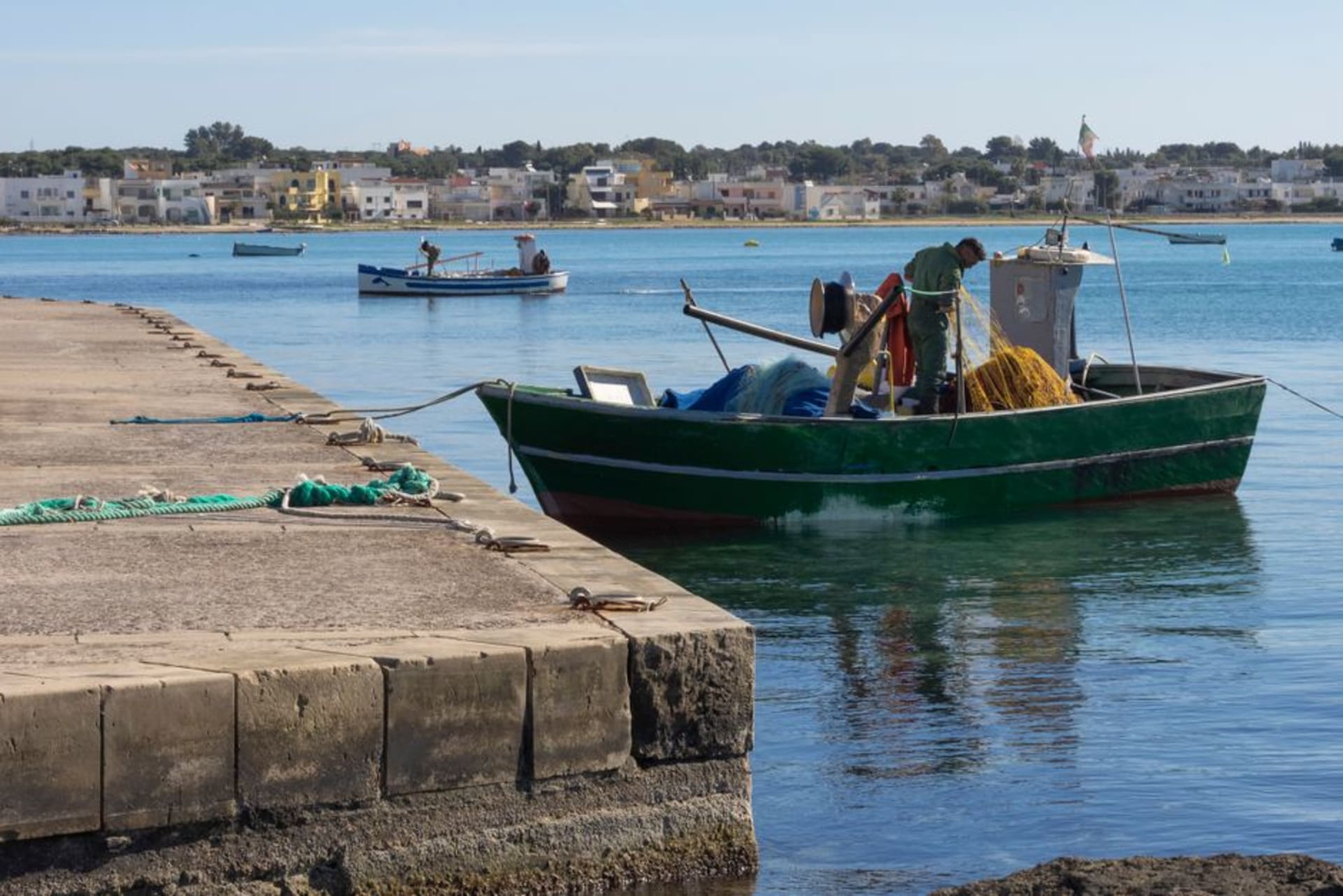
Porto Cesareo
"Porto Cesareo doesn't try to be Gallipoli, and that refusal is exactly what makes an afternoon there worth having."
A low-key Ionian resort town backed by a protected marine reserve, where shallow lagoons and small islets make the water read like a swimming pool built by geology.
We came to Porto Cesareo on the recommendation of a woman who ran the apartment we’d rented near Lecce, who described it with a shrug as “nice, but nothing special,” which in my experience is often the exact recommendation to take seriously. It sits on the Ionian coast roughly halfway between Taranto and Gallipoli, a modest resort town that has resisted, mostly by lacking the historic core to build one around, the kind of old-town tourism that defines its more famous neighbours. What it has instead is a marine protected area — the Riserva Naturale di Punta Della Suina and the wider Area Marina Protetta di Porto Cesareo — covering a genuinely large stretch of seabed, seagrass meadow, and shallow lagoon just offshore.
The effect of the reserve is immediately visible from the shore: the water in front of town is broken up by small islets, sandbars, and channels that keep most of it shallow and mirror-flat even where it would otherwise be open sea. We waded out from the town beach at low tide and found ourselves still only knee-deep fifty metres from land, walking across sand ribs with schools of small fish scattering ahead of our feet, the whole scene looking engineered even though nothing about it was.
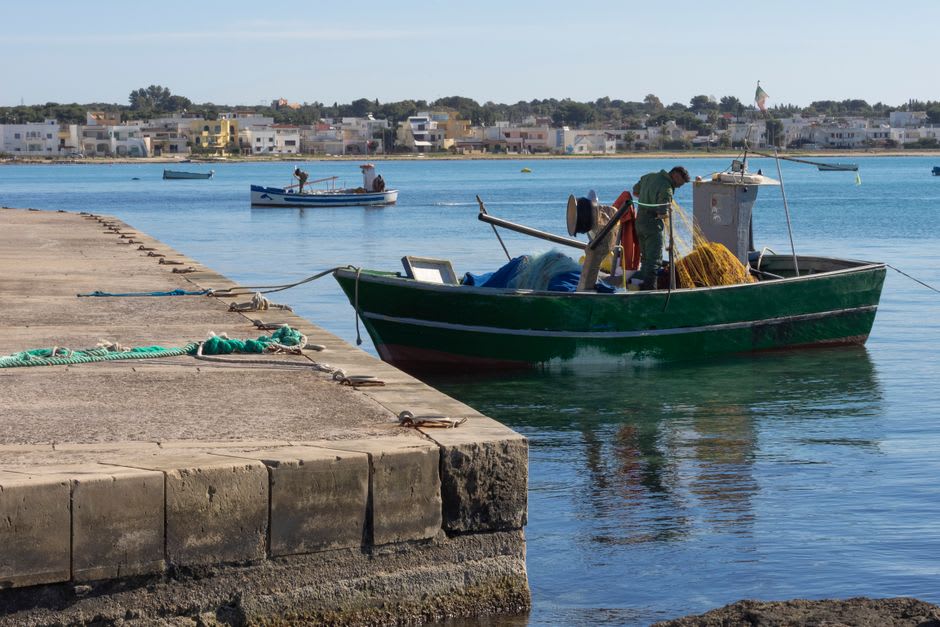
We took an afternoon boat trip out to Isola dei Conigli — a different island of the same name than the one near Pescoluse, Salento apparently having more than one rabbit-adjacent islet — and to the slightly larger Isola del Grande e del Piccolo, both within the reserve and both ringed by water so clear the boat seemed to be floating on nothing. Our guide, a retired fisherman named Nino who’d switched to tourism when the fish stocks thinned in the nineties, pointed out seagrass beds below us and explained, with visible pride, that the posidonia meadows are what keep the whole ecosystem — and by extension the water clarity everyone comes for — functioning. It was the first time on the trip a boat operator had talked to us more about conservation than about beach bars.
The town itself is unpretentious to the point of being slightly featureless — a seafront promenade, a scatter of gelaterias, apartment blocks built for the domestic holiday trade rather than international visitors — and I mean this as a genuine compliment. We ate dinner at a no-frills seafood place a block back from the water where the owner recited the catch of the day rather than reading it off a menu, and the tielle — a Puglian rice, potato, and mussel bake related to the Neapolitan tiella — arrived in a blackened terracotta dish that had clearly seen decades of the same oven.
When to go: Late June through mid-September for swimming and boat trips into the marine reserve, with July weekends drawing the heaviest crowds from Lecce and Taranto. May and early October are quieter, with the water still swimmable for anyone who isn’t fussy about a few degrees.
Keep exploring
More from Puglia
 puglia
 Presicce
A quiet Salento town honeycombed with underground olive oil mills, once called the City of Oil Underground for the labyrinth beneath its streets.
Explore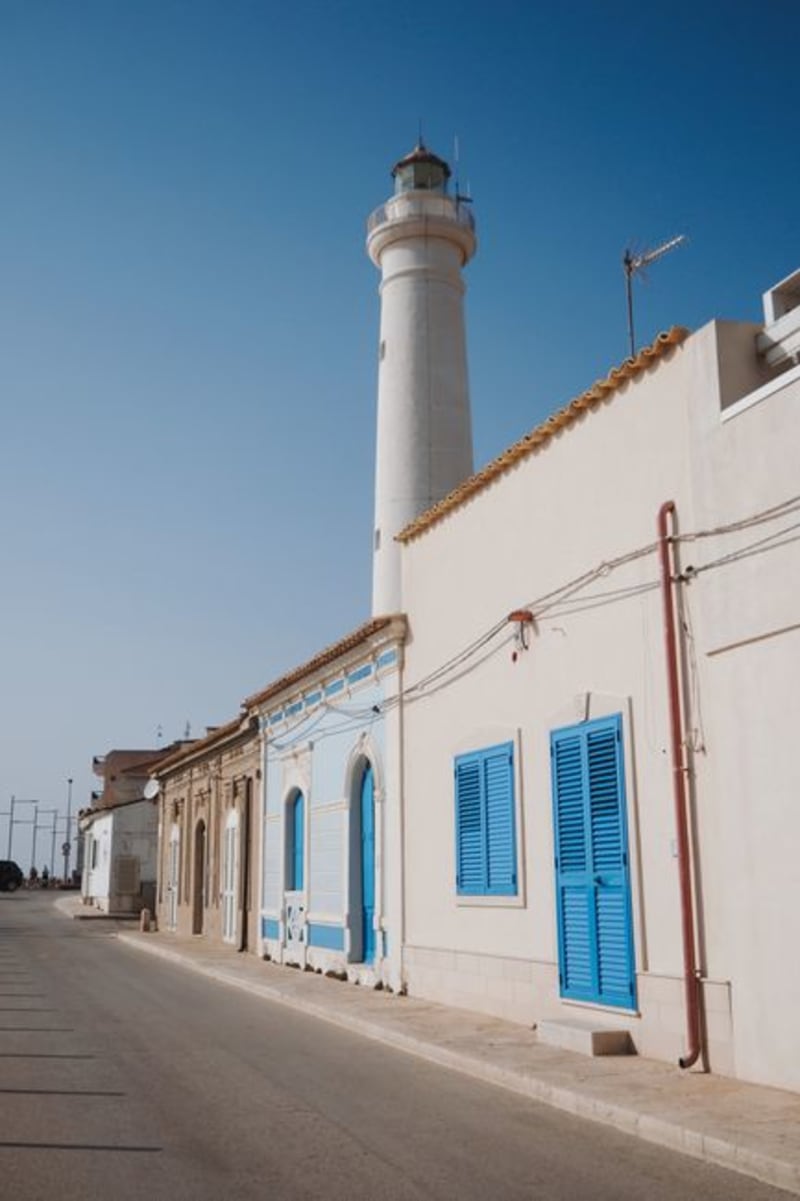 puglia
 Punta Prosciutto
A stretch of low dunes and shallow turquoise water on the Ionian coast that Puglians will tell you, quietly, is better than anything in Sardinia.
Explore puglia
 Putignano
A Murgia hill town famous for having the longest Carnival in Europe, and for the rest of the year, an underground network of caves running beneath its own historic centre.
Explore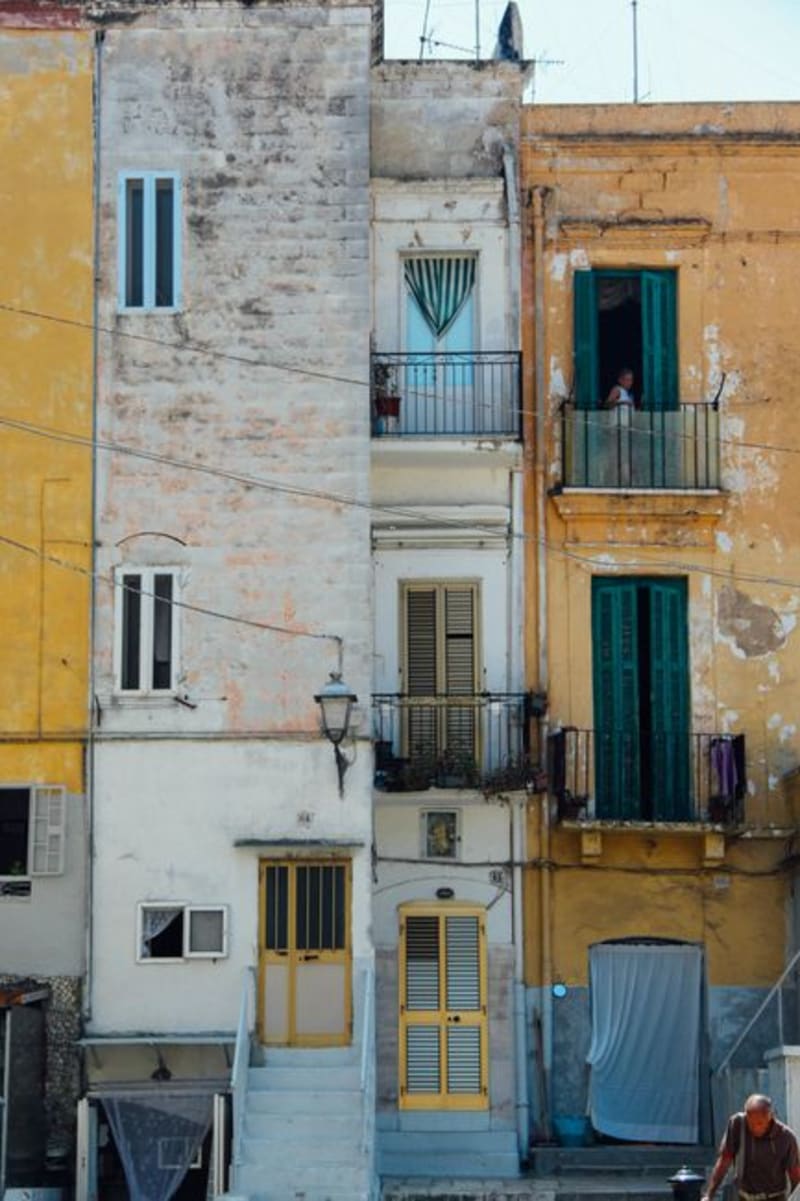 puglia
 Rodi Garganico
A quiet citrus-scented port town on the Gargano's northern coast, its old quarter perched on a small headland above the ferry docks to the Tremiti Islands.
Explore puglia
 Rutigliano
A Terra di Bari countryside town famous for its terracotta whistles and ceramics tradition, surrounded by vineyards and almond groves that come alive every August for the harvest festival.
Explore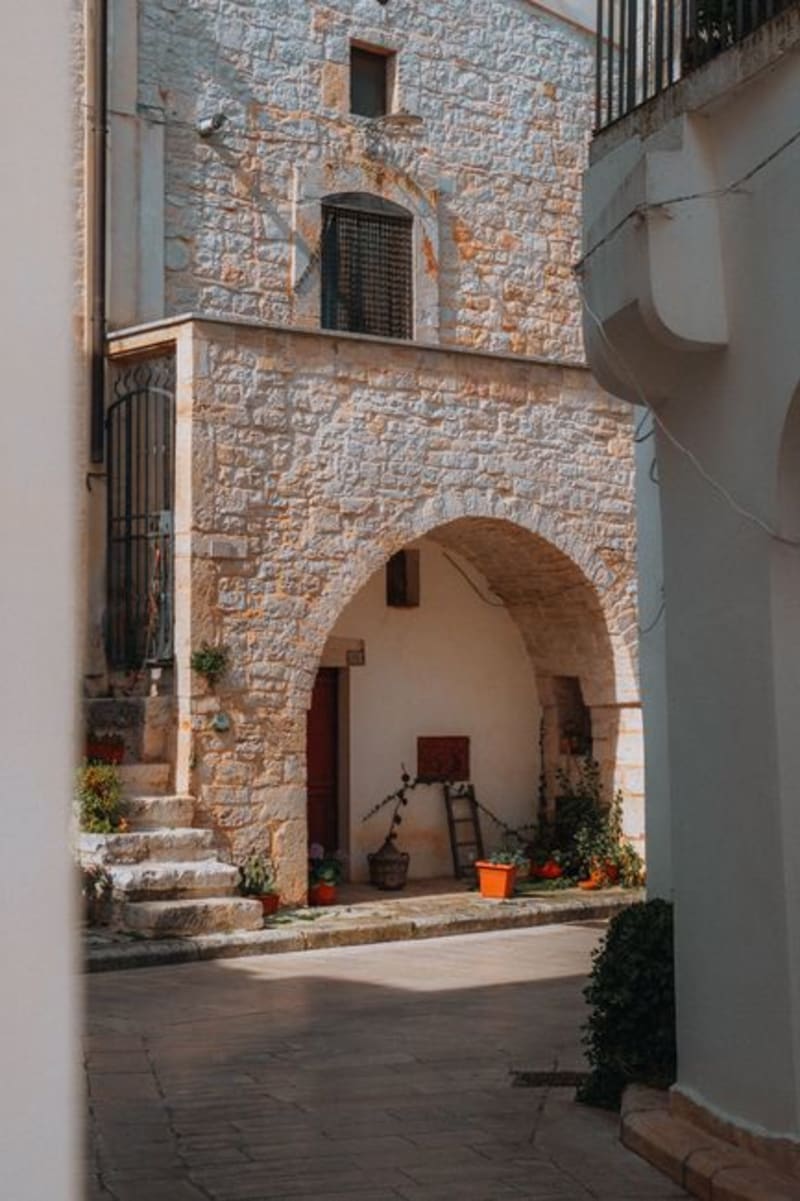 puglia
 Ruvo di Puglia
A quiet Murge hill town famous for the red-figure vases its ancient necropolis produced by the thousand, and a cathedral rose window that outclasses towns ten times its size.
Explore