Barletta
"Nobody quite knows how a five-metre bronze Roman emperor ended up shipwrecked in Barletta, and the town has stopped asking."
A northern Adriatic port guarding a five-metre bronze colossus of a Roman emperor, a castle rebuilt by Frederick II, and the site of a medieval duel still celebrated as a matter of national honour.
The first thing you see walking into central Barletta is the Colossus — a bronze statue over five metres tall, standing on a plinth beside the Basilica del Santo Sepolcro, depicting a late Roman or early Byzantine emperor, most likely from the fourth or fifth century, in full imperial regalia, one arm raised. Nobody is entirely certain which emperor it depicts — theories range across several late-antique rulers — and the more commonly told local story is that the statue was being transported by sea, possibly looted from Constantinople during the Fourth Crusade, when the ship carrying it wrecked off the Barletta coast sometime in the thirteenth century, and the bronze giant washed ashore and simply stayed. Whatever the truth, it has stood in this town for close to eight hundred years, patched together at points with lead where medieval Franciscan monks reportedly melted down some of its original fragments for bells before realizing what they had.
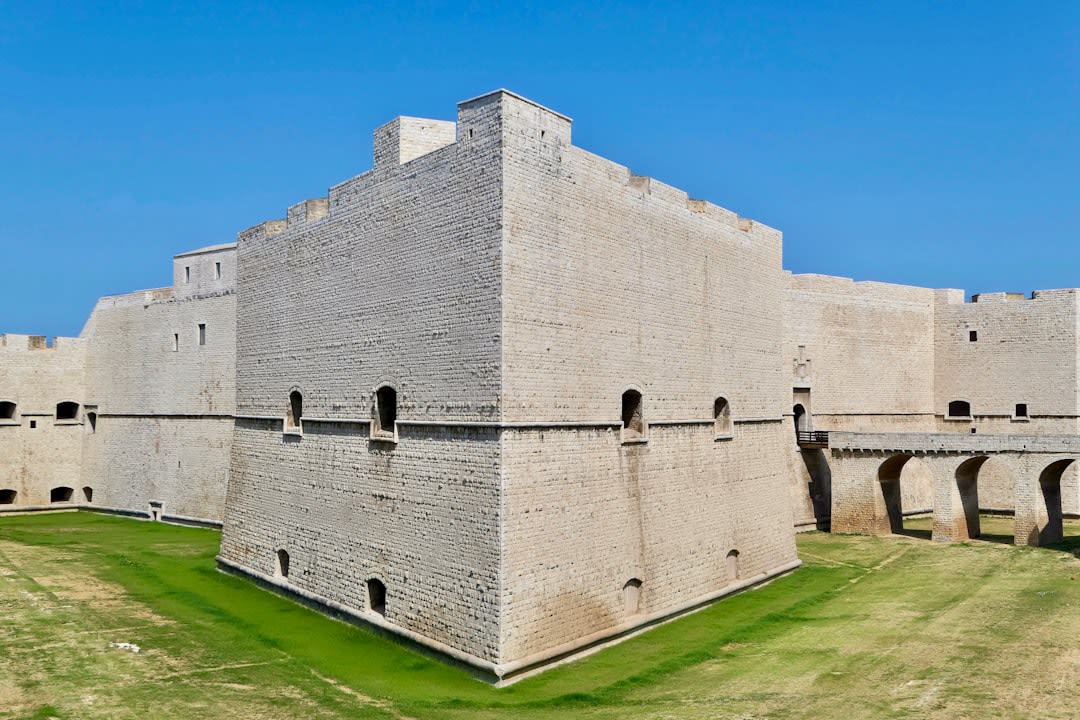
Barletta’s castle, expanded significantly under the Normans and then Frederick II in the thirteenth century, sits at the edge of the old town facing the sea, a squat, powerful structure that later hosted Spanish viceroys and today functions as a museum and event space. I climbed onto the ramparts on a clear afternoon and looked out at the Adriatic, then back at the dense old town crowding up against the castle walls, and felt the particular satisfaction of a place that wears its many occupiers’ architecture without apparent conflict — Roman colossus, Norman-Swabian castle, Aragonese fortifications, all coexisting within a few hundred metres.
The Cantina della Sfida, tucked beneath the old town, commemorates something more specific to Italian pride: the Disfida di Barletta, a 1503 duel between thirteen Italian knights and thirteen French knights, fought after a French officer insulted Italian military honour during the Italian Wars. The Italians won decisively, and the event became a foundational patriotic myth, still referenced in Italian political and sporting rhetoric over five centuries later — I’ve heard football commentators invoke “la disfida di Barletta” completely unironically. The cellar where the challenge was reportedly issued is preserved as a small museum, low-ceilinged and atmospheric, and the caretaker recounted the whole story to me with the intensity of someone describing an event from his own lifetime rather than five hundred years prior.
I ate that evening at a small place near the harbour serving the local specialty of seppie alla barlettana, cuttlefish stewed with tomato and wine, alongside a carafe of a rough, honest red from the Castel del Monte DOC zone just inland, and walked afterward along the seafront promenade as the evening passeggiata filled it, the Colossus visible in silhouette a few streets back, doing what it has apparently done for eight centuries regardless of who was watching.
When to go: Spring or early autumn for comfortable walking weather along the seafront and through the old town. Late February brings the Disfida di Barletta historical reenactment, if the pageantry appeals.
Keep exploring
More from Puglia
 puglia
 Bisceglie
A fishing port on the Adriatic known for a fierce fish market, an old harbour ringed by trabucchi-style structures, and almonds turned into the region's best confetti.
Explore puglia
 Bitonto
The 'city of olives,' where a Romanesque cathedral almost identical to Bari's stands with none of the crowds, surrounded by some of the densest olive groves in Italy.
Explore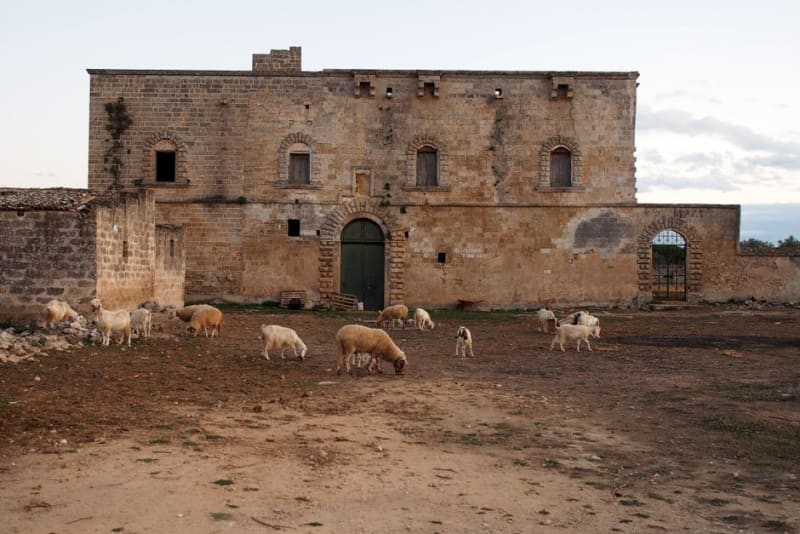 puglia
 Bovino
A medieval hill town clinging to the Apennine foothills at the edge of the Tavoliere, its Norman-Swabian castle and truffle-scented woods a world away from the flat wheat country below.
Explore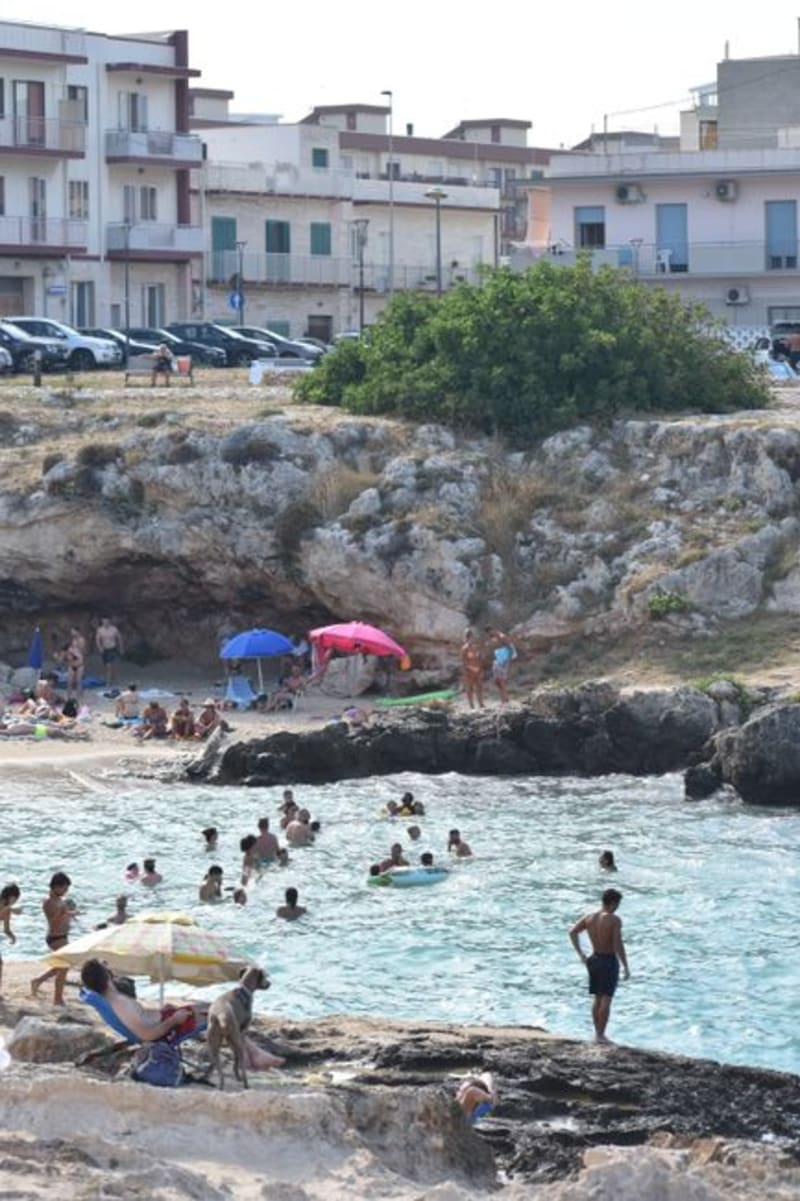 puglia
 Campomarino
A low-rise Ionian beach town near Maruggio built almost entirely around summer, with pine-backed sand and a laid-back crowd that skews heavily local.
Explore puglia
 Casamassima
A small town outside Bari painted almost entirely blue — the Borgo Blu — for reasons nobody can fully agree on, and one of the strangest, most photogenic surprises in the region.
Explore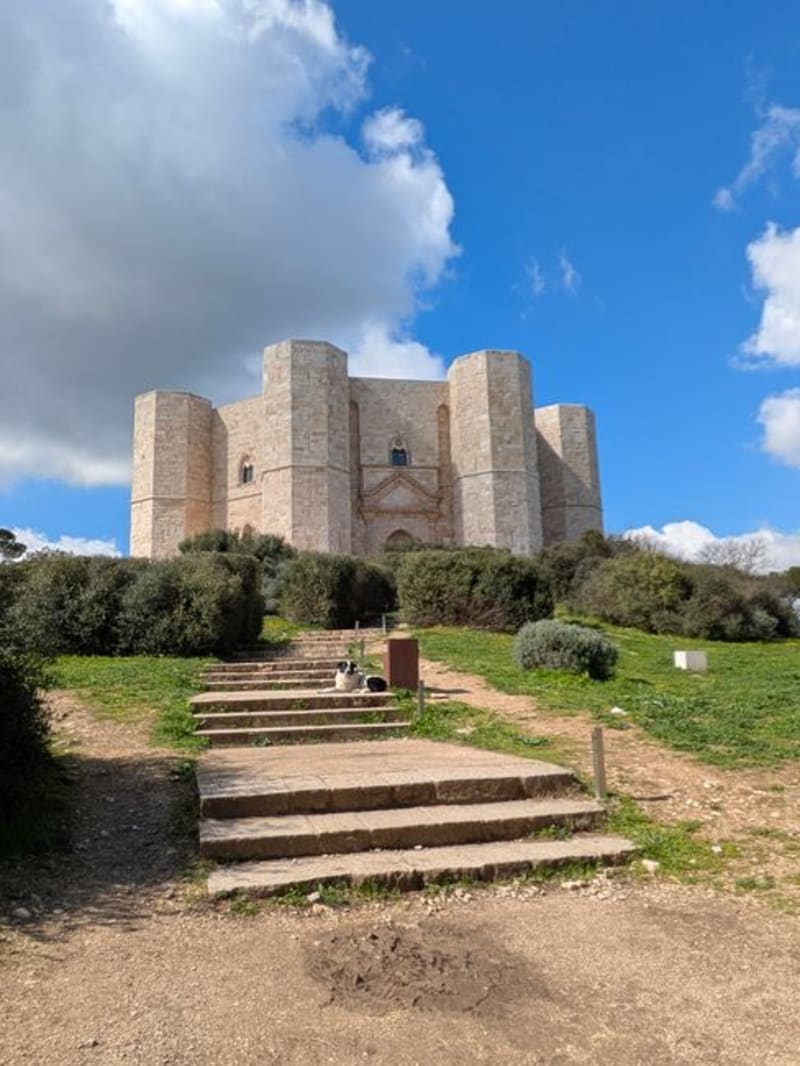 puglia
 Castel del Monte
Frederick II's octagonal riddle of a castle, alone on a hilltop in the Murge with no moat, no defensive purpose anyone can quite agree on, and a geometry that still unsettles mathematicians.
Explore