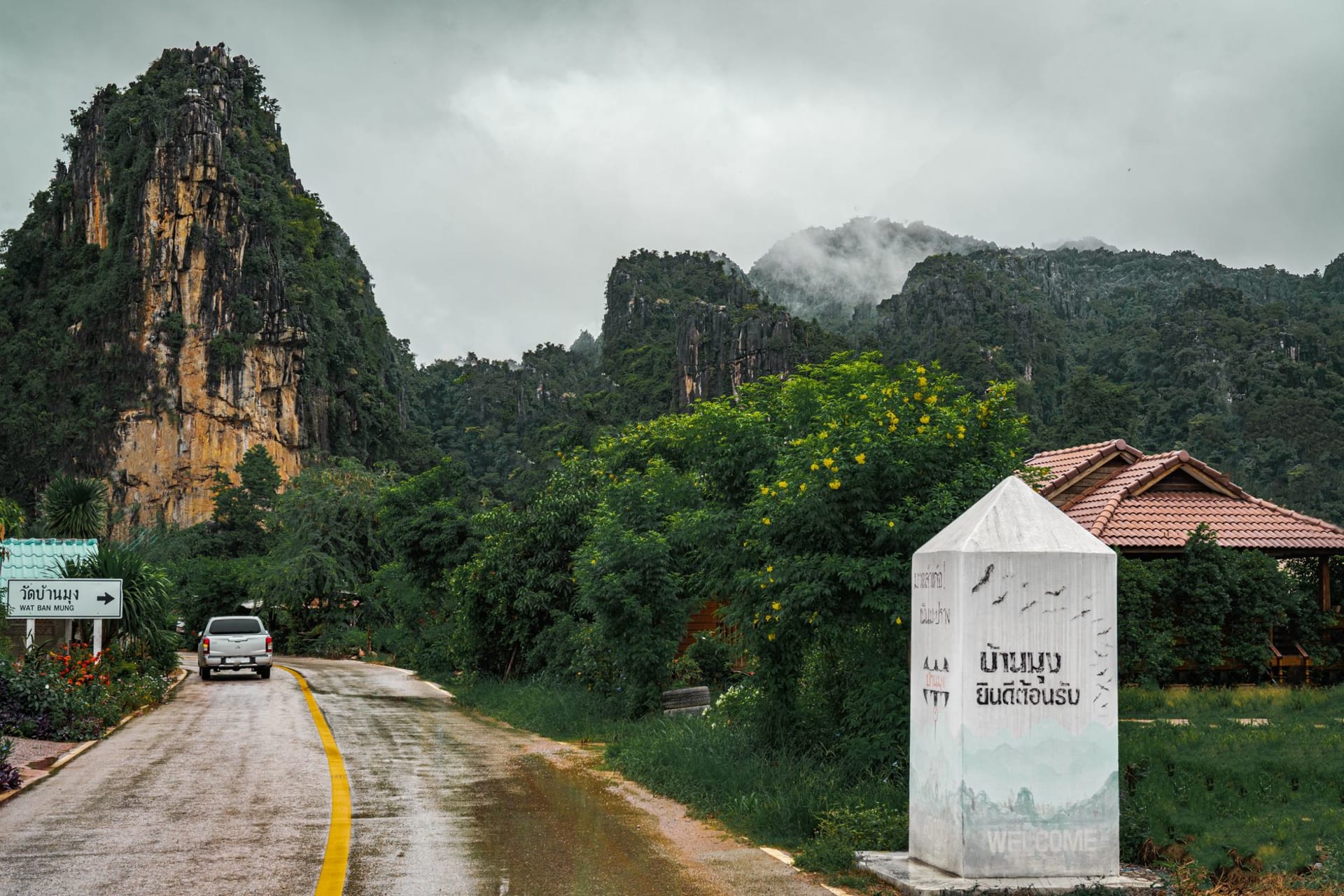
Ban Na Village
"The village is what the Plain of Jars is actually about — not the jars themselves, but the people who have always lived around them."
A Hmong hilltop village near the jar sites where weavers work at looms in their doorways and the morning smells of woodsmoke and lemongrass broth.

I found Ban Na by accident, which is probably the best way to find it. I’d hired a bicycle in Phonsavan to ride to Site 1, taken a wrong turn at a fork I hadn’t noticed on the map, and ended up on a dirt track that climbed away from the plateau road into the hills. After twenty minutes of pushing the bike uphill — the track was too steep and rutted to actually ride — I emerged into a cluster of wooden houses set on a hillside with a view over the entire plateau below. The morning light was slanted and gold and the smoke from cooking fires was going straight up in the still air. A woman at the nearest house was weaving on a backstrap loom in her doorway and looked up when I arrived without particular surprise, the way people look up when they are expecting nothing specific from the morning.

Ban Na is a Hmong village, and its position in the hills tells its own part of the story of this province. The Hmong were heavily recruited by the CIA during the Secret War to fight alongside American forces against the Pathet Lao and North Vietnamese — a history that left the community in an extremely complicated position after the communist victory in 1975. Many fled to Thailand and then to resettlement in the United States, France, and Australia. Those who remained, like the families of Ban Na, built lives in the hills above the plateau, some of the same hills that sheltered their grandparents from the bombing.
The village has no specific attraction in the touristic sense — no museum, no performance of traditional culture, no formal welcome. What it has is the texture of an actual place: children walking to a school I could hear but not see, an elderly man repairing a motorbike with what appeared to be a single wrench and considerable optimism, pigs being moved between enclosures by a teenage boy who seemed to regard them with the mixture of affection and exasperation that characterises everyone’s relationship with pigs. At the small shop — a single wooden room with shelves of instant noodles, Beerlao, soap, and batteries — I bought a bag of crackers and a bottle of water and sat on the step while the shopkeeper’s daughter practised English phrases from a school notebook. She wanted to know how to say “it is very cold in December” and “my family has one buffalo.”

The textiles sold in Ban Na — woven by the women in their doorways and hung from racks on weekends when the jar site visitors sometimes find their way up — are made with a precision that makes the craft market stalls in Phonsavan look approximate. Indigo blues and deep reds, geometric patterns that take weeks to complete, cloth that is genuinely heavy and alive-feeling. I bought a small piece that now hangs on the wall of my apartment in Mexico and still carries, faintly, the smell of the cooking fires.
When to go: Ban Na is accessible year-round, but the dirt track from the plateau road becomes impassable mud in the heavy rainy season. Dry season is easiest for the bike or on foot. Come in the morning — the light is best, the weavers are at work, and the village is genuinely quiet before the heat builds.
Keep exploring
More from Plain of Jars
 plain-of-jars
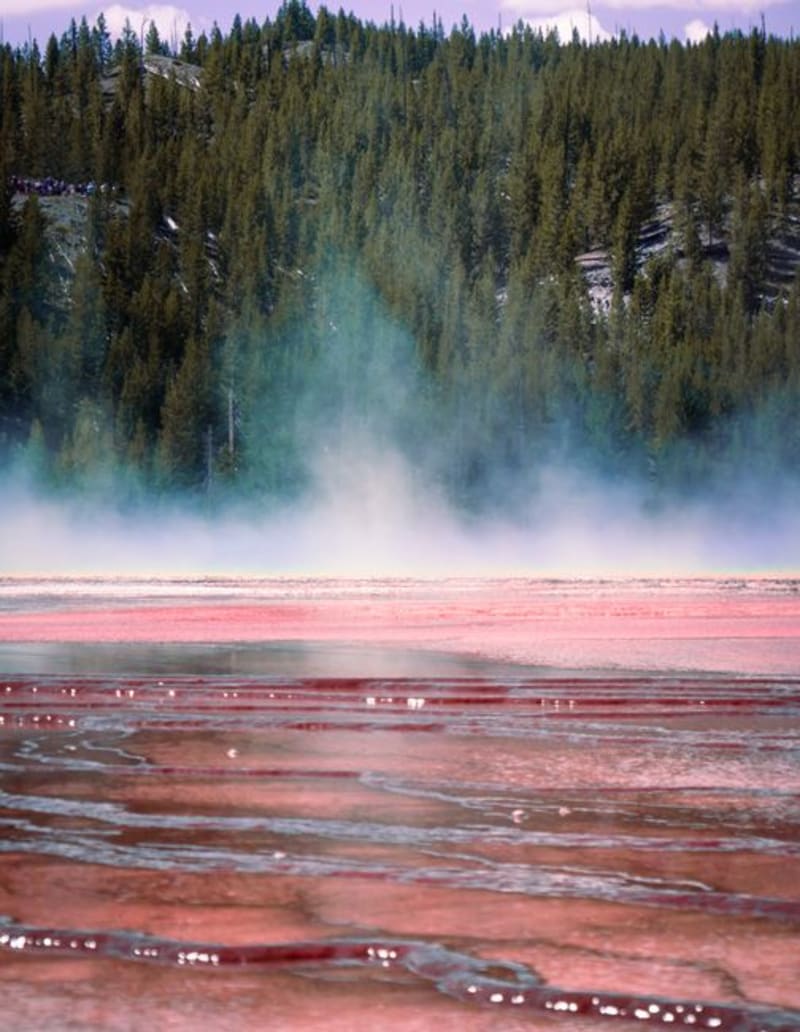
 Muang Kham Hot Springs
A forested valley east of Phonsavan where mineral water surfaces near boiling and pine trails offer a quiet counterpoint to the jar sites.
Explore plain-of-jars
 Muang Khoun
The bombed-out former capital of Xieng Khouang, where a giant Buddha sits in the ruins of a temple that wasn't rebuilt because some losses shouldn't be erased.
Explore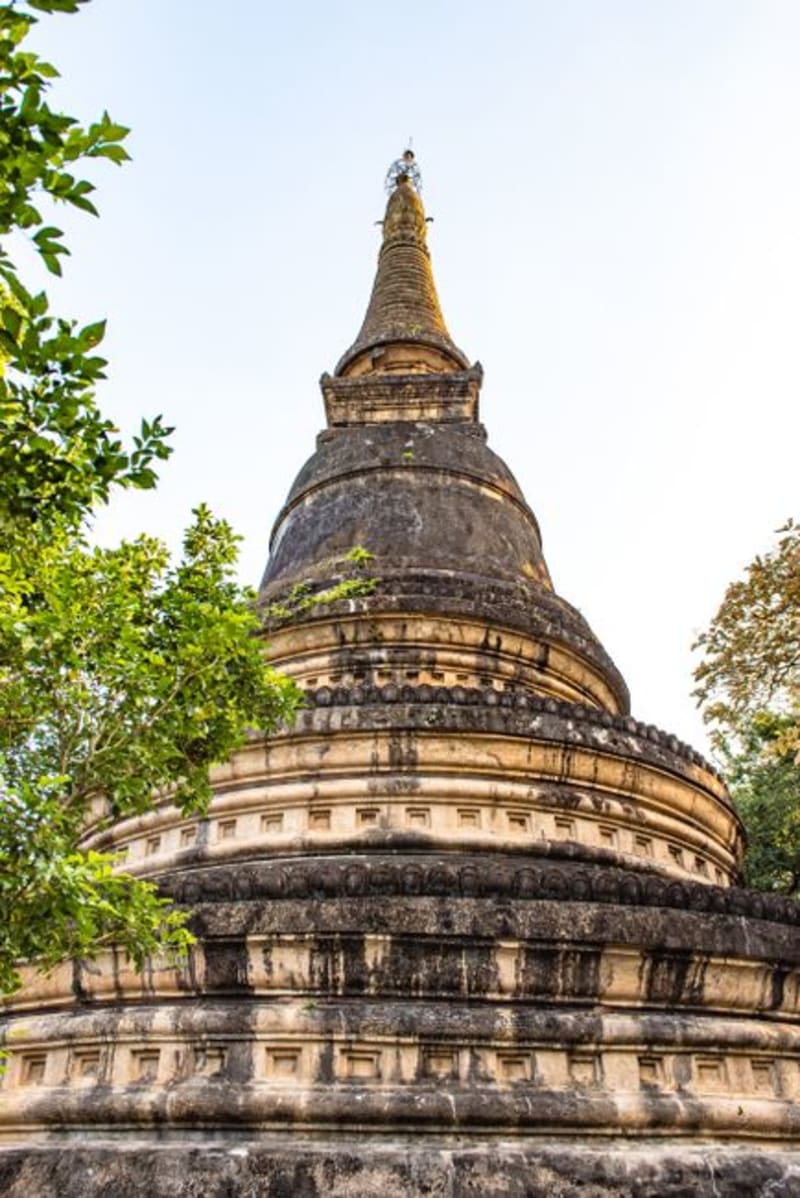 plain-of-jars
 Muang Khoun (Old Xieng Khouang)
The bombed-out former capital of Xieng Khouang, where a lone stupa and a headless Buddha sit quietly among the ruins.
Explore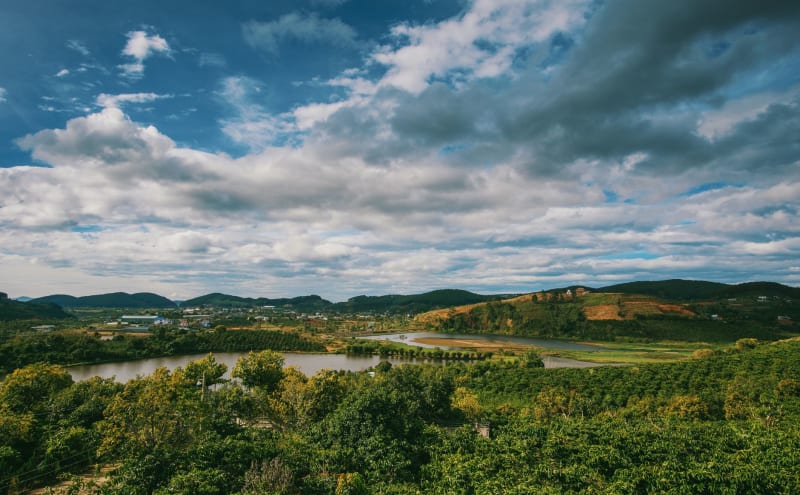 plain-of-jars
 Nam Ngum Valley
The river valley that cuts below the plateau where local fishermen work the current at dawn and the mountains on either side turn violet at dusk.
Explore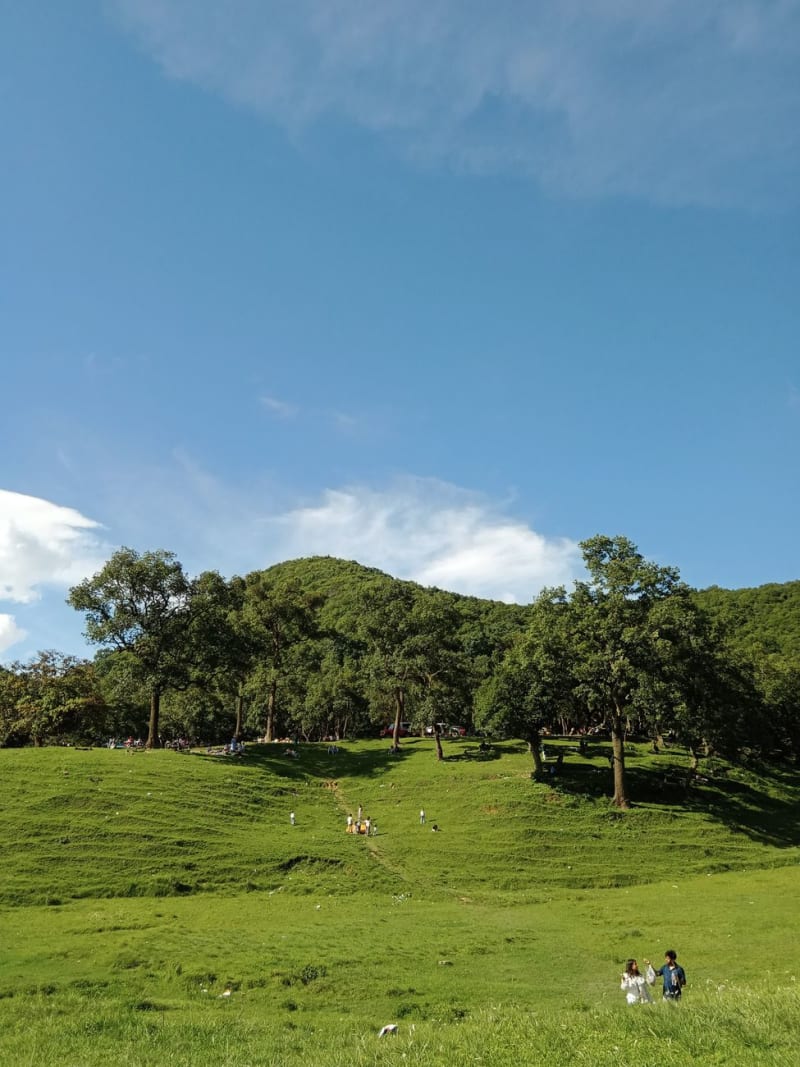 plain-of-jars
 Nong Tang
A still, dark lake ringed by limestone karst in the highlands of Xieng Khouang, where the war-scarred plateau briefly forgets itself and turns quietly beautiful.
Explore plain-of-jars
 Phonsavan
A Lao market town rebuilt from rubble that carries the weight of the Secret War in its streets, its scrap-metal stalls, and the plainspoken honesty of its people.
Explore