Asia
Plain of Jars
"Two thousand years of mystery sitting in the grass, unbothered."
A plateau scattered with thousands of ancient stone jars whose purpose no one fully understands, set against rolling Lao hills still pocked with craters from a forgotten war.

The tuk-tuk dropped me at Site 1 around seven in the morning, before the tour groups arrived. The mist was still low over the plateau and the jars — hundreds of them, some taller than I am, some cracked open like eggs — just sat there in the wet grass, doing nothing, explaining nothing. That’s the thing about the Plain of Jars: nobody actually knows what they are. Funeral urns, wine vats, water cisterns for ancient armies? The academic consensus leans toward funerary use, but the archaeologists keep arguing, and the jars keep their silence. I stayed for two hours and left feeling like I’d asked a question and received, in response, a very patient shrug.
The plateau sits at around 1,200 metres in Xieng Khouang province, which means the air is cooler than anywhere else in Laos and the landscape looks more like hill country than tropics — brown grass in the dry season, vivid green after the rains, pine trees on the ridges. The town of Phonsavan nearby is functional rather than charming: guesthouses, noodle stalls, a handful of restaurants serving Lao-Lao rice whisky and buffalo laab. What gives it depth is the weight of recent history. This was the most bombed region per capita on earth during the American Secret War in the 1960s and 70s. UXO Lao still clears unexploded ordnance from these fields. The bomb craters are visible from the road. You walk on cleared paths and stay between the markers, and the reason why is not abstract.
When to go: November to April is the dry season — clear skies, dusty roads, cooler temperatures that make the plateau comfortable for walking. The rainy season (May to October) turns everything green and dramatic, but some sites become muddy and the paths less accessible. January and February are the best months: cool mornings, low tourist numbers, and the light on the jars in the early hours is exceptional.
What most guides get wrong: They send you to Site 1 and call it done. There are three main sites open to visitors — Site 2 and Site 3 require either a bike or a tuktuk and a bit of effort, which is exactly why they’re worth it. Site 2 is set under trees on a hillside with no shade vendors and almost no other people. Site 3 involves a walk through a village and rice paddies. The jars at both feel wilder and more genuinely strange than the ones at Site 1, which has started to feel like a park. Go to Site 1 first, then keep going.
Explore
Places in Plain of Jars
 plain-of-jars
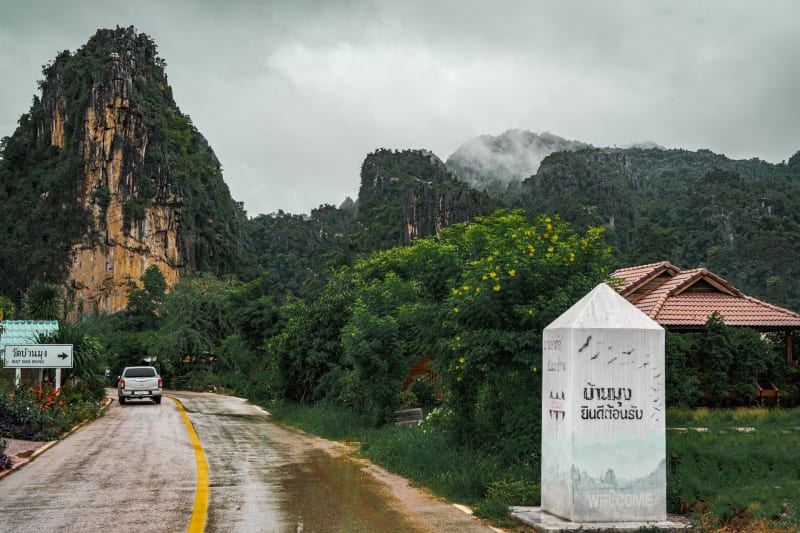
 Ban Na Village
A Hmong hilltop village near the jar sites where weavers work at looms in their doorways and the morning smells of woodsmoke and lemongrass broth.
Explore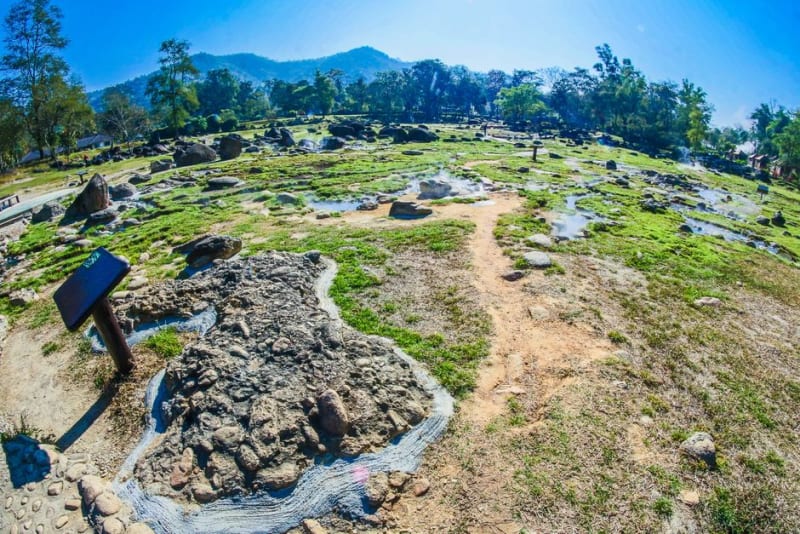 plain-of-jars
 Muang Kham Hot Springs
A forested valley east of Phonsavan where mineral water surfaces near boiling and pine trails offer a quiet counterpoint to the jar sites.
Explore plain-of-jars
 Muang Khoun
The bombed-out former capital of Xieng Khouang, where a giant Buddha sits in the ruins of a temple that wasn't rebuilt because some losses shouldn't be erased.
Explore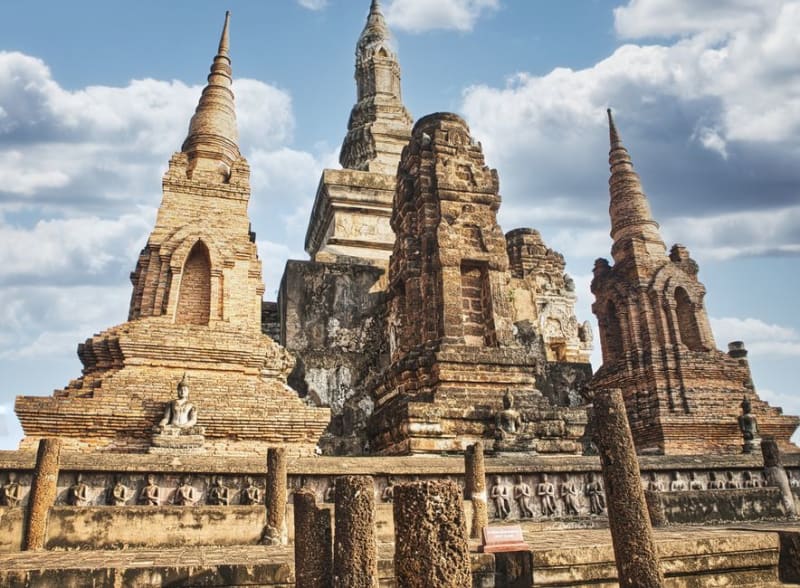 plain-of-jars
 Muang Khoun (Old Xieng Khouang)
The bombed-out former capital of Xieng Khouang, where a lone stupa and a headless Buddha sit quietly among the ruins.
Explore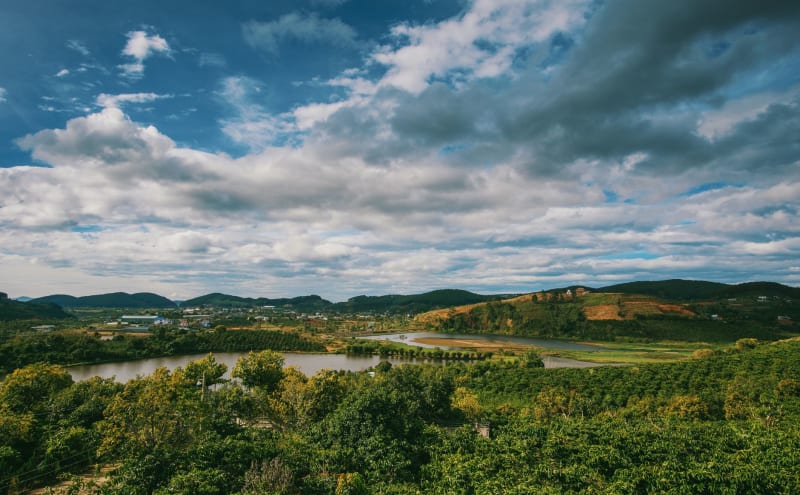 plain-of-jars
 Nam Ngum Valley
The river valley that cuts below the plateau where local fishermen work the current at dawn and the mountains on either side turn violet at dusk.
Explore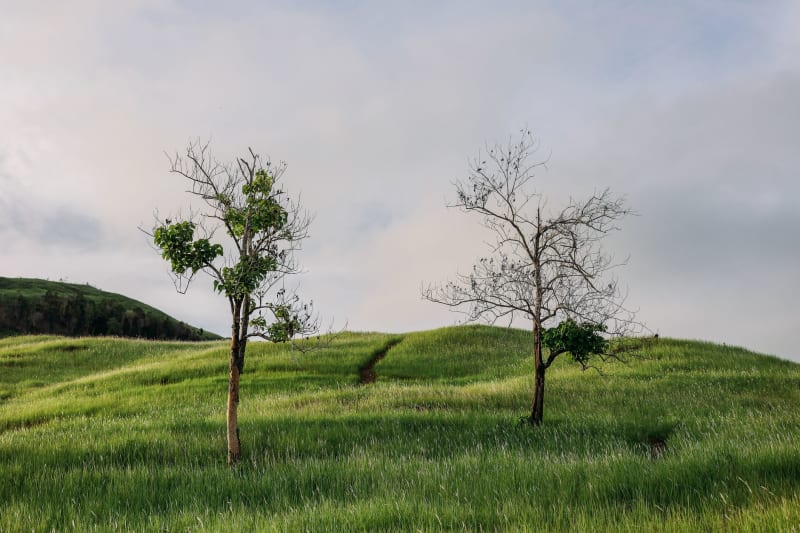 plain-of-jars
 Nong Tang
A still, dark lake ringed by limestone karst in the highlands of Xieng Khouang, where the war-scarred plateau briefly forgets itself and turns quietly beautiful.
Explore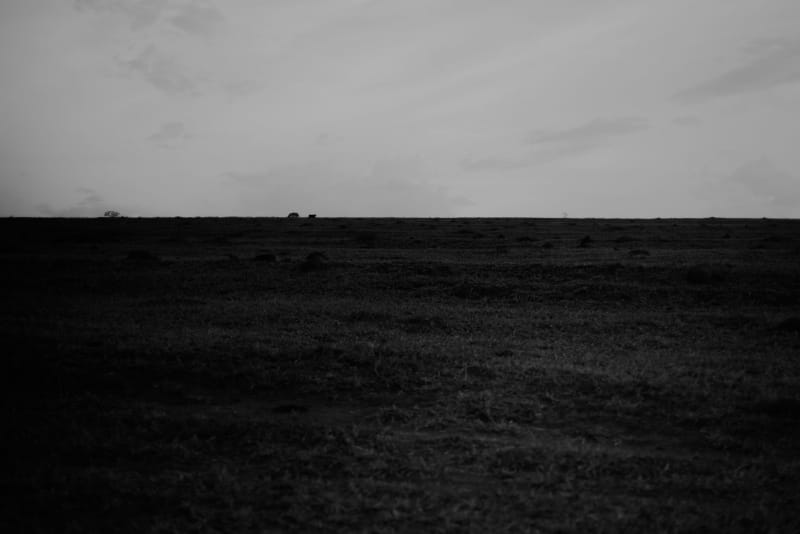 plain-of-jars
 Phonsavan
A Lao market town rebuilt from rubble that carries the weight of the Secret War in its streets, its scrap-metal stalls, and the plainspoken honesty of its people.
Explore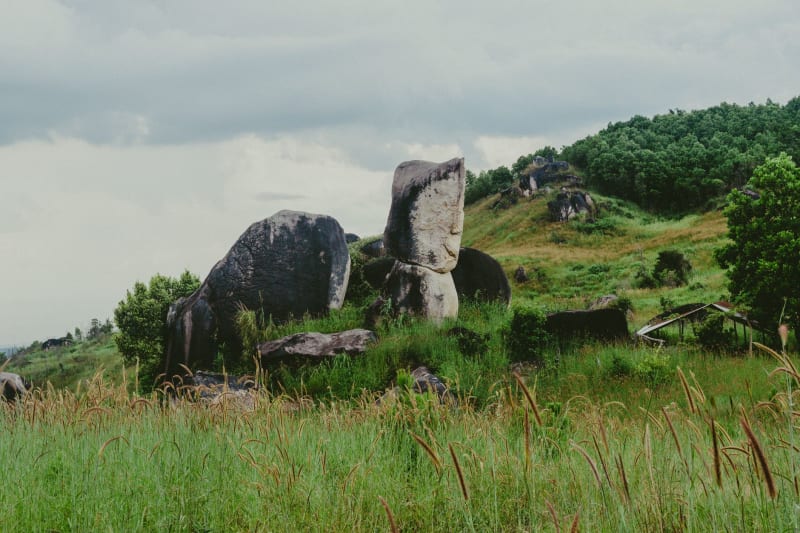 plain-of-jars
 Phu Khe Nature Reserve
A highland pine forest reserve above the plateau where the air is sharp and cold and gibbons call from somewhere you can never quite locate.
Explore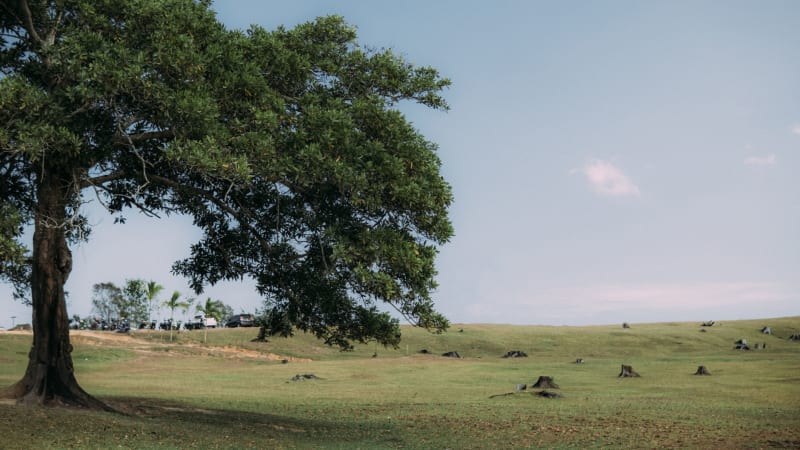 plain-of-jars
 Site 1 — Ban Ang
The largest and oldest of the jar sites, where 334 stone vessels sit in mist-soaked grass with bomb craters for company.
Explore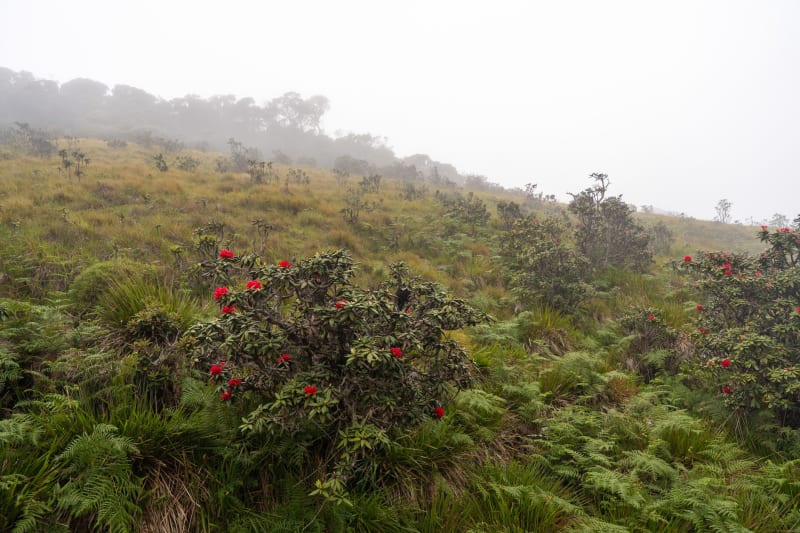 plain-of-jars
 Site 2 — Phu Salato
A hillside jar site tucked under forest canopy where the silence is complete and other visitors are a rumour.
Explore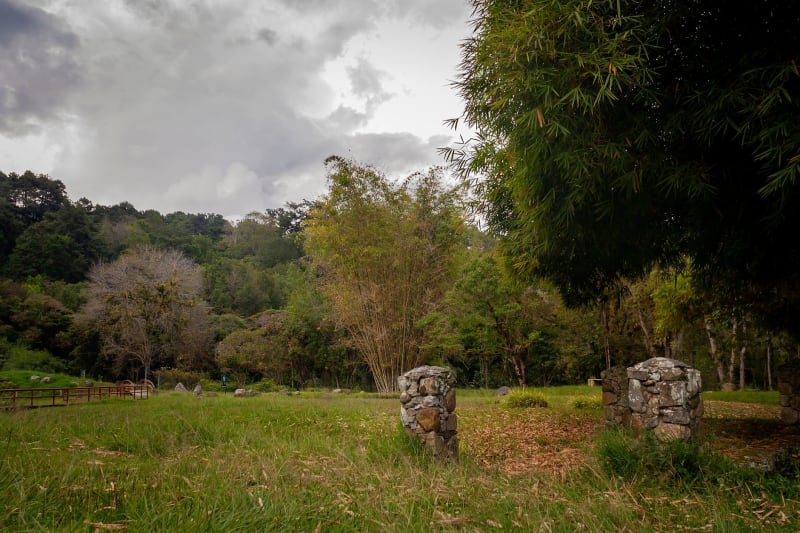 plain-of-jars
 Site 3 — Lat Khai
The wildest of the main jar sites, reached by walking through a living village and across rice paddies still worked by hand.
Explore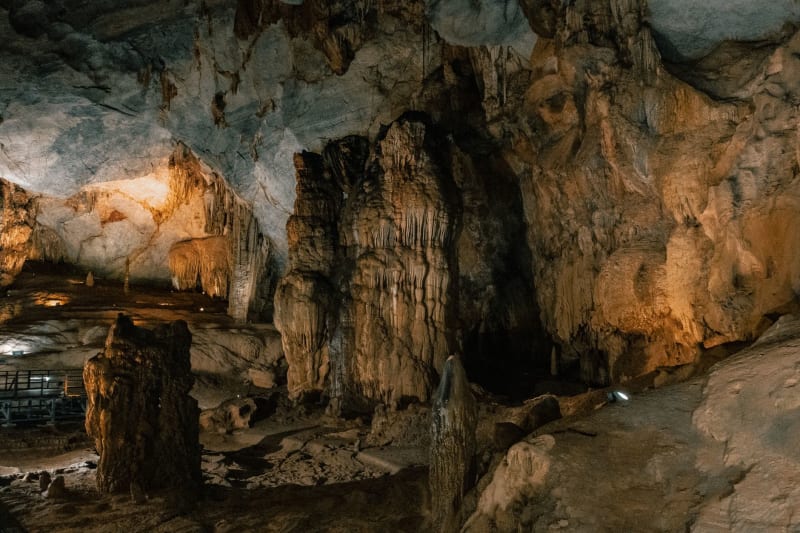 plain-of-jars
 Tham Piu Cave
A natural cave in a limestone cliff where hundreds of civilians sheltered from the bombing in 1969 and were killed by a single rocket strike — a memorial that asks nothing except that you remember.
Explore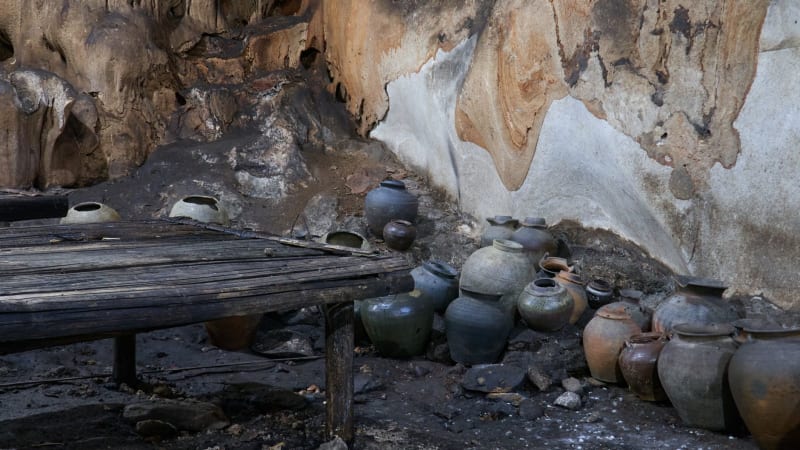 plain-of-jars
 Vieng Xai Caves
A limestone cave city in Houaphan province where Pathet Lao leaders lived underground for nine years during the bombing, a place that rewrites what you think you know about this war.
Explore