
Phu Quoc National Park
"The interior exists to remind you the beach is the exception, not the rule."
Sixty percent of the island locked in primary jungle — the part that reminds you Phu Quoc was a forest before it was a beach holiday.

I rented a motorbike on the second day specifically to go inland, which meant fighting the mild resistance of every accommodation owner who kept suggesting the cable car or a snorkeling trip. What I found instead was the version of Phu Quoc that existed before the beach tourism — a dense, humid, entirely indifferent jungle that covers the northern two-thirds of the island and doesn’t especially want to be visited.
The national park begins suddenly. You’re on a road lined with pepper farms and guest houses and then the road narrows and the trees close in from both sides and the temperature drops a few degrees and the noise of traffic is replaced by insects and birds. I stopped the bike and turned off the engine. The silence — not actual silence but that particular density of natural sound — was the first thing I’d experienced on the island that felt genuinely remote.

The park covers nearly 31,000 hectares of semi-evergreen tropical forest. There are trails, though the signage is sparse and the paths can become streams after rain. The best approach is to hire a guide from one of the companies in Duong Dong, not for safety so much as for the simple fact that the forest reveals itself differently when someone who grew up in it is pointing things out. My guide, a man named Minh who had been taking visitors in for fifteen years, stopped every few minutes to show me something: a vine whose sap smells of eucalyptus, a bird call he could replicate with his hands, a patch of forest where the Phu Quoc ridgeback dogs — the island’s native breed — sometimes shelter. I would have walked past all of it.
The streams that run through the park are cold and clear and completely unexpected. After two hours of walking in heat that rose to forty degrees Celsius in the direct sun, we dropped into a ravine where one of the park’s small rivers ran over smooth granite slabs, and I sat in it for a long time. No facilities, no signs, no other people. Just water and trees and the occasional large blue dragonfly.

The wildlife in the park includes langurs, macaques, civets, and numerous bird species — including kingfishers along the streams and hornbills in the upper canopy. You won’t necessarily see the larger fauna, but the birds are reliable if you go early. The Phu Quoc ridgeback, a distinctive-looking dog with a ridge of reversed fur along its spine, is native to the island and semi-wild populations still exist at the forest edge, though the breed is increasingly domesticated.
When to go: The dry season, November through April, makes trails passable and stream crossings safe. In the wet season the forest is spectacularly lush but paths flood and visibility drops. Go in the morning — by noon the heat inside the canopy becomes genuinely oppressive. Hire a local guide; the park trails are not well-maintained for solo navigation.
Keep exploring
More from Phú Quốc
 phu-quoc
Phu Quoc Prison Museum
The Coconut Tree Prison where thousands of Vietnamese prisoners were held — a place that asks you to sit with something difficult and does not rush you.
Explore phu-quoc
Rach Vem
A northern fishing village at the end of a red dirt road, with a floating starfish-covered sandbar that only the locals bother to find.
Explore phu-quoc
Suoi Tranh Waterfall
A jungle waterfall twenty minutes from Duong Dong that earns its entrance fee by actually being cold, clear, and surrounded by primary forest.
Explore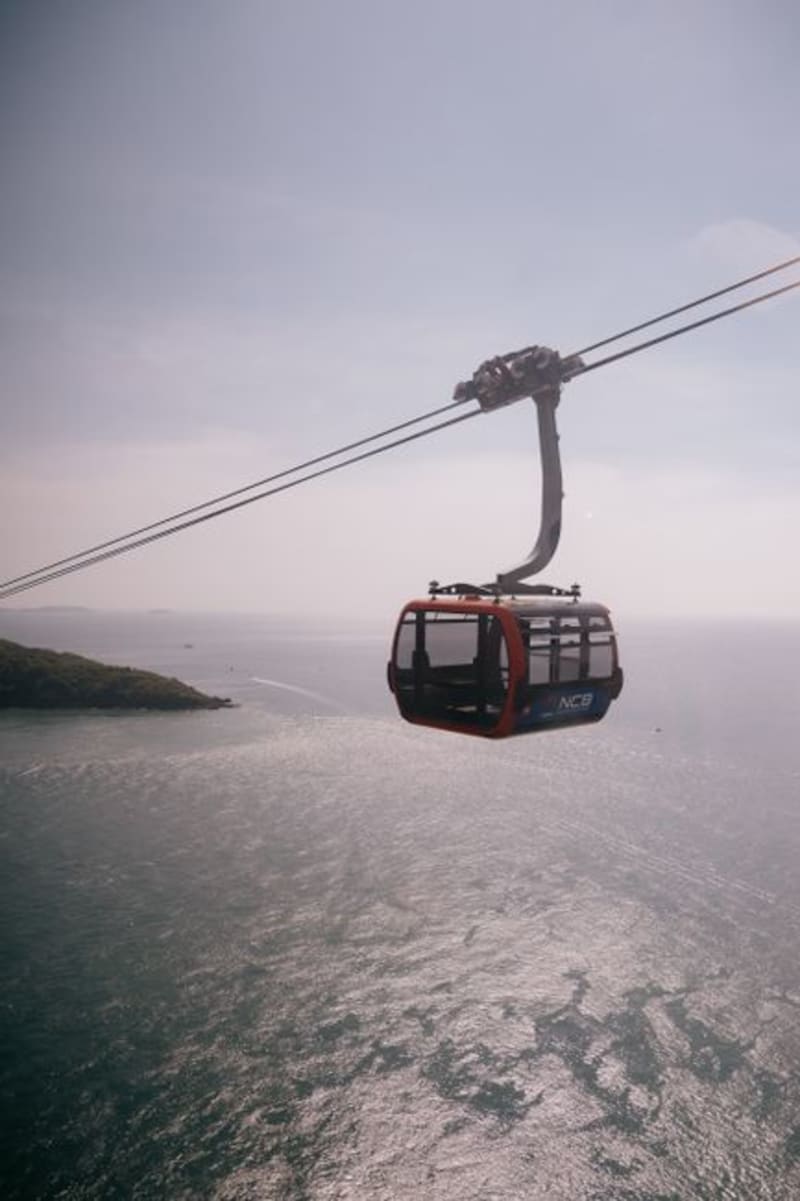 phu-quoc
VinWonders Phú Quốc
A sprawling theme park beneath the world's longest cable car, where roller coasters, a water park and an open-range safari fill an entire day.
Explore phu-quoc
Vung Bau Beach
Four kilometers of undeveloped north coast beach where the sand is darker, the surf rougher, and the solitude is genuine.
Explore phu-quoc
An Thoi Archipelago
Eighteen tiny islands off the southern tip where the water goes three shades of blue and coral grows where nobody expected it to.
Explore