Americas
Paraguay
"Paraguay is what South America looks like when almost nobody has told the rest of the world to come."
South America's most overlooked country — a landlocked heartland of Jesuit mission ruins, a river capital nobody rushes to, and a Guarani culture that never got fully overwritten by colonial history.

Paraguay is the country every neighboring itinerary skips, which is exactly why it rewards the traveler who does not. Asunción, South America’s oldest colonial capital, sits on the Paraguay River doing very little to advertise itself — terracotta rooftops, pale facades, a river light that most cities its age would be shouting about. Nobody shouts about it here, and that restraint turns out to be the whole appeal.
Asunción and the Central Towns
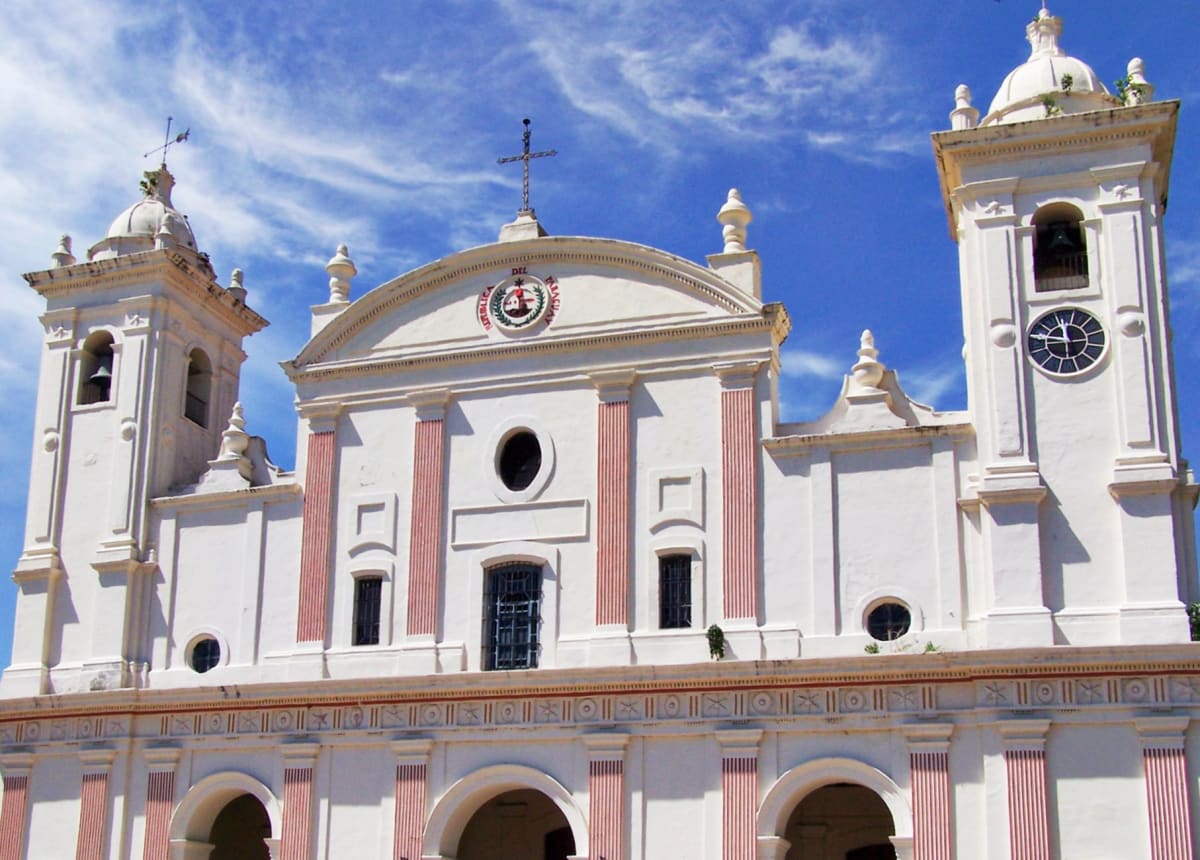
Asunción was founded in 1537 and for a long time was the base from which the Spanish pushed across the rest of the southern continent. It is a low, slow, humid city of old government buildings, shaded plazas and a riverfront that fills at dusk. Spend a morning on foot around the historic center, then do what locals do in the afternoon: sit in the shade with a thermos of cold tereré, the iced yerba mate that is drunk in every garden and on every office step in the country, passed from hand to hand in a shared guampa.
Most of the places worth seeing close to the capital sit on a loop around Lake Ypacaraí. Areguá is the artists’ village on the lake shore, known for ceramics and strawberries, and San Bernardino is the old German-founded resort on the opposite bank, quiet in the week and busy with Asunción families at weekends. Caacupé is the religious heart of the country, with a huge basilica that fills with pilgrims every December, and Yaguarón has a Franciscan church from the colonial period with a painted wooden interior that is among the finest in the country. Itá is a pottery town, Piribebuy is a small town in the hills that served as a wartime capital in the 1860s, and Paraguarí is the gateway to the green ridges south of the lake.
The food is simple and filling. Sopa paraguaya is not a soup but a dense, savory cornbread made with cheese and onion, chipa is a baked cheese bread sold hot from baskets at bus stops, and the grilled beef is as good as anything across the border in Argentina. Almost everything is eaten with mandioca, which here plays the role bread plays elsewhere.
The Jesuit Missions
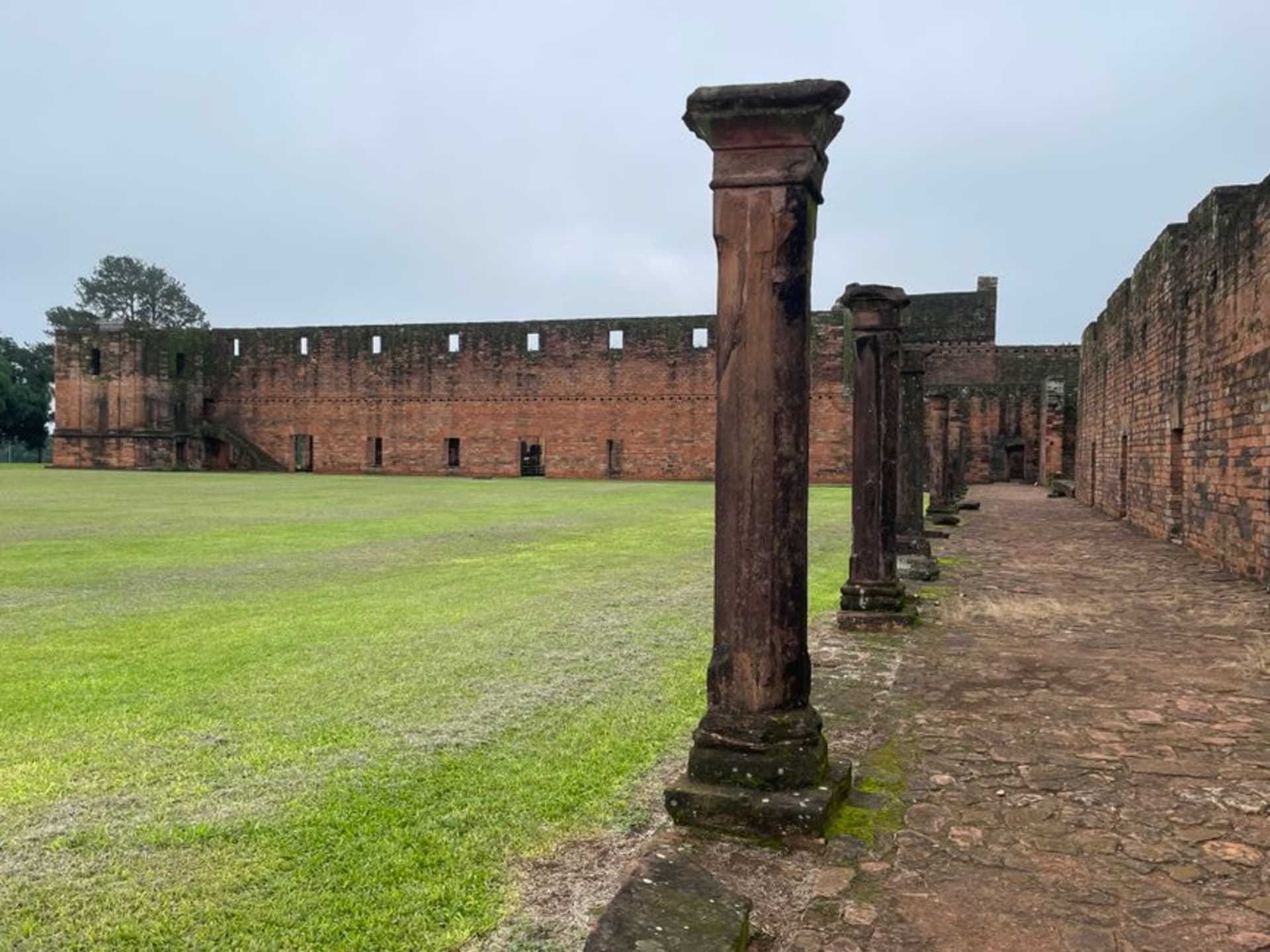
The real draw for me was the Jesuit mission ruins scattered through the south and east. Between the early seventeenth century and 1767 the Jesuits founded a string of settlements, called reductions, among the Guaraní people across what is now Paraguay, northern Argentina and southern Brazil. They combined European architecture and music with Guaraní labor and language, and they ran with a degree of independence that eventually troubled both the Spanish crown and the local colonists. When the order was expelled, the settlements emptied and the grass came back.
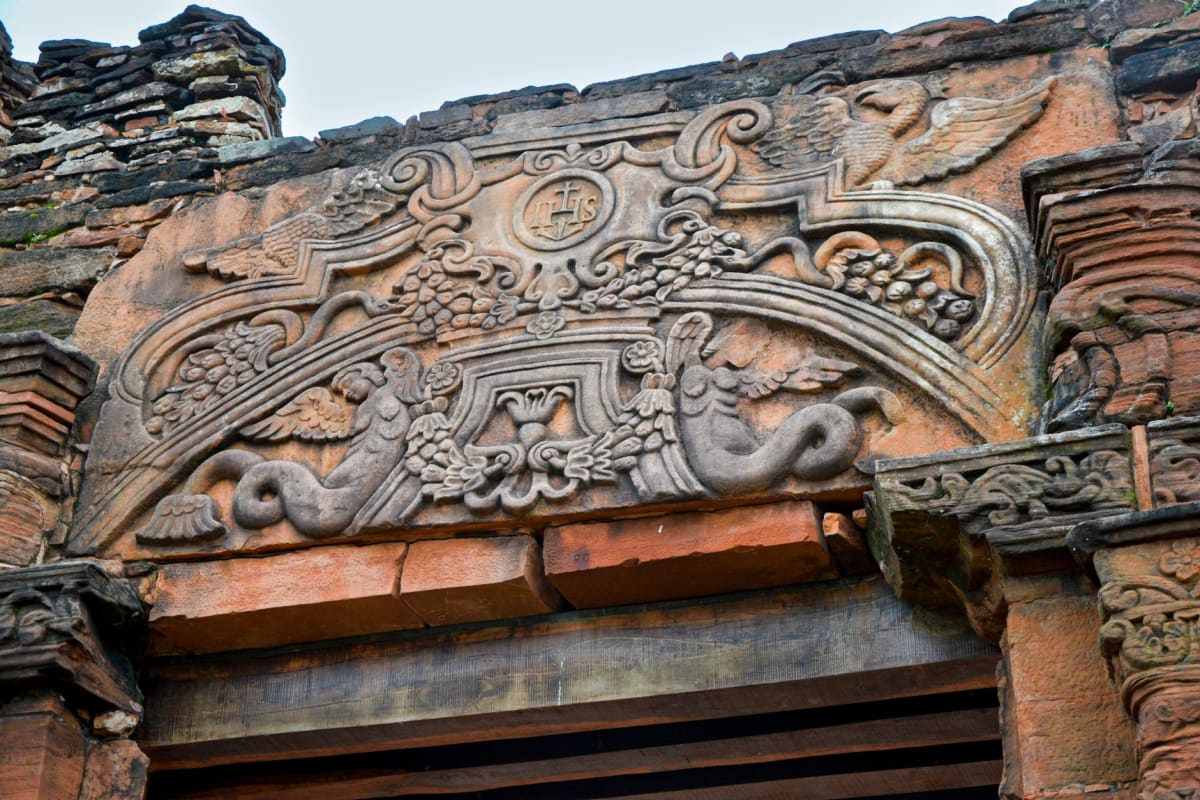
The Trinidad Jesuit Ruins are the best preserved, a UNESCO site where red sandstone workshops, a bell tower and a roofless church stand in open grassland, with carvings of angels playing instruments still visible on the pulpit. A short drive away, Jesús de Tavarangué is the unfinished sister mission, whose half-built church shows how the Jesuits made their stonework. Both are in the countryside near Encarnación, the riverside city on the Paraná that is the practical base for the missions, with a long beachfront promenade and a carnival that is the biggest in the country.

Guaraní is still spoken here more widely than in any other country in the Americas, spoken alongside Spanish rather than beneath it, and that duality shapes everything from the food to the way strangers greet you. It is an official language, taught in schools and heard on the radio, and many Paraguayans switch between the two within a single sentence.
Forest, Falls and Hills
East of the capital the countryside turns green and hilly. Ybycuí National Park protects one of the last big stretches of Atlantic forest in the country, with short trails, waterfalls and the remains of an early iron foundry that once supplied the Paraguayan army. Salto Cristal is a tall waterfall in the eastern hills, reached by a rough road and a short walk, and the Ybytyruzú Mountains near Villarrica are a rocky ridge with viewpoints and hiking that few foreigners ever hear about.
On the eastern border, Ciudad del Este is a loud commercial city of shops and traders on the Brazilian frontier, and its main reason to exist for visitors is the nearby Itaipú dam, one of the largest hydroelectric plants in the world, which Paraguay shares with Brazil. It is not a pretty town, but it is the quickest way to reach Iguazú from this side of the border.
The River Towns
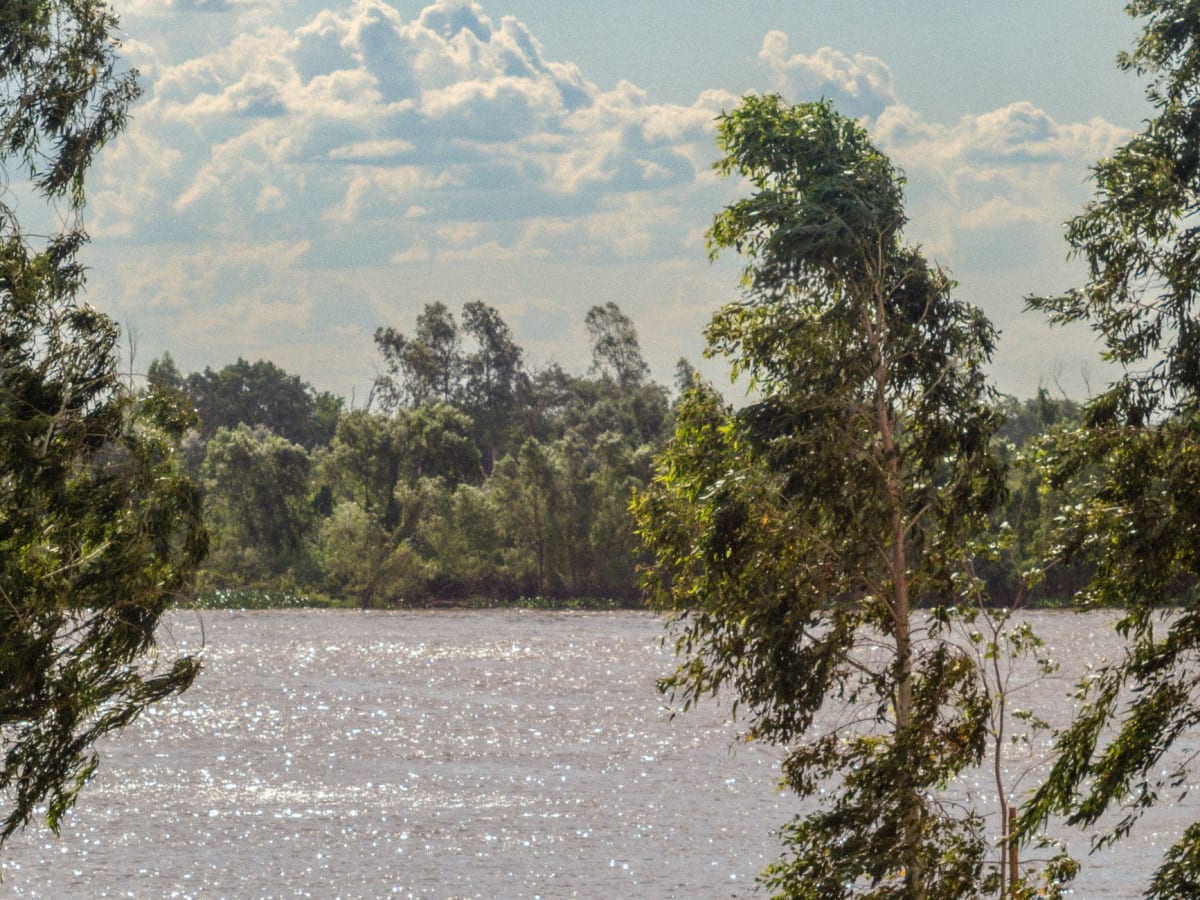
The Paraguay River is the country’s spine, and the old river ports along it feel like another era. Pilar sits in the south near the Argentine border, and Concepción in the north is the main trading town of the upper river, where boats still carry cattle, timber and passengers. Further north still, Bahía Negra is a tiny settlement on the edge of the Pantanal, a long way from anywhere, and the starting point for wildlife trips into one of the least visited wetlands on the continent.
The Chaco
Beyond the river the land flattens into the Chaco, a vast thorn forest and scrubland that makes up more than half of Paraguay and stretches toward Bolivia in a sea of dry bush, palm savannas and salt pans. It is hot, sparsely settled and full of wildlife, including jaguars, giant anteaters and hundreds of bird species.
Filadelfia and Loma Plata are the main Mennonite towns, founded by German-speaking settlers in the 1920s and 1930s who turned the dry land into dairy farms and cooperatives. The museums and farm shops there give an unusual sense of how a tight-knit community built a living in a very difficult place. Roads in the Chaco can be impassable after heavy rain, so check conditions before any long drive, carry plenty of water and plan fuel stops carefully.
The War and Its Memory
To understand modern Paraguay you need to know about the War of the Triple Alliance, fought against Brazil, Argentina and Uruguay from 1864 to 1870. It killed a huge share of the male population and left the country shattered. Beyond the missions, Cerro Corá National Park marks the granite hills where the country’s most catastrophic war ended, with the death of President Francisco Solano López in March 1870. The park is quiet and green, with a small museum and a memorial, and it is a good place to think about how deep that history still runs.
When to go: April through September avoids the worst of the subtropical heat and humidity, with July and August driest and most comfortable for exploring the mission ruins and the Chaco.
What most guides get wrong: They treat Paraguay as a side trip from Argentina’s Iguazú Falls rather than a destination in its own right. The Jesuit missions alone justify a dedicated week, and the country’s near-total absence of mass tourism is the point, not a drawback.
Photography: Pexels contributors.
Explore
Places in Paraguay
 paraguay
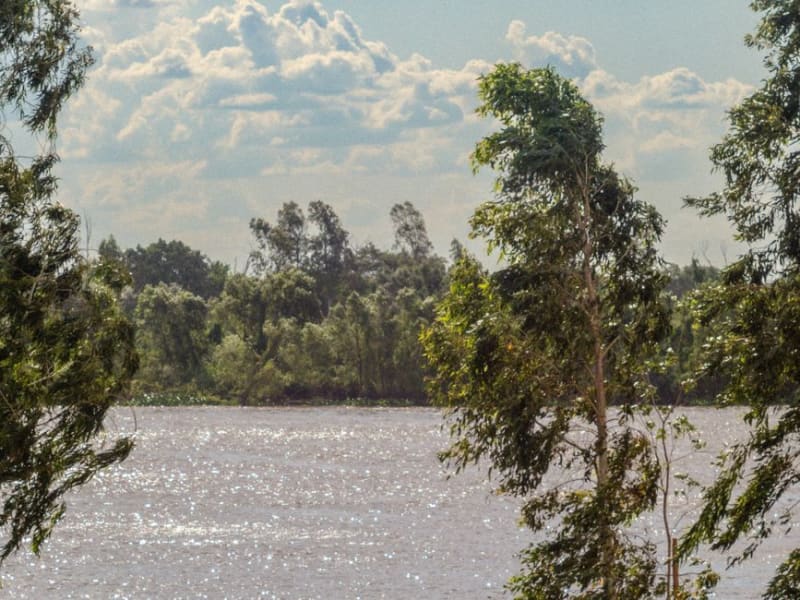
Aregua
A lakeside pottery town on the shores of Lake Ypacarai where red clay hills, strawberry stands, and Sunday crowds from the capital all meet.
Explore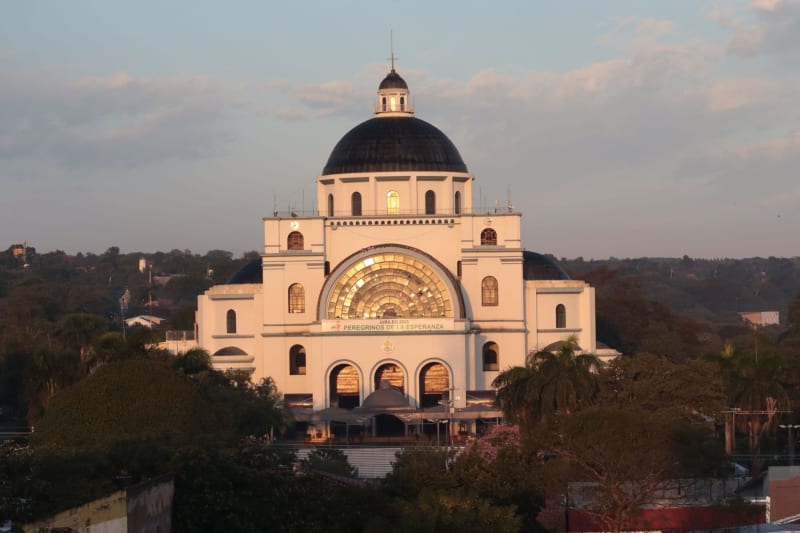 paraguay
Asuncion
South America's oldest colonial capital sits on the Paraguay River, largely undiscovered and entirely itself.
Explore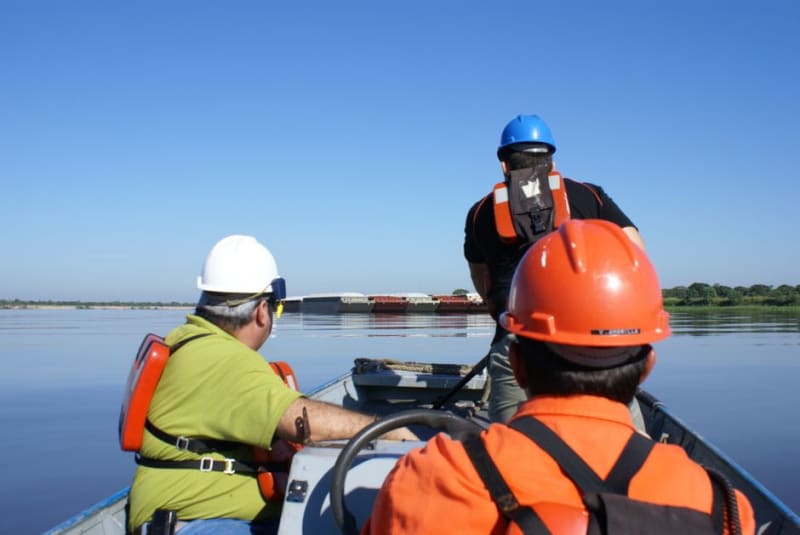 paraguay
Bahia Negra
Paraguay's northernmost river outpost, gateway to the vast Pantanal wetlands, reachable only by a two-day boat trip or a small propeller plane.
Explore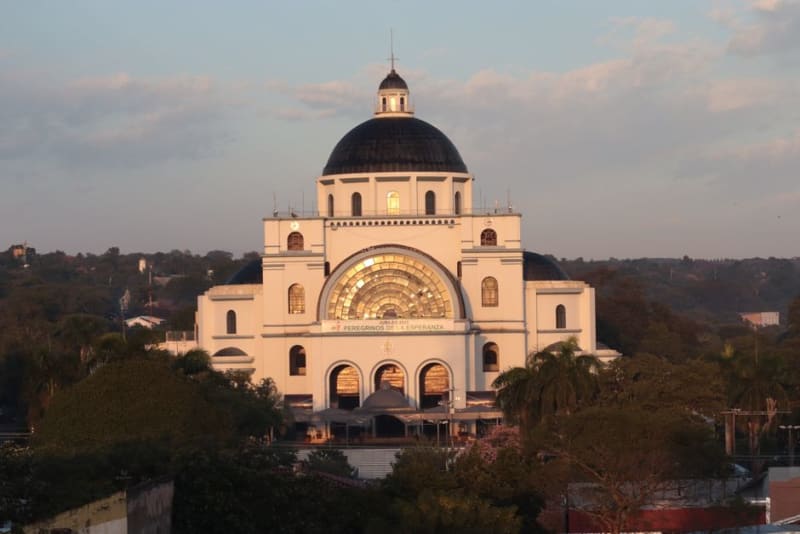 paraguay
Caacupe
Paraguay's spiritual capital, where an immense basilica draws pilgrims by the hundreds of thousands each December in one of South America's great religious gatherings.
Explore paraguay
Cerro Cora National Park
A remote park of granite hills and cerrado savanna near the Brazilian border, sacred as the site where Paraguay's most catastrophic war ended and its wartime president died.
Explore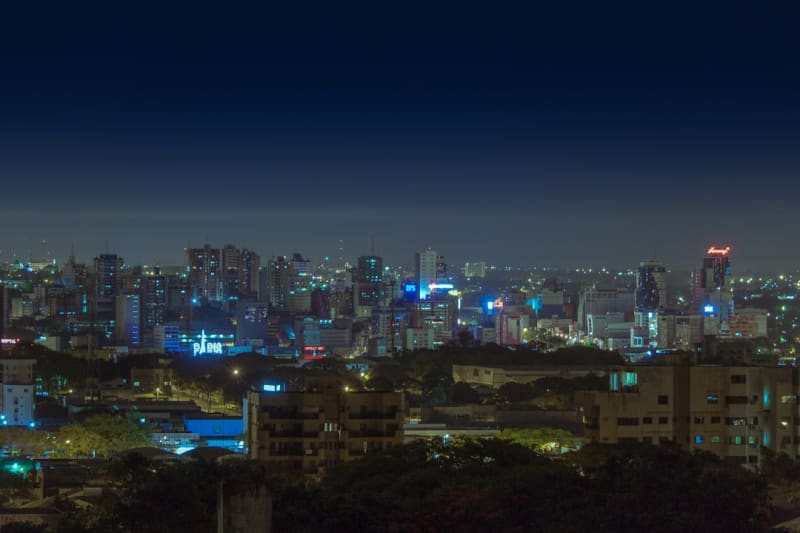 paraguay
Ciudad del Este
A frontier city of duty-free malls and river light, standing at the hinge where Paraguay, Brazil, and Argentina almost touch.
Explore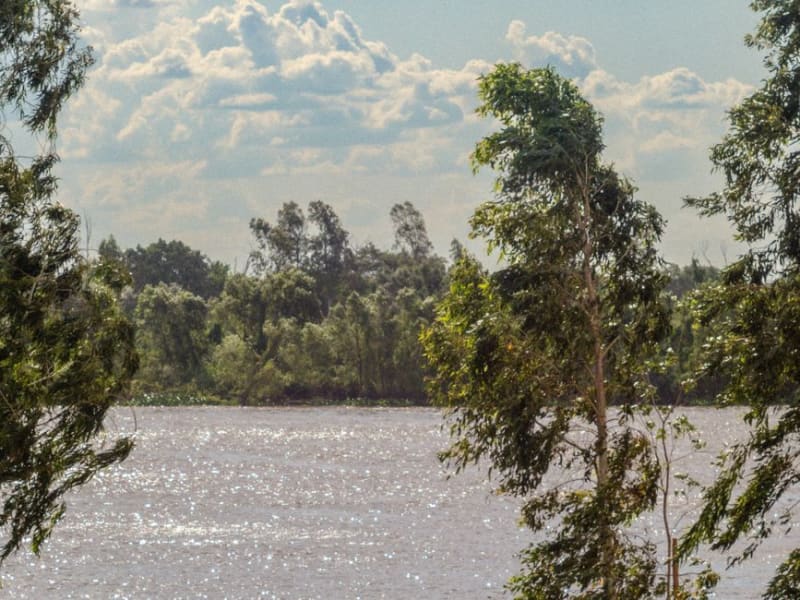 paraguay
Concepcion
A faded river port on the upper Paraguay, its once-grand mansions and cattle-boat docks holding onto a slower northern frontier world.
Explore paraguay
Encarnacion
Paraguay's carnival capital on the Parana River, near the UNESCO Jesuit Missions of La Santisima Trinidad.
Explore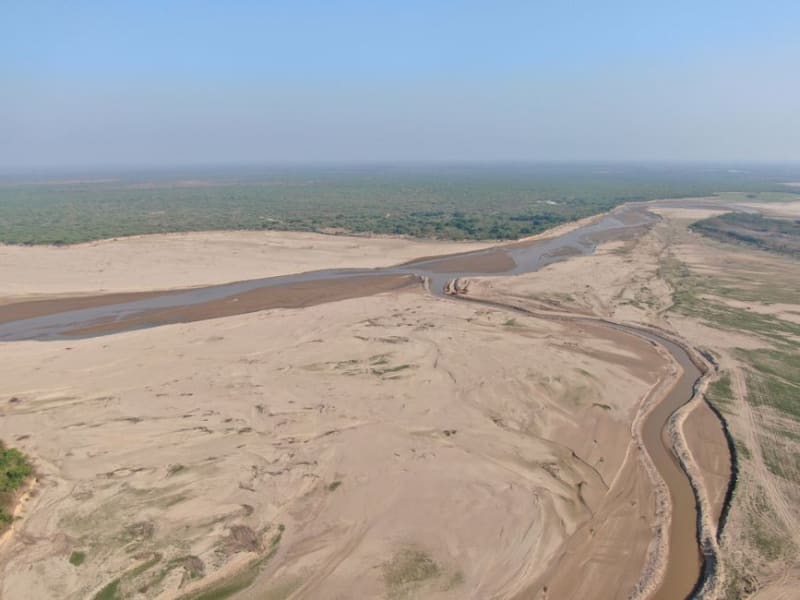 paraguay
Filadelfia
A Mennonite colony town deep in the Chaco scrubland, where German is still spoken over dairy counters and the desert has been coaxed into surprising productivity.
Explore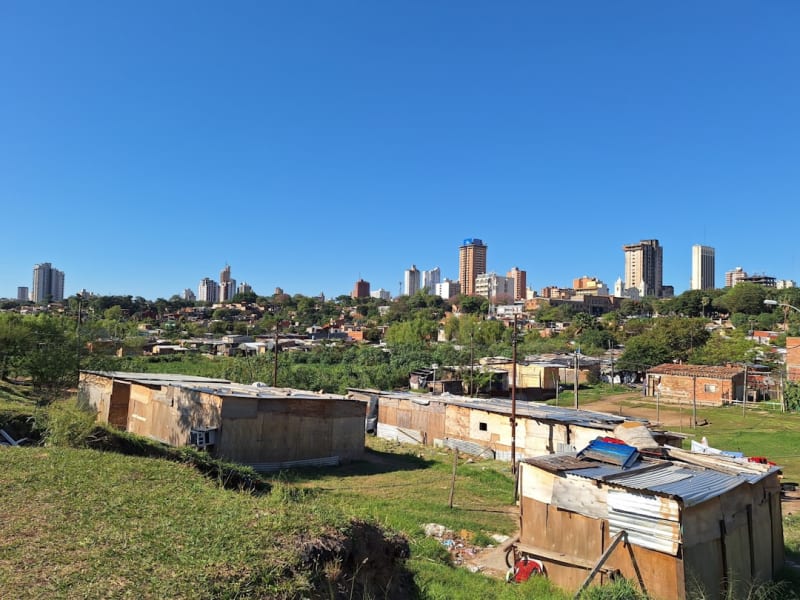 paraguay
Ita
A ceramics town famous for whimsical clay figurines, where entire streets of family workshops fire kilns from before dawn.
Explore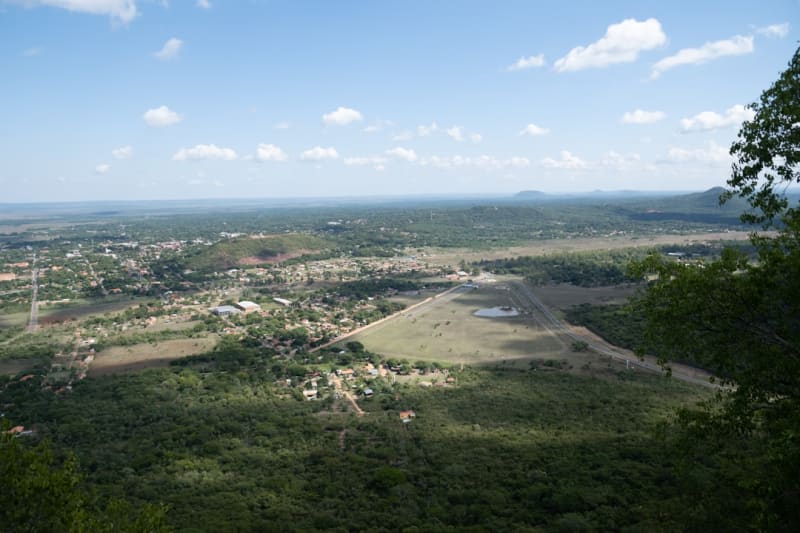 paraguay
Jesus de Tavarangue
An unfinished Jesuit church whose three Moorish-arched doorways stand open to the sky, halted by expulsion before the roof was ever raised.
Explore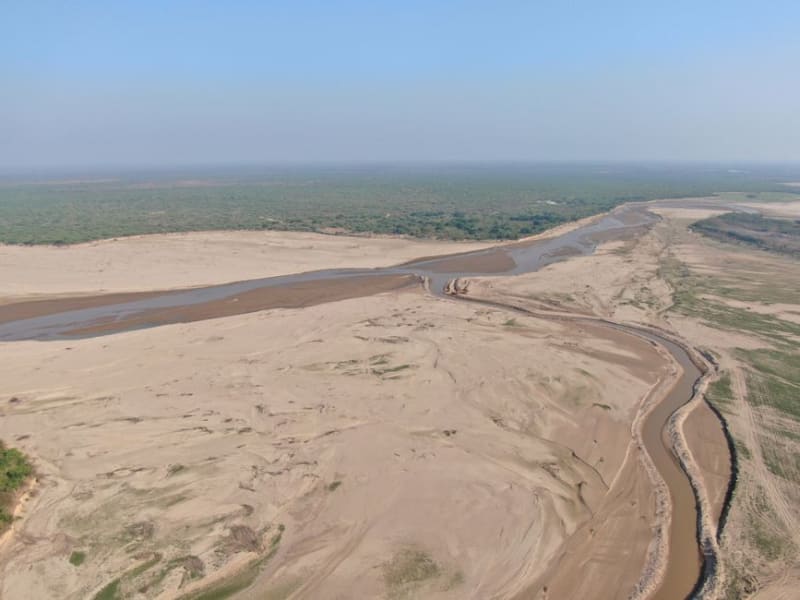 paraguay
Loma Plata
The oldest Mennonite colony town in the Paraguayan Chaco, orderly and green against the surrounding thornbush, with a museum tracing the hardest years of settlement.
Explore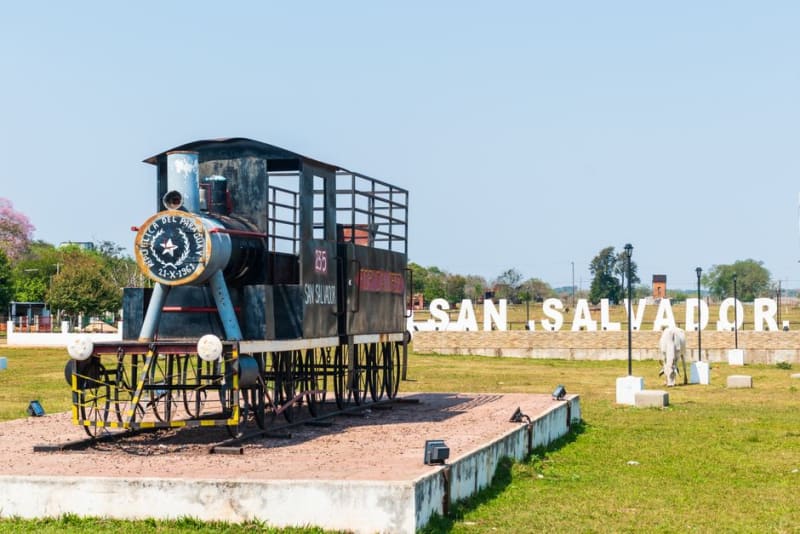 paraguay
Paraguari
A hill-flanked railway town beneath the Cerro Santo Tomas escarpment, where a rusting steam locomotive and steep forest trails share the same quiet valley.
Explore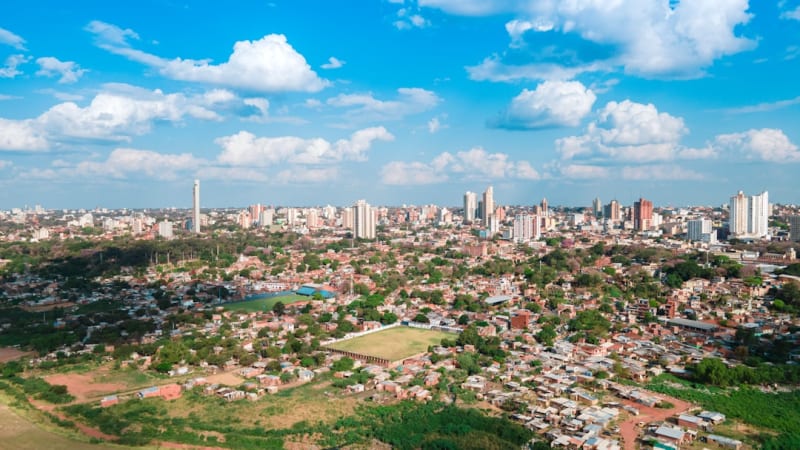 paraguay
Pilar
A low-lying river town on stilts and levees where the Paraguay River floods a rhythm of life into the streets nearly every year.
Explore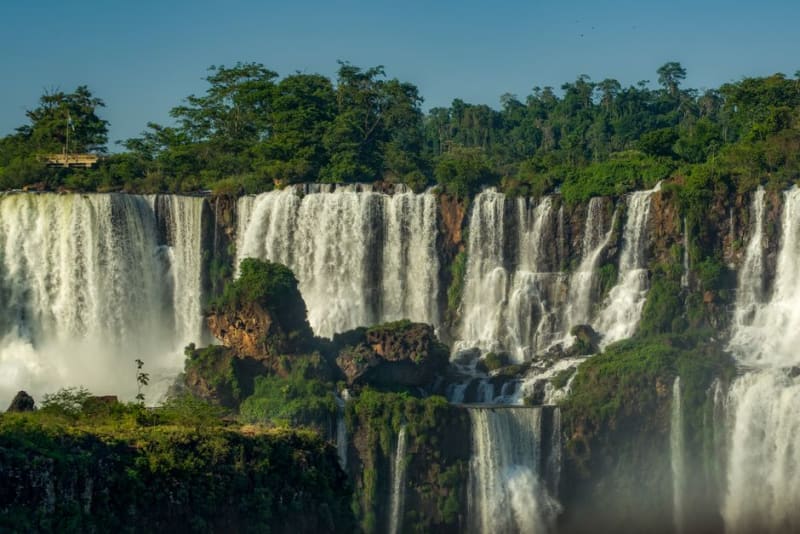 paraguay
Piribebuy
A hill-country town that served as Paraguay's wartime capital, remembered now for a somber battle museum and waterfalls tumbling through the surrounding countryside.
Explore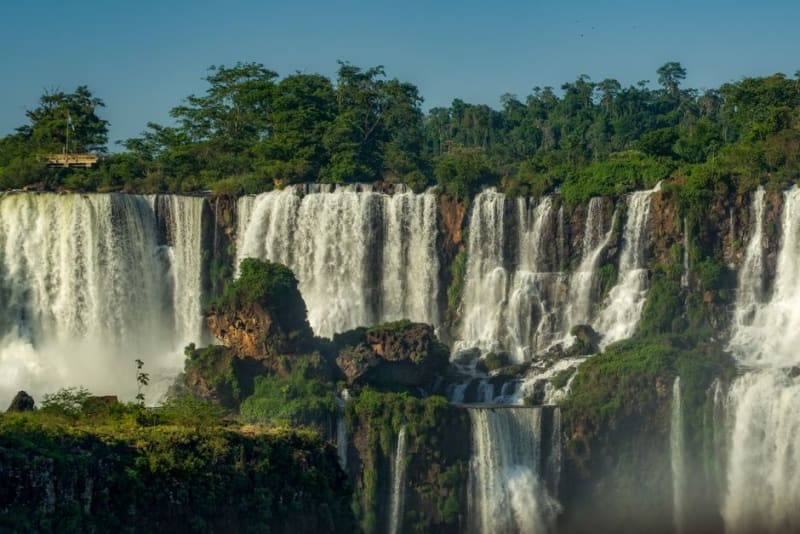 paraguay
Salto Cristal
A hidden waterfall in the eastern forest reserves near the Brazilian border, its clear pool ringed by palms and reachable only after a genuine hike.
Explore