
Izki
"Locals will tell you this town has been lived in longer than almost anywhere else in Arabia. I stopped doubting them after an hour there."
Reputedly one of the oldest continuously inhabited towns in Arabia, its ancient quarter of Al Manakh built directly against a rock outcrop above a working falaj oasis.

Izki came up in conversation with a Nizwa shopkeeper who, after I mentioned I’d already seen the fort and the souq, asked why I hadn’t bothered with “the oldest town in the country” barely twenty minutes down the road. I hadn’t even heard of it. That gap in my own research turned out to be the best recommendation I got on the entire trip.
A Claim Worth Testing
Izki is often cited, with varying degrees of academic rigor, as one of the oldest continuously inhabited settlements in Arabia, with some local traditions tracing habitation back thousands of years. Whatever the precise historical accuracy of that claim, the old quarter called Al Manakh does nothing to undercut it — a dense cluster of mud-brick houses built directly against and into a rocky outcrop, stacked in a way that makes the boundary between building and bedrock genuinely hard to locate in places.

Climbing through the narrow paths between houses, I kept running my hand along walls trying to work out where mud-brick ended and natural stone began, and mostly failing. Whoever built this settlement clearly understood the rock as a foundation to be incorporated rather than cleared.
The Falaj Beneath the Old Fort
At the base of the outcrop, Izki’s fort — smaller and less visited than Nizwa’s or Bahla’s — sits above a falaj-fed oasis of date palms and smaller garden plots still actively farmed. I found the falaj running in a narrow channel directly beside the path up to the old quarter, its water noticeably cold even in the midday heat, drawn from sources deep enough in the mountains to stay that way regardless of the season.

A group of kids playing near the water stopped to watch us for a minute with the mild curiosity small towns off the tourist track tend to show, then went right back to whatever game they’d been running before we showed up.
When to go: October through March. Izki pairs easily with Nizwa as a half-day addition, and the walk through Al Manakh is short enough to fit in even a brief stop between other interior destinations.
Keep exploring
More from Oman
 oman
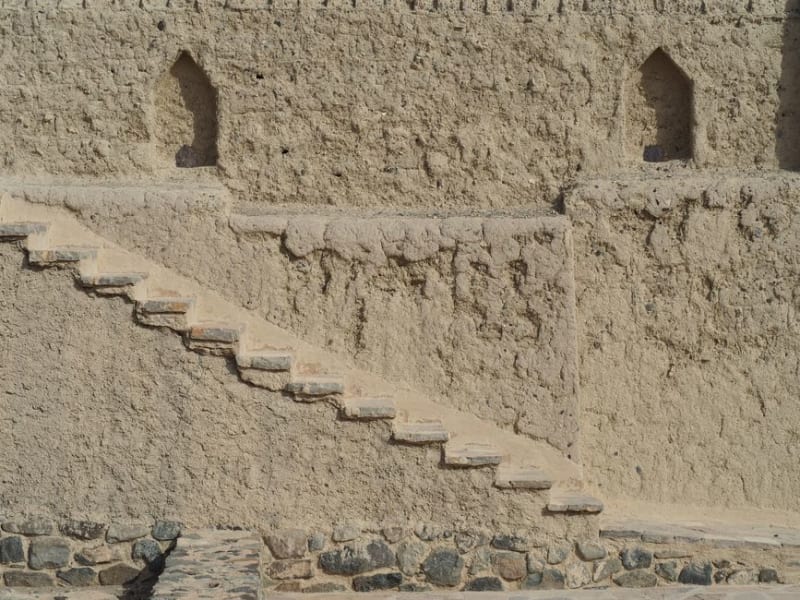
Jabrin Castle
A 17th-century Ya'arubi palace-fortress famous not for its walls but for what's inside them — painted ceilings, a hidden library, and a falaj channel running straight through the building.
Explore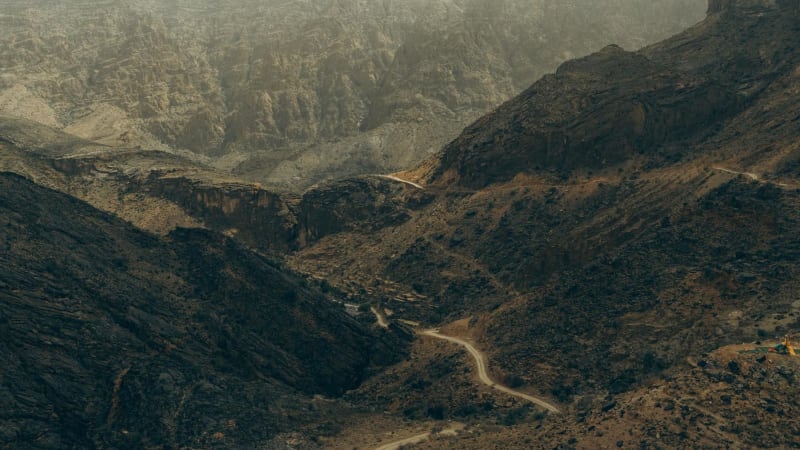 oman
Jebel Akhdar
The 'Green Mountain' towering above Oman's heat — rose farms, cool air, and ancient terraced villages.
Explore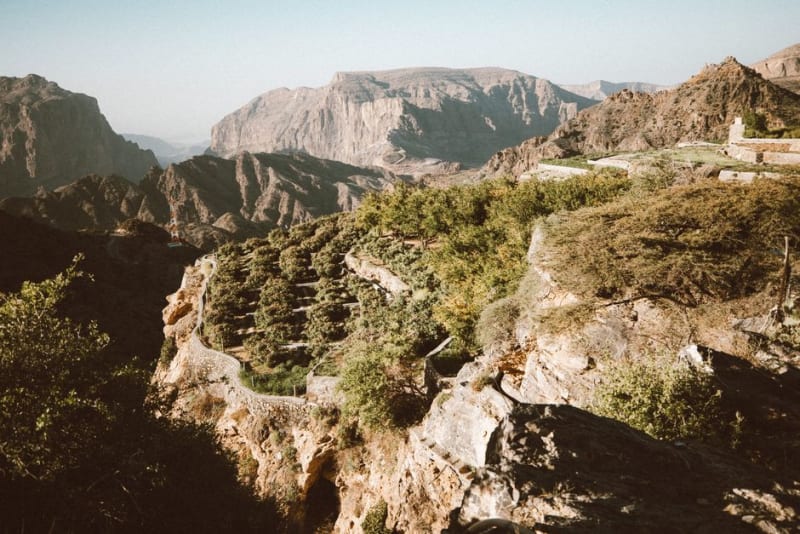 oman
Jebel Misht
A serrated limestone massif rising from the desert plain, uplifted from an ancient seabed and considered one of Oman's great scrambling and climbing objectives.
Explore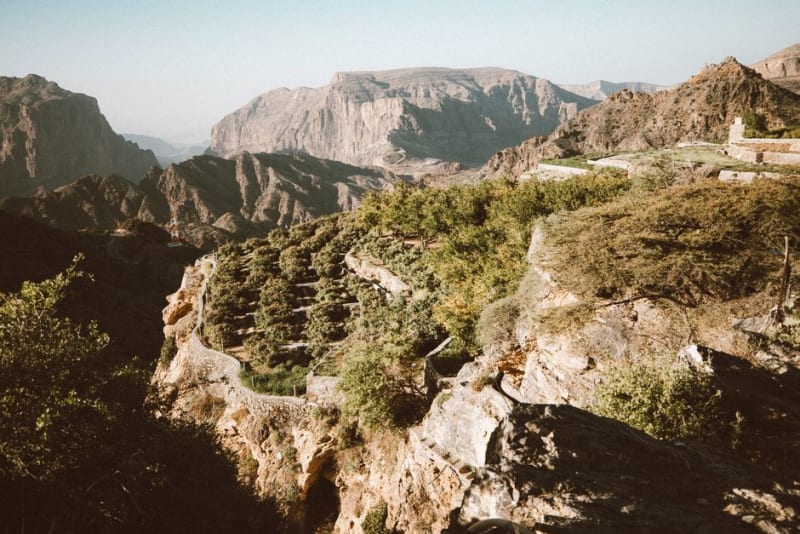 oman
Jebel Samhan
A vast escarpment nature reserve above Mirbat where the plateau drops a kilometer straight down and Arabian leopards still roam, rarely seen.
Explore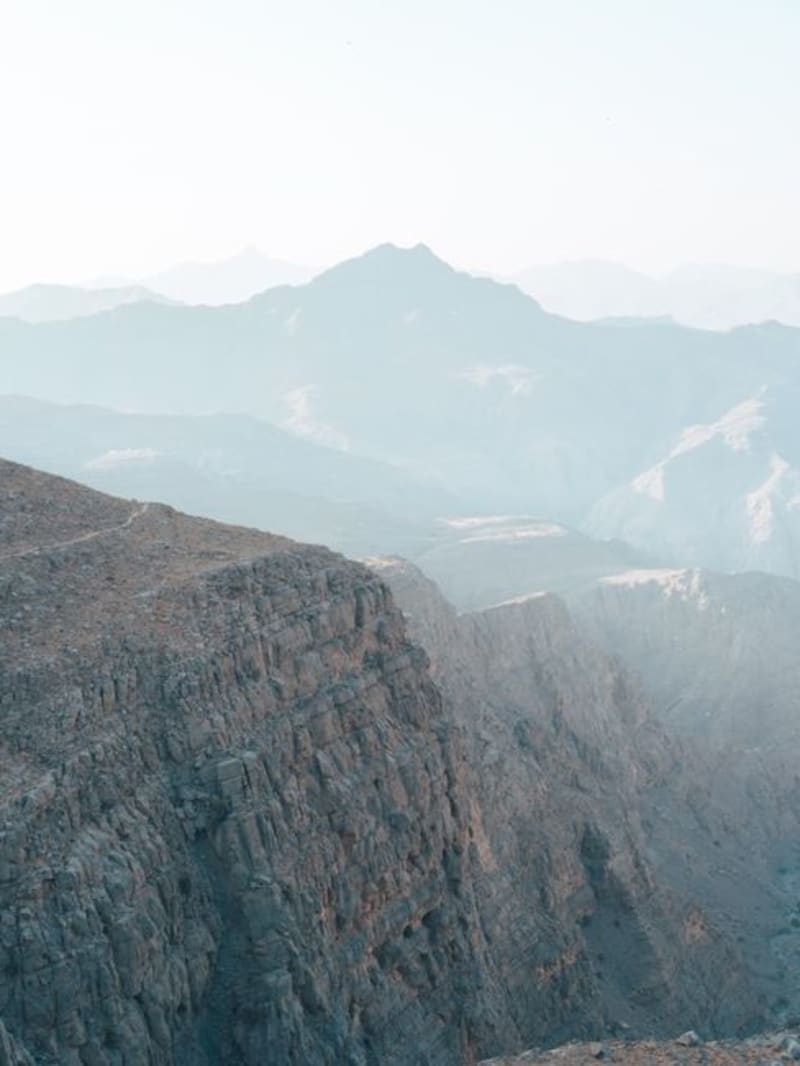 oman
Jebel Shams
Oman's highest peak and the rim of Wadi Ghul, the 'Grand Canyon of Arabia' — a mile-deep gash in the Al Hajar range.
Explore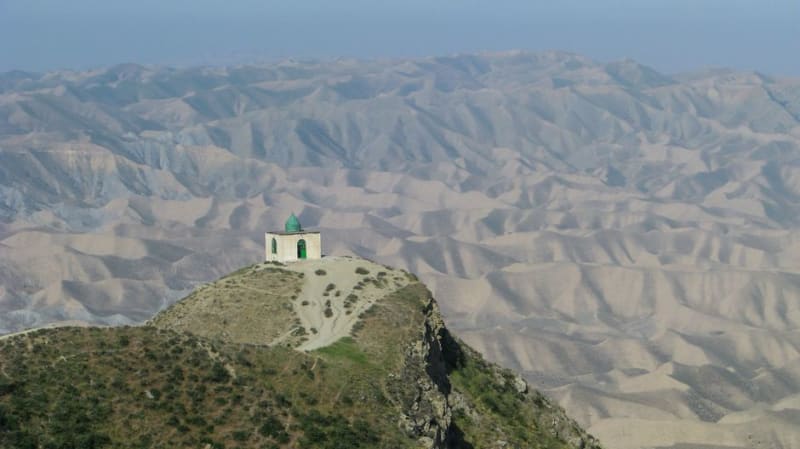 oman
Job's Tomb (Nabi Ayoub)
A hilltop shrine to the biblical and Quranic prophet Job, wrapped in cloud and one of the best views in Dhofar.
Explore