A Sharqiyah trading town with a crumbling old quarter of unguarded mud-brick mansions and a Wednesday livestock souq that still runs on cash, shouting, and centuries of habit.
I almost drove past Ibra entirely. It sits on the road toward Wahiba Sands as a fairly unremarkable modern town — roundabouts, a petrol station, a strip of shops selling tyres and phone credit — and if I hadn’t read a single paragraph in an old guidebook about an abandoned quarter behind the main street, I would have kept going toward the dunes without stopping. That paragraph turned out to be underselling the place badly.
Al Minzafah’s Silent Mansions
The old quarter, Al Minzafah, sits a few streets back from anything a GPS would flag as a point of interest. I parked and walked in without really knowing what I was looking for, and within two minutes I was standing in front of a two-storey mud-brick house with carved wooden lintels and geometric plasterwork so intricate it looked machine-cut, except nothing here was machine-cut. Ibra grew rich on trade with East Africa in the 18th and 19th centuries, and the merchant families built accordingly — these were status houses, meant to be seen from the street and admired by neighbors who were doing the same thing to each other.
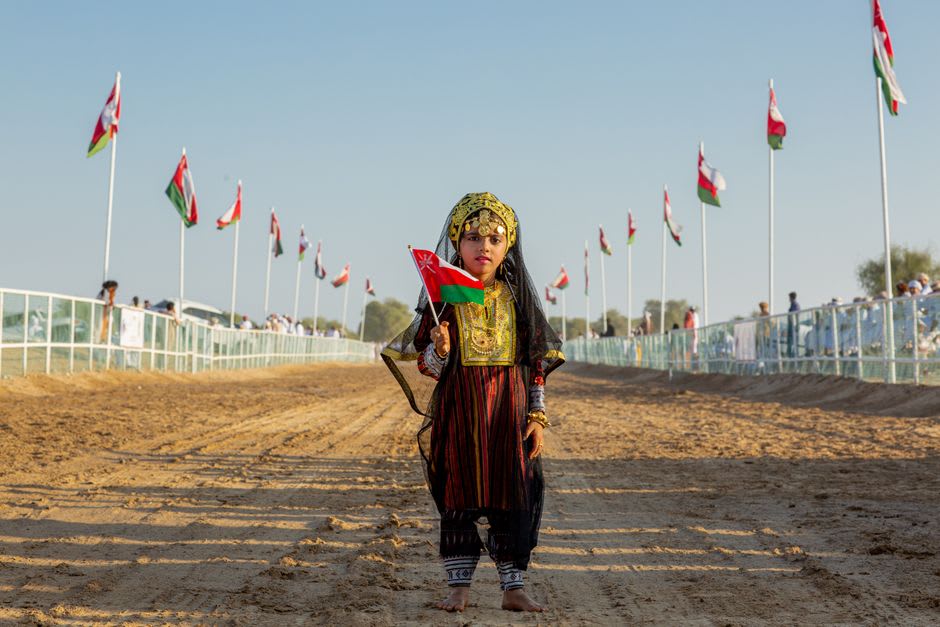
Almost none of the houses are occupied now. Families moved out decades ago into newer concrete homes with air conditioning and modern plumbing, leaving the mansions to erode slowly and, remarkably, mostly unlocked. I pushed open a door that gave without resistance and found myself in a roofless courtyard with a fig tree growing through what used to be someone’s reception hall. Lia stood in the doorway refusing to come further in, convinced the whole structure was one strong gust from collapsing on us, which was probably a more sensible read of the situation than mine.
Wednesday Is for the Souq
If Al Minzafah is Ibra’s past, the livestock souq on Wednesday mornings is its present tense, loud and ongoing. Goats and cattle change hands in a dusty enclosure ringed by pickup trucks, men in dishdashas inspecting teeth and haunches with the unhurried scrutiny of people who have been doing this their whole lives. I’d read that this was one of the few markets in Oman where women also actively trade and negotiate rather than just attend, and it was true — I watched an older woman argue a price down with more conviction than anyone else in the enclosure and walk off with a goat under one arm like it weighed nothing.
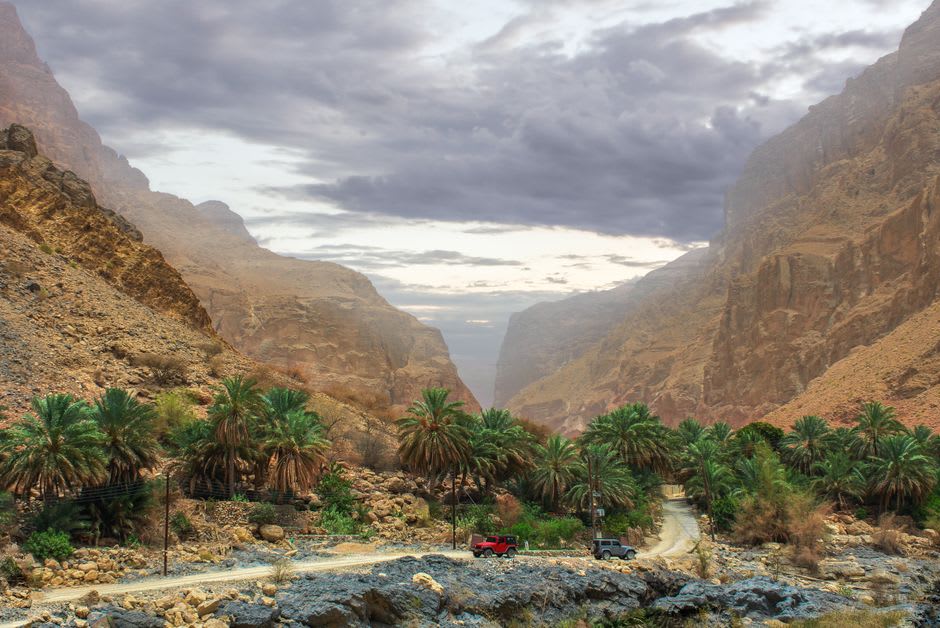
Nobody at the souq paid us the slightest attention beyond a few nods, which after the staged photo-ops of some Gulf tourist markets felt like a genuine relief. This was commerce, not performance.
When to go: Any Wednesday morning for the livestock souq, arriving by 7 a.m. before the heat and the crowds build. October through March for comfortable walking through the old quarter, where there’s no shade and the mud-brick radiates heat back at you well into the afternoon.
Keep exploring
More from Oman
 oman
oman Ibri Fort
A recently restored fort in the heart of Ad Dhahirah region, overlooked by nearly every itinerary that fixates on Nizwa and Bahla, and better for it.
Explore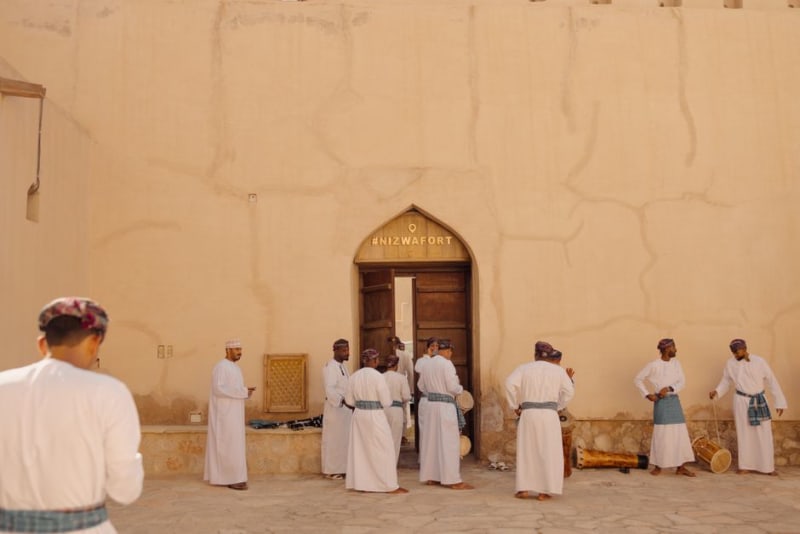 oman
oman Izki
Reputedly one of the oldest continuously inhabited towns in Arabia, its ancient quarter of Al Manakh built directly against a rock outcrop above a working falaj oasis.
Explore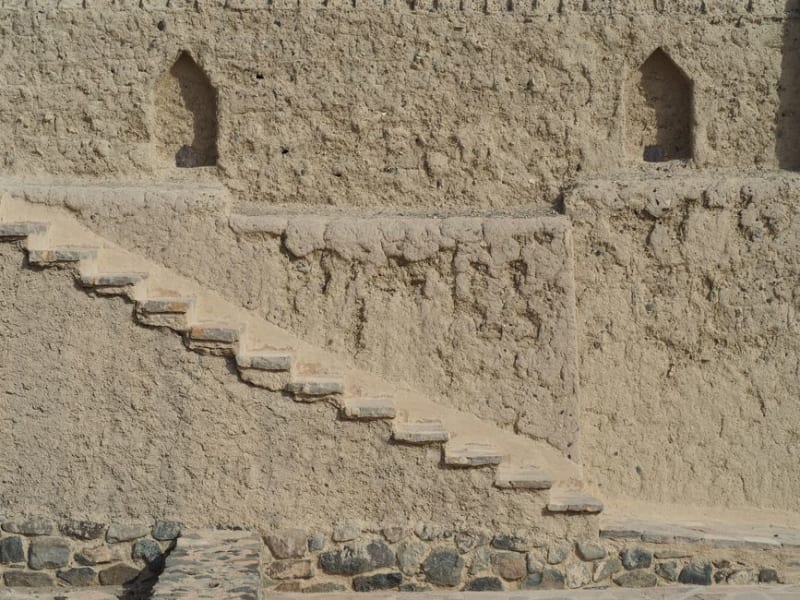 oman
oman Jabrin Castle
A 17th-century Ya'arubi palace-fortress famous not for its walls but for what's inside them — painted ceilings, a hidden library, and a falaj channel running straight through the building.
Explore oman
oman Jebel Akhdar
The 'Green Mountain' towering above Oman's heat — rose farms, cool air, and ancient terraced villages.
Explore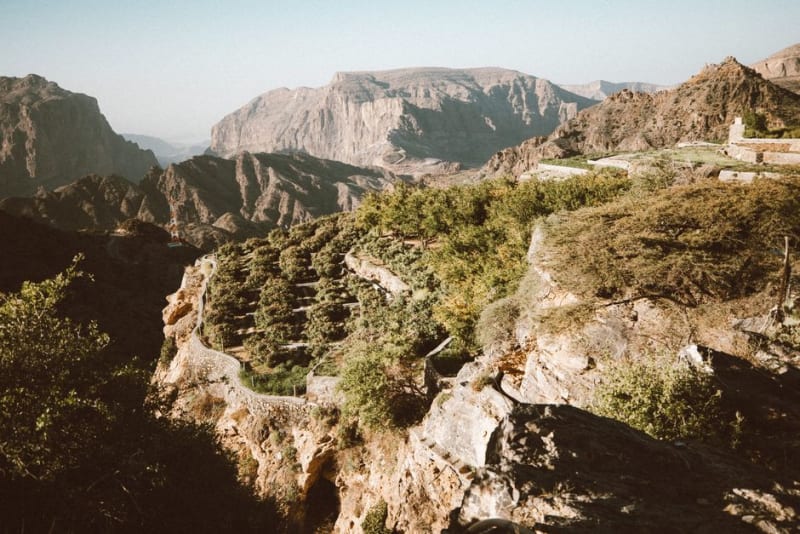 oman
oman Jebel Misht
A serrated limestone massif rising from the desert plain, uplifted from an ancient seabed and considered one of Oman's great scrambling and climbing objectives.
Explore oman
oman Jebel Samhan
A vast escarpment nature reserve above Mirbat where the plateau drops a kilometer straight down and Arabian leopards still roam, rarely seen.
Explore