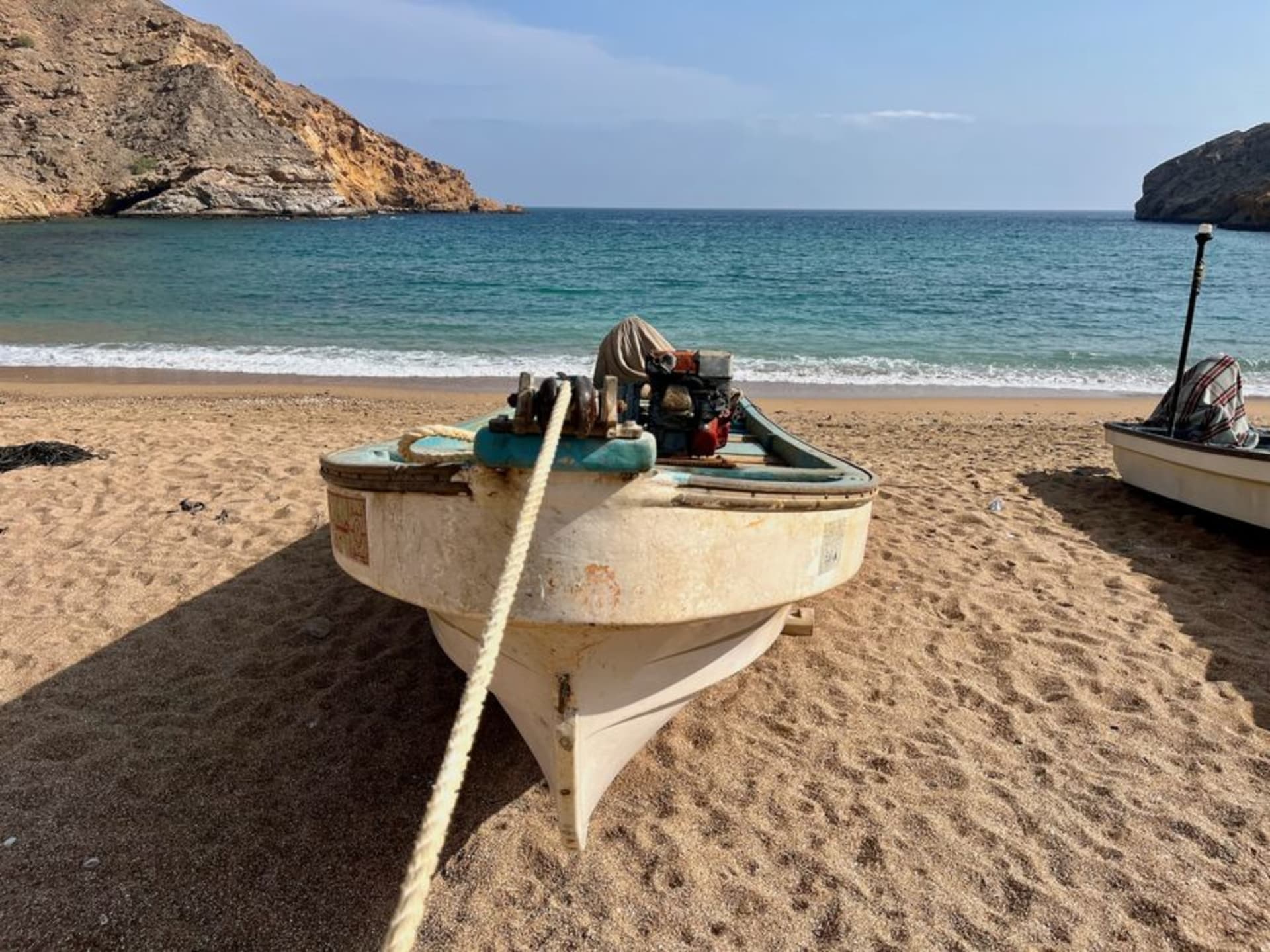
A remote archipelago off Dhofar where fishermen outnumber tourists a thousand to one, and the diving is as raw as it gets in Arabia.
I’d been chasing the Hallaniyat Islands for two trips before I actually made it there, and even now I’m not entirely sure I can explain why they mattered so much to me. Formerly known as the Khuriya Muriya Islands, this small archipelago sits roughly forty kilometers off the Dhofar coast near Al Hallaniyah village, and reaching it means arranging a fishing boat out of Shuwaymiyah or Sadah, since there’s no scheduled transport and no tourist infrastructure whatsoever.
Arranging the Impossible
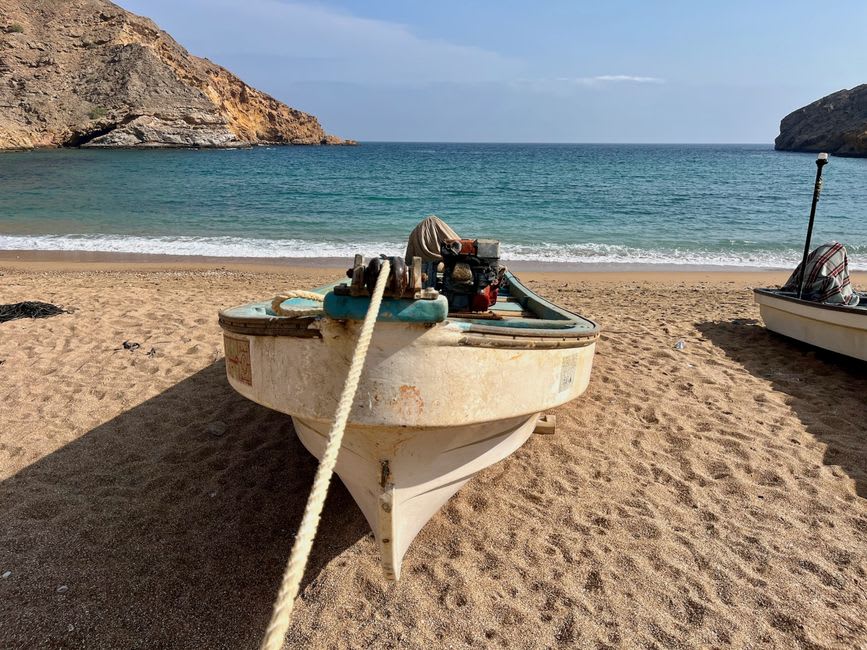
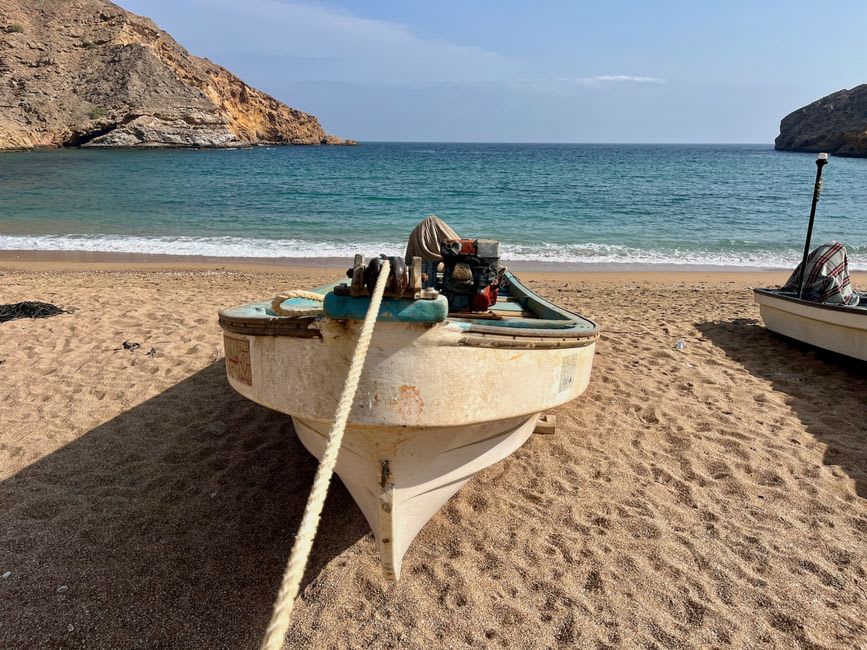
Lia and I spent two days in Salalah tracking down a fisherman willing to take us out — most were reluctant, citing the currents and the distance, until a contact from our guesthouse vouched for us. The crossing took nearly two hours in a small wooden boat, open ocean the entire way, swells rolling under the hull in a rhythm that made conversation pointless. When the first island appeared on the horizon, low and stark against an enormous sky, nobody on the boat said anything. It felt earned.
What’s Beneath the Surface
The diving here, arranged informally with the same fishermen who ferried us, is unlike anything else I’ve done in Oman — cooler water fed by upwelling currents from the Arabian Sea, dense clouds of fish that scatter and reform around you, and an eerie, unpolished quality to the reefs, as if no dive operator has ever mapped or named a single site. We saw a pod of dolphins mid-crossing and, underwater near the second island, a shoal of barracuda arranged in a slow, rotating column that Lia still brings up unprompted months later.
A Working, Not a Tourist, Place
Al Hallaniyah, the only inhabited island, is home to a small fishing community that has lived off this stretch of ocean for generations, largely disconnected from the pace of mainland Oman. We were guests there for an afternoon, sharing grilled kingfish with a family who seemed more curious about us than we were about them, which is a rare and grounding thing to experience as a traveler.
When to go: October through April, when the sea is calmer and crossings are safer. This is not a trip to plan without local contacts and flexible expectations — arrange everything through Salalah in advance.
Keep exploring
More from Oman
 oman
oman Ibra
A Sharqiyah trading town with a crumbling old quarter of unguarded mud-brick mansions and a Wednesday livestock souq that still runs on cash, shouting, and centuries of habit.
Explore oman
oman Ibri Fort
A recently restored fort in the heart of Ad Dhahirah region, overlooked by nearly every itinerary that fixates on Nizwa and Bahla, and better for it.
Explore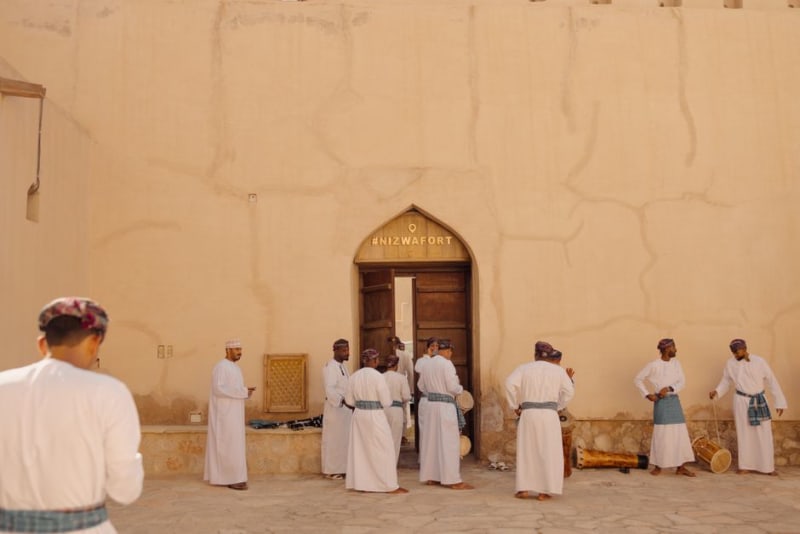 oman
oman Izki
Reputedly one of the oldest continuously inhabited towns in Arabia, its ancient quarter of Al Manakh built directly against a rock outcrop above a working falaj oasis.
Explore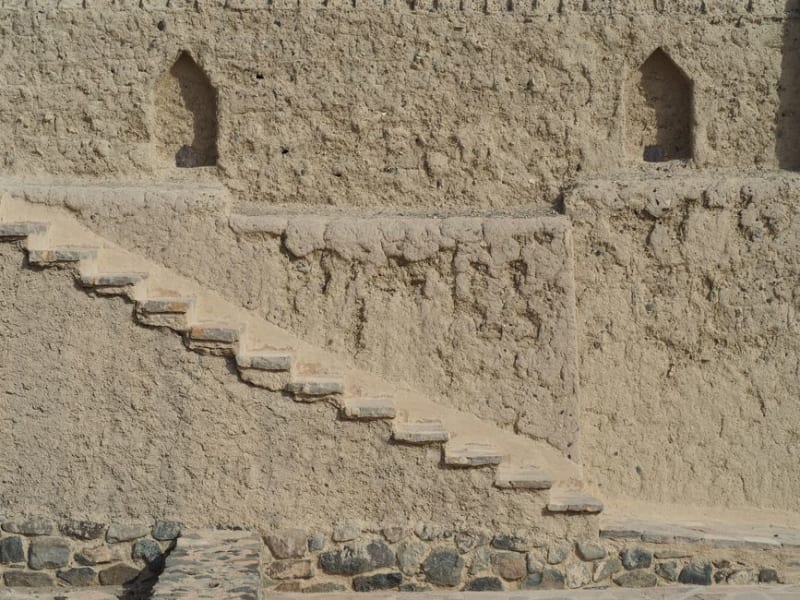 oman
oman Jabrin Castle
A 17th-century Ya'arubi palace-fortress famous not for its walls but for what's inside them — painted ceilings, a hidden library, and a falaj channel running straight through the building.
Explore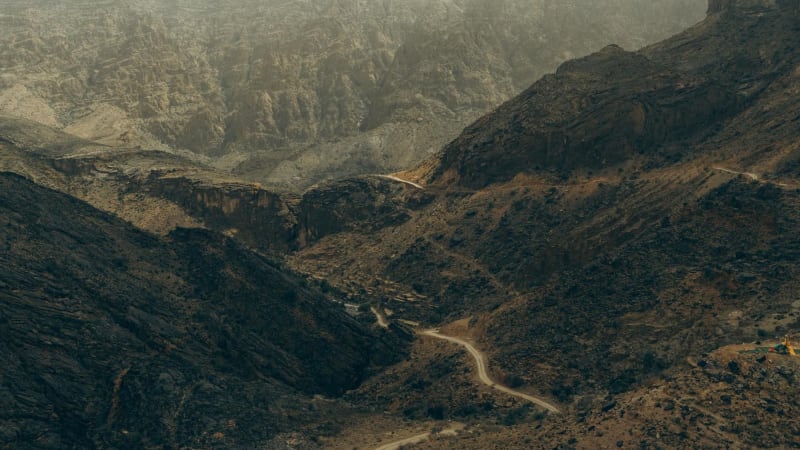 oman
oman Jebel Akhdar
The 'Green Mountain' towering above Oman's heat — rose farms, cool air, and ancient terraced villages.
Explore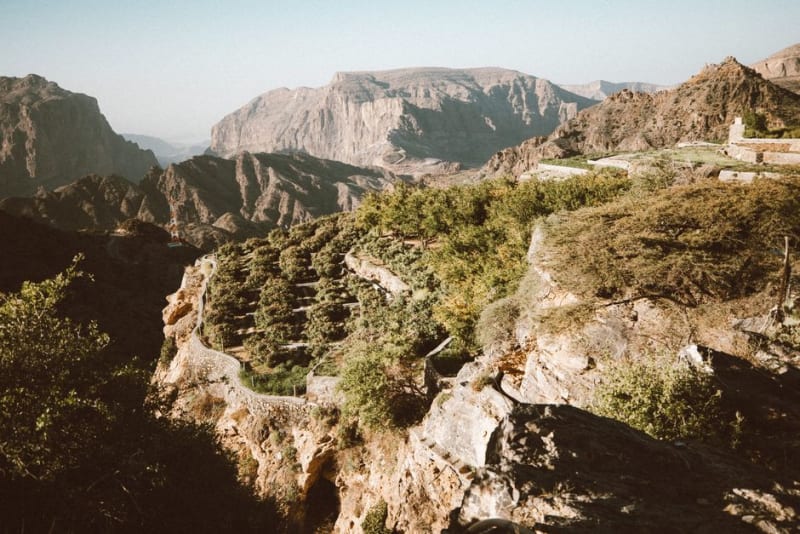 oman
oman Jebel Misht
A serrated limestone massif rising from the desert plain, uplifted from an ancient seabed and considered one of Oman's great scrambling and climbing objectives.
Explore