Maun
"Maun doesn't pretend to be the destination. That honesty is its only redeeming feature — and somehow it's enough."
The dusty, chaotic gateway town that earns your gratitude precisely because it never pretends to be the destination.

I arrived in Maun from Johannesburg on a small prop plane that banked low over the Thamalakane River and gave me a glimpse of green channel before the red dust of the runway swallowed everything. The airport is one terminal, one carousel, and a wall of heat that hits you like a held breath finally released. Outside, a man in a faded shirt was selling SIM cards and cold Fantas from a cooler bag with a broken zipper. I bought both. Within ten minutes I had already stopped checking the time.
Maun is not subtle about what it is. The main road — the A3, which sounds more ambitious than it looks — runs through a long stretch of tyre shops, bottle stores, butcheries selling dried mopane worms in paper bags, and safari companies whose promises outpace their vehicles. Quad bikes raise rooster tails of orange dust. The lodge called Audi Camp, which has nothing to do with cars, is a reliable sundowner institution where overlanders who’ve been on the road for two months compare border crossing stories with first-timers clutching pristine field guides.

What Maun does remarkably well, given the chaos, is function. The logistics of the delta all flow through here. The community mokoro operators meet clients at the Boro River, a short drive west of town. The charter plane companies — several of them — fly into the private camps in the inner delta from the same small apron where I landed. The supermarket has fresh bread and cold white wine. The banks have ATMs that occasionally work. The fuel station has diesel, usually. It is not glamorous, but the infrastructure of wilderness travel depends on unglamorous towns that work.
The river that flows through town — the Thamalakane — deserves a quiet evening. Late afternoon, when the heat collapses into something bearable, the banks attract hammerkops, pied kingfishers, and the occasional fish eagle. I walked along the path south of Riley’s Hotel and watched a reed cormorant spread its wings to dry in a tree while a village boy fished with a bent pin on string. That cormorant and that boy were equally indifferent to me. I found this bracing.

The food in Maun is better than you expect and exactly as random as the town suggests. There is a restaurant attached to one of the lodges that does a kudu burger on a brioche bun that I think about more than I should. There is a supermarket whose back section sells pap and relish through a hatch to construction workers who arrive before seven. The cold Nando’s-style place on the main drag will disappoint you. The roadside stall with the drum braai that appears after four in the afternoon will not.
When to go: Maun is simply the entry point — when you go depends on where you’re headed in the delta. The town itself is year-round, though July and August bring the most traffic as peak season concentrates safari-goers. Budget mokoro trips from the Boro River area run best when the delta is high — typically June through August. If you’re flying straight to an inner-delta camp, the season timing of that camp dictates everything. Give yourself one night in Maun regardless. The chaos orientates you. By morning you will be grateful for whatever silence the delta offers.
Keep exploring
More from Okavango Delta
 okavango-region
Moremi Game Reserve
The only wildlife reserve in Africa established by a local community, where dry woodland and flooded channels operate as one impossibly rich ecosystem.
Explore okavango-region
Nxamaseri
A remote fishing camp deep in the Okavango Panhandle where the day's rhythm is set entirely by tigerfish and river light.
Explore okavango-region
Nxaraga Lagoon
A papyrus-walled lagoon near Chief's Island where hippo grunts and red lechwe splashes carry across still water at dawn.
Explore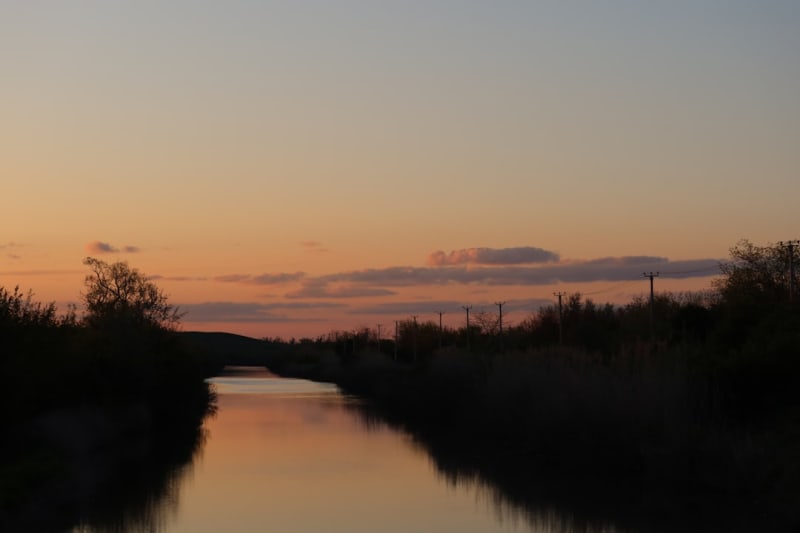 okavango-region
Okavango Panhandle
The narrow northern stretch where the Okavango River first spreads into wetland, quieter and less visited than the delta proper.
Explore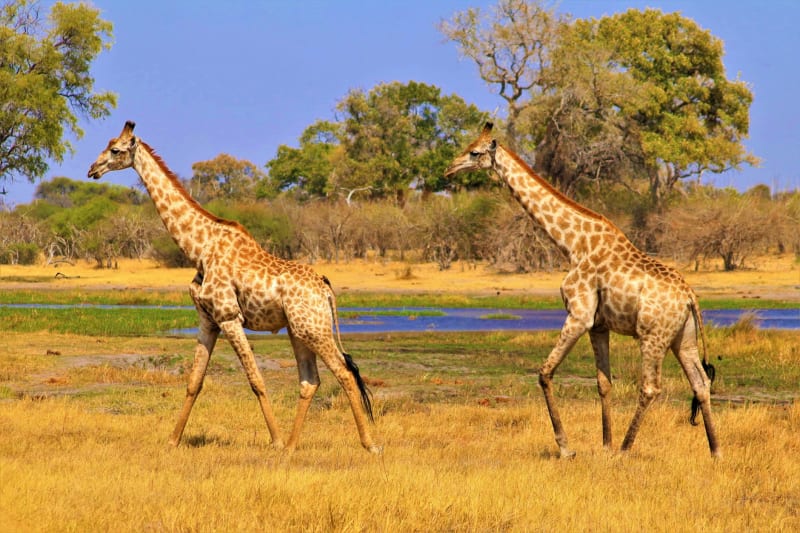 okavango-region
Seronga
The remote northern village where community polers have worked these papyrus channels for generations, long before the safari industry gave it a name.
Explore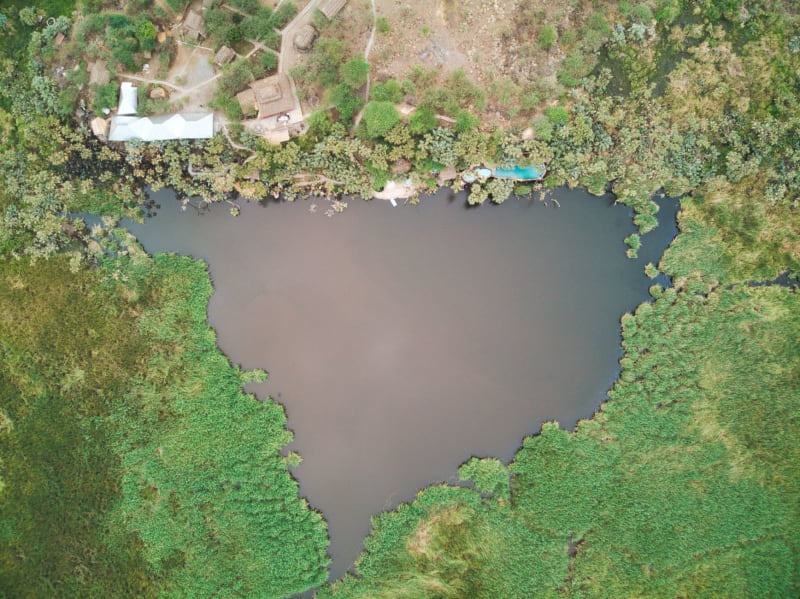 okavango-region
Shakawe
The quiet northern town where the Okavango is still a river — before the delta fans it into something that defies ordinary geography.
Explore