Swayambhunath
"Swayambhunath makes you earn the view, then makes you share it with a troop of monkeys who clearly think they own it."
The hilltop stupa Kathmandu calls the Monkey Temple, 365 steps up to a panorama shared with rhesus macaques and pilgrims.
Everyone in Kathmandu calls it the Monkey Temple before they call it Swayambhunath, and within about ninety seconds of arriving at the base of the stone staircase, I understood exactly why. A macaque swiped a bag of peanuts out of a vendor’s hand while we were still tying our shoelaces, and nobody so much as looked up. This is apparently a Tuesday at Swayambhunath.
The 365 Steps
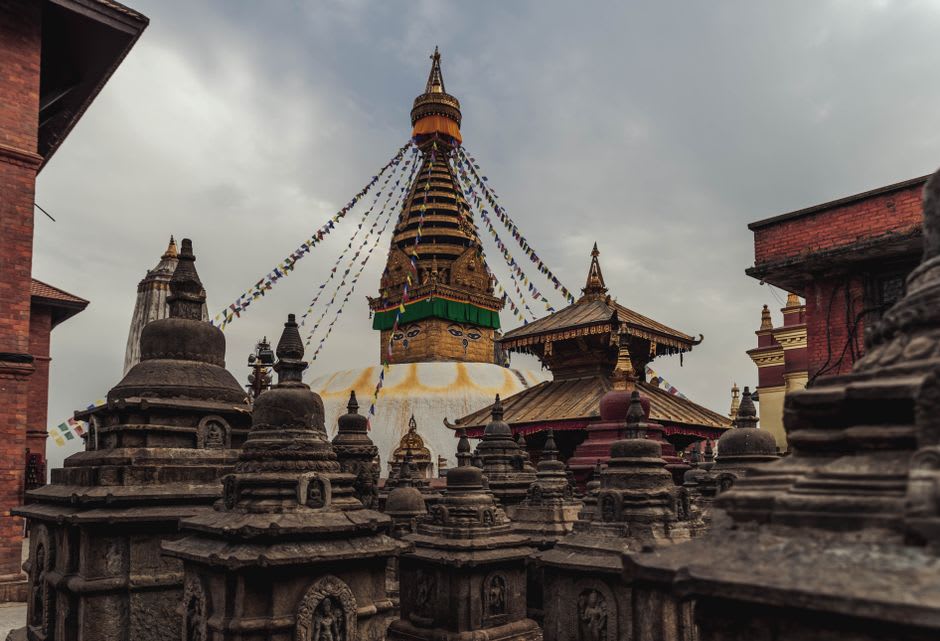
The climb is steep, uneven, and — according to a monk resting halfway up with the patience of a man who has said this line a thousand times — exactly 365 steps, one for each day of the year. Lia and I started before eight, which was still nowhere near early enough to have the staircase to ourselves; a mix of pilgrims doing full-body prostrations, tourists in hiking sandals, and monkeys weaving between both climbed alongside us. Small shrines dot the ascent, carved stone Buddhas worn smooth at the edges from centuries of hands.
The Eyes at the Top
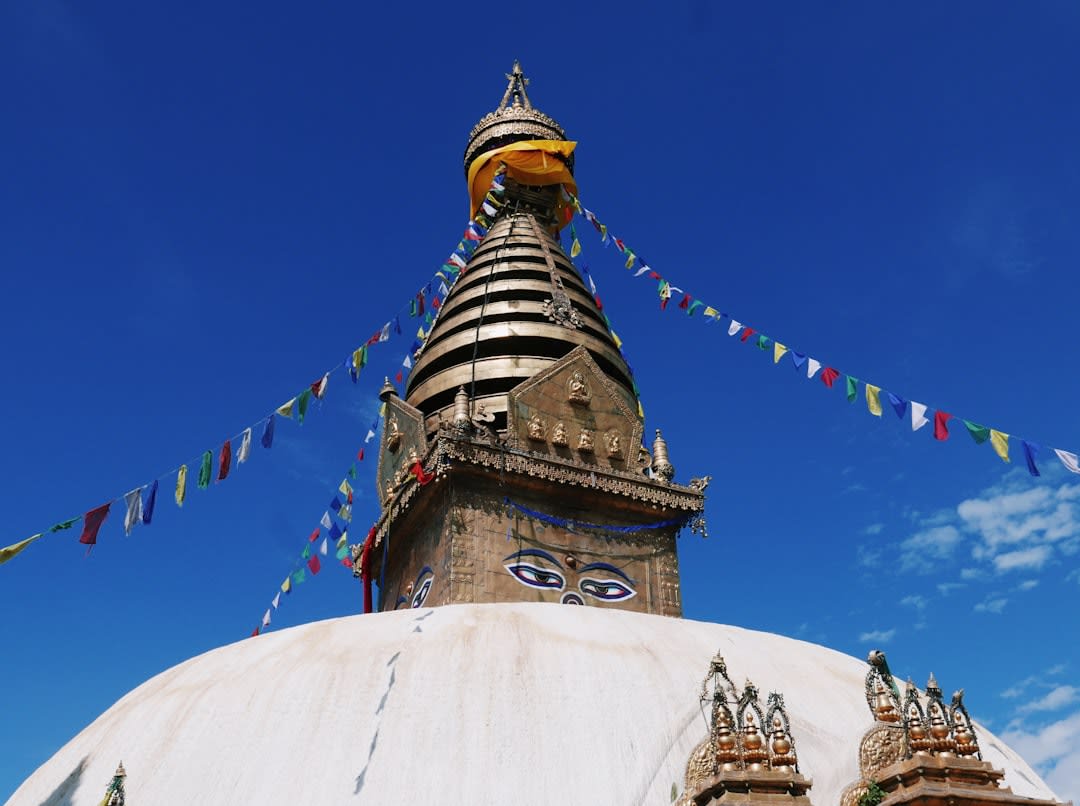
At the summit, the stupa’s gilded spire rises from a whitewashed dome painted with the same watchful eyes as Boudhanath — the eyes of the Buddha here reportedly the older of the two, a claim every guide in Kathmandu makes with total conviction and zero supporting documents. What struck me more than the stupa itself was the view: the entire Kathmandu Valley rolled out below in a haze of tin roofs, temple spires, and — on the clearest mornings — a rumor of the Himalayas on the horizon that Lia swore she could see and I could not.
Sharing the Hilltop With the Locals
The macaques here are not shy. A juvenile monkey stole an entire granola bar from my daypack’s side pocket while I was photographing a Vajra sculpture, unzipping it with more competence than I expected from an animal. Vendors sell sacks of corn and peanuts specifically for feeding them, though the small shrine caretakers warned us — correctly — that this only encourages the bolder ones to get bolder still.
When to go: Arrive before 9am, both for the light across the valley and to beat the mid-morning tour groups climbing from the eastern staircase. October to December offers the clearest valley views; keep a firm grip on anything edible year-round.
Keep exploring
More from Nepal
 nepal
nepal Syabrubesi
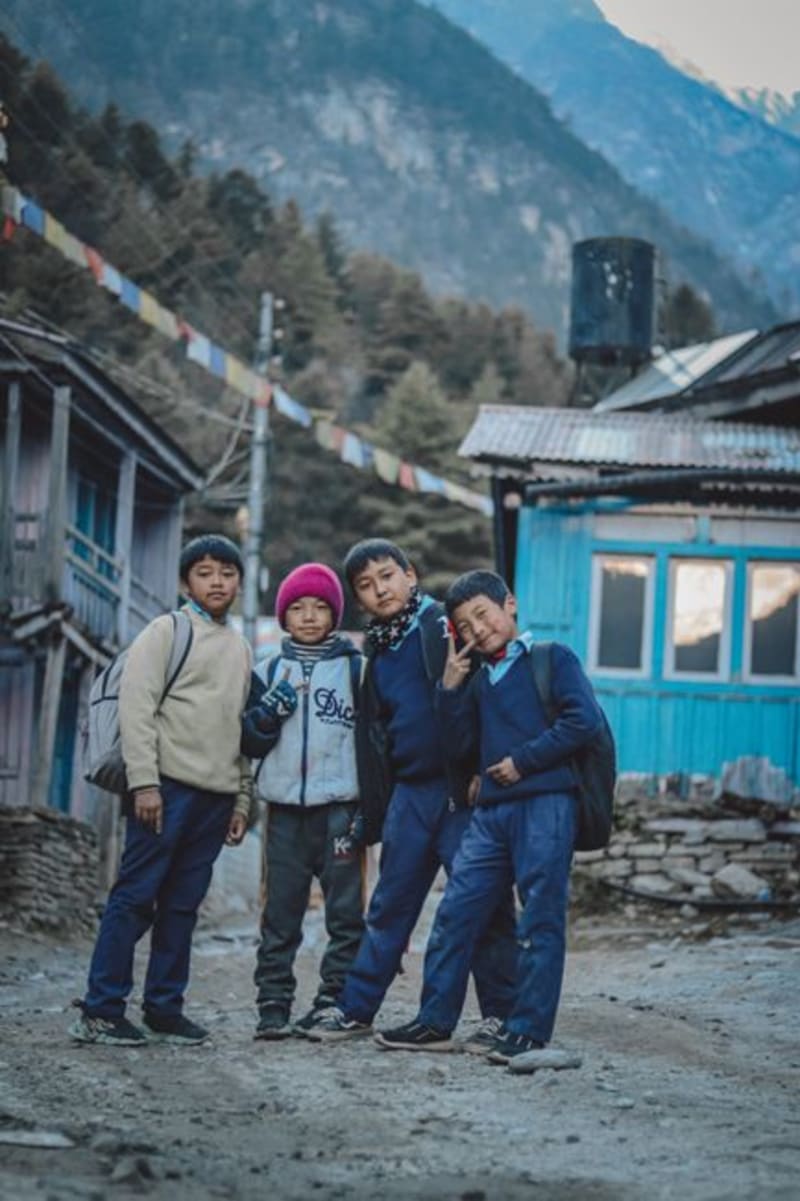
The dusty trailhead town on the Tibetan border road where the Langtang trek actually begins — half transit hub, half last-chance outfitting stop, all business before the mountains take over.
Explore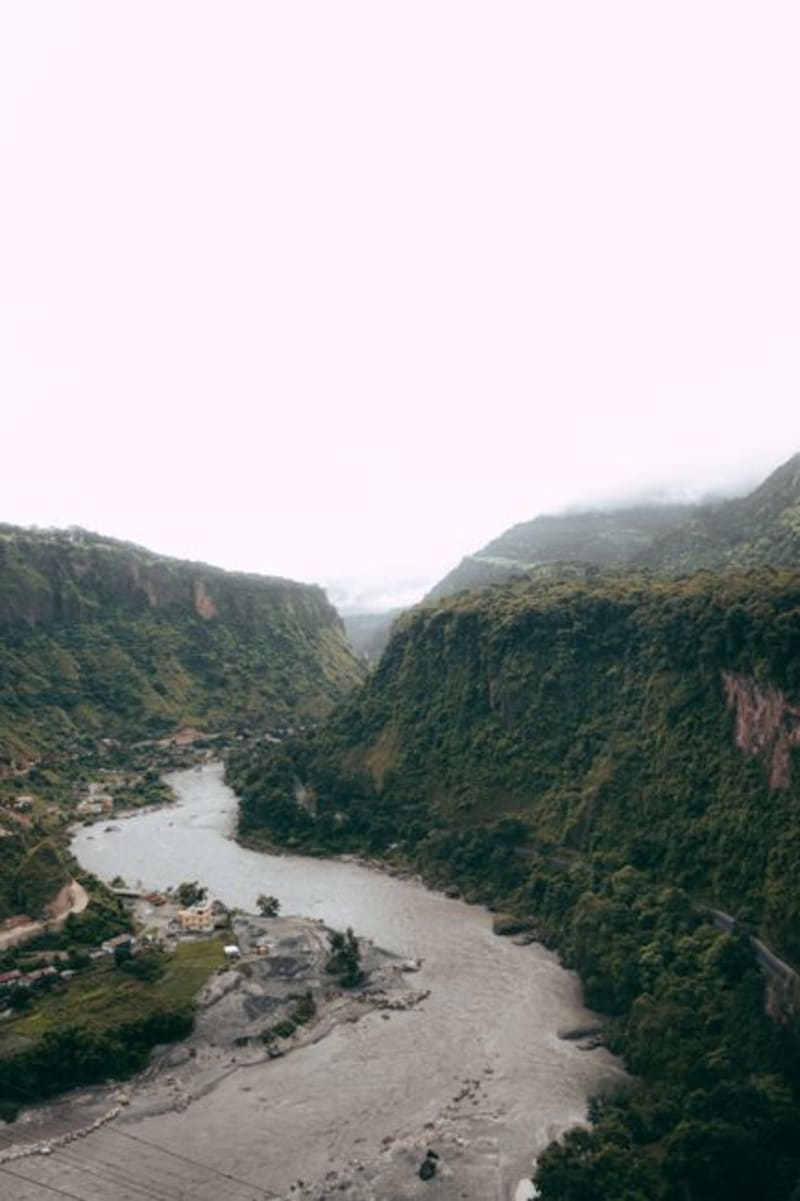 nepal
nepal Tansen
A Newari hill town in western Nepal, once the seat of the Magar kings, now a maze of red-brick lanes and umbrella workshops that tourism has barely touched.
Explore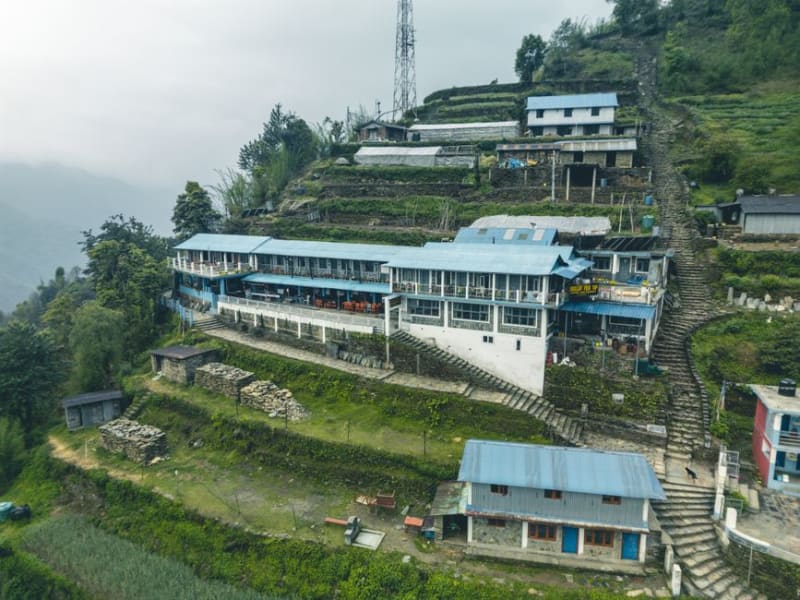 nepal
nepal Taplejung
The last real town before the trails climb toward Kanchenjunga, a hill bazaar of Limbu culture and terraced cardamom farms.
Explore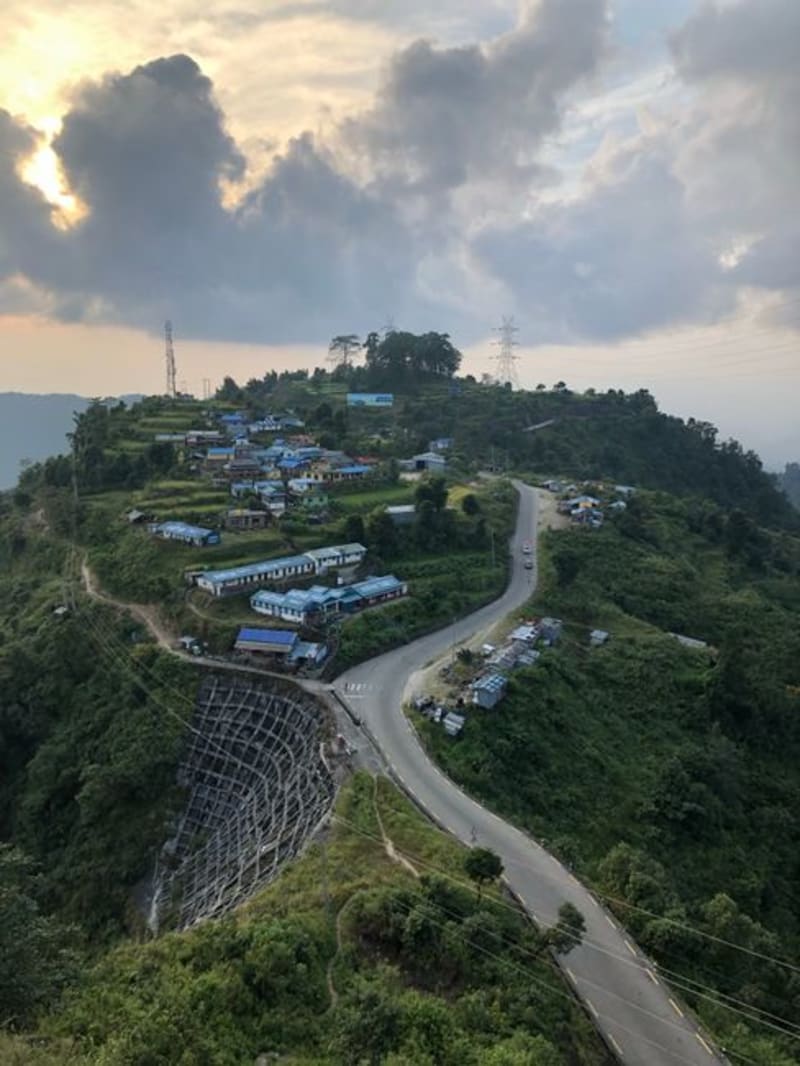 nepal
nepal Tarkeghyang
The largest Sherpa village in the Helambu region, a cluster of carved wooden houses and prayer wheels around a 700-year-old monastery, reached by a trail with almost none of the foot traffic of the bigger-name treks.
Explore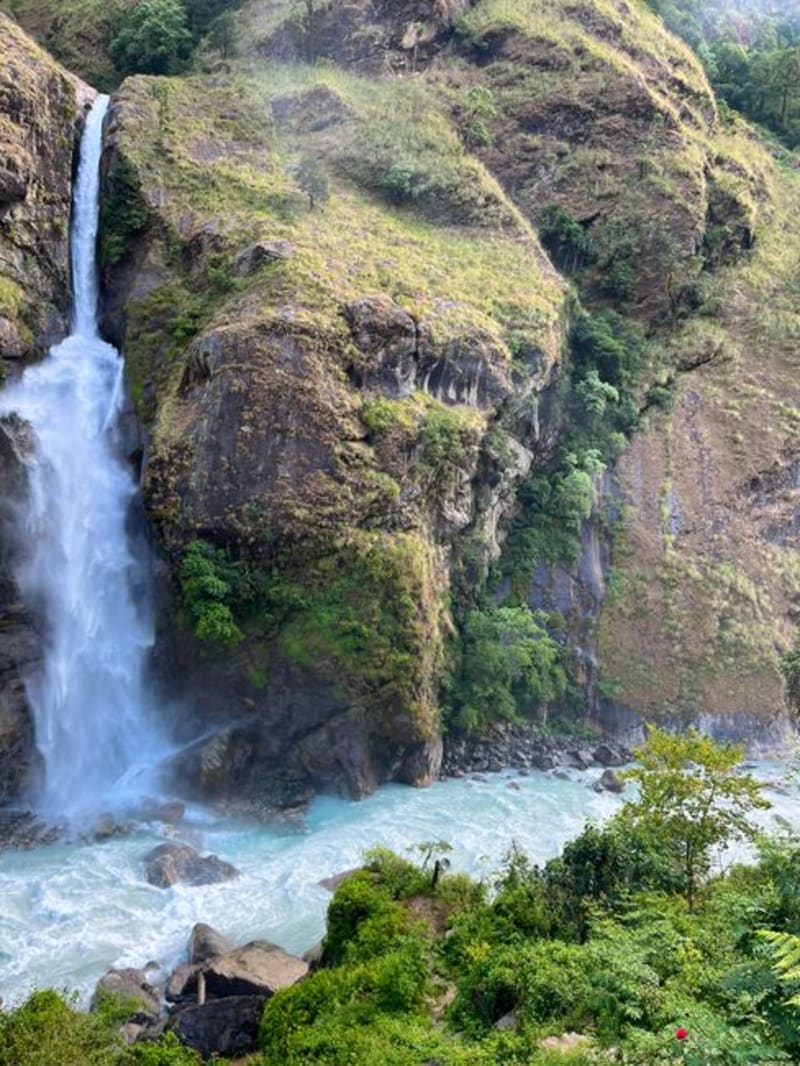 nepal
nepal Tatopani
A low-altitude village on the Kali Gandaki whose name literally means 'hot water' — natural hot springs at the end of a hard trekking day, and one of the few genuinely restful stops on the circuit.
Explore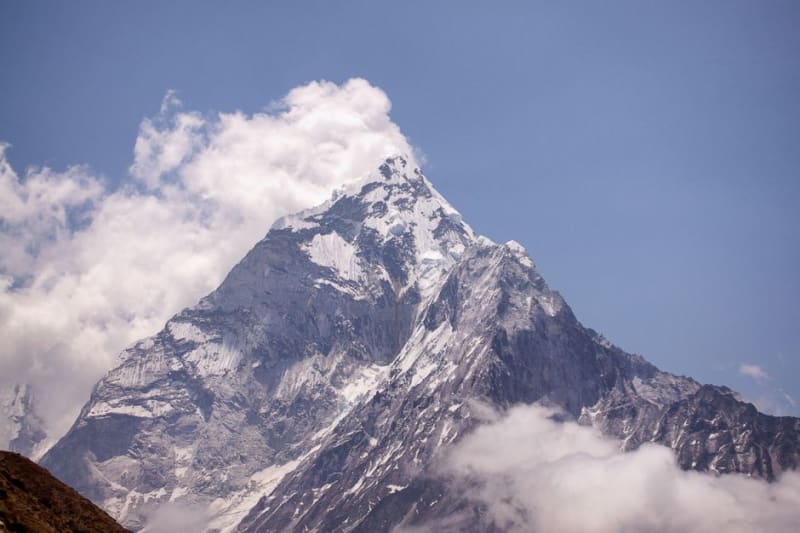 nepal
nepal Tengboche
A ridgeline monastery village with what might be the single best mountain panorama on the entire Everest trail, and a monk's chant that follows you back down the hill.
Explore