Nemegt Basin
"Our guide picked up what looked like a rock. It was a vertebra. He put it back down like it was nothing, because to him, out here, it was."
The deepest, hardest-to-reach fossil valley in the Gobi, where entire dinosaur skeletons still surface after a single hard rain.
Nemegt is not an easy add-on to a Gobi itinerary the way Bayanzag or Khongoryn Els can be — it sits deep in the far south of Ömnögovi province, past the point where most Gobi tour routes turn back, reached by a full day of driving on tracks that fade in and out of visibility across gravel plains. I went because a paleontologist I’d met in Ulaanbaatar, working on a joint Mongolian-American excavation, told me it was the single richest dinosaur fossil basin on the planet and said it with the flat certainty of someone who has spent a career comparing basins and has stopped needing to sell the claim.
The basin’s fame rests on what’s been found here over the past seventy years: Tarbosaurus, a close cousin of Tyrannosaurus rex and the apex predator of Cretaceous Mongolia; Deinocheirus, a bizarre long-armed, humped herbivore that confused paleontologists for decades before a nearly complete skeleton finally surfaced here in 2009; countless smaller finds of Saurolophus, therizinosaurs, and ankylosaurs, many of them recovered in states of preservation good enough to reveal skin impressions and stomach contents. The formation itself is a stack of red and grey sedimentary layers, deposited by ancient river systems roughly seventy million years ago, now exposed as a maze of canyons and badlands that erosion continues to carve open every rainy season.
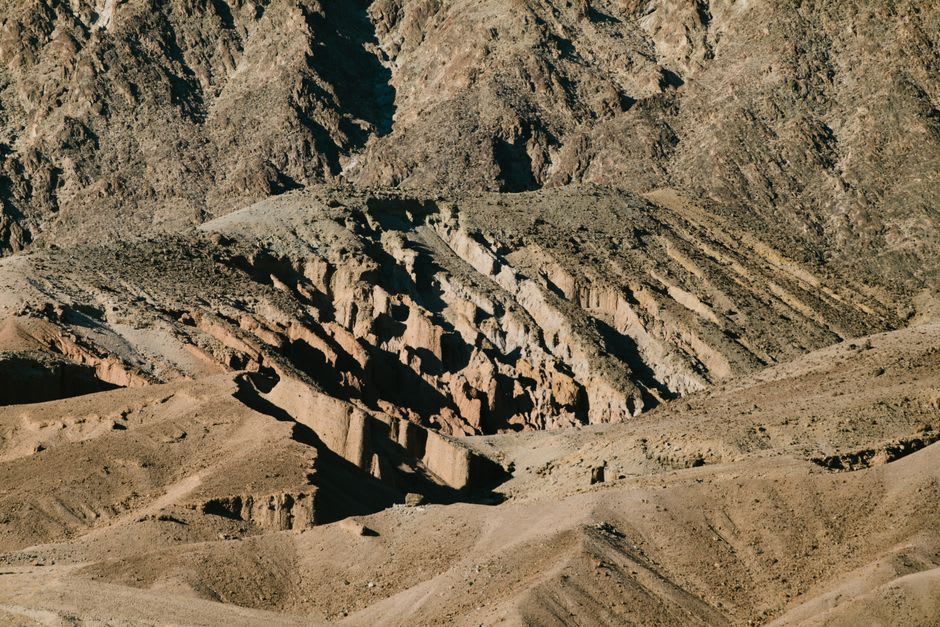
We walked one of the canyon floors with a local guide who’d worked support logistics for paleontology expeditions for over a decade, and within twenty minutes he’d stopped to point out a curved fragment half-buried in the canyon wall that he identified, with total confidence, as part of a rib. He didn’t dig it out — removal without proper documentation and permit is illegal and, more to the point, would destroy the scientific value of an in-situ find — but he photographed its location on a battered GPS unit and mentioned he’d report it to contacts at the Mongolian Academy of Sciences. This, he said, happens constantly. The basin sheds fossils faster than anyone can properly excavate them.
There is no infrastructure at Nemegt beyond what you bring — no ger camp, no fixed accommodation, just camping under a sky so free of light pollution that the Milky Way cast a visible shadow the night I was there, and a silence broken only by wind moving over rock that hadn’t changed shape in any meaningful way since long before humans existed to look at it.
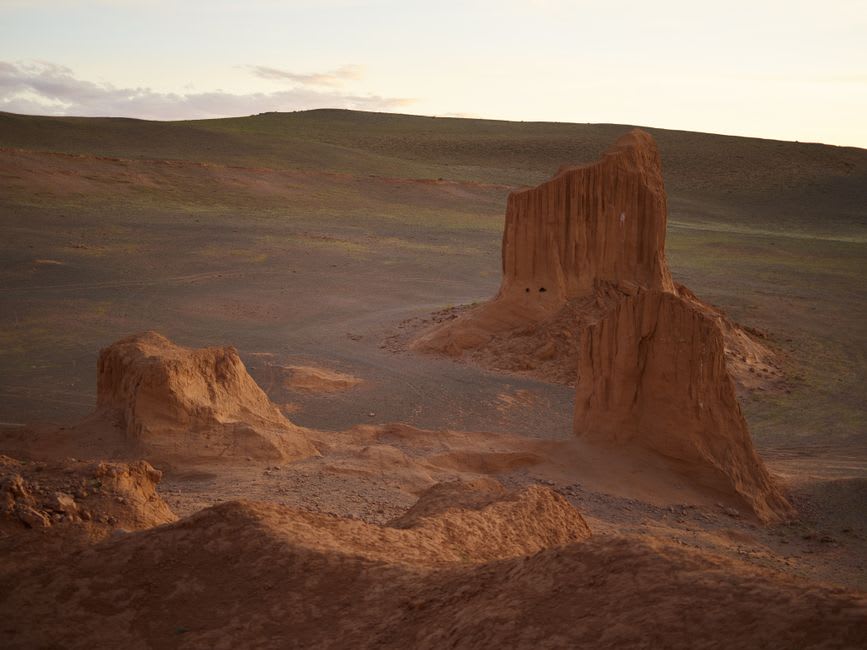
Getting to Nemegt is genuinely difficult, genuinely remote, and genuinely worth the difficulty for anyone who wants to stand in a landscape where the past is still actively, physically surfacing rather than safely archived behind glass.
When to go: June through September, and only with an experienced driver and a vehicle equipped for extended desert travel with no services along the way. This is not a self-drive destination.
Keep exploring
More from Mongolia
 mongolia
 Ongi Monastery
The ruins of one of Mongolia's largest monasteries, torn apart in the Stalinist purges of the 1930s and left standing, half-erased, on the banks of a Gobi river.
Explore mongolia
 Orkhon Valley
A UNESCO river valley where empires rose, waterfalls appear without warning, and nomadic life continues in a landscape that has been continuously inhabited for five thousand years.
Explore mongolia
 Sükhbaatar
A green river town on the Russian border where the Selenge and Orkhon rivers meet, and the landscape finally looks like something other than steppe.
Explore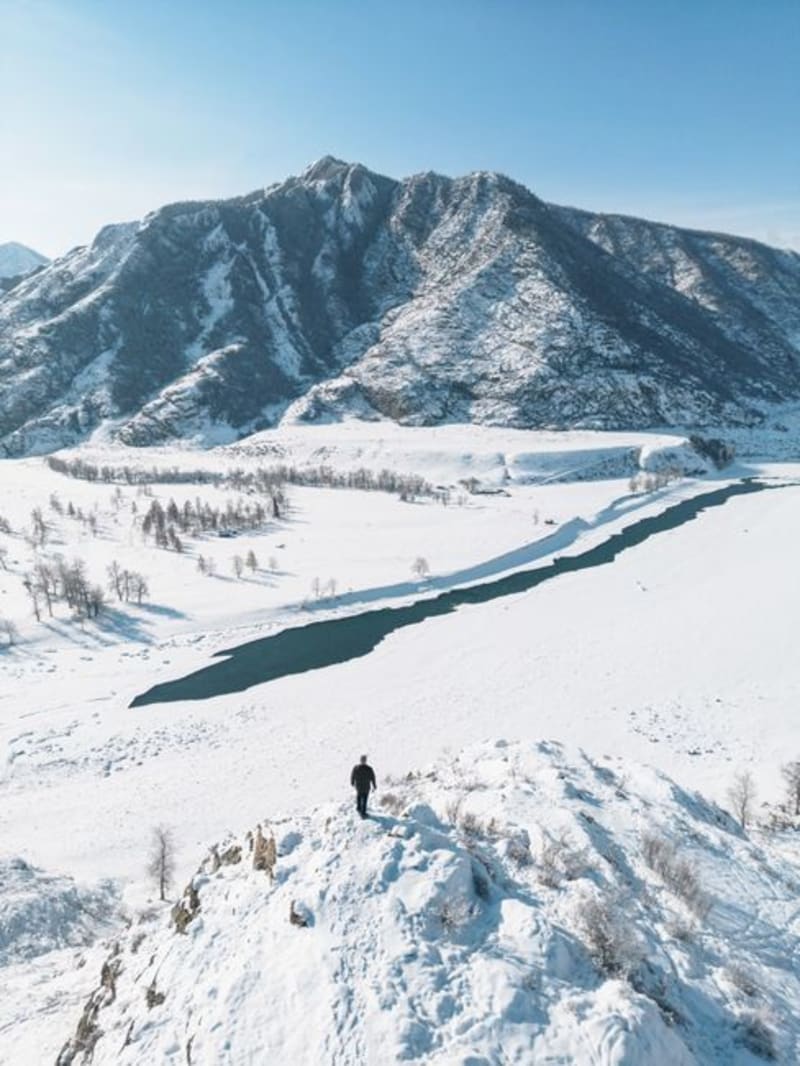 mongolia
 Altai Tavan Bogd National Park
Five glaciated peaks at the far western edge of Mongolia, where Kazakh eagle hunters still ride the ridgelines and three countries meet at a single snowbound point.
Explore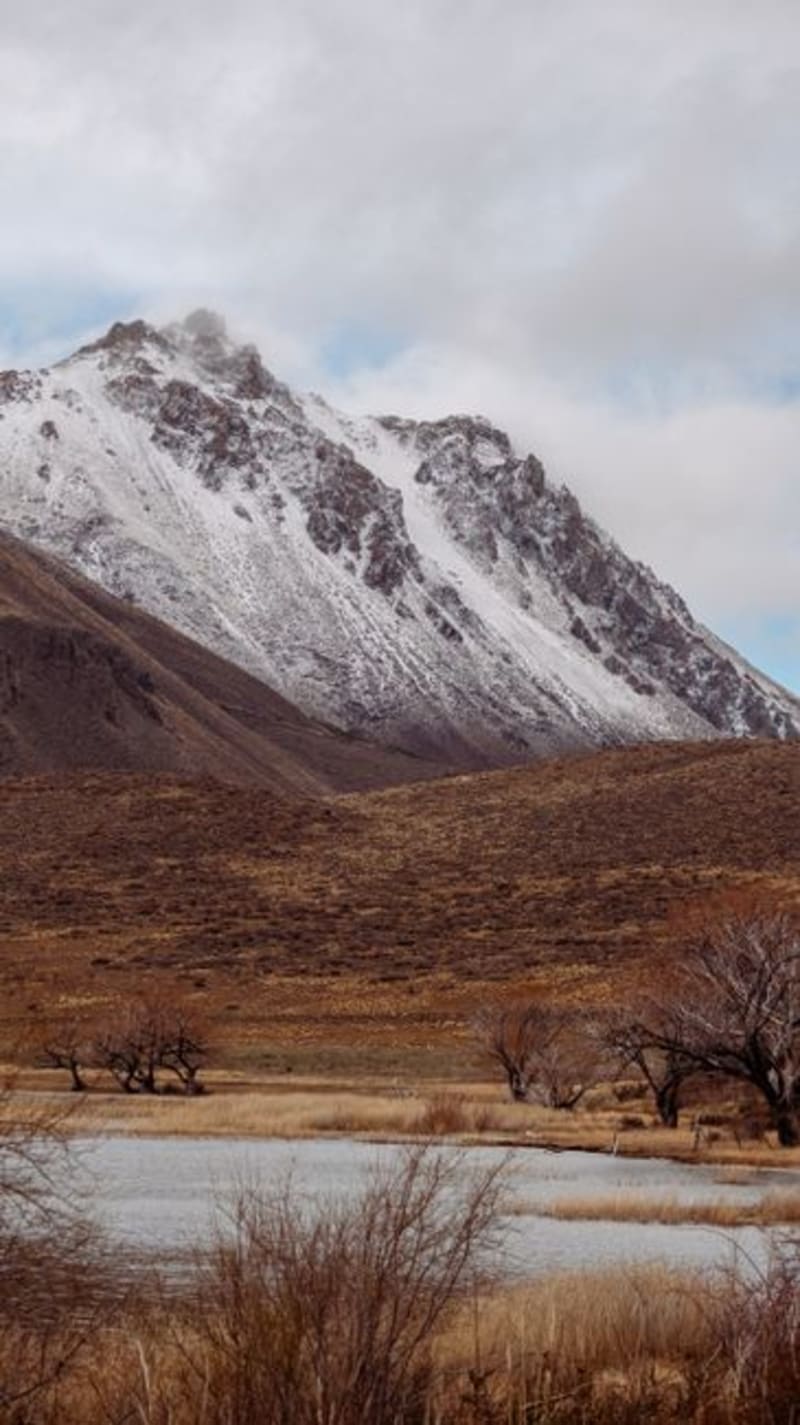 mongolia
 Telmen Lake
A remote alpine lake in Zavkhan province that almost no foreign traveler ever reaches, ringed by steppe and mountain in a silence that feels almost engineered.
Explore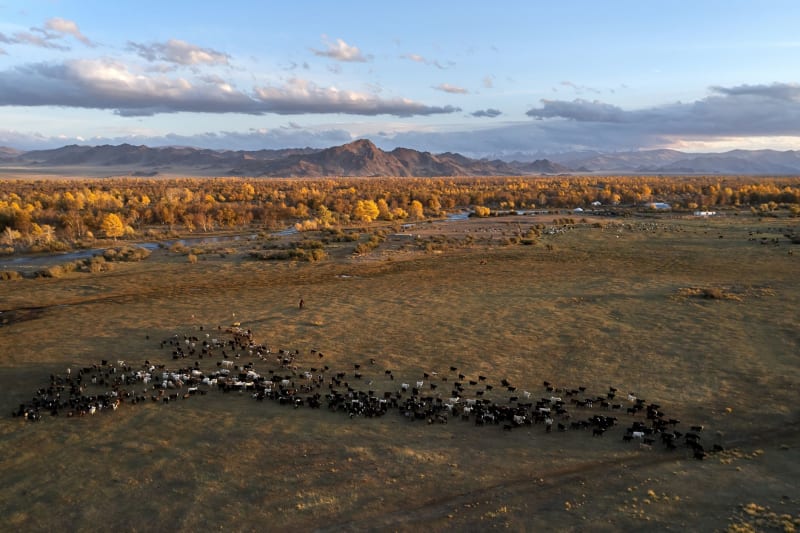 mongolia
 Gorkhi-Terelj National Park
Granite boulders shaped like animals, a cold river below pine-covered hills, and ger camps an hour from the capital that feel like the edge of the world.
Explore