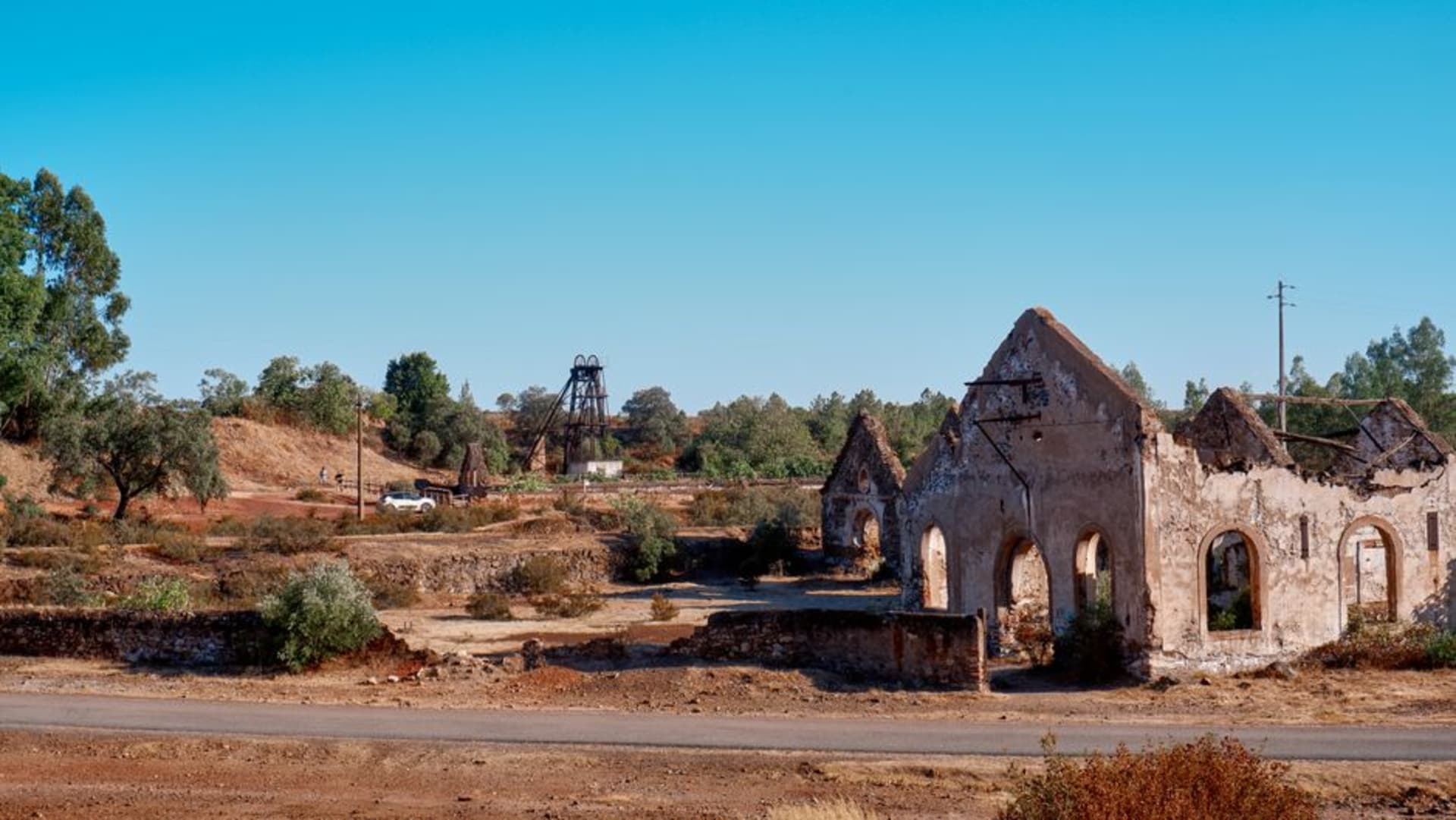
Mazapil
"Silver, a meteorite, and an Augustinian convent in the Chihuahuan desert. Zacatecas does not do ordinary."
I drove into Mazapil on a Tuesday afternoon when the light was doing that flat, merciless thing it does in the high desert — every rock casting a hard shadow, the scrub going grey-green, the air smelling of nothing in particular. The town appeared with almost no warning: a cluster of low colonial facades, a plaza, a fountain. I had expected remote, but not this particular kind of stillness — the kind that arrives when a place has been waiting since 1568 and has stopped being impatient about it.
The Convent at the Edge of Everything
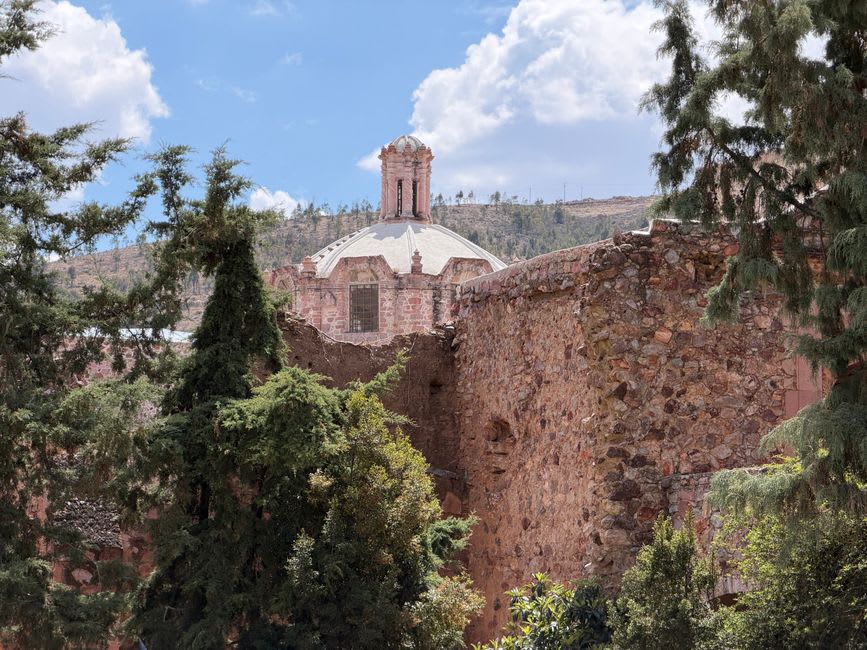
The Ex-Convento Agustino de San Mateo is the reason most people make the trip, and it earns the detour. Built in the late 16th century to serve the silver-mining population pouring into this corner of the Norte Chico, the complex feels improbably intact for something sitting in such exposure. The stone is a warm ochre where it catches the afternoon sun, almost pink. Inside the main chapel, the vault is still standing, the carved doorways still legible. There are no ropes, no guides competing for your attention — you walk through at your own pace, which out here means slowly. I spent an hour in the atrium watching shadows move across the facade before I realized I was the only person there. The nearest city with a shopping mall is four hours away. That fact alone explains something about the quality of the quiet.
The Meteorite, and What It Changes
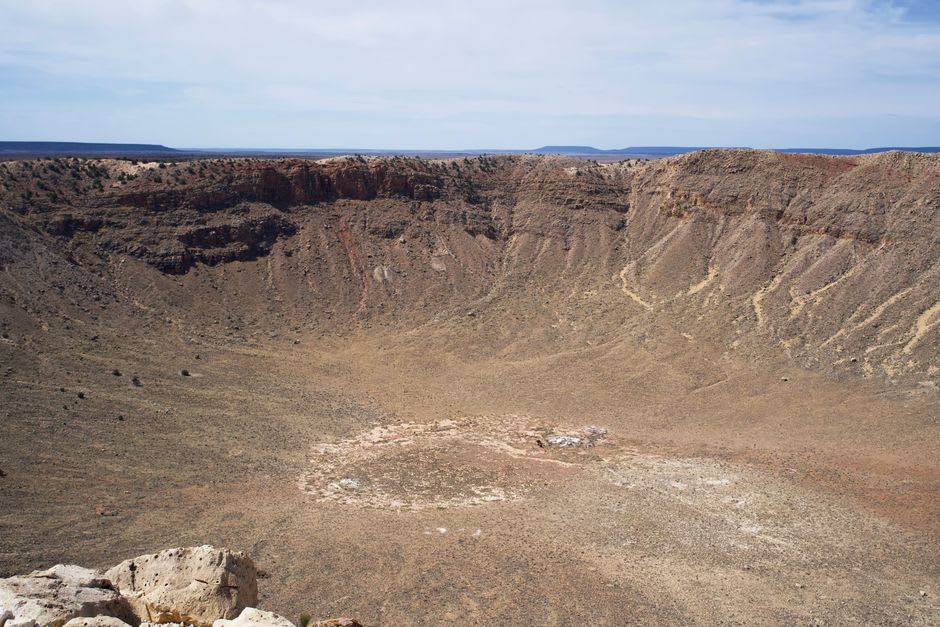
In 1885 a meteorite struck the terrain just outside Mazapil. A fragment — roughly seventy kilograms of iron — was recovered and eventually traveled to the Field Museum in Chicago, where it remains. What stayed behind is the landscape itself: a stretch of high desert that already looked unearthly before a piece of the solar system confirmed the impression. I walked out along a dirt track east of the plaza in the early morning, when the temperature was still low and the light was coming in sideways. The Chihuahuan desert at that hour has a quality I can only describe as geological patience — the cardon cacti, the thorny scrub, the distant ridgelines. Knowing a meteorite passed through here changes nothing about the landscape and somehow changes everything about how you read it.
Eating and Staying
The options in Mazapil are limited and honest. Around the plaza you’ll find a couple of small fondas serving birria de res and gorditas de cuajada — I ate at one with plastic chairs and a handwritten menu that changed daily, and it was exactly right. There is modest lodging in town; I recommend arriving with supplies if you plan to stay more than one night, since the nearest larger market is in Concepción del Oro, about thirty kilometers south.
Getting There
From Zacatecas city, Mazapil is roughly 250 kilometers northeast — plan on four hours by car via Federal Highway 54 through Concepción del Oro. There is no direct bus service from the capital; the most practical approach is a private vehicle or a shared taxi from Concepción del Oro. Fuel up before leaving — stations are sparse on the final stretch.