Ticul sits in the Puuc hills of southern Yucatán, 17 kilometers from the ruins of Uxmal, known for two things that coexist with improbable practicality: traditional Maya pottery in red local clay and handmade women's shoes. The food reason to come is poc chuc — thin-cut pork marinated in sour orange and grilled over wood — cooked here with a simplicity that the Mérida versions, however decent, cannot replicate. I ate it in a restaurant that has occupied the same building since 1965 and understood that I had been ordering the wrong thing in the capital for several months.

Ticul is a working Yucatecan city, the kind that functions as the practical capital of its subregion — market center, administrative offices, the high school that serves a dozen smaller villages — without organizing itself around the tourist traffic that the nearby ruins generate. Most people who visit Uxmal stay in Mérida and arrive by tour bus. Ticul’s hotels are cheap and functional; the restaurants cater to the people who live there; the pottery workshops and the shoe factories are the actual economy.
I arrived on a Tuesday afternoon in the flat midday heat of the Puuc hills, which is a different kind of heat from the coastal heat — drier, more immediate — found a guesthouse near the main plaza, and went looking for poc chuc.
The Pottery
The pottery tradition in Ticul is old and continuous and produces objects that are simultaneously functional and beautiful in the way that the best folk craft usually is. The clay is specific to the local soil — a red-brown earth with a particular density that fires to a warm terracotta — and the forms are traditional Maya: large water jugs in a shape that has not changed substantially in several hundred years, cooking pots with a specific rounded base designed for use over a wood fire, and the decorative pieces that exist somewhere between souvenir trade and genuine local use.
The workshops are spread through the city, most of them family operations where multiple generations work together. The basic technique involves wheel throwing for symmetrical pieces and hand modeling for more complex forms. The surface finish is sometimes polished, sometimes left matte, sometimes painted with mineral pigments in geometric patterns that echo pre-Columbian designs without quite reproducing them.
I bought a small water jug from a workshop on the western edge of the center. The potter, a woman in her forties, explained that the shape — narrow at the base, widening above — is designed for carrying on the hip or the head, that the thickness of the walls provides natural cooling, that the specific clay allows the vessel to breathe slightly and keep water cooler than glass or plastic. I carried it back to the guesthouse and filled it. She was right about the cooling.

Poc Chuc
Poc chuc is, in theory, a simple dish. You take pork — loin or tenderloin, cut thin — marinate it in the juice of the sour orange specific to Yucatán, add garlic and salt, and grill it over wood or charcoal until the edges char. You serve it with pickled red onion, black beans, and tortillas.
In practice there is considerable distance between poc chuc done correctly and poc chuc done adequately, and the distance has to do with three things: the sour orange, the grill, and the cut of the meat. The sour orange used in Yucatecan cooking is not a lime substitute and not the regular sweet orange; it is a specific citrus that has both acid and a floral quality, and what it does to a pork marinade cannot be replicated by anything else. The wood grill gives the meat a smoke that a gas flame eliminates. The thin cut means the exterior chars while the interior stays tender.
The restaurant I found, recommended by the woman at the guesthouse, had been in its current building since 1965 according to a small framed sign by the entrance. The dining room had the furniture of a place that replaced nothing until it broke. The owner — third generation, she said when I asked — brought me poc chuc without asking how I wanted it, because poc chuc comes one way. The meat was charred at the edges and tender in the middle and tasted of sour orange and smoke and nothing else that needed to be there. The pickled onion was sharply acidic and entirely necessary. I ate it with warm tortillas from a basket wrapped in cloth.
I thought about the poc chuc I had eaten in Mérida in the months before this. Those versions were competent. They had been missing something, and that something was this: the simplicity of a dish made the correct way in the city where it is made the correct way.

Uxmal and the Puuc Hills
Ticul is seventeen kilometers from Uxmal, which makes it a better base for the site than Mérida for anyone who wants to be at the gate when it opens at eight. The morning light at Uxmal is different from the midday light — cooler, more angled, and the shadows it creates on the Puuc mosaic facades show the relief work in higher contrast than the flat overhead light of noon.
The Puuc Route sites — Kabah, Sayil, Labná, Xlapak — are equally accessible from Ticul or from Oxkutzcab, twenty kilometers to the east. For anyone planning two days on the archaeological circuit, a night in Ticul placed between Uxmal and the smaller Puuc sites is efficient and substantially cheaper than staying in Mérida for both nights. The city has nothing you specifically need to do in the evening, which after a day walking archaeological sites in the Yucatán heat turns out to be exactly what you want.
Keep exploring
More of Yucatán
Keep exploring
More from Yucatán
 mexico
 Maní
Maní is a small town in the Puuc hills of Yucatán where, on July 12, 1562, the Franciscan bishop Diego de Landa burned the Maya codices — the folded bark-paper books containing centuries of astronomical, religious, and historical knowledge. Only four Maya codices survive in the entire world. The church where this happened is still standing. The town, somehow, makes the finest poc chuc I have eaten anywhere in the Yucatán.
Explore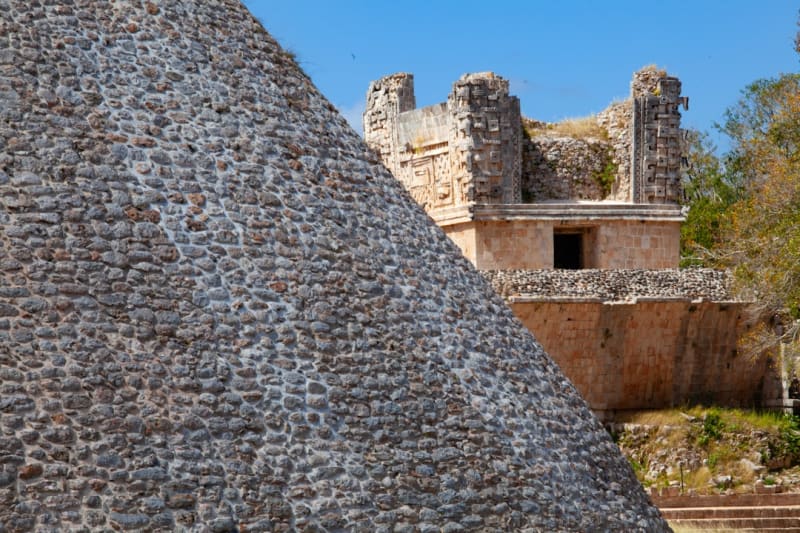 mexico
 Uxmal
The finest Maya architecture in the Yucatán — Puuc-style stone mosaic facades, a pyramid built to align with Venus, and almost none of the crowds that swamp Chichén Itzá.
Explore mexico
 Oxkutzcab
Oxkutzcab is the market capital of the Puuc hills region, a city in southern Yucatán whose surrounding groves produce limes, mandarins, oranges, mangoes, mamey, and the specific Yucatecan citrus varieties used in regional cooking. The Friday market is the largest in the Puuc zone, a genuine supply center for the Maya villages of the surrounding hills rather than a tourist operation. I bought a kilo of limes for three pesos, drove the Puuc Route, and ate tacos de cochinita in the market on the way back, which is roughly the correct order of operations.
Explore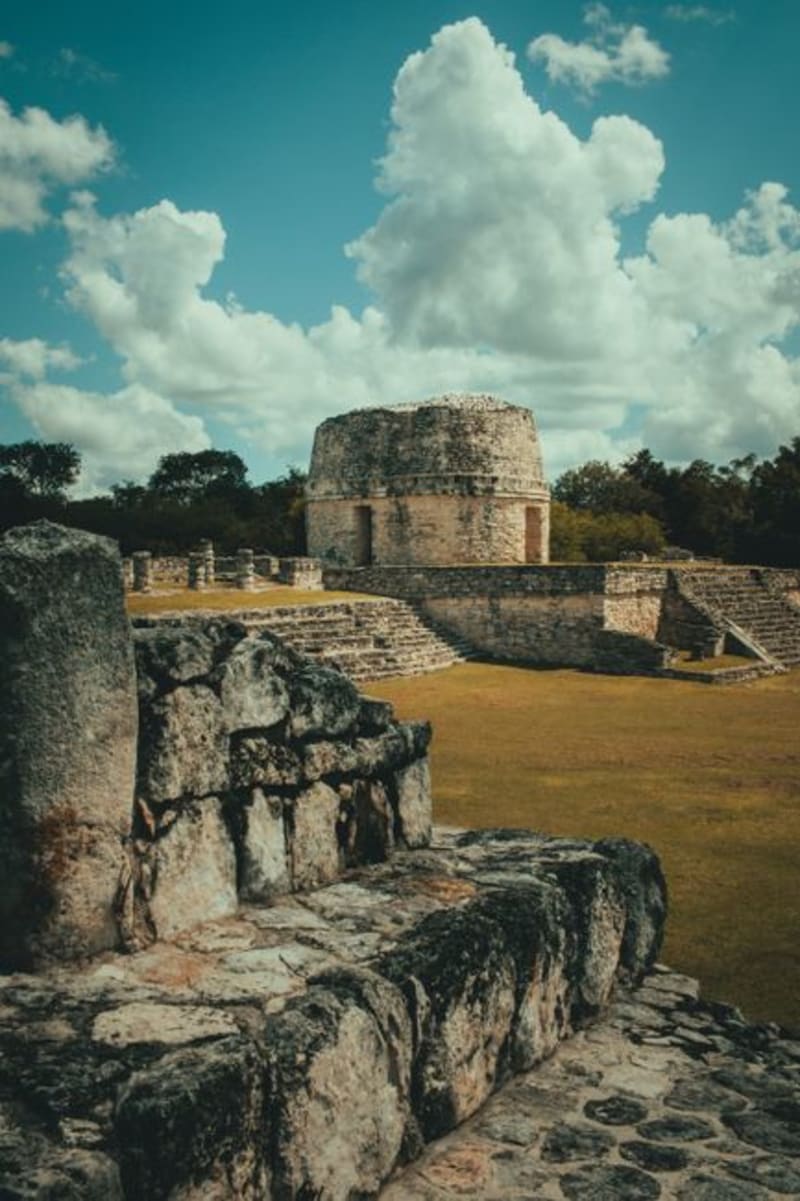 mexico
 Mayapán
The last great Maya capital before Spanish contact, Mayapán governed most of Yucatán for two centuries and now receives a fraction of the visitors that Chichén Itzá collects in a single morning. Quiet, archaeologically serious, and strangely intimate for a site of such historical consequence.
Explore mexico
 Cuzamá
A horse-drawn cart on abandoned hacienda rails is the only way to reach Cuzamá's three cenotes, and somehow that is exactly the right way. The water at Chelentún, Chansinic'che, and Bolonchoojol is the kind of blue that looks like a filter until you are swimming in it. Yucatán at its most quietly spectacular.
Explore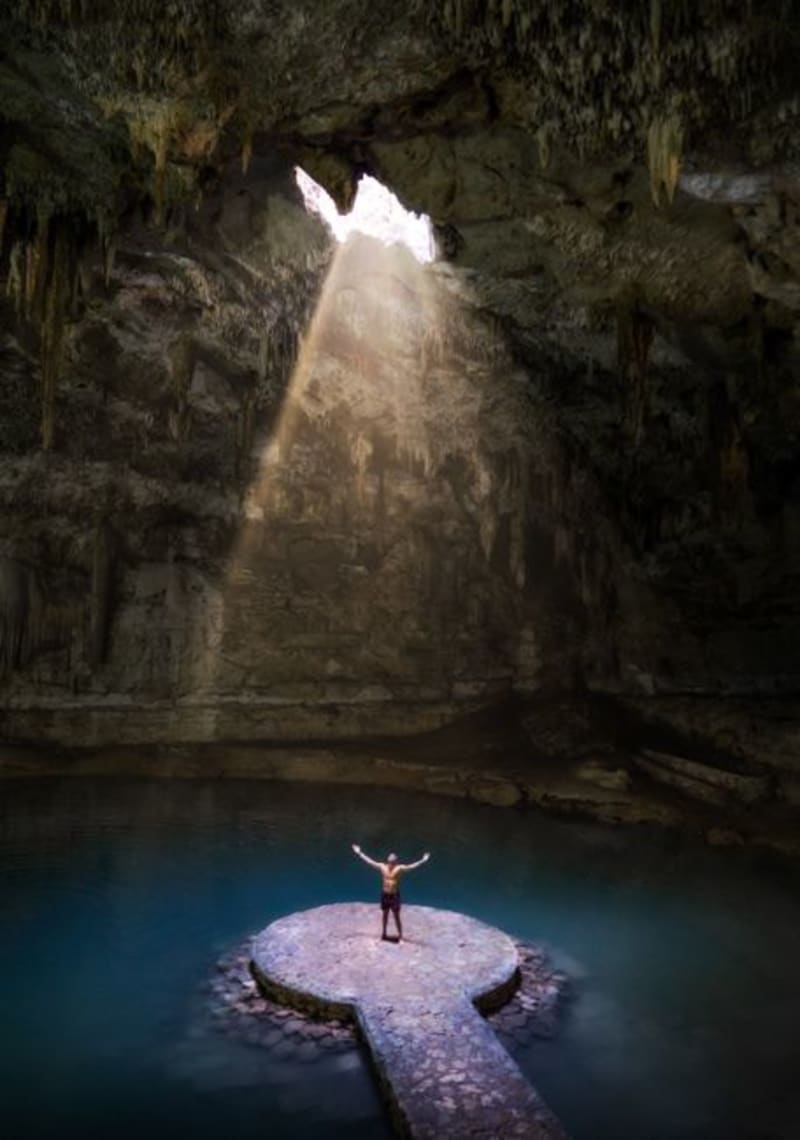 mexico
 Homún
Homún is a small Maya village in central Yucatán surrounded by a loose circuit of cenotes, most of them owned and run by local families who have never seen a reason to advertise. The water here is so clear it looks wrong, and the silence between them is just cornfields and bicycle chains.
Explore