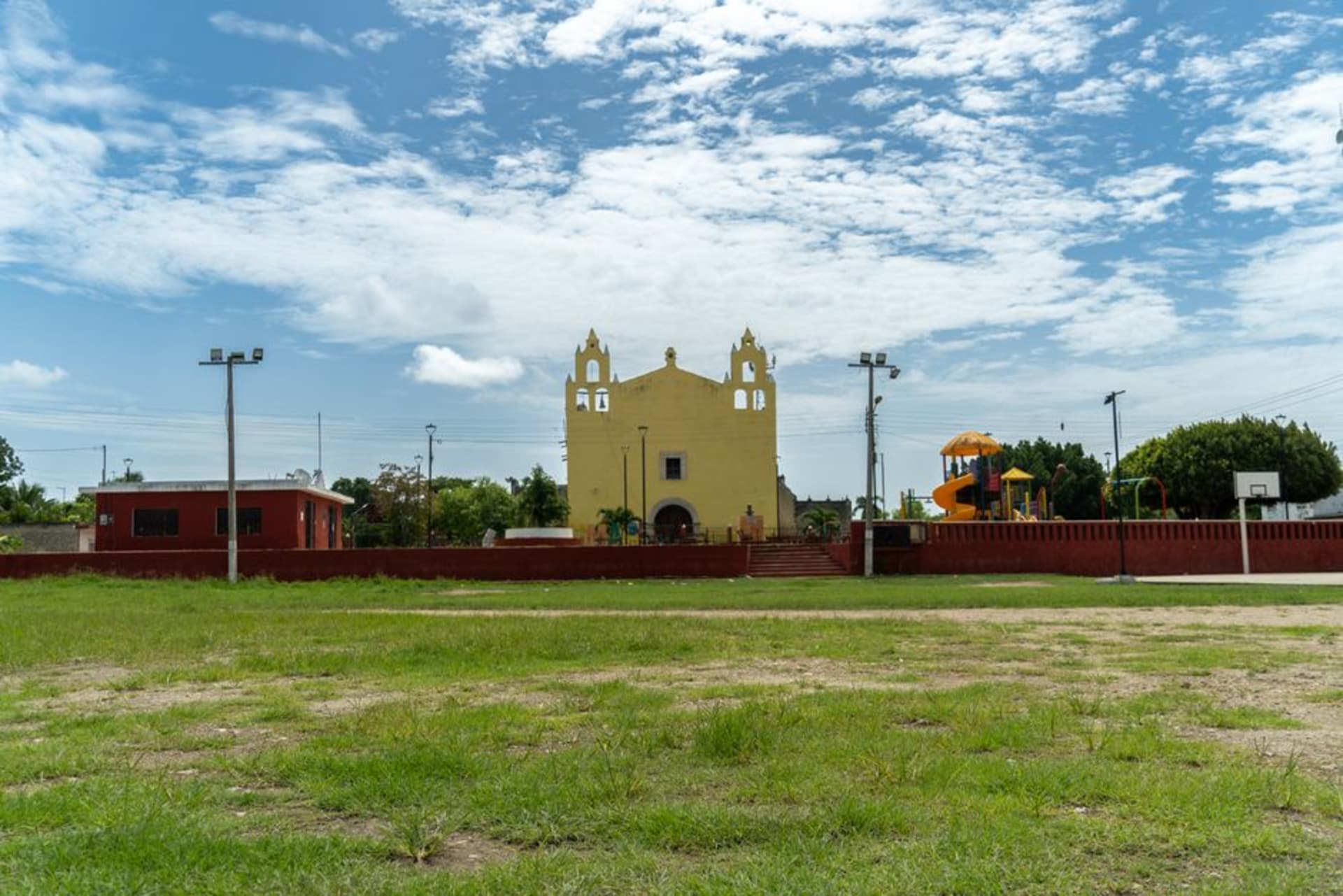
Tekax
"Every town near Uxmal is a potential overnight that saves you from fighting the crowds at sunrise. Tekax is the most comfortable of them."
I stopped in Tekax on the way back from Kabah because the man at my guesthouse in Mérida had mentioned poc chuc and I had not eaten since dawn. The colectivo dropped me at the corner of Calle 47 and the main plaza at half past noon, the sun directly overhead and the square almost entirely empty except for a woman selling marquesitas from a cart near the church steps. I found a table at a small restaurant facing the Parroquia de San Juan Bautista and ordered without looking at the menu. I stayed two nights.
A Town That Has Not Decided to Perform
Tekax sits in the Puuc hills about a hundred kilometers south of Mérida, on the road that connects the capital to Uxmal and then continues, through denser bush, toward Campeche. Most people treat the whole corridor as a day trip, which means arriving at Uxmal after ninety minutes in an air-conditioned van, fighting for shade against a hundred other visitors by nine in the morning, and driving back to the capital with their photographs taken. Staying in Tekax changes the arithmetic entirely. The ruins open at eight. The first colectivo from the plaza leaves around half past seven. On a Wednesday morning I was one of perhaps fifteen people walking the quadrangle at Uxmal, the light still low and orange across the Chenes-style mosaic facades, and I had finished and was back in town before the tour buses had unloaded.
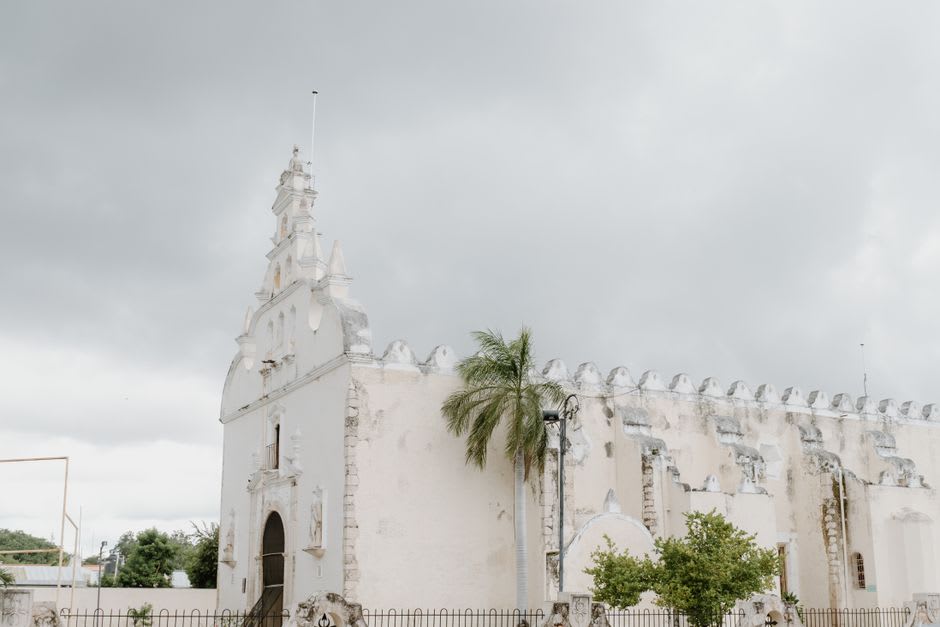
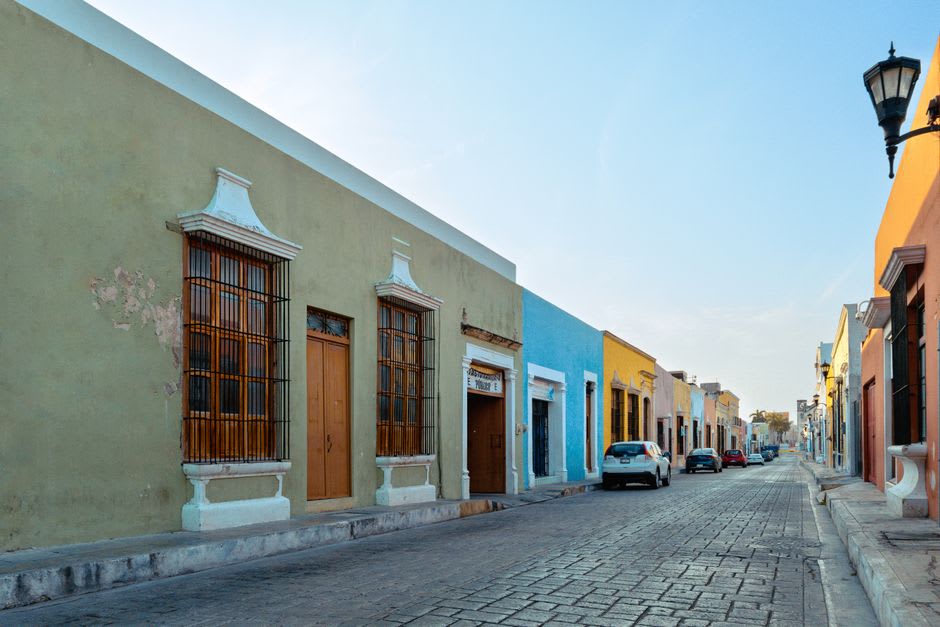
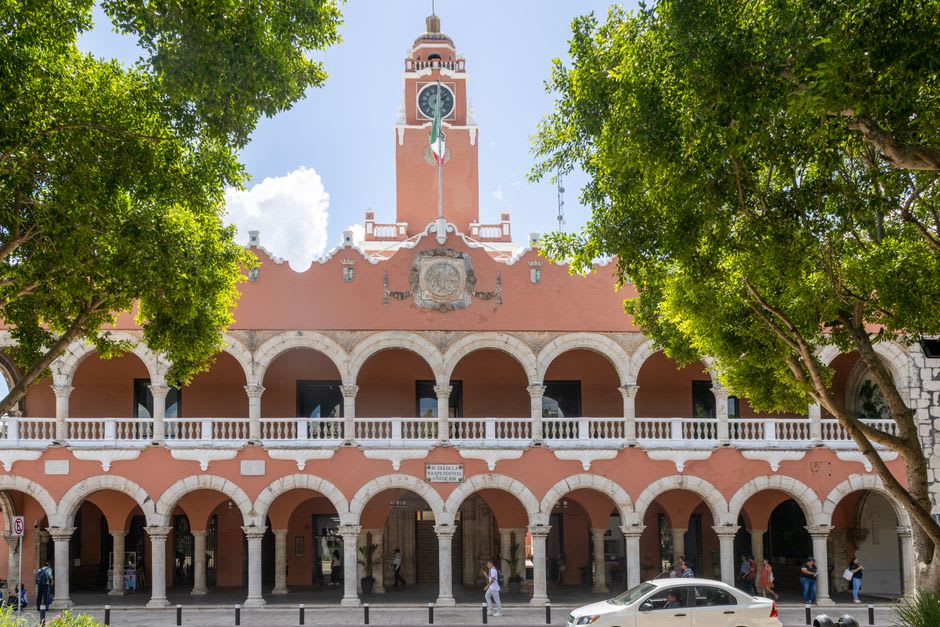
The town itself is arranged around a large, slightly formal plaza anchored by the Parroquia de San Juan Bautista, a sixteenth-century church with a facade that reads somewhere between austere and imposing depending on the hour. The surrounding streets — Calle 45, Calle 47, the market block north of the municipal building — are colonial in the unhurried sense: wide sidewalks, painted doorways in ochre and pale green, old women on plastic chairs in the shade of their doorframes watching nothing in particular.
Poc Chuc and the Logic of the Mercado
The poc chuc I ate on that first afternoon came from a restaurant on the south side of the plaza — a handful of tables under a ceiling fan, a handwritten menu on the wall, no English anywhere. The pork had been marinated in sour orange and grilled to the exact degree of char where it still holds moisture. It came with a small bowl of frijoles colados, the smooth strained black beans that are the Yucatecan answer to comfort food, and a stack of tortillas that arrived warm every few minutes without anyone asking. The bill was something like eighty pesos.
Breakfast the next morning was at the mercado municipal, a block east of the plaza. I had papadzules at a counter where three women worked simultaneously without stepping on each other — egg-stuffed tortillas in a pumpkin-seed sauce that manages to be simultaneously rich and clean. The radio played something regional I could not identify. Nobody looked up when I sat down, which is exactly as it should be. I ate slowly and ordered a second coffee.
Why You Wake Up Early
The value of Tekax is not any single attraction but its temperature, which runs cooler than the organized tourist circuit by several degrees. Set an alarm for six-thirty, walk the grid of streets east of the plaza toward the Santa Cruz neighborhood, and you will have the sidewalks almost entirely to yourself. Horses tied to iron rings in doorways. A bakery on Calle 51 that opens around six and sells pan de cazón that I ate standing at the counter with a paper napkin. The light in the Puuc hills at that hour — low, directional, catching the texture of the carved stone lintels above doorways — is the argument for having stayed rather than driven back to Mérida the night before.
Getting There
Colectivos to Tekax depart throughout the day from the terminal on Calle 69 in Mérida; the trip takes roughly two hours depending on stops. From Tekax, shared taxis run toward Uxmal, Kabah, and Sayil. There is no direct tourist bus service, which is part of the point. Basic guesthouses exist on and near the main plaza — there is no need to book in advance, and there will be rooms.