Cacaxtla
"The blue. Nobody told me about the blue. Twelve hundred years old, and still that specific blue."
Cacaxtla is a hilltop pre-Columbian site in the Tlaxcala-Puebla valley containing some of the best-preserved mural paintings in the Americas — battle scenes in vivid blue, red, and black, executed around 650-900 CE by people using Maya iconography in a city 600 kilometers from the nearest Maya territory. I visited on a Tuesday with a school group and a German couple and stood in front of the main battle mural for twenty minutes without speaking.

I had read about the murals at Cacaxtla before I went, which helped very little. Reading about a painting and standing in front of it are two different cognitive events. The first gives you facts. The second gives you the fact that it exists, which is different.
Cacaxtla is a hilltop site in the Tlaxcala-Puebla valley, built and occupied by a trading people — probably the Olmeca-Xicalanca — between roughly 650 and 900 CE, before it was abandoned and covered in sediment that preserved its extraordinary painted surfaces for over a thousand years. It was not excavated until 1975, when a looter’s trench broke through to the murals and an emergency excavation was launched. A large metal roof now covers the main painted area, sheltering the murals from rain, reducing the light to something indirect and even. It is not the light these murals were made for, but it has kept them.
The Battle Mural
The main mural at Cacaxtla — the mural you come for, the mural that stops you when you round the corner and see it — is a battle scene approximately twenty-six meters long. Warriors in full ceremonial dress fight each other in vivid, specific, terrible detail. The figures are large, the proportions correct, the composition organized across the wall with a care for overall balance and local drama that was fully mature when it was made.
The colors: blue. The blue of Cacaxtla is the specific blue of Maya painting — a pigment produced from indigo and a particular clay mineral that has survived in the Mesoamerican archaeological record because of its extraordinary chemical stability. Twelve hundred years after it was applied, the blue at Cacaxtla is still saturated and specific. Not faded, not grey. Blue.
The figures are Maya in iconography — warriors wear jaguar skins and eagle costumes, the body proportions and postures follow Maya conventions, the glyphs are Maya. This is the puzzle that Cacaxtla presents to archaeology: the site is in the central Mexican highlands, 600 kilometers from the nearest Maya territory in the Gulf Coast lowlands. The Maya influence suggests long-distance exchange networks of either goods or people — traders, artists, perhaps whole communities — moving across Mesoamerica in ways that the conventional picture of isolated civilizations doesn’t fully capture.

What Happens When You Stand There
I visited on a Tuesday morning with a school group from Tlaxcala City — maybe forty children, ages perhaps ten or eleven, with two teachers doing their best — and a German couple who had a very good guidebook and consulted it at intervals. The school group looked at the murals for about three minutes and then began looking at their phones, which is fair. The German couple moved systematically from left to right, which is also fair. I stood in one place for twenty minutes.
I am trying to account for what held me there. It was not awe exactly — awe has an affective quality that is about the viewer’s overwhelm, and what I felt was something more like attention, like the refusal to look away. The painting demands to be looked at closely. The more you look, the more you see. The jaguar warrior in the center has a specific expression — not quite pride, not quite menace — that is the work of someone who has thought about faces. The figures in defeat are not simply smaller or prostrate; they have the specific posture of people who have understood what is happening to them.
In France, the cave paintings at Lascaux and Chauvet exist in the same conceptual category for me — images made so long ago by people so different from us that the fact of their humanity, visible in the images, becomes startling. Cacaxtla is twelve hundred years old rather than twenty thousand, the distance is smaller, but the quality of the arrest is the same. These paintings were made by specific people with specific skills in a specific place. They remain.
The Site
Beyond the main mural, Cacaxtla has several other painted surfaces — a merchant figure with Maya attributes, animal imagery, cosmological symbols — all preserved under the same protective roof structure. The hilltop platform itself gives views across the Tlaxcala-Puebla valley, a broad agricultural plain with Popocatépetl visible on clear days to the southeast. The adjacent site of Xochitécatl, a few hundred meters away, has pyramid mounds and a volcanic rock sculpture collection worth the detour.

Cacaxtla is about twenty kilometers from Tlaxcala City, reachable by taxi or by a local bus from the city center. The drive is short. Come in the morning before the school groups, if possible — not because the school groups are disruptive, but because the morning light through the roof panels creates a quality of illumination that goes flat by midday. The murals deserve the best light you can give them.
Keep exploring
More of Tlaxcala
Keep exploring
More from Tlaxcala
 mexico
 Ixtacuixtla
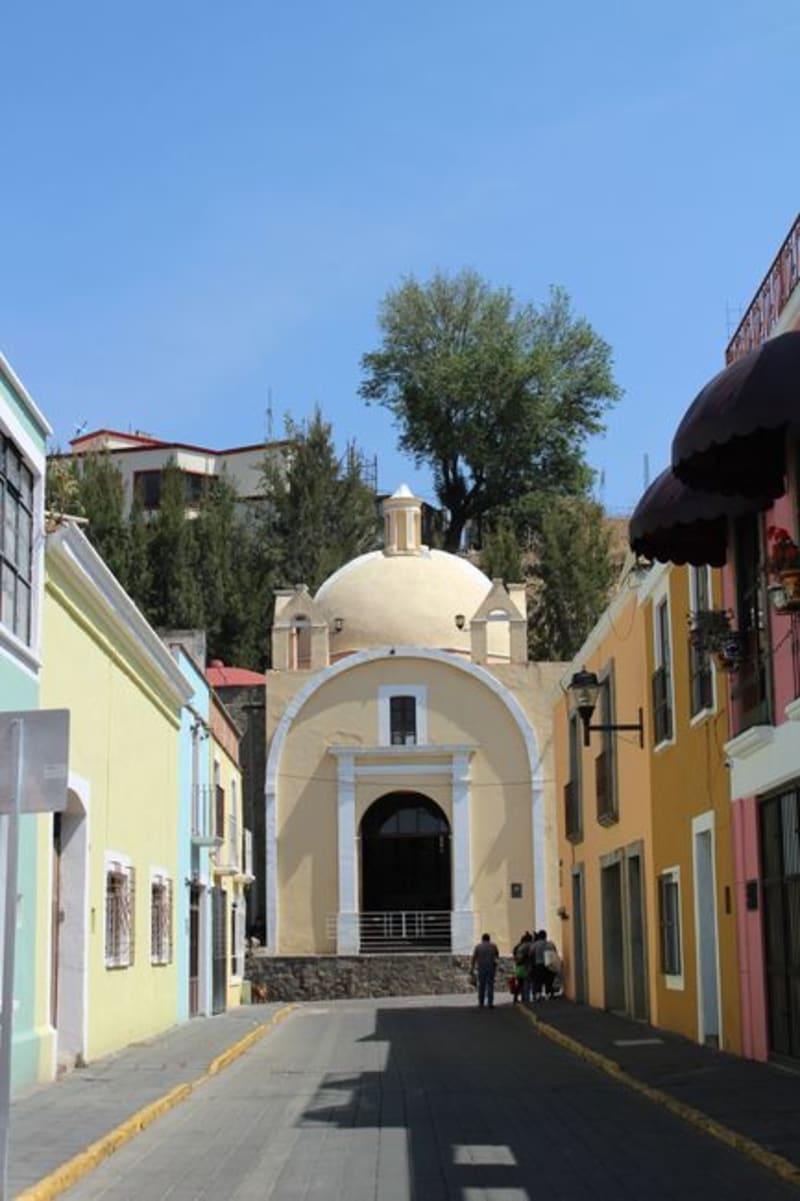
A rural municipality on the plains west of Tlaxcala city, formally Ixtacuixtla de Mariano Matamoros, where old pulque haciendas sit among agave rows under an enormous sky. On clear days the Malinche and distant Popocatépetl both stand on the horizon. Big-sky farm country, quiet and wide, with the maguey still bleeding sweet aguamiel into the buckets.
Explore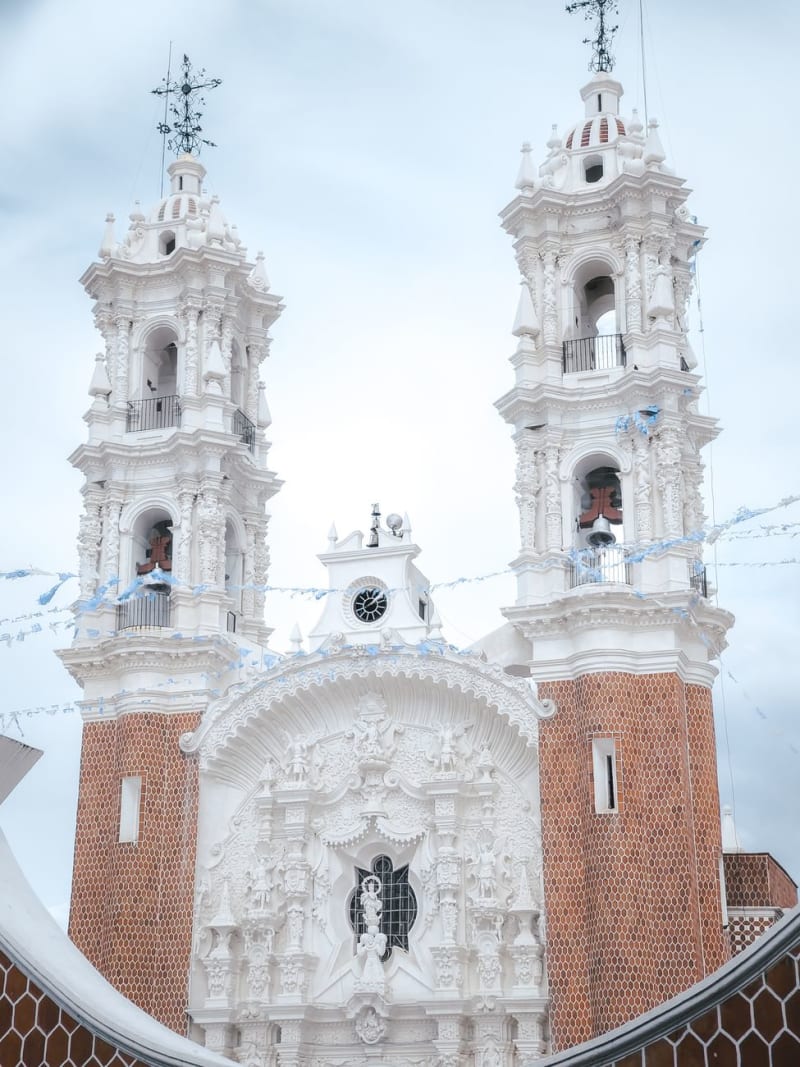 mexico
 Tlaxcala City
The capital of Mexico's smallest state carries a paradox at its heart: the Tlaxcalans were never conquered by the Aztecs, yet they allied with Cortés to bring down Tenochtitlan. A colonial zócalo painted ochre and terracotta, walls covered in Desiderio Hernández Xochitiotzin's dense narrative murals, and a bullring running since the 1500s — this is a city that has spent five centuries sitting with what it chose to do.
Explore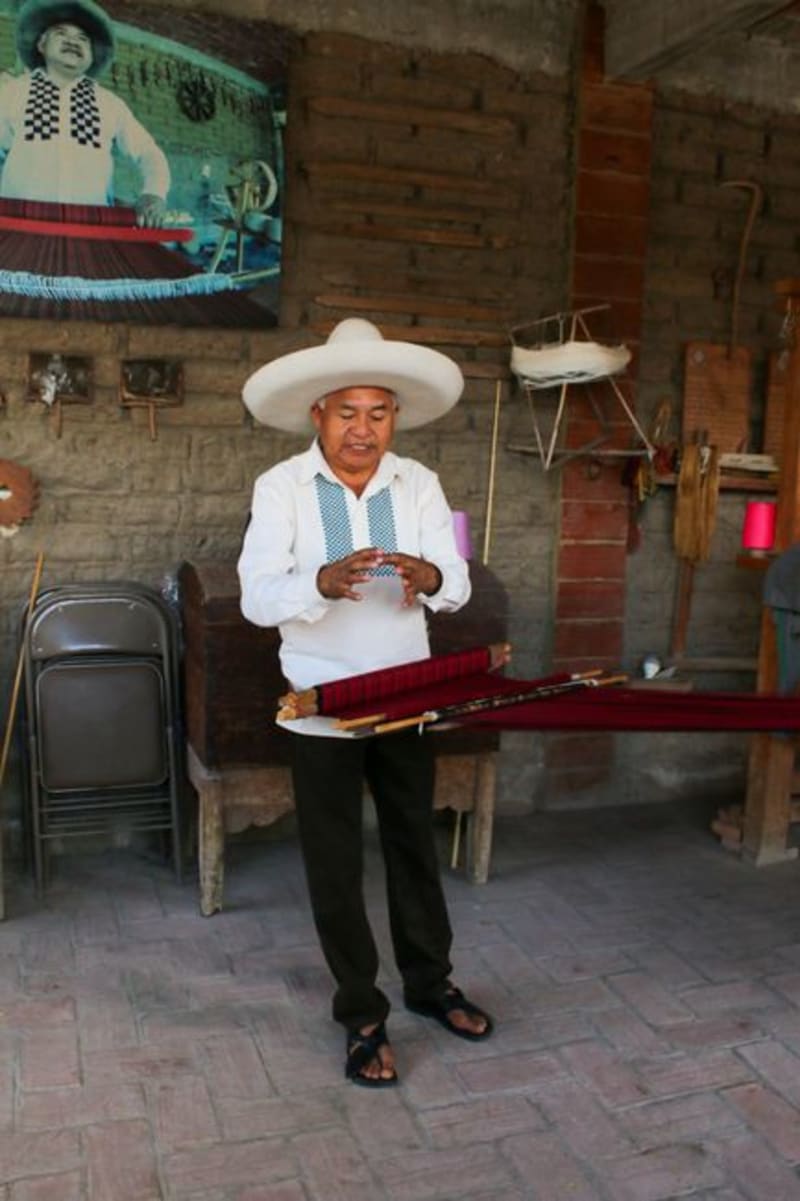 mexico
 Santa Ana Chiautempan
Chiautempan is where Mexico's sarape tradition lives in its most concentrated form — workshops run by the same families for generations, looms clattering through the week, and a Saturday market where the best pieces sell before noon. Most people passing through Tlaxcala city never cross the municipal line. Their loss.
Explore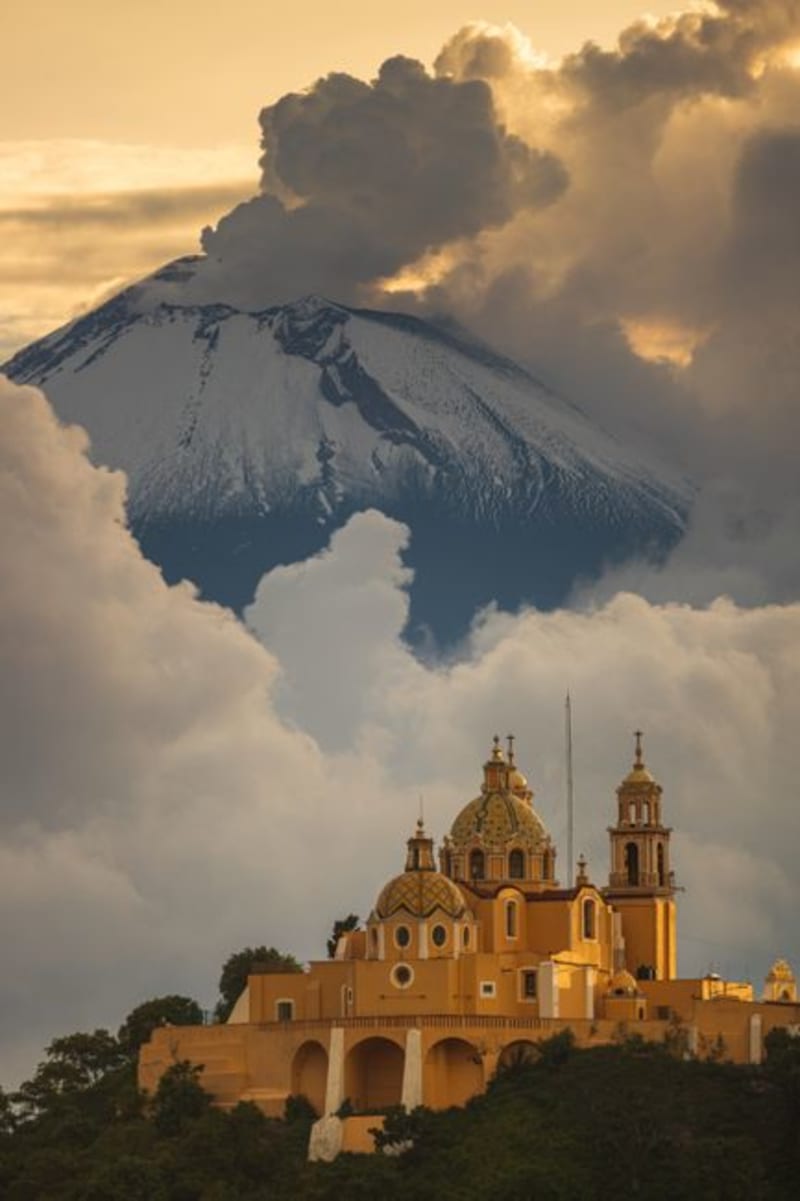 mexico
 Xochitécatl
A hilltop ceremonial center in Tlaxcala that predates Cacaxtla by more than a millennium, Xochitécatl holds four distinct pyramids — including a rare circular one — and unobstructed views of La Malinche that stop you mid-step. The people who built it left no name we can use, which makes the scale of the place feel stranger, and more honest.
Explore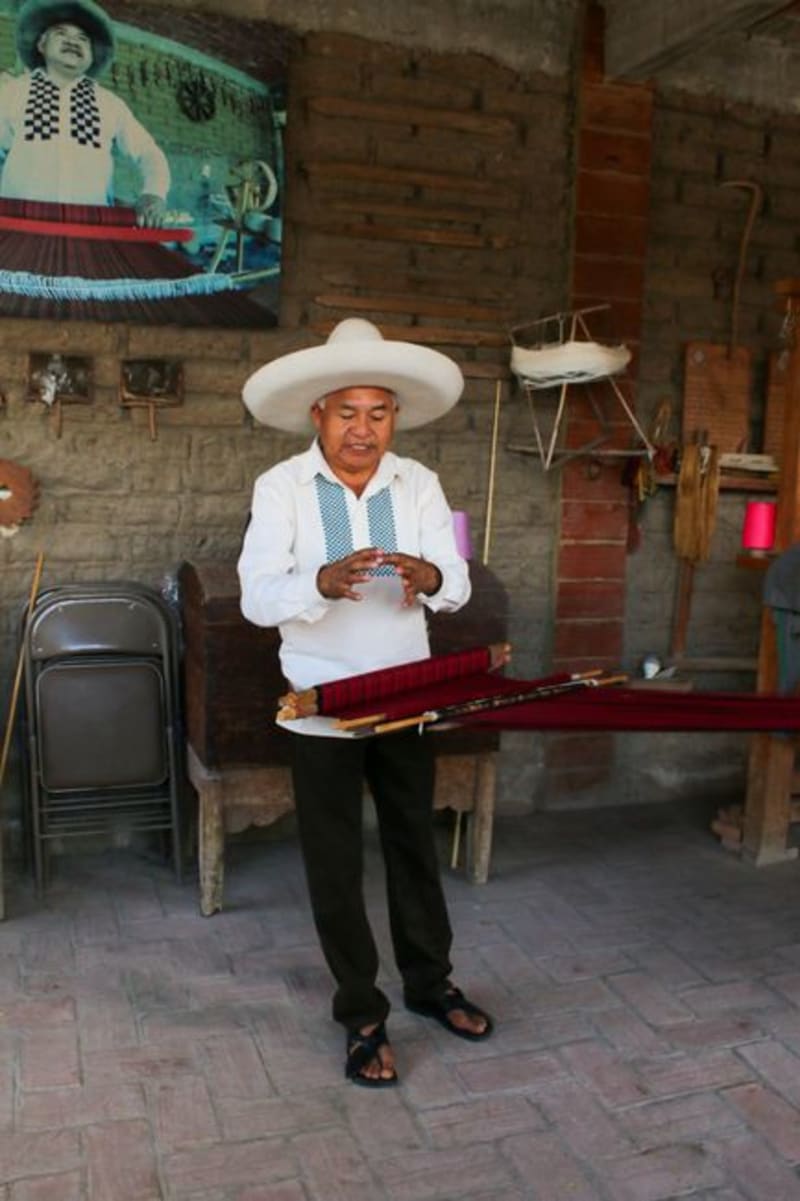 mexico
 Contla de Juan Cuamatzi
Contla has been weaving sarapes on wooden foot-looms since the 17th century and has not felt the need to dramatize the fact. Family workshops open directly onto the street — you walk in without an appointment, watch raw wool become finished cloth in real time, and can usually buy from the person who made it.
Explore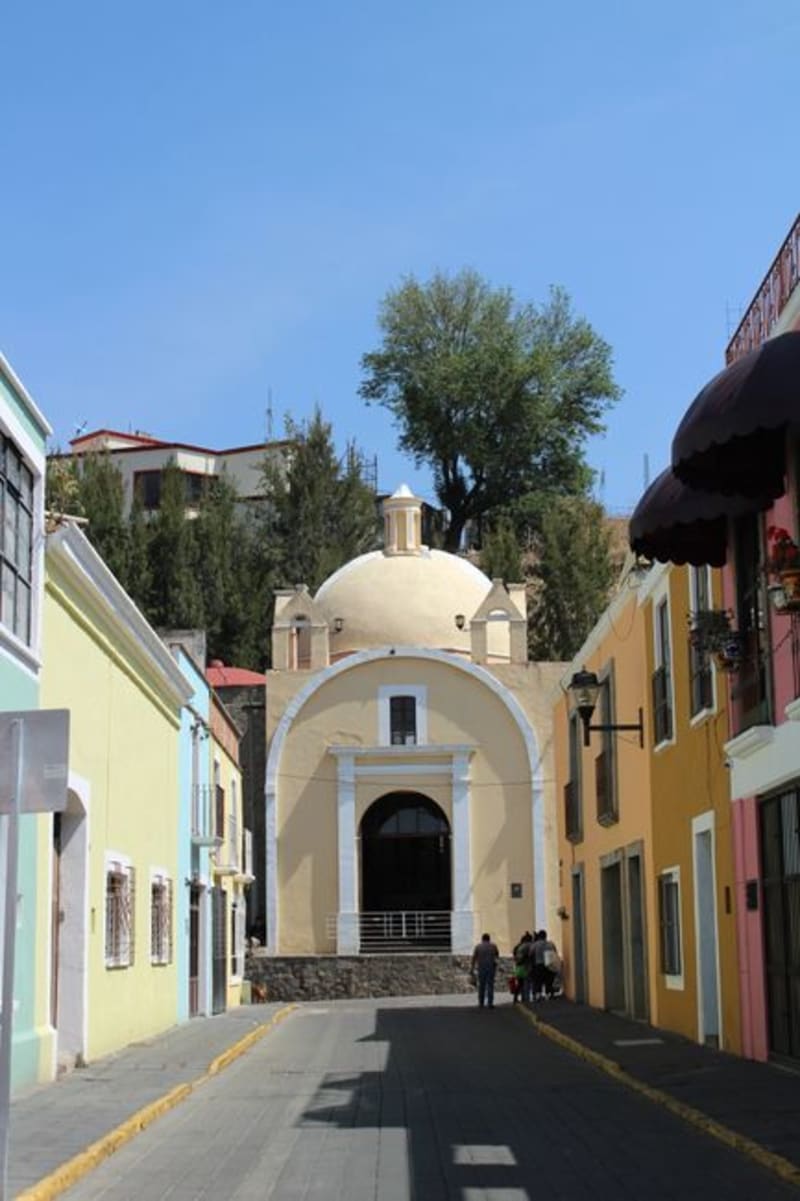 mexico
 Españita
A quiet town in the cool forest-and-farm highlands of western Tlaxcala, where pine woods meet cornfields and, on a clear morning, La Malinche fills the horizon with Popocatépetl and Iztaccíhuatl floating pale behind it. Small, green, and gloriously unhurried.
Explore