Tampico
"The zacahuil in the Tampico market is served by the kilo and it takes two people to carry the banana-leaf package to the table."
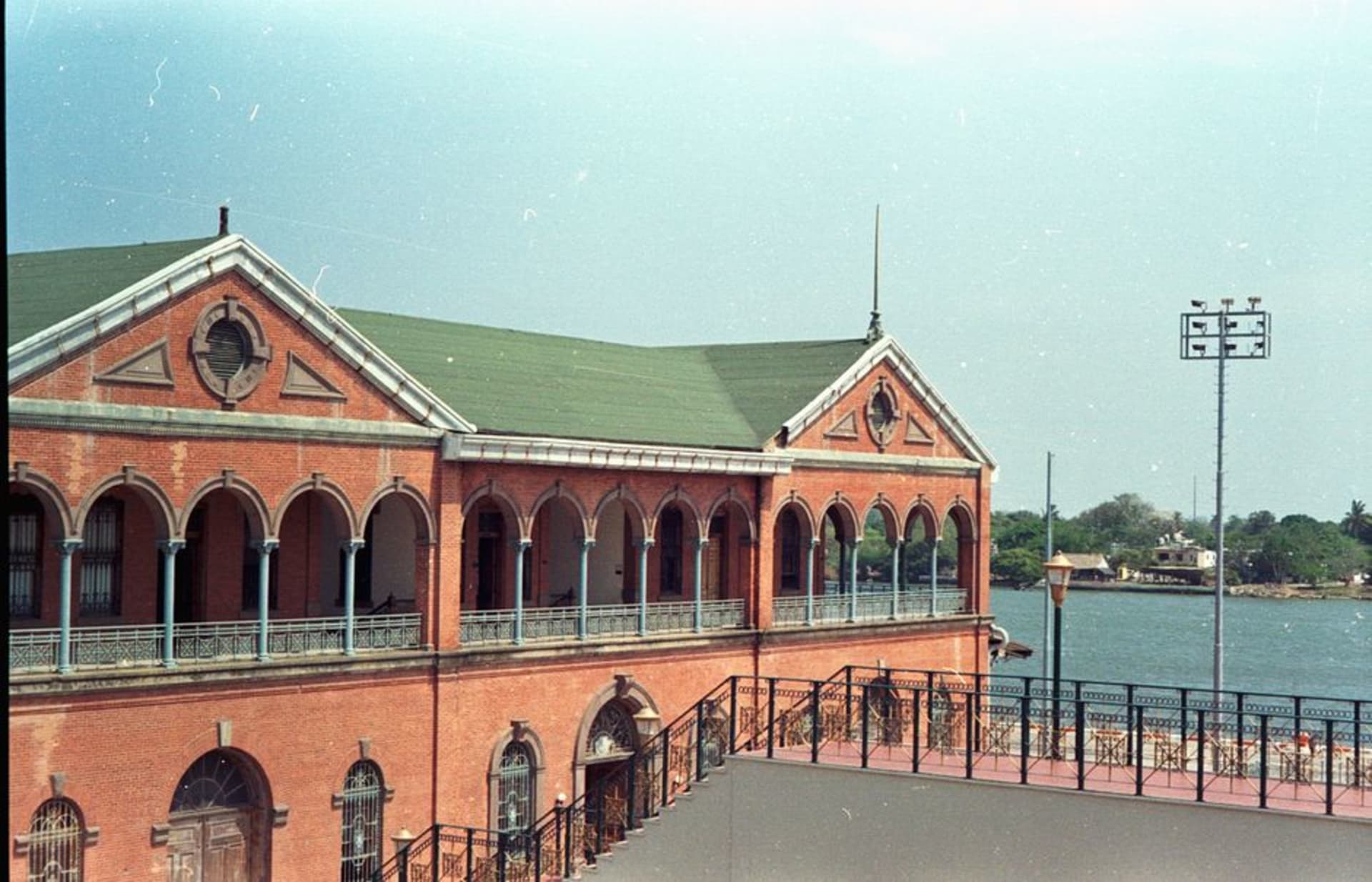
Tampico is a Gulf coast port city with a downtown full of art deco buildings from the 1930s and 1940s, a covered market that deals in zacahuil by the kilo, and a harbor history shaped by oil booms and Cuban trade. The Plaza de Armas at dusk functions as old Mexico does best — without tourism as its justification.

I came to Tampico on a bus from Monterrey, arriving at dawn when the heat was still manageable and the terminal smelled of diesel and coffee. No one had told me what to expect and, frankly, the internet had not been much help either. What I found was a city that had clearly been important once — the kind of importance that leaves architecture behind — and had since decided to get on with things quietly. The Plaza de Armas was already occupied by men reading newspapers on iron benches. The cathedral was lit. A woman was arranging carnations on a cart. I left my bag at the hotel and went looking for breakfast.
Art Deco on the Gulf
The thing nobody tells you about Tampico is that the downtown is genuinely strange and beautiful. Walking Calle Díaz Mirón or around the Plaza de la Libertad, you pass building after building from the 1930s and 1940s — curved corners, horizontal banding, sunburst motifs above doorways, all of it in various states of glory and decline. Some facades have been repainted in colors that don’t quite match the period. Others are peeling in long vertical strips that expose older plaster beneath. The city had its boom during the oil years when Tampico was one of the most productive petroleum ports in the world, and the money that arrived between 1910 and 1940 left its mark in concrete and tile. Wandering without a map is the correct approach. The Edificio La Nacional on the plaza is the set piece, but the best buildings are the ones you find half a block off the main drag, used as pharmacies now, or hardware stores, their original brass fittings still in place.

The Market and the Zacahuil
The Mercado Juárez is where Tampico stops being picturesque and becomes useful. I went at nine in the morning and it was already operating at full volume. The zacahuil stalls are near the back — you will smell the masa and the chile before you see them. Zacahuil is a tamale from the Huasteca region that is made in a section rather than as an individual portion: pink from achiote, wrapped in banana leaves, cooked overnight in a pit, and sold by the kilo from trays that look like they belong in a hospital. I ordered half a kilo, which the woman behind the counter seemed to find reasonable for one person, though barely. The masa is denser than a regular tamale, the pork inside is falling apart, and the whole thing arrives in a banana-leaf package that requires both hands to carry. I ate it standing at a counter with a glass of agua de jamaica. It cost eighty pesos.

The Harbor at Dusk
The Río Pánuco runs along the southern edge of the city and the malecón there is not a tourist promenade — it is a working waterfront that happens to have benches. Cargo vessels move slowly past. Men fish from the concrete edge. At dusk the light over the river goes orange and then pink and the cathedral dome on the plaza catches it. I sat there for a long time the evening before I left, eating a bag of chicharrón with salsa valentina, watching a container ship ease toward the Gulf.

Getting There
Tampico has a functioning regional airport with connections to Mexico City, Monterrey, and a few other cities. From Monterrey, bus is around four hours on ADO or ETN. From the capital, the bus takes roughly seven hours. The downtown hotels on and around Plaza de Armas are inexpensive and adequate. The city does not require much time to understand — two nights is enough to walk it properly.
Keep exploring
More from Mexico
 mexico
 Tlaxcala
Mexico's smallest state and its most underestimated colonial capital — a city of Moorish-influenced architecture, indigenous murals, the best pulque in the country, and an extraordinary military history that the rest of Mexico is still processing.
Explore mexico
 Tula de Tamaulipas
A Franciscan mission from 1617 anchors the colonial center of this Sierra Madre valley town, where the regional market draws mountain communities every Saturday and the canyon road from the east is, on its own, worth the detour. Not to be confused with Hidalgo's Toltec Tula — though this one has the better barbacoa.
Explore mexico
 Veracruz
Mexico's oldest port city on the Gulf coast — jarocho music, the best seafood in the country, a fortress that held off pirates for two centuries, and coffee from the sierra above the city.
Explore mexico
 Yucatán
Maya pyramids, sacred cenotes, and a cuisine distinct from the rest of Mexico. The Yucatán is a peninsula with its own identity.
Explore mexico
 Zacatecas
A UNESCO silver-mining city in the high desert — pink cathedral, canyon-split streets, a cable car over the rooftops, and the best collection of pre-Hispanic gold in the Americas.
Explore mexico
 Aguascalientes
The landlocked city that throws the biggest fair in Mexico every April — 22 days of bullfighting, cockfights, regional food, and free concerts that have been running continuously since 1828, plus the birthplace of José Guadalupe Posada.
Explore