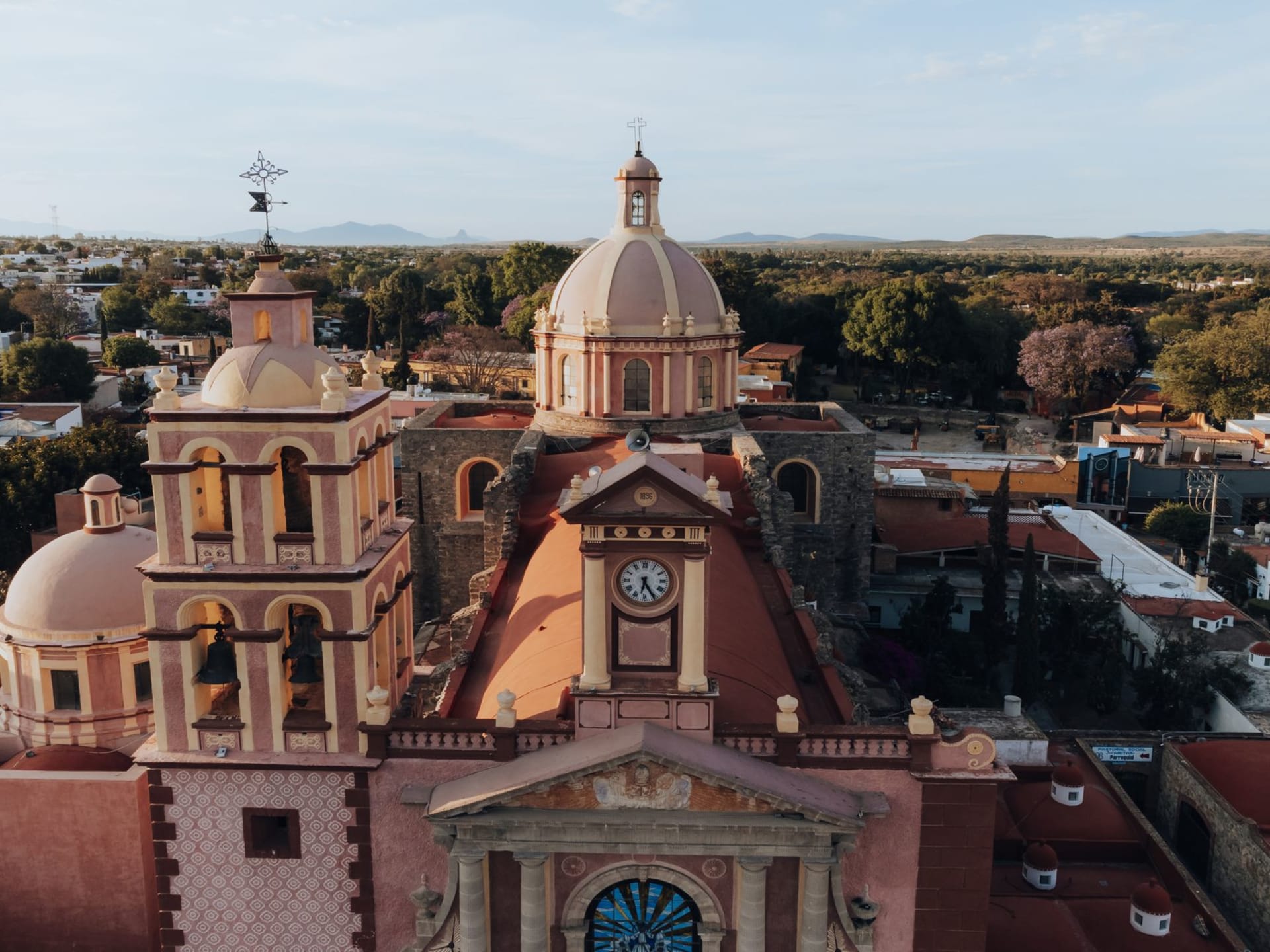
Tequisquiapan
"I ordered a wine I'd never heard of from a region I'd underestimated, and it was better than I had any right to expect."
Mexico is an underrated wine country. I’m going to state that plainly because it needs stating, and because most people — including me, for the first two years I lived here — think of Mexican wine as a thing that exists in Baja California and nowhere else. Baja makes good wine. Querétaro makes good wine too, more of it by volume than Baja, in a high-altitude plateau climate that produces something structurally different: higher acidity, more mineral character, a quality that the Bajío region’s altitude and temperature variation creates and that takes some adjustment if you come from thinking about Mexican wine in terms of the Baja style.
Tequisquiapan is where you taste this in its most accessible form. The town sits in the heart of the Querétaro wine and cheese corridor, about an hour from the capital, and it has the additional advantages of thermal springs and a genuine weekend market to ensure that wine tourism is not its only reason to exist.
Pink Stone and the Plaza
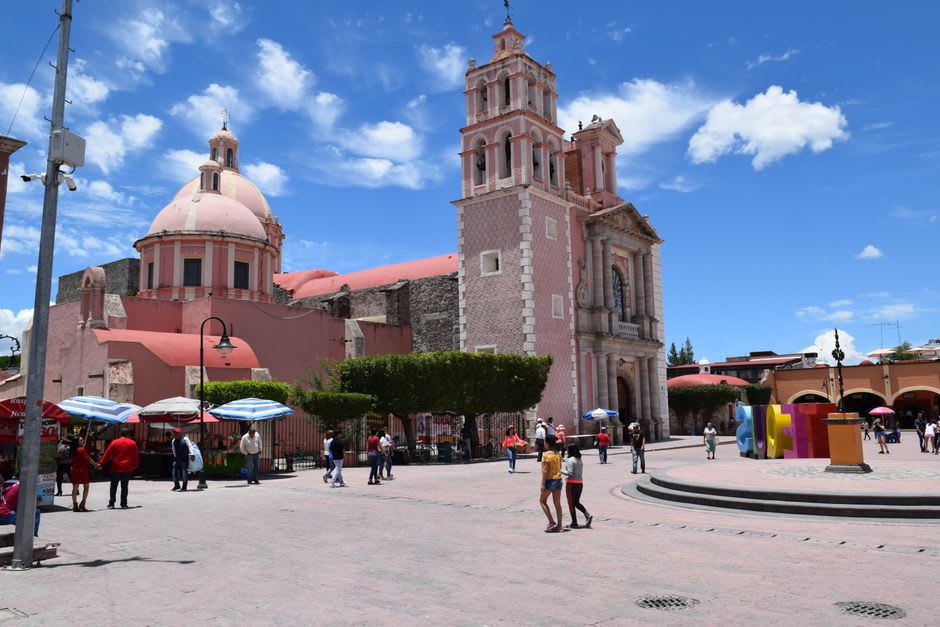
The architecture of Tequisquiapan follows the warm Querétaro palette — buildings faced in the local cantera rosa, a pink quarry stone that goes deep amber in the late afternoon light. The scale is human: two-story facades, stone arches, streets narrow enough that the buildings on both sides block the midday sun. France has its rose-stone towns — Albi, parts of Toulouse — and there is something in the Querétaro pink that rhymes with that aesthetic without resembling it. It’s a different pink. Warmer, more porous-looking, with a texture that holds the light rather than reflecting it.
The main plaza on a Sunday morning is what a Mexican weekend market is supposed to be and often isn’t: locally made cheese at tables run by the producers themselves, rebozo weavers from nearby towns, preserves and honeys and maguey spirits in unlabeled bottles. The woman I bought a wedge of regional manchego from told me it came from her family’s dairy six kilometers outside town. It was younger than the manchego I grew up with — softer, more lactic, less sharp — but there was a freshness to it that the Spanish version’s age trades away. Both are correct. They’re different things.
The Cheese Board and the Wine
The restaurant that changed my thinking had been open six months. I know this because I asked, after the meal, and the owner — who was also the sommelier and probably also the dishwasher — told me with the combination of pride and visible exhaustion of someone in the first year of a restaurant. The space was small: eight tables, stone walls, a handwritten menu that changed based on what the local farms had.
The cheese board came with five selections from the Querétaro region: a fresh queso de cabra, a semi-cured manchego, a harder aged version, something washed-rind that I didn’t catch the name of, and a queso añejo that was dry and salty and excellent crumbled over everything else. The wine was a Cabernet Sauvignon from an estate twenty minutes away, from a vintage I didn’t recognize. It had the acidity I associate with a cool-climate red — not the jam of a hot-climate Cabernet, but something tighter, with a finish that had actual mineral length.
I want to be careful here. I’m not a wine writer. But I know what it tastes like when a wine is better than you expected in a category you’d written off, and this was that. Mexico at altitude makes wine seriously. Tequisquiapan is the right place to encounter that fact.
Thermal Springs
The balnearios — the thermal spring complexes with pools — are the other reason weekenders come from Querétaro City and the Bajío cities. Several are inside town or just outside it, ranging from large family-oriented complexes with waterslides to smaller hotel pools reserved for guests. The water is warm without being hot, around 36 degrees, the sort of temperature that you can stay in for a long time without noticing how much time has passed.
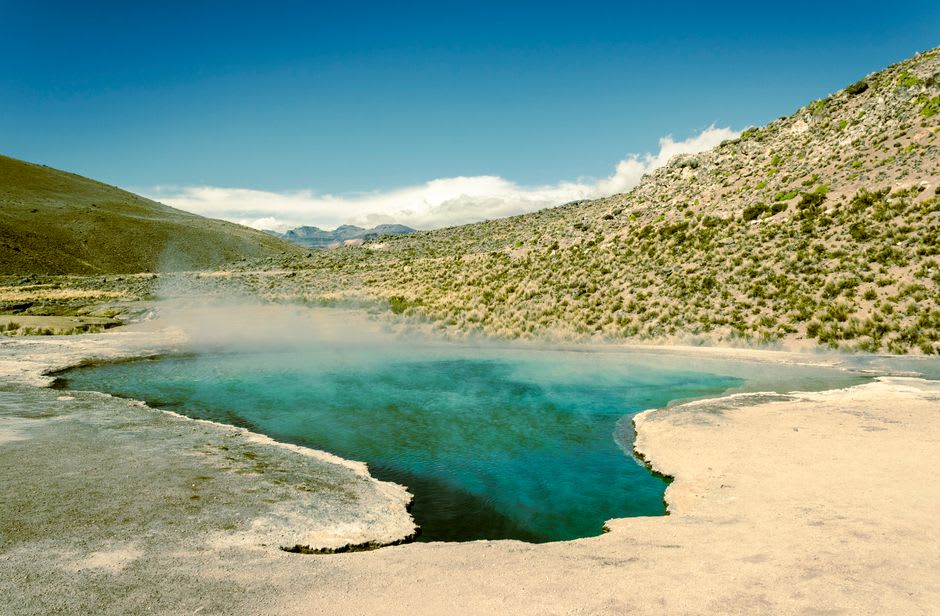
I went to one of the smaller hotel pools on a Saturday morning. By ten the family complexes had already filled with people from the city; the small pool was quieter. The water had a slight mineral taste when I accidentally swallowed some. A woman in the pool told me her family had been coming here every year for thirty years. I asked if it had changed. She said the wine route was new. Everything else was the same.
Getting There
From Querétaro City, local buses run to Tequisquiapan in about an hour — ask at the Central de Autobuses for the Tequisquiapan service. The town is small enough to walk entirely. The wine estates are spread through the surrounding countryside and are best reached by car or organized tour; several do tastings with advance notice. Come on a Saturday or Sunday if you want the market. Come on a weekday if you want the plaza to yourself.