Querétaro
"The aqueduct has 74 arches and was built by a nobleman who fell in love with a nun. The story is probably apocryphal. The aqueduct is definitely real."
Querétaro is the colonial city that Mexico’s political history keeps returning to. The conspiracy that launched the 1810 independence movement was hatched here, in the home of the city’s corregidora Doña Josefa Ortiz de Domínguez, who famously warned the conspirators that their plot had been discovered. The Emperor Maximilian was captured here after the French intervention collapsed in 1867 and executed on the Cerro de las Campanas with his two Mexican generals. The constitution of 1917, which ended the revolution and established the modern Mexican state, was written and signed here.
The city is also, in the 21st century, one of Mexico’s fastest-growing industrial and technology centers — the automotive and aerospace manufacturing corridors of the Bajío region have made Querétaro the economic center of central Mexico in ways that tourism doesn’t reflect but that explain the excellent restaurants and hotels. The historic center, however, is contained and walkable and has the particular quality of a city where the people who live well in the new economy live in the colonial buildings and walk the same streets as the 18th century.
The Centro Histórico
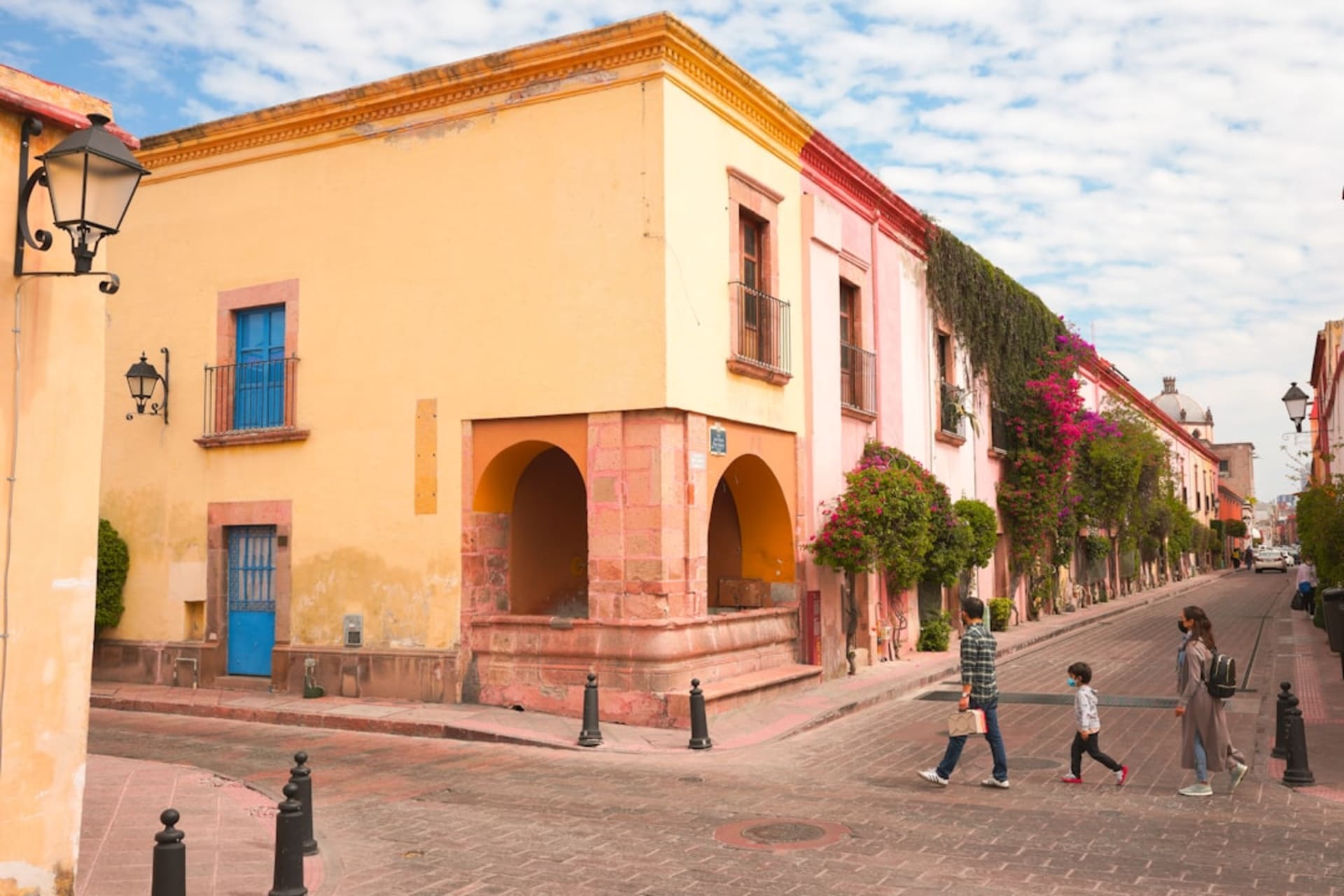
The historic center of Querétaro has a different character from Guanajuato or San Miguel — less theatrical, more civic. The buildings are austere in comparison: pink and ochre cantera stone facades, ornamental ironwork, colonial convents that have been converted into the city’s cultural institutions.
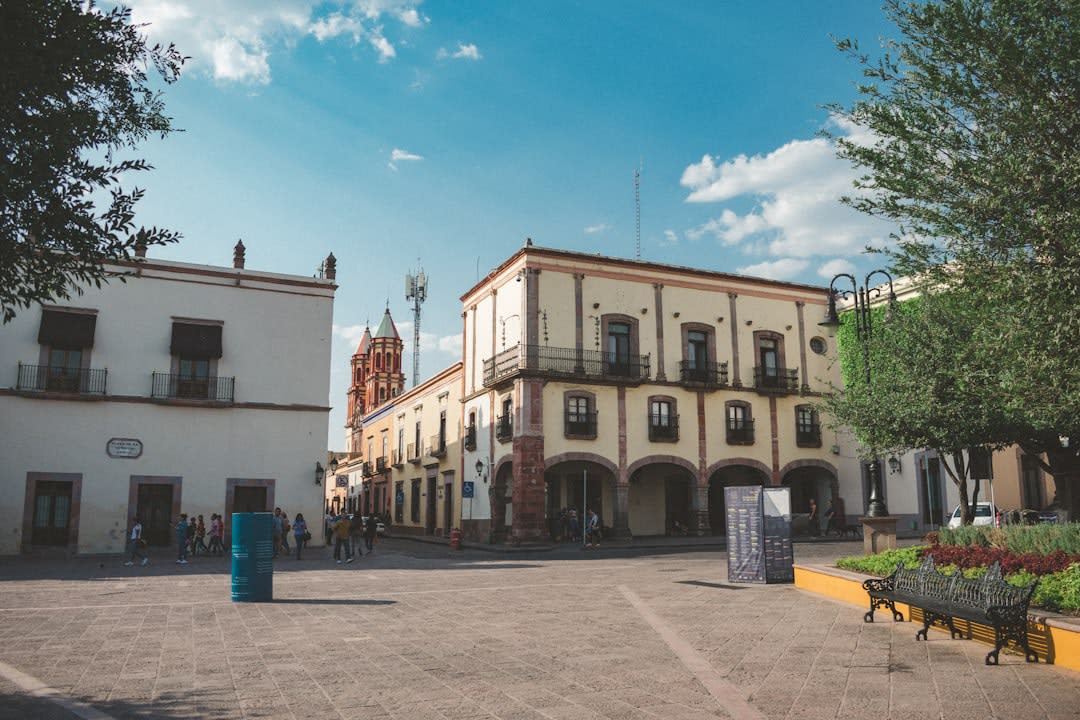
The Jardín Zenea — the main plaza — has the usual colonial equipment (portales, cathedral on one side, government palace on another) plus the specific energy of a city where the plaza is actually used by residents for daily life. The evening paseo, when the families of Querétaro walk the pedestrian streets around the Jardín, happens every day of the week with the regularity of a social institution.
The Templo de Santa Rosa de Viterbo is the architectural showpiece: an 18th-century church with a facade of such eccentric invention — double external buttresses that function as flying buttresses on the sides of the building rather than the back, a clocktower with a clock face on each of its four sides, each showing a different time — that it reads as a building that was designed to be unlike any other. The interior is equally idiosyncratic: the earliest retablos in Mexico with the neoclassical influence, which the Franciscan master Juan de Dios Marín introduced here before the style had reached anywhere else in New Spain.
The aqueduct — 74 arches of pink stone, 1.28 kilometers long, 23 meters at its tallest point, built between 1726 and 1738 — arrives in the city from the northeast like a Roman monument that got lost. The legend attached to it (a nobleman named Juan Antonio de Urrutia y Arana built it to impress a Capuchin nun he was in love with) is of uncertain historical basis. The aqueduct is not: it supplied the city’s water for two centuries.
The Sierra Gorda Missions
Two hours north of Querétaro, in the Sierra Gorda biosphere reserve where the central plateau drops into the tropical Huasteca lowlands, the Franciscan friar Junípero Serra (later of California mission fame) built five missions between 1751 and 1768. These missions — at Jalpan, Landa, Arroyo Seco, Tancoyol, and Tilaco — are UNESCO World Heritage Sites and among the most extraordinary examples of indigenous-inflected baroque anywhere in Mexico.
The facades of the Sierra Gorda missions were designed by indigenous craftsmen under Franciscan direction, incorporating Huastec and Pame cosmological symbols into what is ostensibly Catholic iconography. The result — corn ears where European missions would have wheat, indigenous birds where European missions would have doves, solar symbols worked into crosses — is a visible record of the negotiation between the Franciscan program and the people being converted.
Jalpan de Serra, the center of the mission circuit and the most accessible, is a three-hour drive from Querétaro through the sierra — the road passes through dramatic landscape changes, from the dry central plateau to cloud forest to semi-tropical lowlands. The town has excellent posadas and a Sunday market that draws Pame and Huastec artisans from the surrounding sierra.
The Wine Country
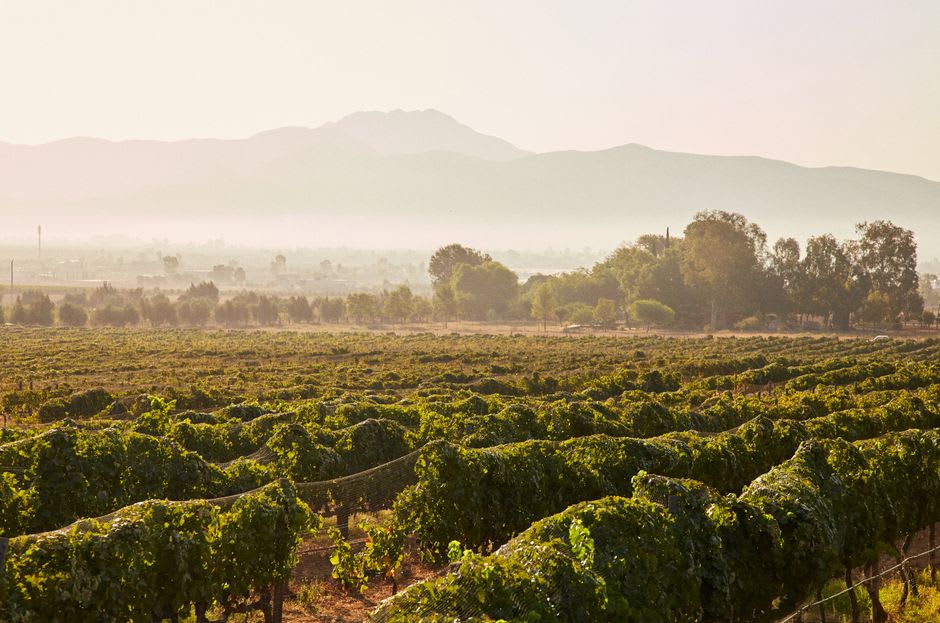
The Valle de San Francisco and surrounding vineyards, 45 minutes north of the city, produce Querétaro wines that have quietly become the most technically accomplished in Mexico. The altitude (1,800 meters), the diurnal temperature variation, and the limestone soils create conditions for Cabernet Franc, Syrah, and Viognier that the wineries of Baja California are now treating as competition rather than novelty.
Freixenet México operates the largest winery in the region with tours; La Redonda and La Santísima Trinidad are smaller operations with better wine and more interesting visits. The harvest festival in August brings a week of events across the wine region.
Getting there: ETN buses from Mexico City’s Terminal del Norte (2.5-3h), direct to Querétaro’s bus station ten minutes from the historic center. Flights from major Mexican cities and some US destinations to Querétaro’s airport. Rental car useful for the Sierra Gorda and wine country.
When to go: October through April for best weather. The Festival Internacional de Cine de Querétaro runs in November. Harvest season (August-September) for the wine region.