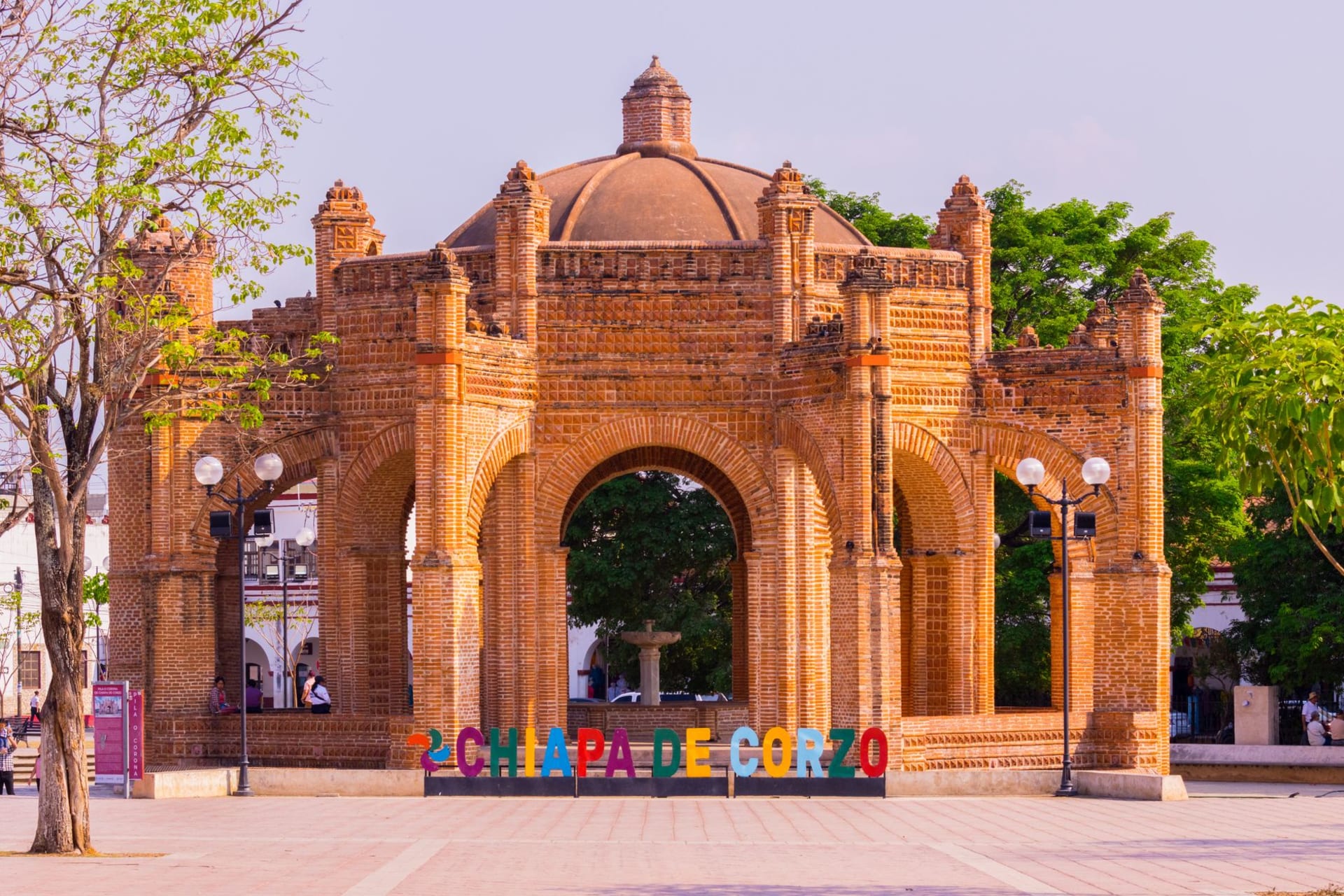
Jalpan de Serra
"Three hours of mountain road brought us from the high dry plateau to a valley that felt subtropical. The mission appeared around a corner as if someone had placed it there as a test of whether you were paying attention."
The road to Jalpan de Serra is the reason to go to Jalpan de Serra. I should be clear about this. The mission at the end is extraordinary — one of the most elaborate carved-stone façades I have seen in Mexico, in a remote mountain town where the scale of it makes no immediate sense — but the drive is something on its own, and you need to budget for stopping.
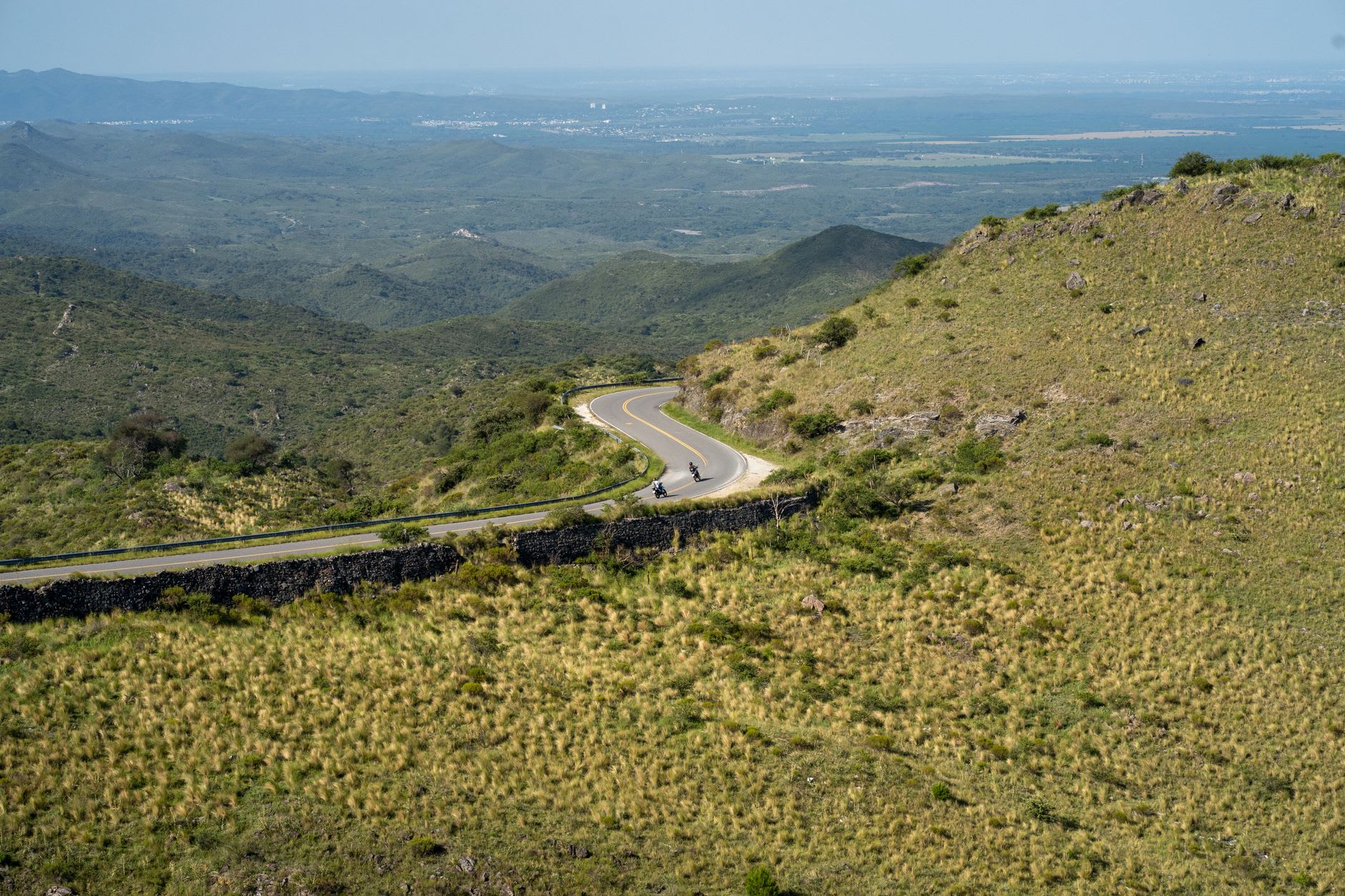
We left Querétaro city early, which meant the light was still flat and the road still empty for the first hour. The plateau — arid, high at 2000 meters, the kind of landscape that looks like it should produce nothing and manages to produce a surprising amount of agave and nopal — stayed with us until the turnoff into the sierra proper. Then the road begins to descend, and the descending is the thing.
The Road Down
In the space of three hours, you drop from 2000 meters to about 800, and the vegetation tracks every hundred meters of altitude with a different logic. The scrub and yucca of the high plateau give way to oak and pine forest, then to something lusher and more subtropical as the elevation drops, the canyon walls closing in and the air going from dry to visibly humid. At one point — somewhere around Pinal de Amoles, a small town perched at a dramatic viewpoint — you can see the sierra fanning out below you, ridge after ridge going green and then blue-green and then blue-gray toward the horizon, and you understand for the first time that this is a serious mountain range that most of the tourists in Mexico will never know exists.
Lia was navigating on her phone, which had lost signal an hour before, so she was navigating using the cached map and a policy of optimistic confidence that turned out to serve us well. The road has switchbacks. The road has trucks coming the other way. The road also has, at irregular intervals, waterfalls crossing it — not next to it, across it, thin sheets of water running from the cliff above directly over the asphalt and off the edge into the canyon below. The first time this happened I slowed to a stop and we sat there for a moment, water running under the car, before continuing.
The coffee near Pinal de Amoles is served from a small comedor with plastic chairs and a propane burner and comes in a cup that might be a mug or might be a glass — the distinction seems not to have been decided — and is perfect in the way that coffee at altitude after two hours of mountain driving tends to be perfect.
The Mission
Jalpan de Serra itself is a small town, the kind of place where people know each other and the market operates on a schedule that reflects the actual needs of the residents rather than tourist hours. The mission sits at the edge of the main square, which is the right location — visible, central, unavoidable — and its façade is the first thing you see and the thing that stops you.
Fray Junípero Serra — who went on to found the California mission chain from San Diego to Sonoma — came to the Sierra Gorda in 1750 as part of a Franciscan effort to consolidate missionary work among the Pame, Jonaz, and Chichimec communities of the region. He stayed for nine years and supervised the construction of five missions. This one, the Misión de Santiago de Jalpan, completed around 1758, is the most elaborate. The façade is churrigueresque in its density — not the austere Franciscan style you might expect from a frontier mission but something that feels more Poblano, more urban, more suited to a cathedral in a vice-regal capital than a church in a mountain valley with a population in the thousands.
The stone carving represents a visual catechism: saints, angels, indigenous floral motifs borrowed from the local communities, crosses and crowns and pelicans and musical instruments, all layered in low relief across the entire surface from the doorway to the bell towers. The indigenous elements are not marginal — they are woven throughout, a record of the syncretism that made these missions functional as institutions. You can spend twenty minutes just reading the façade.
Inside, the mission is simple in the way that exteriors like this often produce simple interiors: all the decoration was spent on the outside. The nave is cool and high and quiet. I sat in one of the wooden pews for a while, listening to nothing. A woman came in to pray, knelt, and did not look at me or anyone else. After a few minutes she left. The quietness felt earned — the product of a specific remoteness that hasn’t been filled in yet.
Staying the Night
Most people who visit the Sierra Gorda missions do it as a day circuit from Querétaro city or on a guided tour that moves between all five sites. I stayed the night in Jalpan, which I would recommend as the correct approach. The hotel was small and had a courtyard with a bougainvillea growing over the entrance in a way that appeared to have been negotiated rather than designed. The owners brought us coffee at 7am without being asked, which I regard as a sign of a well-run establishment.
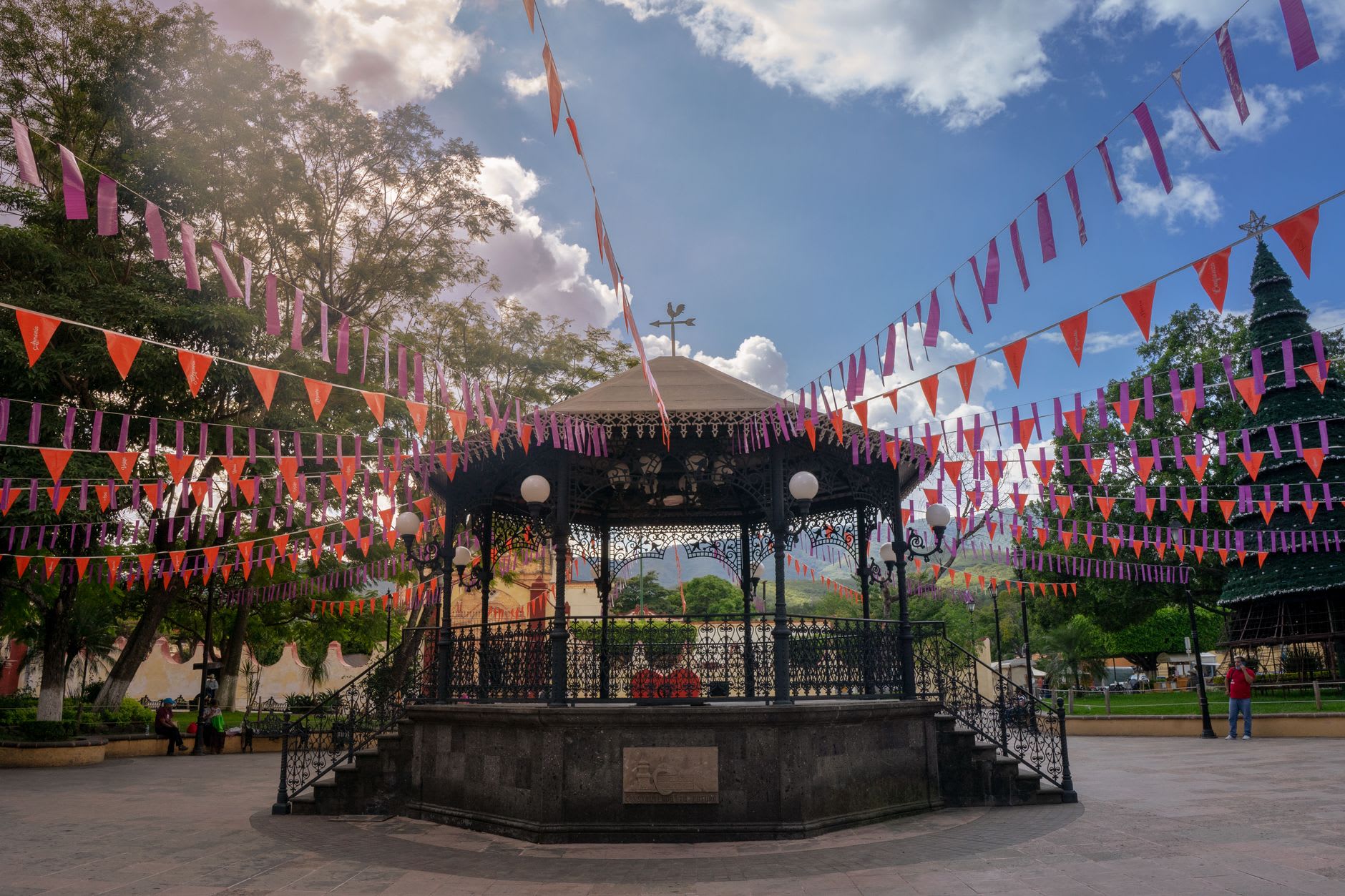
At night, the town produces a near-total quiet that you don’t get in Querétaro, or in any city. The kind of quiet where you can hear what’s in the next room without trying. The mission is lit from the square and you can see it from a bench near the kiosk — the carved façade illuminated from below, which makes it look different again, the shadows falling upward, the detail that was horizontal in daylight now vertical. I sat there for an hour with a beer from a convenience store because the restaurants had closed, and it was one of the better hours of that trip.
The other four Sierra Gorda missions — Landa de Matamoros, Tilaco, Tancoyol, Concá — are within a few hours of Jalpan by road, also descending and winding, also through remarkable landscape. Each has its own façade variation, its own character. Concá, the smallest, sits at the confluence of two rivers and the water is visible from the atrium. I went to two of them the following morning before driving back, taking the same road up that we had come down, which requires a completely different posture toward the switchbacks.
Practical Notes
Jalpan de Serra is 200 kilometers northeast of Querétaro city — approximately three hours by car on Highway 120. The road is paved and in generally good condition but involves sustained mountain driving with significant elevation change. A driver who is comfortable with switchbacks and occasional single-lane sections is the right person for this road.
Bus service from Querétaro’s Central Camionera runs to Jalpan but takes four or more hours and has limited schedules — check current routes before relying on it. Renting a car in Querétaro for two to three days is the more flexible option.
Accommodation in Jalpan is limited: a handful of small hotels and a few casas de huéspedes, most of which should be contacted in advance by phone as they don’t maintain online booking systems. There is also a parador ecológico run by the Sierra Gorda Biosphere Reserve nearby.
The Sierra Gorda Biosphere Reserve covers much of the surrounding landscape and has several designated hiking areas and lookout points. The reserve organization also runs tours and operates an ecolodge. The biological diversity of the sierra — cloud forest, tropical deciduous forest, and arid scrub all within the same mountain range — is the other reason to linger, aside from the missions.