Zacatlán
"I was standing at a roadside stall with a plastic cup of fermented apple cider when the clock tower began to play. I still don't know what the song was."
I arrived in Zacatlán on a Wednesday in October, three hours from Puebla City on a road that climbs steadily into the Sierra Norte through pine forests and fog banks and small towns where the roofs are corrugated metal and the hillsides are suddenly full of apple trees. In France, apple orchards are a Norman thing — Normandy, Brittany, the cider country of the northwest. I grew up knowing cider as something specific to that landscape. The idea that a town in the mountains of Puebla had been fermenting apple cider since the nineteenth century in a tradition entirely its own had not occurred to me until someone mentioned it off-hand, and then I couldn’t let it go.
The harvest in October means the roadside stalls are operating. I found mine about two kilometers outside town: a woman with a folding table, plastic cups, and several unlabeled bottles of sidra that she had made herself. She poured me a cup. It was golden, gently fizzy, tart in a way that reminded me of the cidre bouché my grandmother used to buy in Caen — dry but with something vegetal underneath, alive in the way that industrial cider is not. I asked her how she made it. She told me in more detail than I could follow, involving the specific variety of manzana del país they grow here, a fermentation process passed through her husband’s family, and a temperature she knew from experience rather than a thermometer. I bought two bottles to take home. One of them did not survive the bus journey.
The Clock
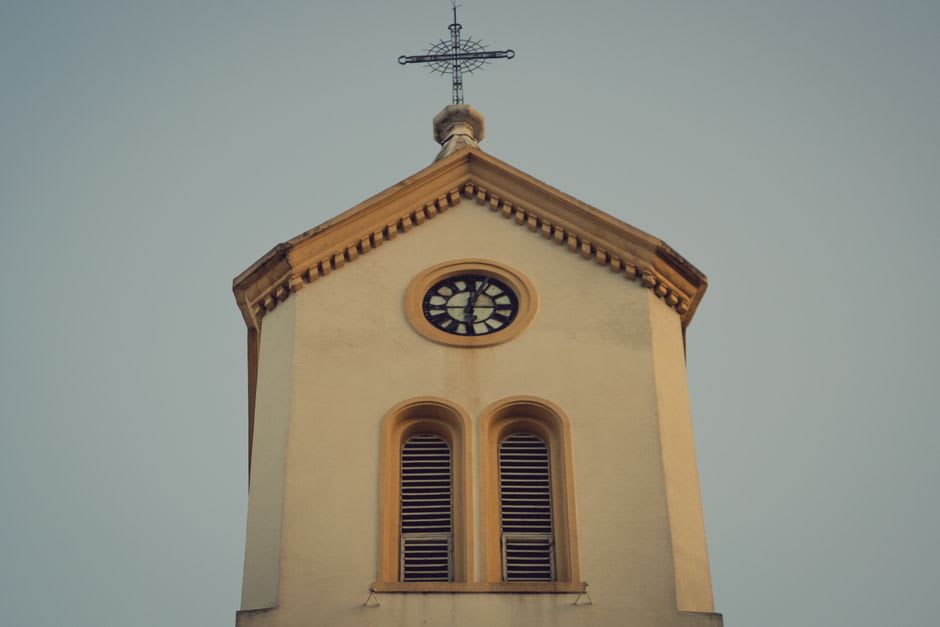
The main attraction that every description of Zacatlán leads with is the Automóviles Roldán clock, built into the exterior of the church tower by a local mechanic named Joaquín Roldán in the 1960s. The word “clock” underprepares you. What Roldán built is a mechanical theater: at the top of each hour, a sequence of carved and painted wooden figures emerges from small doors in the tower face and rotates while the clock plays a Mexican folk song through a mechanism of metal combs and rotating cylinders.
I was in the main plaza when noon arrived. The song that played was something I almost recognized — a mariachi adaptation of something, the melody just familiar enough to be maddening. The figures turned slowly: a charro on horseback, a woman in traditional dress, two smaller figures I couldn’t identify from the plaza. The whole performance lasts perhaps three minutes. The plaza fills slightly as it begins and empties again afterward. Local people barely look up. I watched it twice, at noon and again at one.
Orchards and Waterfalls
The landscape around Zacatlán is what the town is made of. The hillsides above the valley are planted in apple, pear, and peach trees that in October are in various stages of harvest — some already stripped, some still heavy, the fallen fruit on the ground going sweet and brown and attracting a specific kind of large green fly. Walking into the orchards without permission felt presumptuous, but several of them border the road closely enough that you can stand at the edge and watch the pickers working. The smell is extraordinary. Yeast and sugar and something green underneath.
The waterfalls — Cascada Tulimán and Las Brisas, both a short drive into the sierra — are the other reason people come. I reached Tulimán in the afternoon, a multi-tiered fall dropping through cloud forest, the pool at the base cold enough to make the decision to swim feel like a genuine commitment. I committed. The water was glacier-temperature and completely clear. There were two other people there, both local, both watching me with the mild amusement that a Frenchman making involuntary noises in cold water tends to generate.

Getting There and What to Eat
From Puebla City, buses run from the CAPU terminal toward Zacatlán — the journey is about three hours on roads that are scenic in the way that mountain roads are scenic, meaning dramatic when the fog lifts. The town itself is small enough to walk entirely, with a central plaza, the clock church, and a market where the apple products line entire tables: sidra, apple brandy, apple jam, dried apple slices, and a local version of rompope made with apple brandy that is sweeter than it should be and harder to stop drinking than it has any right to be.
Eat the mole de panza if you see it — a regional mole made with tripe that is darker and more complex than a standard mole negro, and that the locals seem to regard as a normal Tuesday lunch. There are several fondas around the market that serve it. Eat the cecina enchilada, the cured pork that is also a sierra specialty, thin-sliced and slightly smoky. And if you pass a sidra stall, stop. Don’t let the plastic cup discourage you.