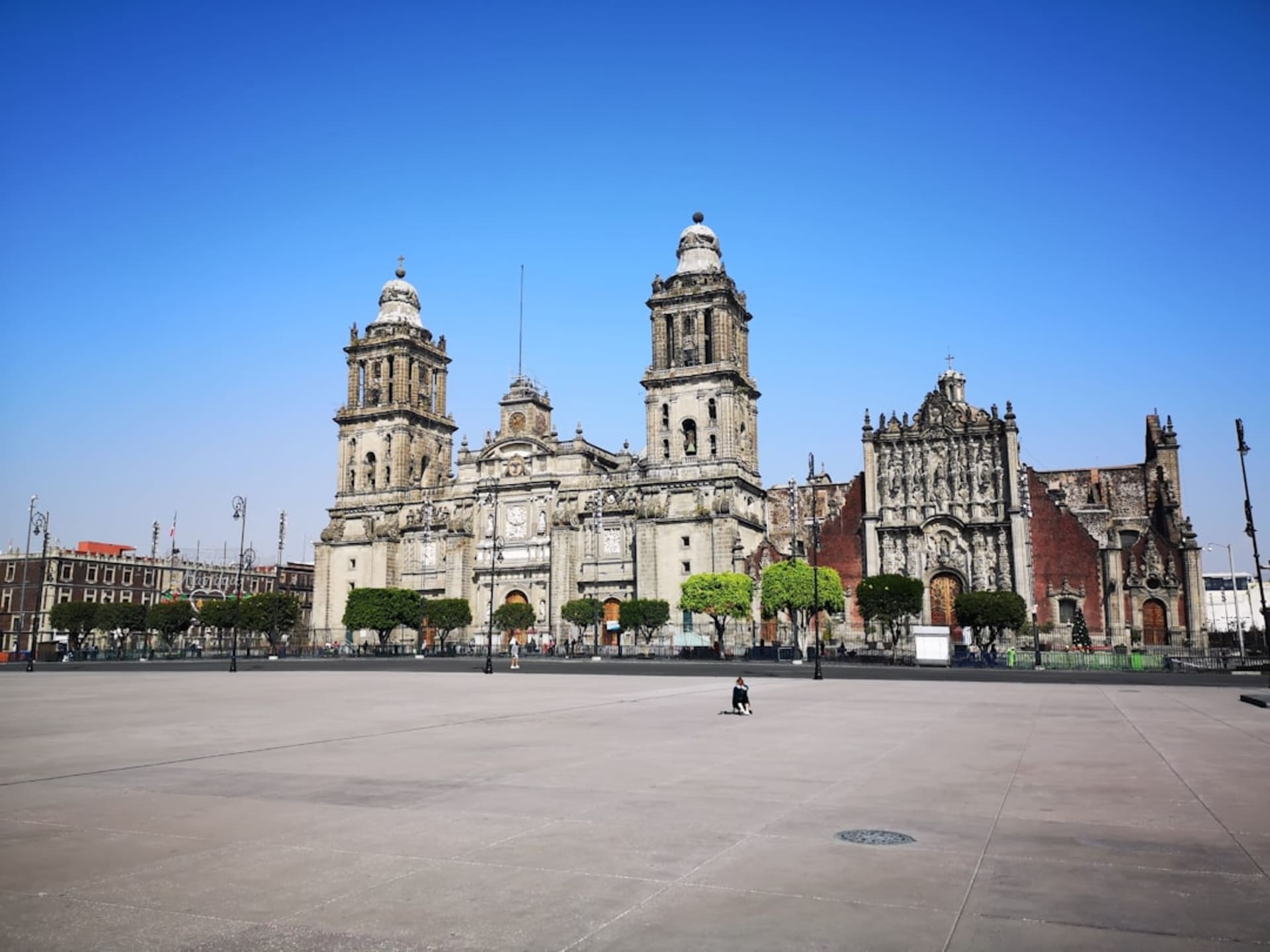
Puebla
"They say it has 365 churches, one for each day of the year. I stopped counting at forty."
Puebla sits in a valley at 2,135 meters between the two great volcanoes of central Mexico — Popocatépetl to the west and La Malinche to the east — and has been competing with Mexico City for culinary and architectural supremacy since the 16th century. On the food question it wins, or at least draws. The mole poblano, the chiles en nogada, the cemitas, the chalupas: this is the kitchen that defines what Mexican food means beyond tacos.
The city was founded in 1531 and grew prosperous on trade between Mexico City and the port of Veracruz, producing the Talavera tiles, silk, and ceramics that furnished the churches and mansions of New Spain. The wealth is visible everywhere: Puebla has more colonial-era baroque buildings than any other city in Mexico, and the interior decoration of those buildings — in painted tile, carved stone, gilded wood, and painted plaster — achieves an extravagance that has no parallel anywhere in Latin America.
The Zócalo and the Cathedral
The Plaza de Armas — Puebla’s zócalo — is among the most elegant in Mexico: wide, tree-lined, with the cathedral on the south side and the Palacio Municipal on the north, both in the honey-stone local baroque. The zócalo functions as the city’s living room: from early morning coffee through the evening paseo, there is always something happening on the benches and in the surrounding portales.
The Catedral de Puebla took over a century to build, from 1575 to 1649, and the result is the finest Renaissance-influenced cathedral in Mexico — restrained by the local standards, which is still quite elaborate. The towers, at 69 meters, are the tallest in the country. The interior contains 14 side chapels, a baroque choir screen in marble and jasper, and a 19th-century neoclassical altarpiece that is less interesting than what it replaced but still technically accomplished.
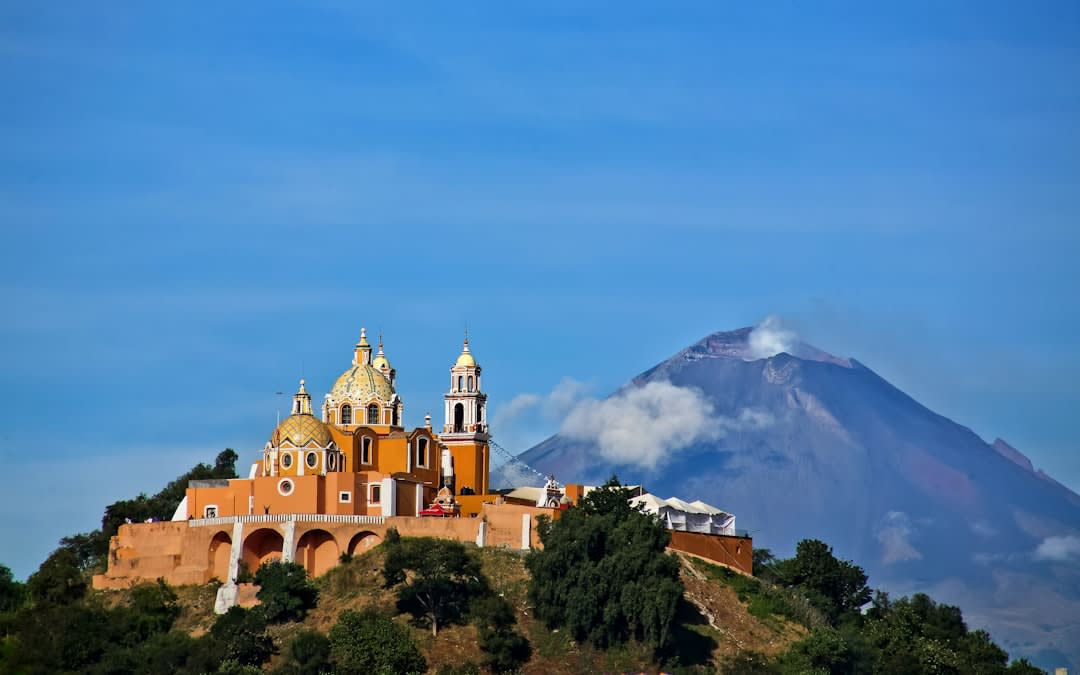
One block from the cathedral, the Capilla del Rosario in the Templo de Santo Domingo is the object of the trip. Completed in 1690, it is considered the peak of Mexican baroque — a chapel so densely covered in gilded carved stone and marble that the effect is of entering a three-dimensional painting. Every surface — ceiling, walls, arches, the eight side altars — is covered in white and gold, with figures of angels, saints, and the Virgin emerging from a background of floral ornament so intricate that the human eye takes some time to parse it. The light is kept deliberately low. Come with enough time to stand in it for twenty minutes.
The Food
Puebla is one of the three or four most important culinary cities in Mexico. The canonical dishes:
Mole poblano — the dark, complex sauce of dried chiles, chocolate, spices, and aromatics that is the city’s signature contribution to world gastronomy. The good versions require two days of cooking, upward of thirty ingredients, and a patience that is not compatible with restaurant economics. The best mole in the city is at La China Poblana on Boulevard Héroes del 5 de Mayo, where the sauce has reportedly been cooking on a continuous basis for decades.
Chiles en nogada — the most beautiful dish in Mexico: a poblano chile stuffed with a picadillo of meat, fruits, and spices, covered in walnut cream sauce and dotted with pomegranate seeds and parsley. Green, white, and red — the colors of the Mexican flag. Available only from August through October when the walnuts and pomegranates are simultaneously in season.
Cemita — the Puebla sandwich, on a sesame-seeded bun with avocado, chipotle, quesillo, papalo (an herb with a taste like nothing else in Mexico), and meat. Sold at the Mercado El Alto and from street carts throughout the center. One of the few sandwiches I have found in Mexico worth seeking out specifically.
Cemitas El Rincón on Calle 9 Norte is the canonical address. Arrive before noon.
The Tiles
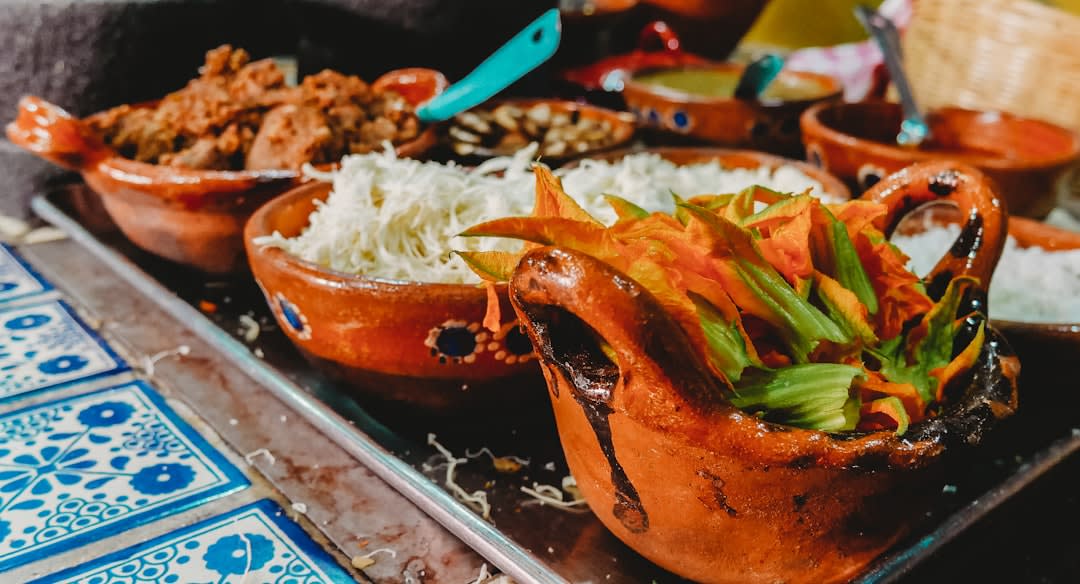
The Talavera pottery tradition of Puebla — tin-glazed earthenware in blue, white, and polychrome patterns — has been produced in the city since the 16th century, when Spanish potters arrived from the Talavera de la Reina region and incorporated indigenous ceramic techniques. The result is uniquely Mexican and protected by a denomination of origin that limits the Talavera label to pieces made in Puebla state using traditional methods.
The facades of Puebla’s historic center are tiled in Talavera as a form of architectural decoration — entire building faces covered in the blue-and-white geometric and figurative patterns. The Casa de Alfeñique and the Ex-convento de Santa Mónica have the most elaborate tile exteriors. The Barrio del Artista has working studios where the pottery is made and sold directly.
The Barrio de Analco
Cross the Puente de Bubas from the historic center into Analco — the indigenous neighborhood established at the time of the conquest for the Tlaxcalan allies who helped the Spanish defeat the Aztecs — and the city becomes different: smaller houses, street food stalls, the Templo de San Juan del Río with its modest facade and extraordinary carved retablo inside. The neighborhood is rapidly gentrifying but still has more local life per block than the tourist center.
Getting there: Buses from Mexico City’s TAPO (Terminal de Autobuses del Oriente) run every fifteen minutes and take about two hours depending on traffic. The Puebla bus station is outside the center; taxis and Uber reach the zócalo in fifteen minutes. Puebla also has an airport with domestic connections.
When to go: Year-round. The Batalla de Puebla celebration on May 5th (the origin of Cinco de Mayo, marking the 1862 defeat of French forces) is the main civic event. Chiles en nogada season (August-October) is the gastronomic high point.