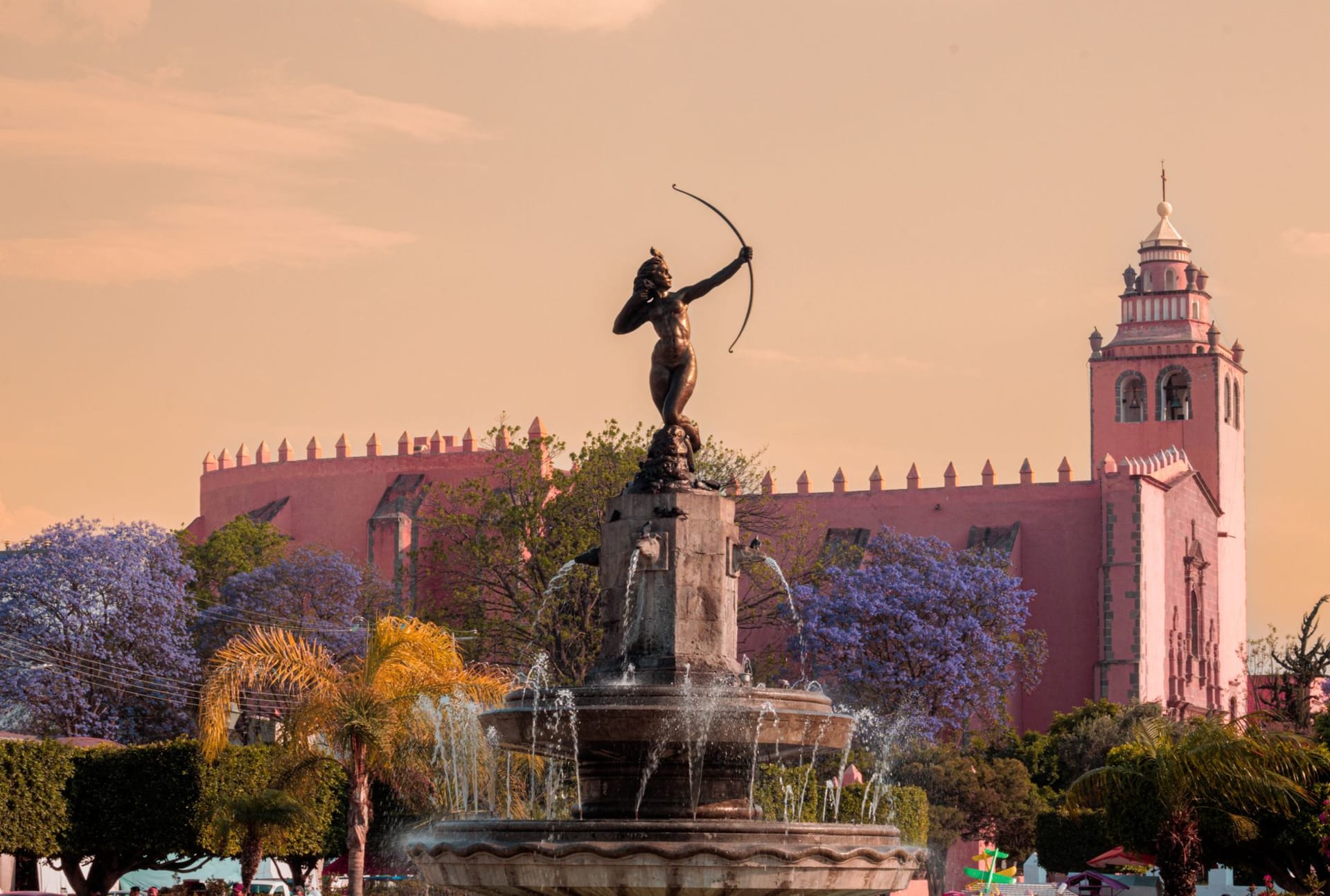
Tehuacán
"He said the spring was right there, and pointed. I expected a trickle. The water came out fizzing like someone had shaken a bottle underground."
The Valle de Tehuacán-Cuicatlán is one of those places where the landscape refuses to let you ignore it. Coming down from the humid Sierra Mixteca toward Tehuacán, the vegetation changes abruptly — the trees give way to cardón cacti as tall as telephone poles, and the air goes dry and thin, and you have the specific sensation of entering a different biome without having crossed any visible boundary. The valley is a UNESCO World Heritage Site for its biological diversity, which is not a distinction normally associated with somewhere that looks, from a distance, like a very large and orderly desert. What the UNESCO designation is actually about is maize: most of the genetic diversity of domesticated corn that exists in the world traces to within two hundred kilometers of where I was standing, which is a fact I find genuinely overwhelming if I think about it too long.
The city of Tehuacán is a mid-sized Poblano city — about 350,000 people, a colonial center, a busy market, the particular energy of a city that trades with a large indigenous hinterland. The Popoloca and Nahua communities in the surrounding valley come to market here. It doesn’t feel like a tourist town because it isn’t one, which means it requires more orientation but rewards more attention.
The Water
Tehuacán is the mineral water capital of Mexico. The brands Peñafiel and Agua de Tehuacán both originate here, along with several smaller regional labels, and the reason is simple: the springs that come up through the limestone aquifer beneath the valley are naturally carbonated and mineral-rich in a way that requires no industrial addition. The fizz is geological.
I knew this before I arrived, in the abstract way you know things you’ve read. What I did not know was that there are springs accessible outside the industrial bottling facilities — small natural seeps and pools where the water surfaces more or less as it wants to. An older man near the bus terminal, who had apparently identified me as someone who looked confused and interested, offered to show me one.
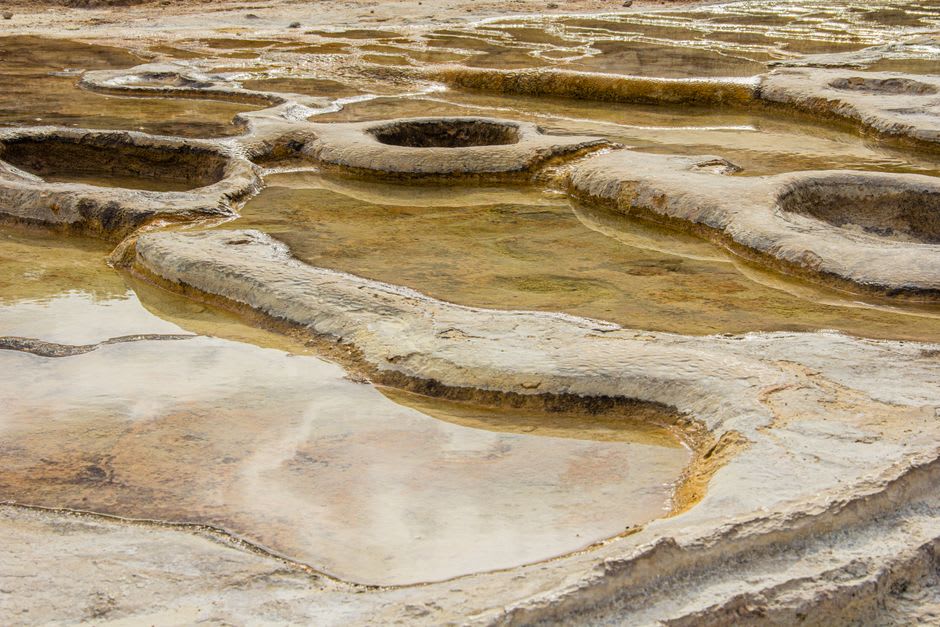
We walked for maybe twenty minutes out of the city center to a shallow depression near an irrigation channel where the water came up from the ground into a small natural basin, clear and slightly warm, the surface moving with slow carbonation that I initially mistook for insects. He handed me a plastic cup that he had in his jacket pocket — apparently this was not his first time doing this — and I drank. The water was more mineral than Peñafiel, harder, with a slight sulfurous note underneath the carbonation that resolved into something clean. It tasted like geology. I had nothing to transport it in and cursed myself for the oversight.
Onyx and the Workshop
The white and brown onyx quarried from the hills around Tehuacán is another thing the city produces that most of Mexico takes for granted. I had seen onyx bowls and ashtrays and decorative objects in markets throughout Mexico without thinking about where they were made. A significant proportion of them are made here.
The workshops are not hidden. On the streets southwest of the zócalo there are several family operations where the stone is cut, shaped, and polished. I walked into one without much ceremony — the door was open, the sound of grinding machinery was audible from the street, and the man inside gestured for me to come in. The operation was two rooms: one with a large saw for cutting slabs, one with smaller tools for shaping and polishing. The stone under the saw was revealing itself in slow parallel slices, each one showing the banded brown and cream interior of the onyx in a different configuration. He showed me a finished bowl the size of a soup plate, light passing through it in the places where the stone was thin enough.
I bought it. It sits on our kitchen counter now and I use it for keys.

Practical Notes
Tehuacán is a two-hour bus ride from Puebla City, with regular ADO service. From Oaxaca City it is about four hours north on the road through Teotitlán del Camino, making it a natural stop on that route. The city is best seen as a half-day to full-day visit — the zócalo, the market, a workshop, and the spring excursion if you can arrange it — unless you’re staying to explore the biosphere reserve and the surrounding archaeological sites, which could justify longer.
The valley’s most significant site is the Zapotec and Mixtec ceremonial center of Tehuacán Viejo, southeast of the city; a guide is worth finding for this, as the signage is minimal. The Valley of the Cacti, a protected area within the biosphere reserve, can be visited with local guides who know the species — the cardón, biznaga, and candelabra cacti in the valley floor are biologically remarkable in ways that take explanation to appreciate properly.
Eat in the market. The regional mole here has a note of the local chiles that I can’t find anywhere else — a slightly fermented, almost smoky base that is specific to the valley.