Teposcolula
"Three hours past the last tour group, in a town that doesn't know it's remarkable, a Dominican open chapel stopped me mid-sentence."
I arrived in Teposcolula on a Sunday, which was either perfect timing or complete accident — probably both. The colectivo from Nochixtlán dropped me at the edge of town around nine in the morning, and the market was already half-assembled in the main square: piles of dried chiles, bundles of hierba santa, a woman selling nothing but red plastic buckets. I walked past all of it and kept going uphill because someone on the bus had mentioned a church. What I found instead was a question someone had started building in the sixteenth century and then left open, literally, to the sky.
The Open Chapel of San Pedro y San Pablo
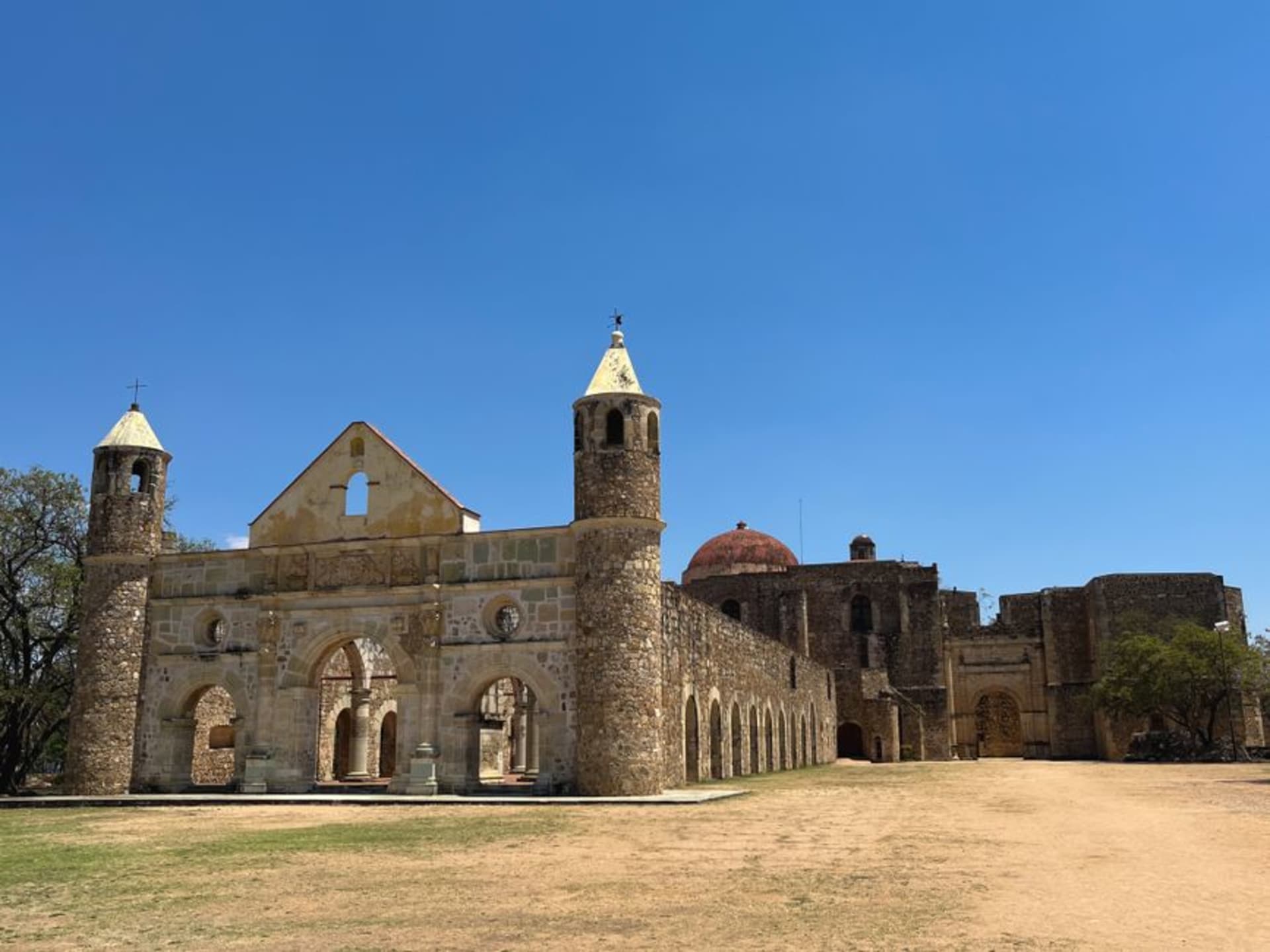
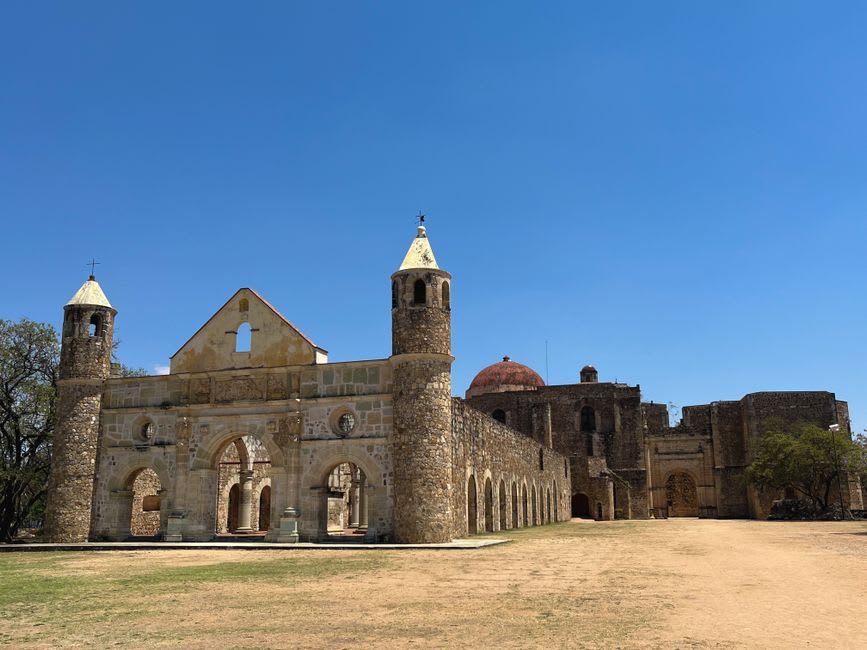
The capilla abierta of the ex-convent of San Pedro y San Pablo is one of the strangest architectural encounters I have had in Mexico, and I do not say that casually. The Dominicans built it in the 1570s to preach to thousands of Mixtec converts in the open air: a vaulted nave so wide it rivals anything in Oaxaca City, with Gothic ribbing pressing up against the blue of the sky where a wall should be. The east wall simply isn’t there. The intention was practical — no indigenous temple in the region could hold that many people — but the effect is something else: you stand inside a ruin that was designed this way, an interior that was always also an exterior. Half the vault has collapsed in places. Goats sometimes wander in from the courtyard. A caretaker let me through the iron gate without ceremony and then disappeared. I sat on a stone block for twenty minutes without taking a single photo, which is not something I do.
The Sunday Market and Mixtec Table
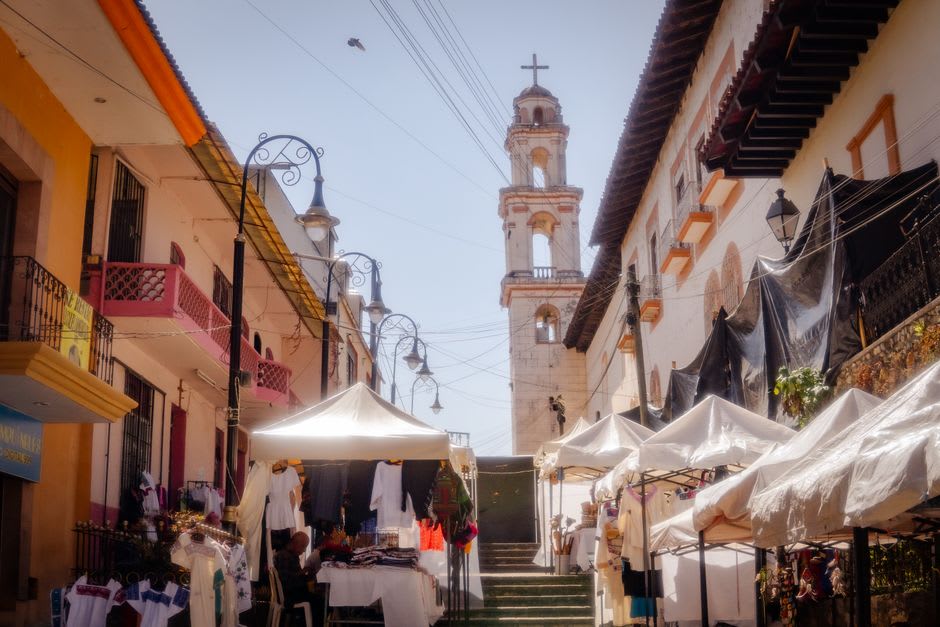
The Sunday market in Teposcolula has nothing to offer tourists. This is meant as praise. The vendors sell black beans by the kilo, bundles of firewood, second-hand sandals, and a traditional Mixtec pozahuanco wrap skirt at a folding table near the church steps. The food stalls appear around ten: tlayudas heavier than what I usually find in Puerto Escondido, memelas topped with asiento and frijoles negros, and a red chile broth soup I could not identify, with masa floating in it. I ate two things without knowing their names, pointed at both, and paid forty pesos total. Nobody seemed particularly interested in explaining what I was eating, which I found genuinely refreshing after months of menus translated into approximate English. The market packs up by noon and the town goes quiet in a way that feels structural, not seasonal.
Moving Through the Mixteca Alta
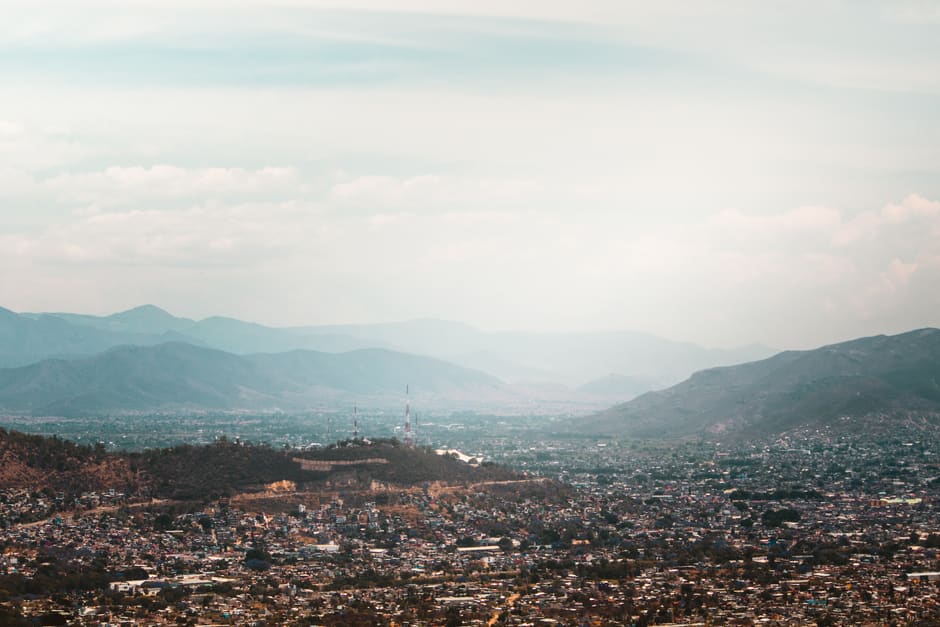
Teposcolula makes more sense when you place it in the landscape around it. The Mixteca Alta is Oaxaca stripped of the things that made it famous — mezcal bars, cooking classes, textile tours — and what remains is harder and more interesting. The ex-convent here is the centrepiece, but the town also holds a 16th-century open-air tribunal and a small parish church with a crumbling retablo worth thirty minutes of attention on its own. Spend the morning at the market and the chapel. Eat at the stalls. Leave mid-afternoon before the light flattens. And if you have time, drive the forty minutes north to Yanhuitlán — another Dominican complex, better preserved, equally empty of visitors — and let the two places talk to each other on the road back.
Getting There
Teposcolula is roughly three hours from Oaxaca City via Highway 190 toward Huajuapan de León. From Oaxaca, take a colectivo to Nochixtlán, then transfer for Teposcolula — connections are loose on weekdays, more reliable on Sundays when the market draws traffic. The Mixteca Alta runs colder and drier than the central valleys; bring a layer even in March. Yanhuitlán’s own extraordinary ex-convent sits thirty minutes north and pairs naturally as a single day’s route.